
Reliable Boat Dock Lighting Repair for Waterfront Homeowners


Marine-Grade Boat Dock Lighting Repair and Electrical Infrastructure
Maintaining reliable waterfront illumination requires heavy-duty marine electrical engineering, structural integration, and specialized shoreline repair techniques. When dockside fixtures flicker, lose power, or suffer environmental degradation from coastal elements, certified marine contractors must inspect the underlying infrastructure. Professional boat dock lighting repair involves tracing rigid conduit runs along timber pilings, rebuilding submerged junction enclosures, and replacing compromised wiring assemblies to restore structural safety and performance across waterfront facilities.
Pearce Marine Construction is a woman-owned marine construction company serving residential, commercial, and public clients in Nassau and Suffolk Counties on Long Island, NY. Our team specializes in comprehensive dock and pier building, pile driving, custom decking, and marine utility repairs engineered to withstand tidal surges, ice loads, and severe coastal weather.

Explore our specialized marine contracting services:
- Certified boat dock repair services
- Heavy-duty marine dock components and hardware
- Long Island marine dock repair solutions
Engineering Diagnostics for Waterfront Lighting Infrastructure
Waterfront electrical systems operate in an aggressive marine environment. The continuous cycle of salt air, high humidity, storm surges, and shifting tides places immense mechanical and chemical stress on dock wiring, junction boxes, and light housings. Professional diagnostics focus on voltage delivery, environmental ingress protection, and component durability across marine structures.
Identifying Marine Corrosion and Structural Wiring Failures
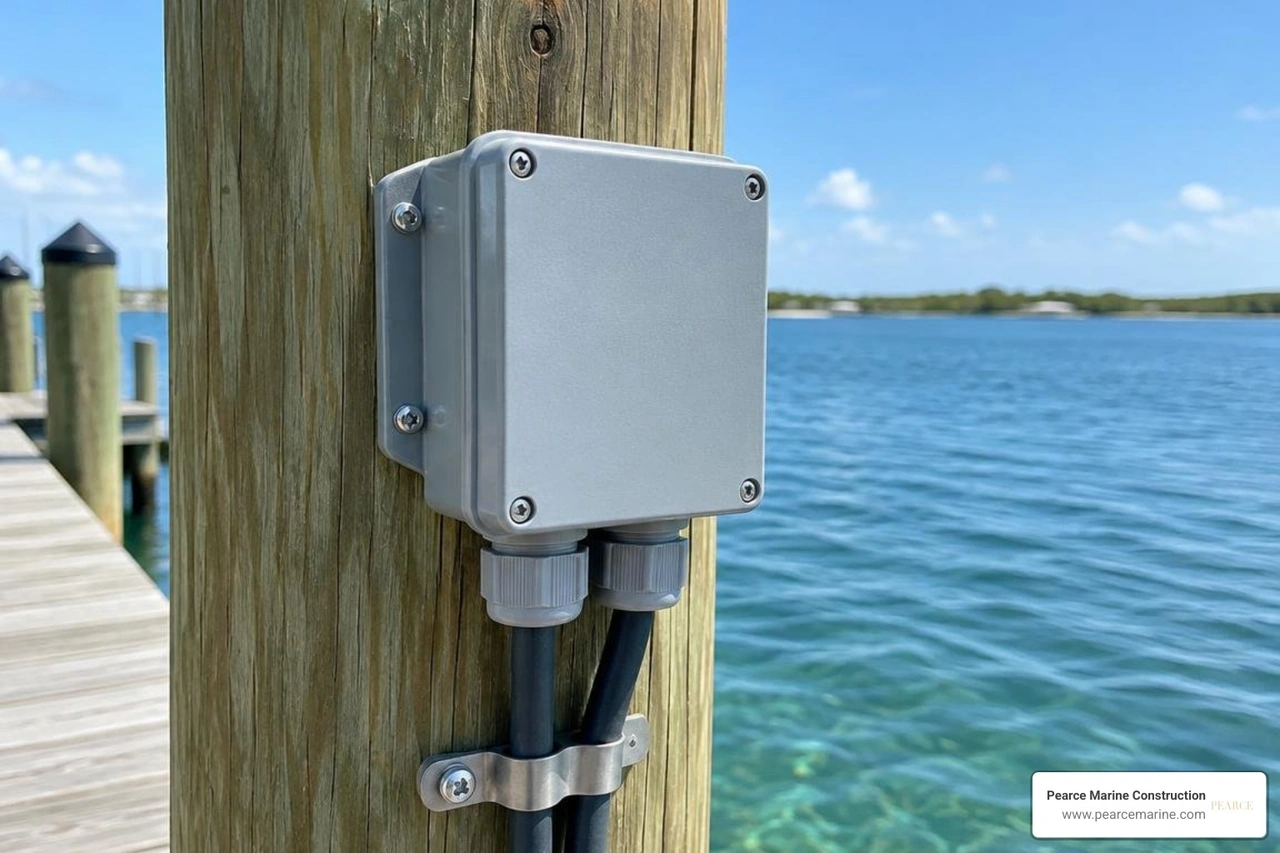
The primary threat to dockside lighting circuits is galvanic oxidation and saltwater intrusion. When saltwater breaches a conduit run or junction enclosure, it creates a conductive path that leads to copper degradation, high-resistance connections, and system-wide ground faults.
Marine contractors inspect lighting infrastructure for critical failure points:
- Copper Oxidation: Discolored wire terminals inside connection boxes signal seal failure, causing elevated resistance that leads to flickering fixtures or localized thermal buildup.
- Ingress Protection Degradation: Surface-mounted dock fixtures require at least an IP67 rating (temporary immersion protection), while submerged installations demand an IP68 rating. Internal moisture accumulation inside lenses indicates compromised housing seals that necessitate full assembly replacement.
- Submerged Fixture Integrity: Specialized underwater luminaires must adhere to strict manufacturer installation specifications, ensuring 316 stainless-steel mounting hardware remains free of crevice corrosion and conduit entries remain completely sealed with marine-grade polyurethane compounds.
Professional Circuit Diagnostics and Electrical Restoration
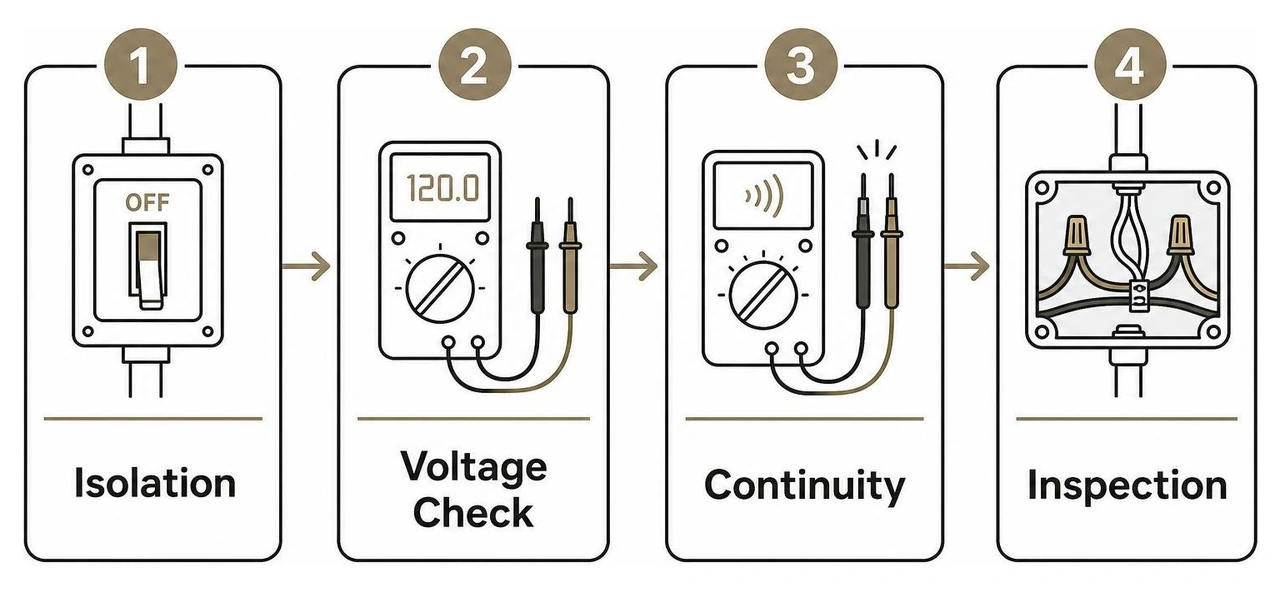
Contractors isolate whether lighting failures stem from power supply degradation, conductor damage, or driver failure through precise engineering methodologies:
- Isolation and Verification: De-energizing the dedicated subpanel breaker and verifying zero potential across terminals using calibrated digital multi-meters.
- Ground-Fault and Overcurrent Assessment: Diagnosing whether circuit interruption is caused by overload or ground faults resulting from water intrusion into pile-mounted junction enclosures or sub-deck conduit.
- Voltage Drop Analysis: Measuring operating voltage under full load across low-voltage (12V–24V DC) marine runs. Extended pier runs require engineered 15% power supply reserves to maintain steady driver operation through seasonal temperature extremes.
- Driver and Relay Testing: Assessing encapsulated marine LED drivers, which operate significantly cooler than legacy incandescent systems but require surge protection and watertight isolation against moisture spikes.
When electrical failures coincide with shifting pilings or loose framing, structural reinforcement via comprehensive boat dock repair services restores pier integrity.
Low-Voltage Hardwired vs. Self-Contained Solar Marine Lighting
Selecting lighting systems during dock construction or repair depends on site exposure, structural requirements, and illumination demands.
Self-Contained Solar Dock Lights provide perimeter demarcation with outputs of 2 to 3 lumens, eliminating the need for internal conduit runs along piers. However, continuous exposure to coastal UV and saltwater degrades integrated solar cells and sealed battery packs over 2 to 4 years, requiring full unit replacement.
Hardwired Marine-Grade Low-Voltage Systems (12V–24V DC) provide high-lumen, code-compliant illumination for heavy-use piers, custom decking, and pile installations. Commercial-grade LED systems deliver lifespans exceeding 50,000 hours. When hardwired systems fail, marine contractors replace drivers, reseal enclosures, and rebuild terminal connections while preserving the heavy-duty structural housings.
| Feature / Metric | Low-Voltage Hardwired LED | Self-Contained Solar Dock Light |
|---|---|---|
| Average Lifespan | 50,000+ hours (10+ years) | 2–4 years (battery limited) |
| Output / Brightness | High (200–2,000+ Lumens) | Low (2–3 Lumens) |
| Repair Strategy | Replace driver, seal, or terminal | Replace sealed unit |
| Water Intrusion Vulnerability | Conduit entries and junction boxes | Internal seal and battery tray |
| Infrastructure Needed | Schedule 80 conduit and subpanel | None (Surface or pile-mount) |
Safe Waterfront Electrical Practices and Long Island Maintenance
Marine construction along coastal shorelines requires stringent adherence to electrical engineering codes to protect structural integrity and prevent dangerous current leakage into the surrounding water.
Critical Safety Precautions and Marine Electrical Code Standards
Waterfront electrical systems must comply with National Electrical Code (NEC) Article 682 (Electrical Installations at Bodies of Water), NEC Article 555, and NFPA 303 standards.
- Electric Shock Drowning (ESD) Prevention: AC current leakage into fresh or brackish water causes muscular paralysis in swimmers. All circuits feeding dock fixtures must feature functional, regularly tested Ground-Fault Circuit-Interrupter (GFCI) protection.
- Service Equipment Isolation: NEC standards dictate that main service panels must be located on solid ground adjacent to floating dock systems, never directly on floating structures subject to mechanical movement.
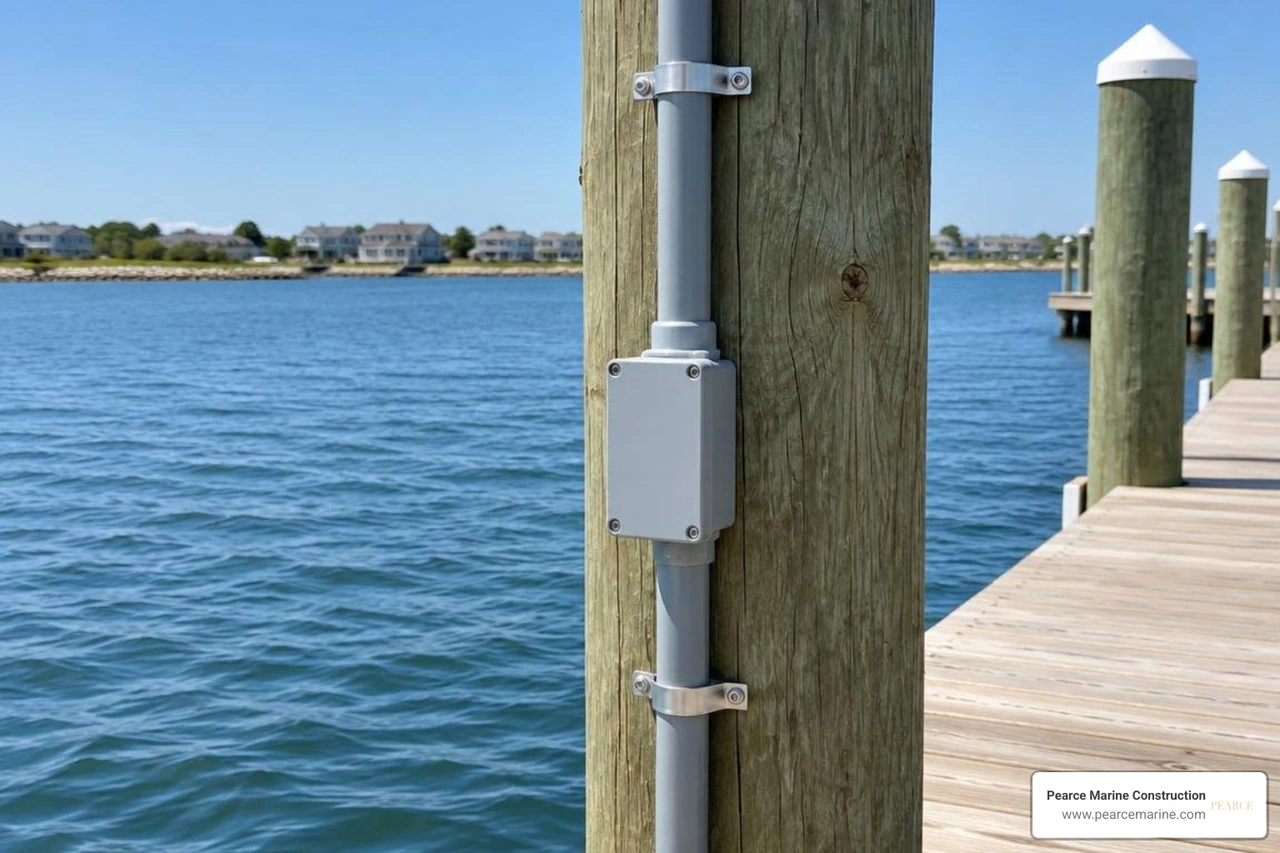
- Heavy-Duty Conduit Runs: All shore-to-dock and deck-level wiring must be encased in rigid Schedule 80 PVC conduit or liquid-tight flexible non-metallic conduit, secured against structural shifting, ice flow, and wave-induced vibration.
Weatherproofing Best Practices for Coastal Long Island Docks
Waterfront structures in Nassau County and Suffolk County—spanning South Shore bays in Massapequa, Merrick, Wantagh, Bellmore, Brightwaters, West Islip, Babylon, and Bayshore to eastern communities like West Hampton and Southampton, as well as North Shore harbors in Cold Spring Harbor, Huntington, and Lloyd Harbor—face aggressive saltwater exposure and seasonal nor'easters.
Maintaining dock lighting across these coastal properties requires durable, marine-grade components:
- 316 Stainless-Steel Fasteners: Standard grade-304 or galvanized screws corrode rapidly in South Shore estuaries. Only 316 marine-grade stainless steel resists pitting and galvanic breakdown.
- Dual-Wall Heat Shrink with Adhesive: All low-voltage splice points must utilize marine crimp connectors encased in heat-shrink tubing lined with internal thermoplastic adhesive to create an airtight, watertight seal.
- Submersible Junction Boxes: Enclosures must feature compression glands and silicone perimeter gaskets.
- Integrating Structural Elements: Lighting installations integrate seamlessly with heavy-duty boat dock accessories and align with comprehensive dock repair construction standards.
When to Call Professional Marine Contractors for Dock Lighting
Structural infrastructure damage requires heavy-duty marine contracting capabilities. When conduits are crushed by shifting dock framework, pilings shift out of alignment, or sub-deck wiring runs are compromised beneath fixed piers, specialized structural repair work is essential.
Pearce Marine Construction brings specialized engineering precision, deep local expertise in Long Island coastal conditions, and superior craftsmanship to every waterfront project. When severe storms, ice loads, or marine decay compromise the pilings, bulkheads, or custom decking supporting your dock's electrical grid, contact us for dedicated marine repairs and maintenance services to ensure your waterfront infrastructure remains secure, code-compliant, and durable for decades to come.



Bring Your Vision to Life
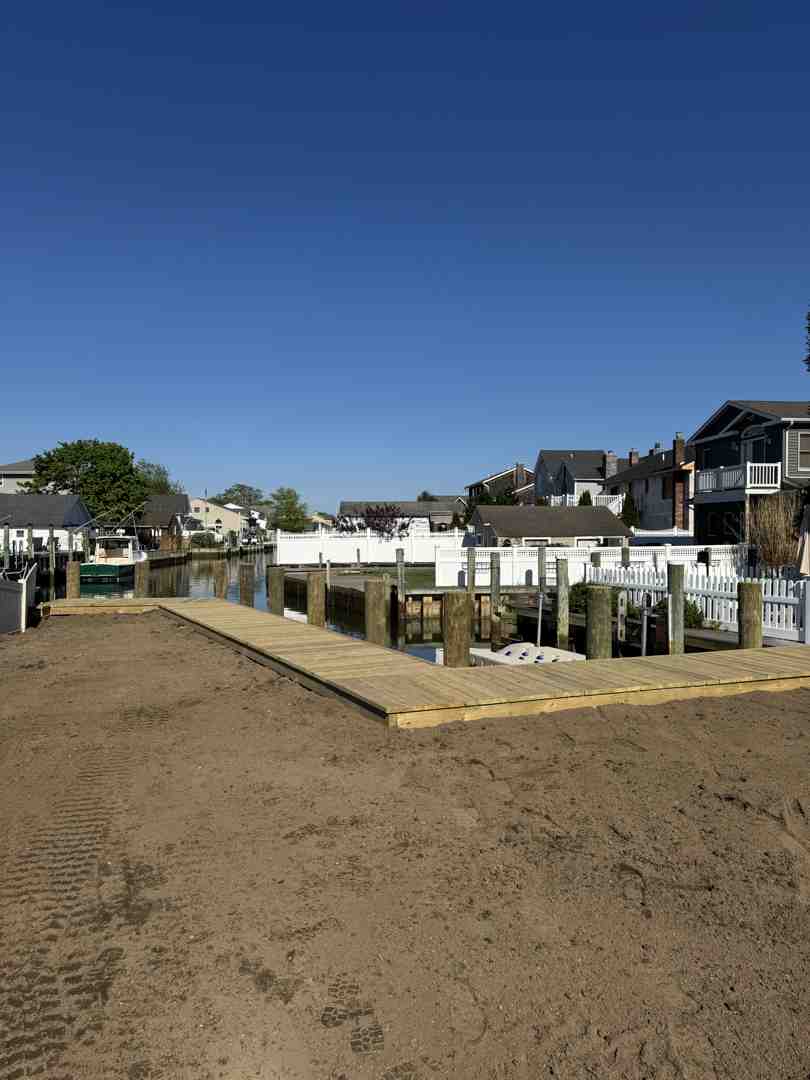
Whether you're planning a custom dock, seawall, or boat lift, our experienced team is ready to deliver high-quality marine construction tailored to your needs. Pearce Marine Construction brings craftsmanship, precision, and a deep understanding of Florida’s waterways to every project. Let us help you create a durable, beautiful solution that stands the test of time. Get in touch now for a personalized estimate!