
The Ultimate Guide to Choosing Decking Material on Long Island

Why the Right Decking Material on Long Island Can Make or Break Your Waterfront Structure
Choosing the wrong decking material on a Long Island waterfront property isn't just a cosmetic mistake — it can mean structural failure within a few years. At Pearce Marine Construction, we specialize in selecting and installing high-performance marine decking engineered for the harshest coastal environments.
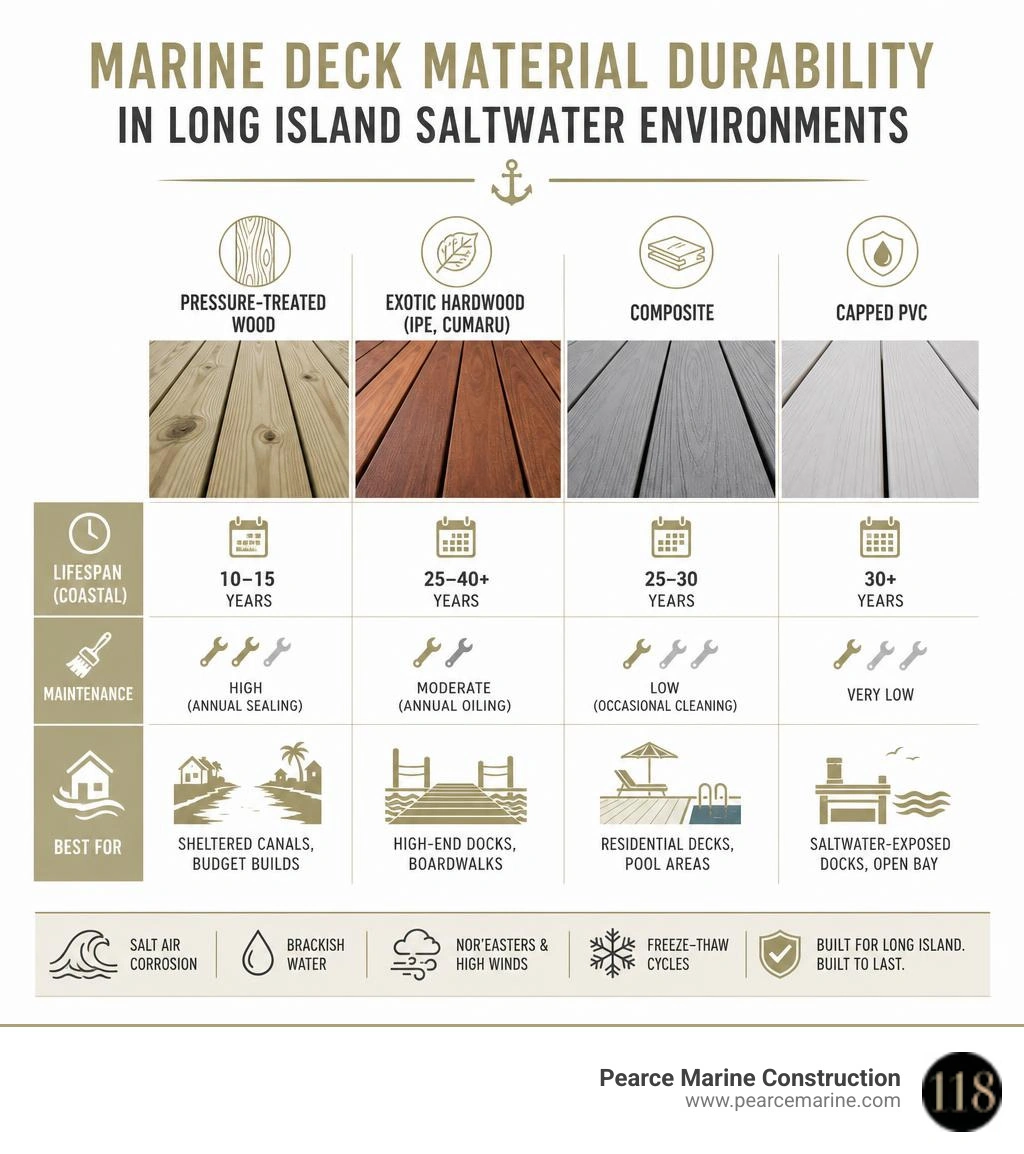
Here's a quick breakdown of the most common decking materials used on Long Island and how they hold up in coastal conditions:
| Material | Lifespan (Coastal) | Maintenance | Best For |
|---|---|---|---|
| Pressure-treated wood | 10–15 years | High (annual sealing) | Sheltered canals, budget builds |
| Exotic hardwood (Ipe, Cumaru) | 25–40+ years | Moderate (annual oiling) | High-end docks, boardwalks |
| Composite (Trex, TimberTech, Fiberon) | 25–30 years | Low (occasional cleaning) | Residential decks, pool areas |
| Capped PVC (Azek) | 30+ years | Very low | Saltwater-exposed docks, open bay |
Long Island's environment is uniquely harsh. Salt air, brackish water, nor'easters, and freeze-thaw cycles all attack decking year-round. What works in an inland suburb simply won't survive on a dock in Southampton or a waterfront deck in West Islip.
The material you choose today determines how much you'll spend on repairs — or full replacement — over the next decade.
As leading marine contractors, we evaluate every major decking material available to Long Island property owners, focusing on what actually holds up in professional marine and shoreline construction.
Decking material Long Island basics:
Comparing Decking material Long Island Options for Coastal Construction
Building along the water in places like Babylon, Brightwaters, or Bayshore requires an understanding of how materials interact with a marine environment. Saltwater exposure accelerates the breakdown of standard building materials. When salt spray penetrates porous surfaces, it leaves behind salt crystals that expand and contract, slowly tearing the material apart from the inside.
Furthermore, Long Island’s climate features intense freeze-thaw cycles. Water gets trapped inside the decking material, freezes during our cold winters, expands, and causes cracking, splintering, or warping.
To combat this, we use advanced coastal engineering practices. When we build custom marine decks, we evaluate the height of the deck relative to the high-tide line, the amount of direct sunlight the structure will receive, and the level of wave action during storms. Selecting high-durability materials designed specifically for marine exposure is the only way to ensure your investment survives the elements. For more details on our engineering approach, you can read More info about custom marine decks.
Wood vs. Composite: Choosing Your Decking material Long Island
The debate between natural wood and manufactured composite is one of the most common discussions we have with property owners in Massapequa, Merrick, and Wantagh. Both options have distinct structural characteristics that dictate where and how they should be installed.
Pressure-Treated Timber
Traditional pressure-treated wood is chemically treated to resist rot, decay, and marine borers. While it is highly cost-effective upfront, it is highly susceptible to the drying effects of salt air and intense sun. Over time, pressure-treated pine will warp, cup, and splinter, requiring regular structural inspections and board replacements to remain safe.
Exotic Hardwoods (Ipe and Cumaru)
For those who demand the unmatched beauty of real wood, premium tropical hardwoods are the gold standard.
- Ipe (Brazilian Walnut): With an incredibly high Janka hardness rating of 3,510 lbf, Ipe is so dense that it actually sinks in water. It is naturally resistant to rot, insects, and fire. When installed correctly by professional marine builders, an Ipe deck can easily last 40+ years.
- Cumaru (Brazilian Teak): Second only to Ipe in density, Cumaru offers similar structural strength and durability at a slightly lower price point.
Because of their immense density, these hardwoods require specialized installation techniques, including pre-drilling every single screw hole. To ensure the highest quality for our custom builds, we source premium hardwoods from trusted local suppliers, utilizing materials like those found at Decking Supplies in Long Island, NY - Century Building Materials for our professional installations. For an in-depth look at how we plan and execute these wood builds, check out our Deck Building Guide Long Island.
Composite Boards
Modern composite decking (engineered from recycled polymers and reclaimed wood fibers) offers a highly stable alternative to natural wood. Brands like Trex, TimberTech, and Fiberon do not splinter, warp, or rot, making them excellent choices for high-traffic walkways and residential waterfront decks. However, because they contain wood fibers, standard composites can still absorb trace amounts of moisture if they are constantly submerged or installed too close to the water's surface.
Heavy-Duty PVC Decking material Long Island for Waterfront Docks
For structures facing direct saltwater contact—such as docks, piers, and low-lying walkways in Bellmore or West Hampton—capped PVC is the ultimate decking material Long Island option.
Unlike wood-plastic composites, capped PVC (such as TimberTech Azek) is made from 100% cellular polymer. It contains absolutely no wood fibers. This translates to zero moisture absorption, making it entirely immune to rot, mold, and marine wood-boring organisms.
When selecting PVC for your marine construction project, we look for several key performance features:
- Slip Resistance: Wet docks can be incredibly hazardous. High-quality PVC decking is engineered with deep, embossed grain patterns that provide excellent traction even when completely soaked.
- Heat Retention: PVC has historically run hot under the summer sun. However, premium modern lines feature advanced heat-dissipating technology that keeps the boards cooler underfoot than traditional composite materials.
- Chemical and Salt Resistance: PVC is completely unaffected by harsh salt spray, sunscreen, or spilled boat fuel.
Our team coordinates with top-tier suppliers, including Decking & Fencing | Riverhead Building Supply , to procure heavy-duty PVC profiles that meet our rigorous marine construction standards. To understand how we integrate these advanced polymers into full marine systems, explore Decks and Docks Long Island.
Marine-Grade Hardware and Fasteners for Coastal Decks
A deck is only as strong as the fasteners holding it together. Standard construction screws will rust and fail within a few seasons when exposed to Long Island’s salty atmosphere, leading to loose boards and structural hazards.

When we build marine decks, we exclusively use marine-grade stainless steel fasteners (typically Grade 305 or Grade 316). Grade 316 stainless steel contains molybdenum, which provides superior resistance to ocean-driven chloride pitting and corrosion.
We utilize several heavy-duty fastening methods depending on the material and location:
- Hidden Deck Clips: For composite and PVC decks, hidden clips secure the boards from the sides, leaving a smooth, screw-free surface that eliminates the risk of snags or splinters.
- Structural Marine Screws: For heavy-duty framing and hardwood installations, we use specialized structural screws designed to handle high shear loads without snapping under the constant movement of tides and wind.
- Color-Matched Plugs: For exotic hardwoods like Ipe, we counterbore the screws and seal the holes with matching wood plugs, creating a completely seamless, premium finish.
Using the correct hardware is vital for both the longevity of the structure and the safety of everyone walking on it. Learn more about how we pair premium materials with robust structural components in Decking and Railings.
Structural Framing and Pile Driving for Marine Decks
While the deck surface gets all the attention, the real magic happens underneath. A marine deck requires a heavy-duty substructure engineered to withstand shifting soils, tidal surges, and high winds.
Our structural framing process is built on absolute precision and heavy-duty engineering:
- Pile Driving and Helical Piles: For true waterfront decks and docks, we drive heavy timber piles deep into the bay floor or install helical steel piles to establish an unshakeable foundation that won't settle over time.
- Kiln-Dried After Treatment (KDAT) Lumber: Standard pressure-treated framing lumber is often wet when installed, leading to warping and twisting as it dries. We prefer KDAT lumber, which is dried in a controlled environment to ensure maximum dimensional stability and structural straightness.
- Joist Spacing and Bracing: Marine decks face immense lateral forces from waves and wind. We use tighter joist spacing and robust cross-bracing to prevent any bouncing or shifting in the deck surface.
Every deck framing system we build in 2026 meets or exceeds the latest coastal building codes, ensuring your structure remains safe and level for decades. For a deeper look into the professional engineering and structural standards behind our substructures, read The Ultimate Guide to Building a Deck Plans Framing and Installation.
Professional Marine Deck Construction and Installation Services
Investing in premium materials like Ipe or capped PVC is only half the battle; the quality of the installation determines whether those materials actually live up to their lifetime warranties. Marine construction is a highly specialized trade that requires heavy equipment, structural expertise, and a deep understanding of local coastal dynamics.
Whether you need a brand-new custom boardwalk in Lloyd Harbor, a structural deck repair in Cold Spring Harbor, or a complete bulkhead-integrated deck system in Huntington, hiring a dedicated marine contractor is essential. We don't just lay boards; we stabilize shorelines, reinforce bulkheads, and build structures engineered to survive the next big storm. If you are planning a project, working with certified Long Island Deck Builders ensures the job is done right the first time.
Custom Marine Deck Construction in Nassau and Suffolk Counties
At Pearce Marine Construction, we bring generational expertise and meticulous craftsmanship to every shoreline project we touch across Nassau and Suffolk Counties. As a woman-owned marine construction company, we pride ourselves on delivering robust, beautifully engineered structures that stand up to the harshest South Shore waves and North Shore tides.
From custom docks in Southampton to heavy-duty walkways in West Islip and resilient waterfront decks in West Hampton, we never cut corners. We manage the entire construction process from structural engineering and pile driving to the final layout of your premium decking material Long Island choice.
Ready to build a waterfront structure that will stand the test of time? Schedule a consultation for custom marine decks, walkways, and railings with our expert team today.



Bring Your Vision to Life
Whether you're planning a custom dock, seawall, or boat lift, our experienced team is ready to deliver high-quality marine construction tailored to your needs. Pearce Marine Construction brings craftsmanship, precision, and a deep understanding of Florida’s waterways to every project. Let us help you create a durable, beautiful solution that stands the test of time. Get in touch now for a personalized estimate!