
Get Your Dock in Order: A Step-by-Step Guide to Piling Installation


The Critical Role of a Professional Dock Foundation
Dock piling installation is the single most important element of any durable waterfront structure. For property owners on Long Island, the quality of this foundation determines the safety, longevity, and value of your entire marine project. Your dock is only as strong as the pilings that support it, and in the harsh marine environment of Nassau and Suffolk Counties, a weak foundation can lead to structural failure and costly repairs.
The forces of wind, waves, boat traffic, and ice movement place tremendous stress on waterfront structures. Professional piling installation isn't just about driving posts into the waterbed; it requires a deep understanding of Long Island's unique ground conditions—from the sandy bottoms of Southampton to the rockier substrates in West Hampton. As marine contractors, we account for water depth, tidal patterns, saltwater corrosion, and the specific load-bearing requirements of your dock.
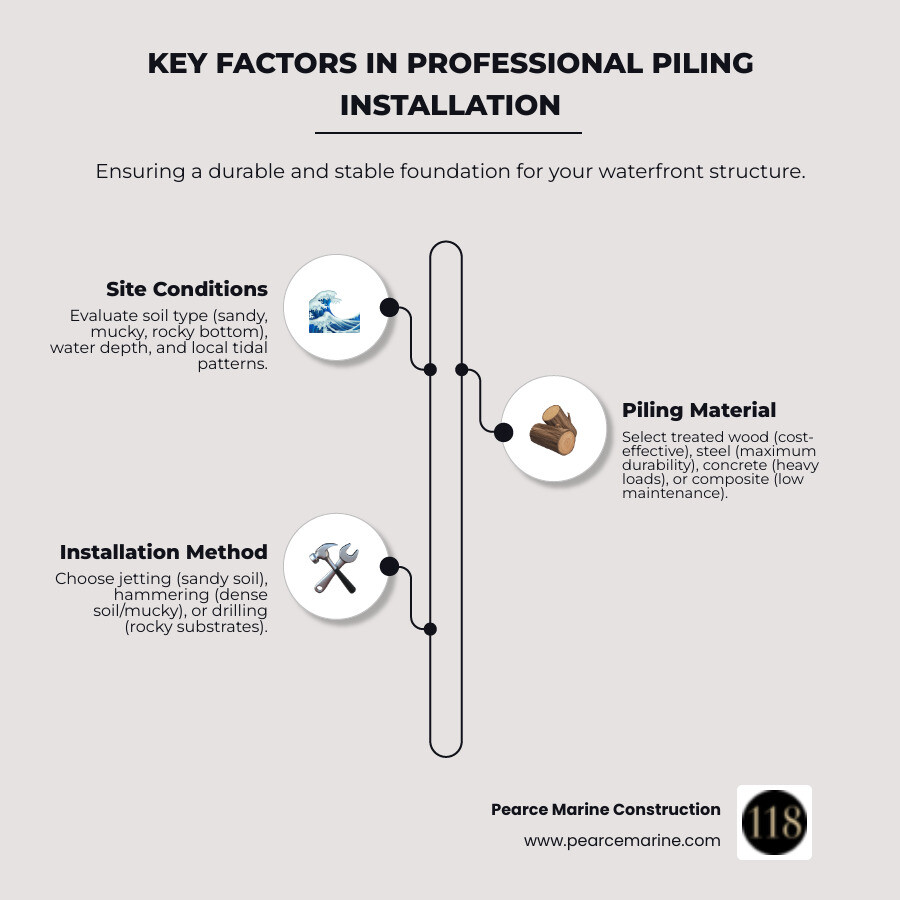
Our process involves selecting the right installation method—whether jetting for sand, hammering for mucky conditions, or drilling for rock—and the ideal material, such as treated wood, steel, or composite. By ensuring pilings are driven to the proper depth, typically 4-6 feet below the waterbed, we create a stable foundation that provides decades of reliable service. A properly installed piling foundation protects your waterfront property and can add a 60-80% return on investment, but achieving this requires the specialized equipment and technical expertise we provide.
The Professional Dock Piling Installation Process
At Pearce Marine Construction, we understand that constructing a robust and long-lasting dock on Long Island begins with a meticulous dock piling installation process. Our generational expertise ensures that every step, from initial assessment to the final drive, is executed with precision and an unwavering commitment to quality. This process is a mechanical symphony, a careful dance with Mother Nature, ensuring your marine structure stands strong against the elements unique to Nassau and Suffolk Counties.

Site Assessment and Material Selection
Before any pilings touch the water, our team conducts a thorough site assessment. This critical step involves evaluating the specific conditions of your waterfront property in areas like Nassau County, West Islip, or Huntington. We analyze the soil composition—whether it's a sandy bottom, mucky sediment, or rocky substrate—water depth, tidal patterns, and potential load requirements. This assessment directly informs our material and method recommendations.
Choosing the right material for your dock pilings is paramount, especially in the corrosive saltwater environment of Long Island. Different materials offer unique advantages and disadvantages:
- Treated Wood Pilings: A common and often cost-effective choice for many residential docks. These pilings are pressure-treated with chemicals to resist rot and marine borers, which are a significant concern in our local waterways. While durable for smaller projects, they require specific treatment levels to withstand saltwater immersion. You can learn more about treated wood pilings and their specifications.
- Composite Pilings: A modern and environmentally friendly option, composite pilings are made from a mixture of materials designed to provide strength while resisting rot, corrosion, and impact damage. They are ideal for sensitive areas and offer excellent longevity with minimal maintenance.
- Steel Pilings: Highly durable and robust, steel pilings are often chosen for commercial docks or high-load applications. They offer superior strength and can withstand significant forces, but require careful consideration for corrosion protection in saltwater.
- Concrete Pilings: Precast concrete pilings provide excellent durability and are highly resistant to saltwater corrosion and marine borers. They are ideal for heavy-load applications and offer a long lifespan, making them a premium choice for many of our clients in Massapequa and Bellmore.
Our expertise in Marine Structures ensures we recommend the optimal material custom to your specific site conditions, project requirements, and budget, ensuring maximum durability and structural integrity.
Choosing the Right Dock Piling Installation Method
The method we employ for dock piling installation is determined by the specific soil conditions of your Long Island waterfront. What works best for a sandy bottom in Southampton might not be suitable for a mucky area in Babylon or a rocky shore in West Hampton. We use three primary methods, each with its own advantages:
| Method | Soil Type Preference | Cost Implications | Best Use Case |
|---|---|---|---|
| Jetting | Sandy bottoms with small rocks/shells | Generally cheapest | Lighter loads, smaller docks, freshwater sandy areas |
| Hammering | Mucky bottoms, dense soils, thin clay | Moderate | Heavy-duty applications, commercial docks |
| Drilling | Extensive rocky conditions, hardpan | Potentially most expensive | Precision placement, challenging substrates |
- Jetting (Water Jetting): This method involves using high-pressure water streams to erode the sediment beneath the piling, allowing it to sink into place. It's the preferred and often cheapest method for sandy bottoms or areas with small rocks and shells. For typical docks, pilings are jetted 4-6 feet deep into sandy soil, while boat lift pilings may require 6-8 feet for added stability. However, jetting can disturb the surrounding soil, and its effectiveness is limited in dense or rocky conditions.
- Hammering (Impact Driving): When dealing with mucky bottoms or denser soil formations, hammering is often the go-to method. Our pile drivers use sheer force to drive pilings deep into the substrate. This method can force small to medium rocks aside and break through thin clay layers. While effective for heavy-duty applications, it cannot penetrate large, solid rock formations. Hammering creates a strong, compact foundation as surrounding earth materials are forced to close around the pile.
- Drilling (Auger Drilling): For the most challenging conditions, such as extensive rocky substrates, hardpan, or when precise placement is critical, drilling is the best and most guaranteed option. This method involves boring a precise hole into the ground or rock, allowing for exact placement and often reaching 4-5 feet into solid rock for improved strength. Drilling is essential for projects requiring absolute stability and where other methods might fail to achieve adequate penetration.
Our expertise in Pile Driving allows us to select and execute the most appropriate method for your specific Long Island location, ensuring a foundation that will stand the test of time.
Ensuring a Strong Foundation and Longevity
A successful dock piling installation culminates in a strong, stable, and long-lasting foundation. This involves several critical considerations beyond just driving the pilings. We focus on meticulous execution to guarantee your dock's longevity and minimize future maintenance needs.
- Piling Depth and Spacing: Pilings must be driven deep enough to reach stable subsoil or bedrock. For most residential docks, this typically means at least 4-6 feet into the lakebed, and often 10-15 feet into the ground or waterbed in general, depending on soil conditions. Proper spacing, generally 8 to 10 feet apart, is also crucial to adequately distribute the dock's load and prevent sagging or instability.
- Protective Measures: For wood pilings, preventing rot and marine borers is paramount. We use pressure-treated wood suitable for saltwater immersion and often recommend additional protective measures such as wrapping the submerged sections with protective barriers or sleeves. These barriers shield the wood from constant water exposure and marine organisms, significantly extending the piling's lifespan.
- Pile Caps: Above the waterline, pilings are exposed to UV rays, rain, snow, and other environmental elements. Installing durable pile caps protects the top of the pilings from deterioration and water ingress, which can lead to internal rot.
- Marine-Grade Hardware: All fasteners, brackets, and connections used in our dock construction are marine-grade, typically hot-dipped galvanized or stainless steel. This prevents rust and corrosion, which can quickly compromise structural integrity in saltwater environments.
- Structural Stability: For comprehensive stability, especially against lateral forces from waves, wind, or ice, cross bracing is often incorporated between pilings. This "X" shaped bracing significantly stiffens the structure and prevents leaning or excessive movement.
We adhere to expert insights on marine durability standards, often referencing guidelines from organizations like the U.S. Army Corps of Engineers to ensure our installations meet the highest benchmarks for resilience. Our commitment extends to providing comprehensive Repairs and Maintenance services, proactively addressing any wear and tear to preserve your investment for decades.
Partnering with an Expert for Your Dock Project
While the concept of dock piling installation might seem straightforward, the complexities of marine environments, local regulations, and the specialized equipment required make it a job best left to seasoned professionals. As a woman-owned marine construction company with generational expertise, Pearce Marine Construction brings meticulous craftsmanship and unparalleled local knowledge to every project across Nassau and Suffolk Counties.
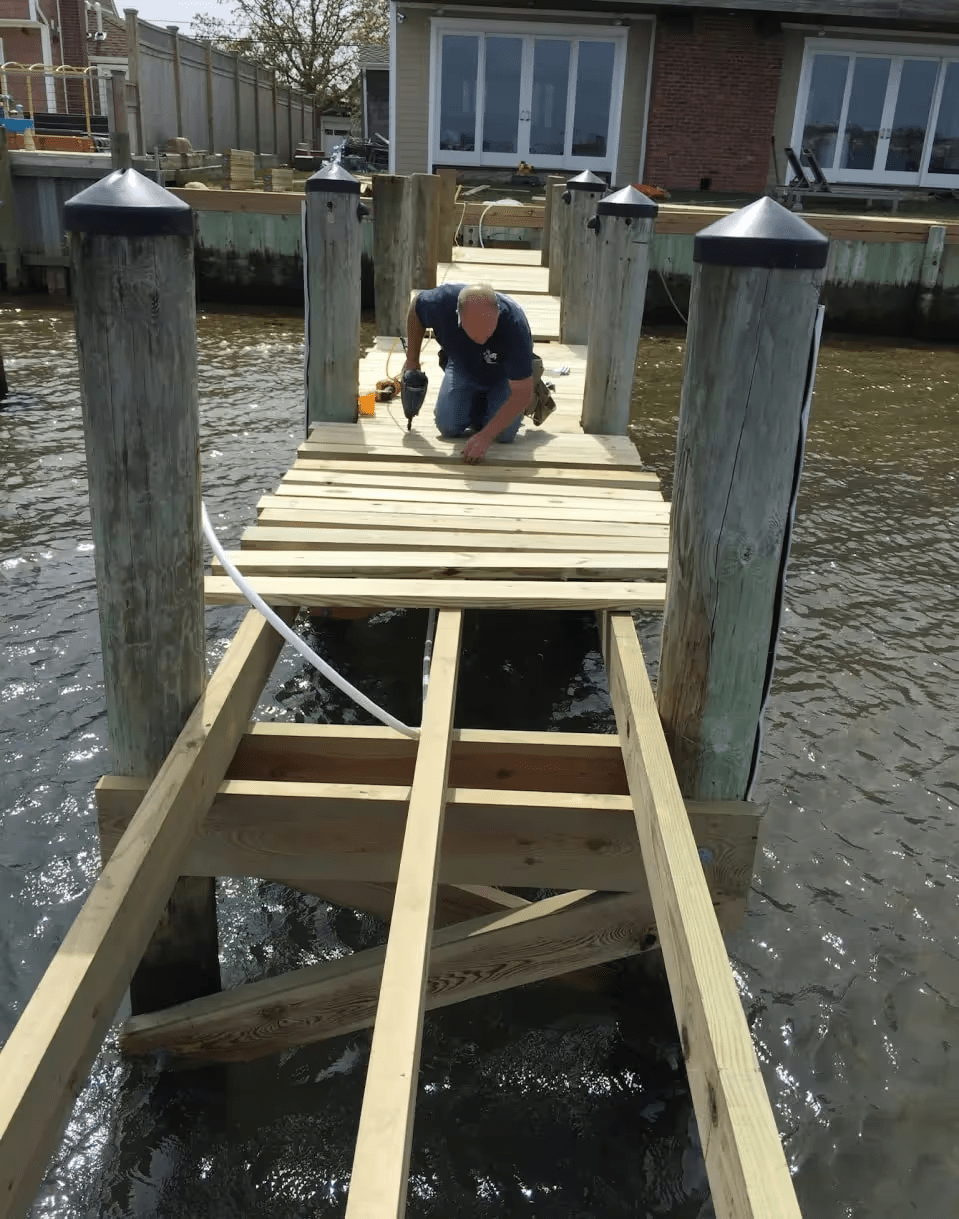
Hiring an experienced marine contractor like us means more than just getting the job done; it means partnering with a team that understands the unique challenges of Long Island's waterfront. We manage every technical aspect of the project to deliver a final product that is not only beautiful but also structurally sound and built to last. Our work in areas from West Hampton to Cold Spring Harbor stands as a testament to our commitment to quality. For truly custom, expertly built docks, we are proud to be among the leading Dock Builders Long Island trusts.
Key Questions for Your Marine Contractor
Choosing the right marine contractor for your dock piling installation is a crucial decision that impacts the longevity and safety of your waterfront investment. To ensure you're making an informed choice, we recommend asking prospective builders these key questions:
- Experience with Local Conditions: "What is your experience with dock piling installation in specific Long Island areas like Nassau or Suffolk County? Do you understand the local soil conditions, tidal patterns, and environmental regulations relevant to my property?"
- Portfolio of Work: "Can you provide a portfolio of your past dock construction projects, particularly those similar in scope and scale to mine, within Nassau or Suffolk County?"
- Project Timeline: "What is your estimated timeline for the complete dock piling installation and construction, from start to finish?"
- Detailed Cost Estimate: "Can you provide a comprehensive, itemized cost estimate that details all materials, labor, and equipment?"
- Warranty Information: "What warranties do you offer on your workmanship and the materials used for the dock pilings and structure?"
- Insurance and Licensing: "Are you fully licensed and insured for marine construction work in New York, and can you provide proof of both?"
- Safety Protocols: "What safety protocols do you have in place for your crew and the work site during the installation process?"
By asking these questions, you can gauge a contractor's expertise and commitment to quality. At Pearce Marine Construction, we pride ourselves on transparency and our proven track record as a reputable Marine Construction Company serving Long Island.
Understanding Dock Piling Installation Costs and ROI
The cost of dock piling installation is a significant consideration for any waterfront property owner. While the average cost for residential dock piling installation typically ranges from $4,000 to $25,000, with many projects averaging around $11,000, several factors influence the final price. We aim to provide clear and detailed estimates for our clients across Long Island, from Merrick to Brightwaters.
Key factors affecting the price include:
- Piling Material Costs: As discussed, materials like treated wood, composite, steel, or concrete vary significantly in price. For instance, while treated wood might be more economical upfront, premium materials like fiberglass, though more expensive, can last for decades without deterioration, rot, or rust, offering long-term value.
- Labor Rates: Professional labor rates for marine construction can range from $75 to $150 per hour, or $200 to $600 per piling, depending on complexity and location within Nassau or Suffolk County.
- Site Accessibility and Conditions: Difficult access to the waterfront, challenging soil conditions (e.g., extensive rocky areas requiring drilling), or deep water depths can increase both labor and equipment costs.
- Number and Size of Pilings: A small residential dock might require 4-6 pilings, while a larger, multi-slip dock could need 12-20+ pilings, significantly impacting the total cost.
Despite the upfront investment, a professionally installed dock with sturdy pilings offers a substantial return on investment (ROI). A well-built dock can add significant value to your waterfront property, often ranging from 60% to 80% ROI. It improves usability, aesthetic appeal, and overall desirability, making it a wise long-term investment for homeowners in Long Island's competitive real estate market.
At Pearce Marine Construction, we believe in providing not just a service, but a valuable asset that improves your property. We encourage you to Contact Us for a custom quote and discuss how our meticulous craftsmanship can bring your dock vision to life in Nassau or Suffolk County.


Bring Your Vision to Life
Whether you're planning a custom dock, seawall, or boat lift, our experienced team is ready to deliver high-quality marine construction tailored to your needs. Pearce Marine Construction brings craftsmanship, precision, and a deep understanding of Florida’s waterways to every project. Let us help you create a durable, beautiful solution that stands the test of time. Get in touch now for a personalized estimate!