
Dock Stability 101: Floating Dock Anchor Poles Explained


Securing Your Long Island Dock with Professional Anchor Pole Installation
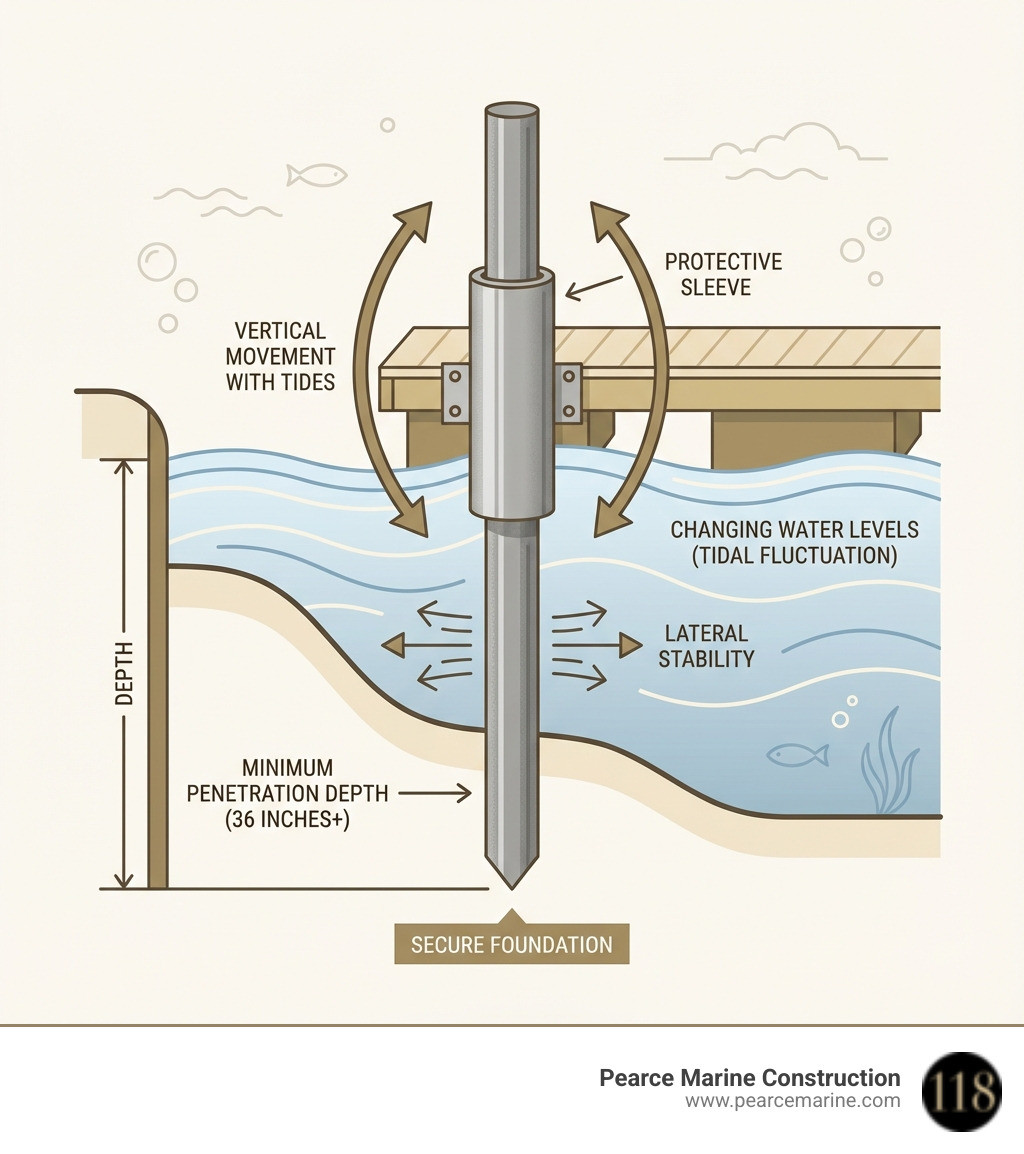
A floating dock anchor pole is a vertical support system—typically steel, wood, or fiberglass—driven into the seafloor. It allows a floating dock to move up and down with changing water levels while preventing dangerous lateral drift. The system works via sleeves attached to the dock that slide along the poles, guiding the dock's vertical movement while keeping it securely positioned.
For waterfront property owners in Southampton, West Islip, West Hampton, and across Nassau and Suffolk Counties, the stability of a floating dock depends entirely on a professionally engineered anchor pole system. It is the primary defense for your investment against Long Island's tidal fluctuations, storm surges, and relentless wave action. An improperly installed anchor pole system doesn't just risk your dock—it can become a liability, threatening neighboring property and boats during a storm.
At Pearce Marine Construction, we have spent years engineering and installing floating dock anchor pole systems that withstand the harshest Long Island weather. We understand the difference between a system that survives a nor'easter and one that becomes debris. Our process, from site assessment to final construction, is designed to deliver maximum stability and protect your waterfront investment.
Professional Anchor Pole Systems for Long Island Waters
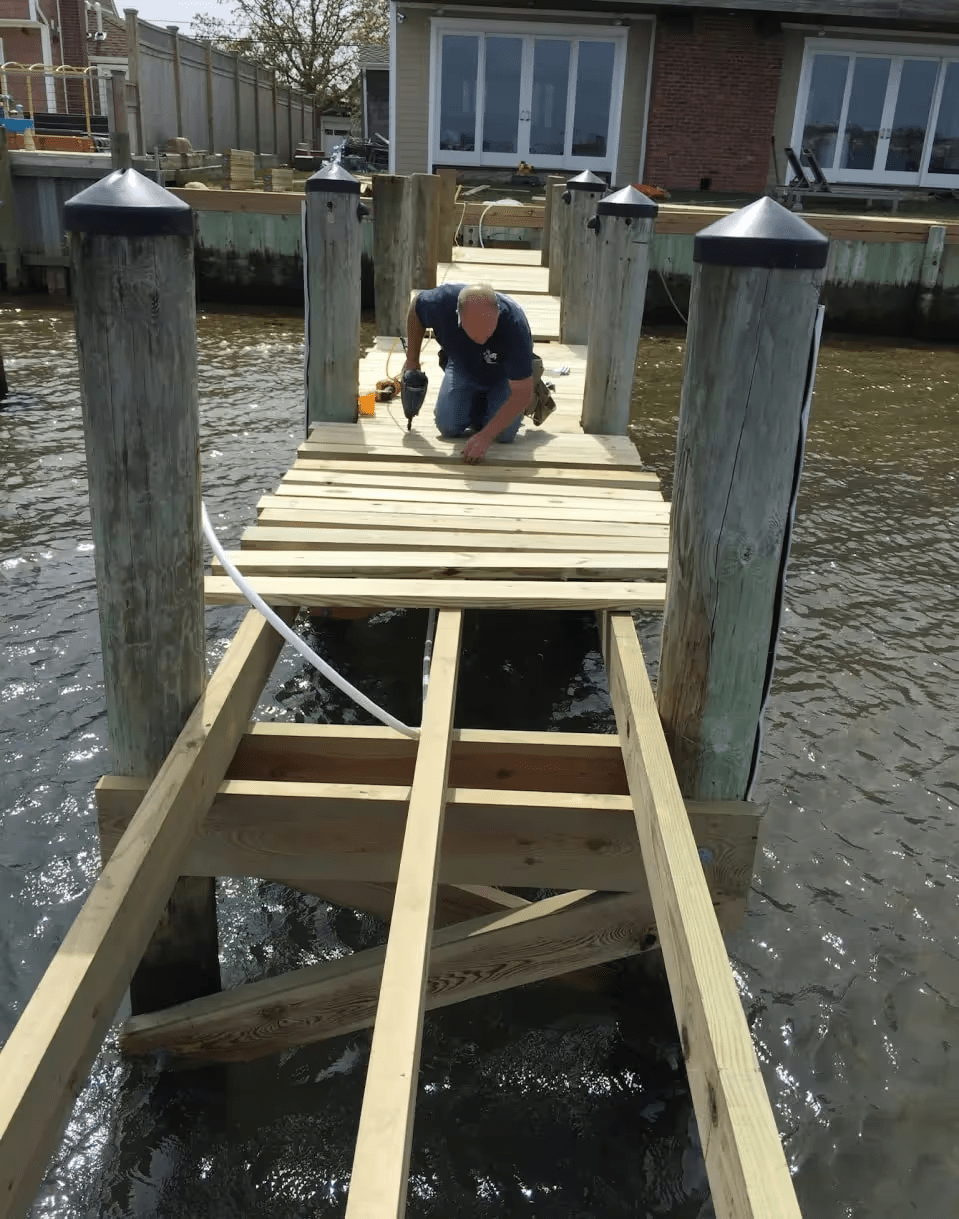
When designing floating dock systems for clients across Long Island, from Cold Spring Harbor to West Hampton, we prioritize stability and longevity. Professional marine contractors install several types of floating dock anchor pole systems, each engineered for specific conditions.
Pole and Sleeve Anchoring Systems
This is a highly effective method where water levels fluctuate significantly. A strong vertical pole (often 4-inch diameter galvanized steel or treated wood) is driven deep into the seafloor. The dock is fitted with a sleeve or hoop, typically made of durable UHMW-PE, that encircles the pole. This allows the dock to glide smoothly up and down with the tide, providing crucial lateral support. This system excels in the bays and harbors of Nassau and Suffolk Counties and is best for non-rocky bottoms where poles can be driven deep for excellent stability.
For a deeper dive into securing floating docks, explore our floating dock anchoring systems.
Driven Pile Anchoring: The Ultimate in Stability
For the most demanding conditions—heavy currents, significant wave action, or high-traffic areas—we use driven pile anchoring. This heavy-duty method provides superior long-term stability. We use robust materials like wood, steel, or fiberglass, chosen based on site conditions in locations like Babylon or South Hampton. The dock connects to these piles via pile rollers, which feature durable UHMW-PE Pile anchoring systems components to ensure smooth vertical movement. Properly installed pilings can last 15 to 30 years, offering decades of reliable protection for your waterfront investment.
Driven pile anchoring is a cornerstone of our work. For more information on how we build strong, reliable waterfront solutions, please learn about our boat dock construction services.
Engineering and Constructing a Floating Dock Anchor Pole System

Constructing a durable floating dock anchor pole system on Long Island is a precise engineering challenge. Our team at Pearce Marine Construction carefully evaluates your site to build a system that withstands everything from daily tides to severe nor'easters, ensuring your dock is engineered for longevity.
Site Assessment for a Floating Dock Anchor Pole
Before construction, a comprehensive site assessment is critical. We analyze key factors that inform the design of your floating dock anchor pole system. This includes measuring water depth, assessing the bottom composition (soft mud, sand, or rock), and evaluating wave action and fetch distance. We also account for Long Island's significant tidal ranges and potential storm surges, which can raise water levels several feet. As experts in Nassau and Suffolk Counties, our designs are built to meet the specific challenges of your location.
The Professional Installation of a Floating Dock Anchor Pole
Once the design is finalized, our marine construction team begins the installation. For robust systems, we use a barge with a pile driver to install wood, steel, or fiberglass piles deep into the seafloor. In other cases, auger-style poles are screwed into the sediment. Precision is key; we ensure each floating dock anchor pole is driven perfectly vertical to the required depth for maximum stability. The dock is then secured to the poles with high-quality sleeves and marine-grade hardware, typically galvanized or stainless steel, to resist corrosion in saltwater environments.
We recommend a floating dock anchor pole system for clients in locations like Bellmore or Huntington who require superior lateral stability for sites with significant water level fluctuations and suitable bottom conditions. It is the premier choice for a robust, long-term investment in your waterfront property.
Ensuring Longevity and Protecting Your Waterfront Investment
A properly constructed floating dock anchor pole system is a long-term investment in your property's safety and value. To protect that investment, professional maintenance and inspection are critical. Preventative care is always less expensive than emergency repairs after a system fails.
Maintenance and Professional Inspection for Anchor Poles
Your floating dock anchor pole system requires ongoing care to ensure its effectiveness, especially in Long Island's saltwater environments. Our professional inspections are key to catching minor issues before they become major, costly problems.
Our Maintenance and Inspection Best Practices:
- Hardware and Corrosion Checks: We inspect all metal components—poles, sleeves, and fasteners—for signs of rust or galvanic corrosion. We also check for wear on moving parts like pile rollers and sleeves, as neglected hardware is a common cause of dock failure.
- Structural Integrity: Our team looks for any signs of stress, bending, or fatigue in the dock frame and the poles themselves that could compromise the system's integrity.
- Post-Storm Assessments: After any significant weather event like a nor'easter, a professional assessment is crucial to check for shifted poles or damaged hardware.
- Extending Lifespan: Regular inspections and proactive maintenance are proven to extend the life of your marine structures. The BoatUS Foundation highlights that consistent dock maintenance can extend your system's life by up to 50%, saving you significant money over time.
For comprehensive care and to ensure the enduring stability of your waterfront investment, we invite you to schedule a professional dock inspection with Pearce Marine Construction. Our expertise means your dock will be thoroughly evaluated and expertly maintained, providing you with peace of mind for years to come.



Bring Your Vision to Life
Whether you're planning a custom dock, seawall, or boat lift, our experienced team is ready to deliver high-quality marine construction tailored to your needs. Pearce Marine Construction brings craftsmanship, precision, and a deep understanding of Florida’s waterways to every project. Let us help you create a durable, beautiful solution that stands the test of time. Get in touch now for a personalized estimate!