
Contractor Designed vs Specified: Navigating Helical Piling Decisions

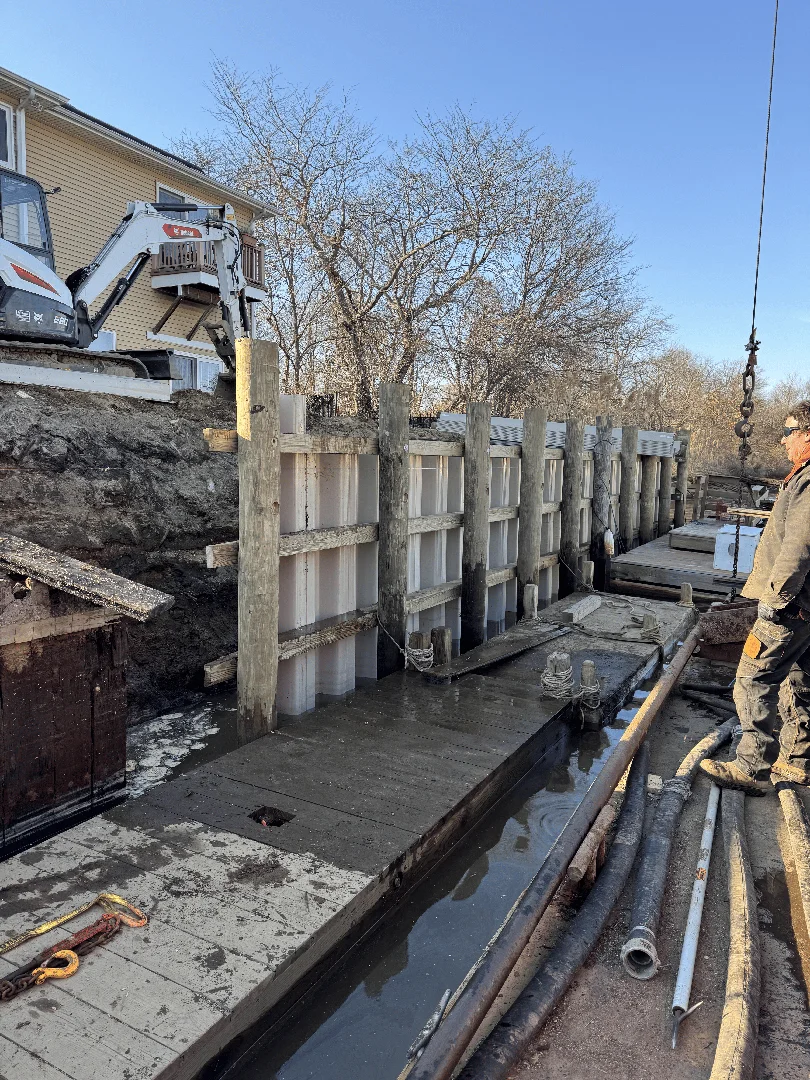
What Helical Piling Contractors Do — and Why It Matters for Long Island Shorelines
Helical piling contractors specialize in installing steel screw-type foundations — called helical piles or helical piers — that are rotated deep into the ground to support marine structures above unstable, saturated, or shifting coastal soils. On Long Island's Nassau and Suffolk County coastlines, where soft sandy soils and tidal conditions make traditional concrete foundations unreliable, helical piles have become a go-to deep foundation solution for marine infrastructure.
Here's a quick overview of the marine services helical piling contractors typically offer:
| Service | What It Means |
|---|---|
| Waterfront foundation installation | Helical piles screwed into load-bearing soil for new marine and shoreline structures |
| Underpinning & stabilization | Supporting or lifting existing waterfront foundations that have settled |
| Seawall & bulkhead anchoring | Tieback anchors to resist lateral soil and water pressure |
| Dock and pier foundations | Deep pile support for waterfront structures, docks, and piers |
A key advantage: helical piles can bear load immediately after installation — no concrete curing time, no waiting. That makes them especially valuable on coastal projects where tidal windows and weather create tight construction schedules.
But not all helical pile work is the same. There are two main ways a project gets designed and built — the contractor-designed model and the specified model — and choosing the wrong approach for your marine project can mean delays, cost overruns, or foundations that underperform.
This guide breaks down both methods, explains how helical piling works in Long Island's unique marine environment, and shows what to look for when hiring a contractor in Nassau or Suffolk County.

Helical piling contractors terms to remember:
Contractor-Designed vs. Specified Engineering: Choosing the Right Helical Piling Contractors
When planning a deep foundation or marine anchoring project on Long Island, the pathway from soil testing to the final installed pile generally splits into two methodologies: Contractor-Designed (often referred to as design-build) and Specified Engineering.
Both routes aim to deliver a structurally sound foundation capable of transferring heavy structural loads down through unstable coastal sand and silt into dense, load-bearing soil strata. However, the division of labor, engineering risk, and project timelines differ significantly between the two.
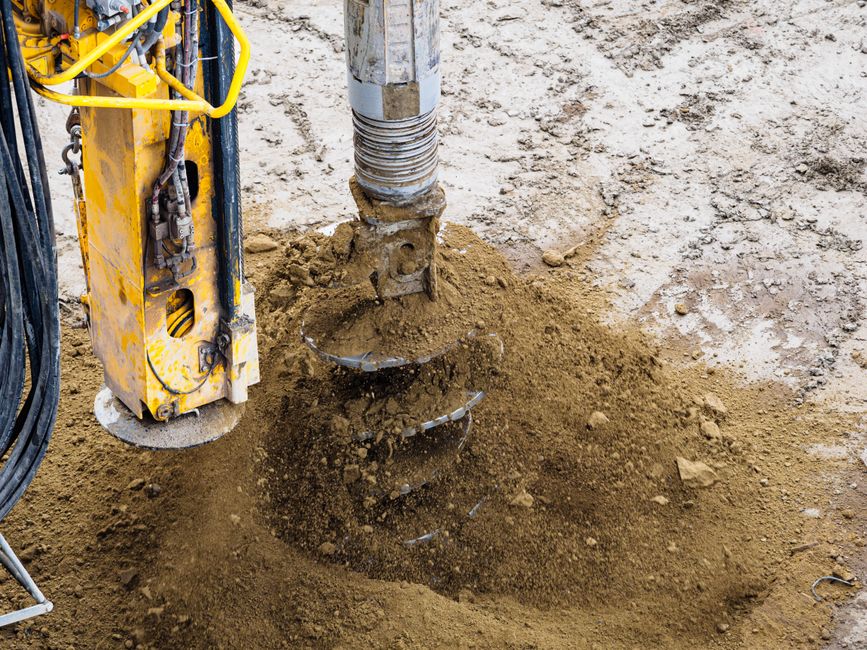
Understanding these differences is critical before hiring helical piling contractors for your waterfront bulkheads, docks, or marine foundations. While some projects benefit from a highly customized, multi-tiered engineering process, others are far better suited for a streamlined Design-Build | Solid Foundations Florida | Call 866-398-9323 delivery method that consolidates accountability.
The Specified Method: Engineering First for Complex Shorelines
In the specified engineering model, the property owner or project manager hires a third-party geotechnical engineer and structural engineer before any piling contractor is brought to the table.
This process begins with a detailed geotechnical report. Soil borings are taken on-site—whether in Southampton, Huntington, or Lloyd Harbor—to analyze the soil profile, water table, and exact depth of load-bearing strata. Based on this data, the structural engineer drafts detailed plans specifying the exact pile dimensions, shaft diameters (round or solid square), helix plate configurations, and required target depths.
The primary benefit of this approach is rigorous, independent risk management. It is highly favored for complex public works, large-scale commercial marine developments, or highly customized waterfront builds on challenging shorelines. By laying out exact specifications beforehand, the project is opened to competitive bidding, ensuring all contractors bid on the exact same scope of work.
To explore how turnkey geotechnical engineering and design-build solutions work hand-in-hand during complex projects, you can read more about Helical Drilling - Innovative Geotechnical Design-Build Solutions .
The Contractor-Designed Approach: Streamlining with Certified Helical Piling Contractors
For many commercial and residential marine construction projects on Long Island, the contractor-designed (or design-build) method is rapidly becoming the preferred choice. In this single-source model, you hire a certified marine contractor who handles the entire pipeline: coordinating the geotechnical evaluation, engineering the pile layouts, securing professional engineer (PE) stamped structural drawings, and executing the physical installation.
This approach offers significant schedule savings—often cutting two weeks or more off the pre-construction phase. Because the engineering team works directly with the field crews, communication loops are tight. If the soil conditions require minor modifications, the engineering design can be adjusted dynamically without waiting for an external third-party firm to review requests for information (RFIs).
This level of unified accountability protects the property owner. There is no finger-pointing between the designer and the installer if field conditions change; the responsibility rests entirely with your chosen Certified Helical Pile Installers.
Torque Monitoring and Real-Time Load Verification
One of the most remarkable technical advantages of helical piles is the ability to verify load capacity in real time during the installation process. Whether using a specified or contractor-designed workflow, certified installers utilize advanced hydraulic torque monitoring gear.
As a high-torque hydraulic gear motor rotates the hot-dip galvanized steel pile into the ground, the resistance of the soil creates torque. There is a direct, mathematically proven correlation between the installation torque and the ultimate load-bearing capacity of the pile.
By logging these torque measurements foot-by-foot, our installation crews can verify that each individual pile has reached its required design capacity (which can range up to 20 tons or more for standard marine and waterfront projects). If a pile hits a soft pocket of sand or organic clay, we simply add shaft extensions to drive the helix plates deeper until the target torque—and therefore the required load capacity—is achieved.
To learn more about how torque monitoring works in the field and how it guarantees structural stability, check out our Helical Pile Installation Complete Guide.
Implementing Helical Piles in Long Island Marine Construction
Long Island's unique geography—stretching from the calm bays of Nassau County to the exposed shorelines of Suffolk County—demands foundation systems built to withstand constant water saturation, shifting sands, and harsh coastal weather. Traditional poured concrete marine footings are highly vulnerable to erosion, frost heave, and soil settlement in these environments.

This is where helical piles shine. Because they are screwed deep into the earth rather than excavated, they bypass the unstable upper layers of soil entirely. For a comprehensive look at how these systems are deployed across our local coastal communities, see our Helical Piles Long Island Guide.
Marine Applications: Bulkheads, Seawalls, and Docks
In marine construction, lateral forces from water pressure and shifting soil are constant threats to shoreline integrity. Helical piles are highly versatile tools used to combat these forces in several ways:
- Bulkhead and Seawall Tiebacks: We install helical tieback anchors horizontally through bulkheads deep into stable inland soil. This provides massive lateral resistance, preventing the seawall from bowing or collapsing outward.
- Dock and Pier Foundations: Traditional wood piles can rot, float, or shift over time. Utilizing steel helical piles provides a permanent, corrosion-resistant foundation for docks, piers, and heavy boat lifts.
- Decks and Walkways: For coastal boardwalks and custom decking in environmentally sensitive wetlands, helical piles can be installed with light machinery, causing virtually zero disruption to the surrounding habitat.
For those interested in the structural engineering behind coastal foundation systems and how they protect marine properties, you can explore the resources at Helical Pier Foundation Systems Long Island, NY - Helical Piles NY .
Selecting Local Helical Piling Contractors in Nassau and Suffolk Counties
When investing in shoreline protection or waterfront foundations in communities like West Islip, Southampton, West Hampton, or Bayshore, local expertise is irreplaceable. The coastal geology of Long Island varies wildly; the glacial till of the North Shore (like Lloyd Harbor and Cold Spring Harbor) presents entirely different underground challenges than the fine, saturated barrier sands of the South Shore (like Massapequa, Wantagh, and Babylon).
At Pearce Marine Construction, we bring generational expertise and meticulous craftsmanship to every project we undertake. As a premier woman-owned marine construction company, we understand how to navigate the strict regulatory frameworks and challenging coastal conditions of Nassau and Suffolk Counties.
While generic regional competitors like Bayview Dockbuilders or Kevel may offer basic piling services, they often lack the deep, localized understanding of Long Island's distinct shoreline dynamics and custom marine engineering requirements. Our focus is strictly on delivering high-quality, durable marine infrastructure designed to protect your property for generations.
To discuss your upcoming waterfront project or request a professional assessment, visit our marine construction services page.
Cost-Effectiveness and Long-Term Durability of Helical Foundations
While the upfront material cost of high-strength, hot-dip galvanized steel helical piles can sometimes be higher than raw concrete, they represent a highly cost-effective long-term solution.
Because helical piles can be installed up to 90% faster than traditional concrete foundations and require up to 40% less labor, the total project installation costs are dramatically reduced. Furthermore, because there is no excavation, soil removal, or concrete curing time, subsequent marine construction phases can begin the very same day.
| Feature | Helical Piles | Poured Concrete Marine Foundations |
|---|---|---|
| Installation Speed | Extremely Fast (Hours/Days) | Slow (Requires excavation, pouring, curing) |
| Cure Time | Zero (Immediate loading) | 7 to 28 days |
| Soil Disruption | Minimal (No spoils or excavation) | High (Heavy excavation required) |
| Environmental Impact | Very Low (Removable and recyclable) | High (Leaves permanent concrete in soil) |
| Weather Dependency | Can install in all weather conditions | Highly sensitive to rain, freezing, and tides |
| Expected Lifespan | 50 to 100+ Years (Galvanized steel) | Variable (Prone to cracking and settling) |
To protect against the highly corrosive marine environments of Massapequa, Wantagh, Bellmore, and South Hampton, we utilize heavy-duty galvanized coatings. Under average soil and saltwater conditions, these piles easily achieve a service life of 50 to well over 100 years.
For a detailed analysis of pricing structures, material choices, and budgeting for your deep foundation project, consult our Helical Piles Cost Guide 2026.
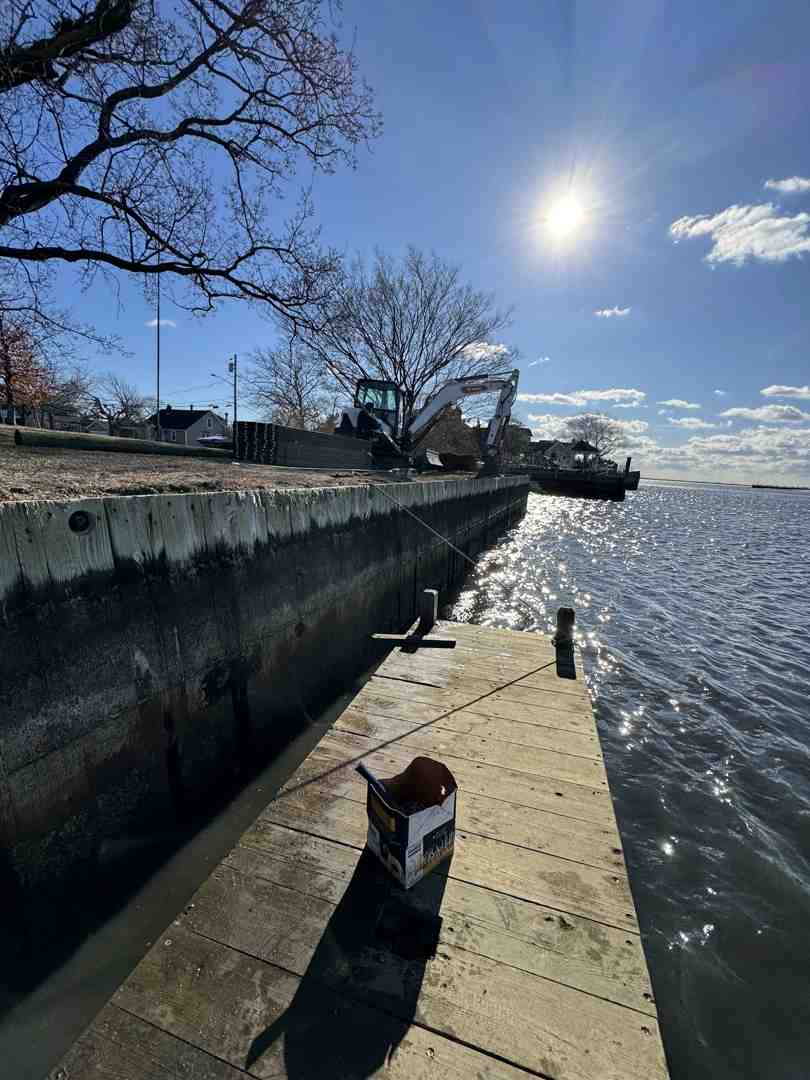



Bring Your Vision to Life
Whether you're planning a custom dock, seawall, or boat lift, our experienced team is ready to deliver high-quality marine construction tailored to your needs. Pearce Marine Construction brings craftsmanship, precision, and a deep understanding of Florida’s waterways to every project. Let us help you create a durable, beautiful solution that stands the test of time. Get in touch now for a personalized estimate!