
Hochul's Heroes: How Long Island is Investing in Shoreline Protection

_compressed.webp)
The Unseen Battle: Why Long Island's Coastline is Under Threat
Shoreline protection Long Island is a critical defense for waterfront property owners. The island's 1,180+ miles of coastline face relentless pressure from waves, storms, and rising seas, threatening both property values and the natural environment.
Key Shoreline Protection Methods for Long Island:
- Structural Solutions - Seawalls, bulkheads, and revetments that create physical barriers.
- Engineered Hybrid Systems - Combinations of structural elements with reinforced vegetation for stability and habitat improvement.
- Materials - Durable options like vinyl seawalls (40+ year lifespan), marine-grade concrete, pressure-treated timber, and gabion systems.
- Critical Success Factors - Professional engineering, proper permitting, and site-specific design.
With 15% of Long Islanders in flood zones and sea levels projected to rise 11-21 inches by 2050, the risk is escalating. For every foot of shoreline lost on a 100-foot property, owners can face over $9,000 in land value losses, plus the risk of structural damage to waterfront property.
The battle for the coastline is driven by natural forces and accelerated by human activity. Property owners must choose between investing in professional shoreline protection or accepting the mounting costs of erosion and property damage. The solution lies in understanding both the threats and the proven methods marine construction specialists use to combat them.
Natural Forces at Play
Long Island's coast is constantly reshaped by natural forces. Tides weaken soil through saturation, while wind whips up waves and carries away sand. In winter, ice buildup exerts immense pressure, scouring banks and lifting sediment. The island's iconic bluffs are vulnerable to waves at their base and runoff at their tops, leading to collapses. Finally, longshore drift, the natural movement of sediment along the coast, can strip sand from one area and deposit it in another, requiring careful planning for any stabilization effort. For more on local erosion, see our guide on Long Island Beach Erosion.
The Human Impact and Climate Change
Human activities and climate change amplify Long Island's erosion crisis. Vegetation removal for lawns or development strips away nature's best defense, leaving soil exposed. Impermeable surfaces like driveways and patios create concentrated runoff that carves gullies. On bays and canals, boat wakes act as a constant, artificial erosive force. The most significant long-term threat is sea-level rise, projected at 11-21 inches by 2050. This leads to more frequent flooding and forces shorelines landward, where they collide with fixed structures, accelerating erosion. Addressing these threats requires robust Flood Mitigation Solutions and a focus on Coastal Resilience - Suffolk County Government.
The High Cost of Erosion: Consequences for Property and Planet
The consequences of erosion are both financial and environmental. Lost land value can exceed $9,000 per foot of shoreline, not including the emotional toll. Unchecked erosion can cause structural damage to property, leading to costly repairs. Infrastructure near the water can be exposed or damaged, creating public health and safety hazards. Eroded soil is also a major source of water pollution, clouding water and harming marine life. This habitat loss destroys vital spawning and nesting grounds, degrading the coastal ecosystem. Proactive shoreline protection Long Island is an investment in safeguarding your property and our shared environment. Learn how we can help with our shoreline stabilization services.
A Tale of Two Shores: Comparing Shoreline Protection Methods on Long Island
Choosing the right shoreline protection Long Island method involves comparing two main philosophies: structural "hard" solutions like seawalls, and engineered hybrid approaches that blend structures with nature. The best choice depends on your site conditions, wave energy, and environmental goals. A property on the open Atlantic requires a different defense than one in a protected bay.
- Initial Cost: Structural solutions are typically a higher upfront investment, while hybrid solutions range from moderate to high.
- Maintenance: Hard structures require periodic inspection, while hybrid solutions need more consistent vegetation and sediment management.
- Lifespan: Structural solutions can last 20 to 75+ years. Hybrid solutions have a more variable lifespan of 10 to 50+ years, dependent on natural growth.
- Environmental Impact: Hard structures can disrupt habitats, while hybrid solutions often improve them.
- Ideal Wave Energy: Structural solutions excel in high-energy environments, while hybrid solutions are best for low to moderate-energy settings.
Structural Solutions: Building a Formidable Defense
When facing powerful waves, structural solutions provide a physical barrier between your property and the water. These are the heavy-duty options for shoreline protection Long Island.
- Seawalls: Massive vertical structures built parallel to the shore, designed to withstand the full force of ocean waves in high-energy environments.
- Bulkheads: Similar to seawalls but typically used in calmer bays and estuaries, these vertical walls retain soil. We build them from timber, vinyl, or concrete, leveraging our expertise in bulkhead construction on Long Island.
- Revetments: Sloped structures of rock or concrete that absorb and dissipate wave energy rather than reflecting it, creating a gentler transition to the water.
- Retaining Walls: While often used inland, marine retaining walls require special engineering to handle waves and hydrostatic pressure.
A key consideration is wave reflection. Vertical walls can reflect wave energy, scouring the base of the structure and increasing erosion on adjacent properties—a factor we always account for in our designs. Learn more from our resources on Bulkhead and Seawall and our Seawall Construction Ultimate Guide.
Advantages and Disadvantages of Structural Solutions
Structural solutions offer maximum protection in high-energy conditions and provide impressive longevity, often lasting for decades with proper maintenance. They also create a clear property boundary. However, they come with a higher initial cost. There is also the potential for off-site erosion due to wave reflection, which can shift the problem to neighboring properties. Environmentally, hard structures can cause habitat disruption by blocking wildlife access and interrupting natural sediment flow. For more details, visit our guide on bulkhead construction.
Materials and Construction Methods
The longevity of a structure depends on its materials. We use only high-quality options proven to withstand Long Island's marine environment.
- Vinyl seawalls are a popular choice, offering a 40+ year lifespan with minimal maintenance due to their resistance to corrosion and marine borers.
- Marine-grade concrete (4,000-5,000 PSI) provides maximum strength for high-wave-energy areas. Proper concrete bulkhead installation is critical for durability.
- Pressure-treated timber offers a classic aesthetic but typically requires more maintenance than vinyl or concrete.
- Gabions (stone-filled wire cages) are permeable structures that dissipate wave energy and can be vegetated for a softer look.
- Helical piles are deep foundation anchors that provide essential stability for bulkheads and seawalls, securing them against storm forces. Learn about their role in helical piles.
Engineered Hybrid Solutions: Enhancing Shoreline Stability
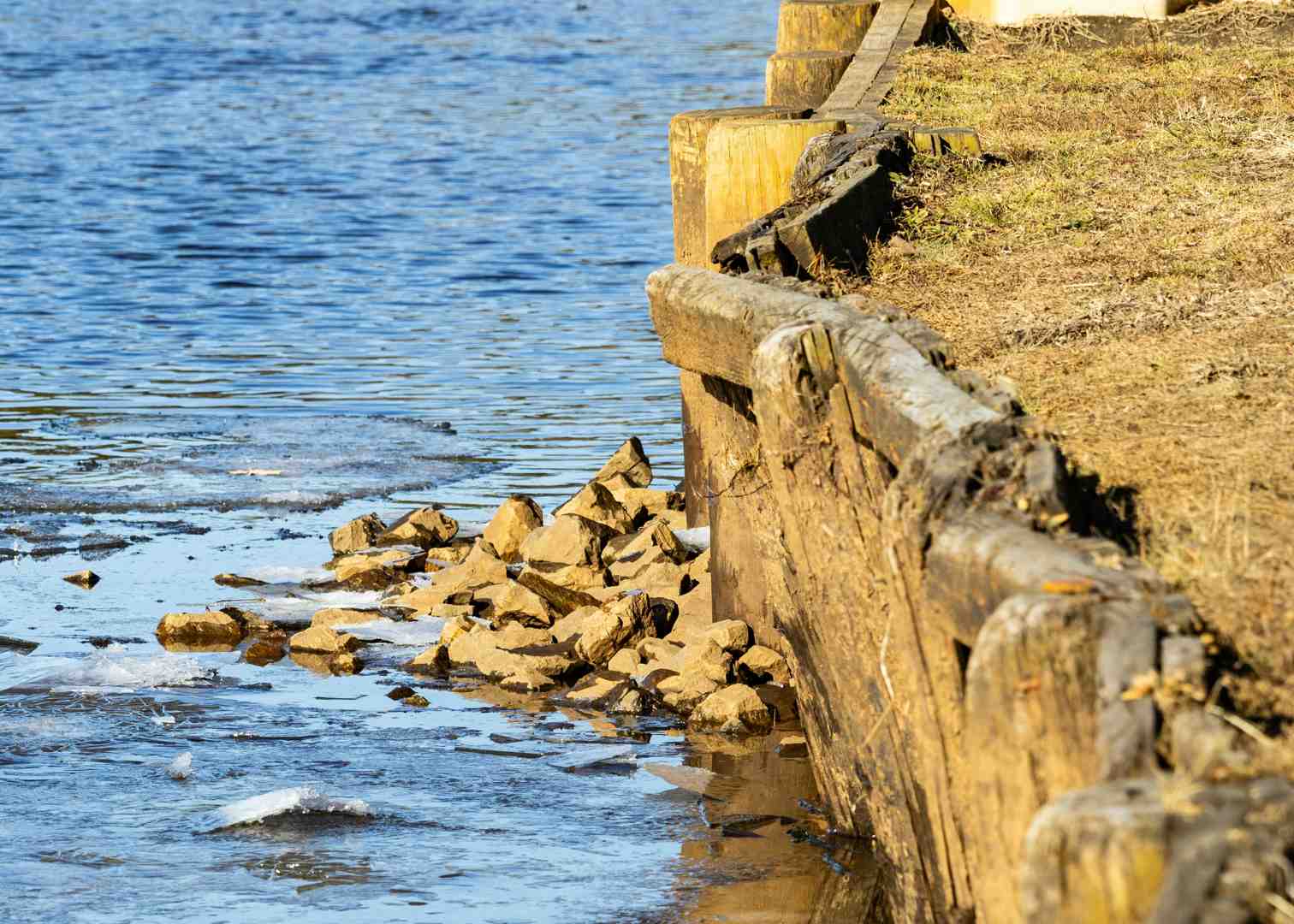
Engineered hybrid solutions, or living shorelines, blend structural elements with natural features to create resilient and ecologically beneficial shoreline protection Long Island. Instead of fighting nature, this approach works with it.
These systems replace vertical walls with engineered slopes and reinforced vegetation. Native, erosion-resistant plants are strategically chosen for their deep root systems, which bind the soil like natural rebar. This living barrier absorbs wave energy, filters runoff, and improves habitat. Temporary supports like biodegradable coir logs can be used to protect slopes while plants establish themselves. The goal is wave energy absorption through friction and vegetation, which reduces scouring and impact on neighboring properties. This approach provides significant habitat improvement, creating spawning and feeding areas for marine life. For more nature-based strategies, explore our Erosion Control Solutions.
How Engineered Hybrid Solutions Protect and Improve Long Island's Coast
Hybrid solutions offer multi-layered benefits. The root systems of native plants create stabilized slopes that prevent land loss and grow stronger over time. We select erosion-resistant plantings like beach grasses and seaside goldenrod that are adapted to coastal conditions. This dense vegetation also provides natural sediment control, trapping particles and preventing them from polluting waterways. A major benefit is water quality improvement, as the plants filter excess nutrients and pollutants from stormwater runoff. These methods are a long-term investment in both your property and the ecological health of our coast. See an example in our case study on engineered shoreline stabilization.
Advantages and Disadvantages of Hybrid Solutions
Hybrid solutions offer substantial ecological benefits, promoting biodiversity and creating critical habitats. Their customizable design can be adapted to unique site conditions, and many owners prefer their natural aesthetic integration. These living systems are also resilient and adaptable, evolving over time and potentially handling sea-level rise better than static structures. However, they may require ongoing maintenance, especially in the early years, to ensure vegetation establishes. They are also not suitable for all high-energy sites, where more substantial structural components may be needed. There is a time to establish factor, as full protection is not immediate. Finally, they often require more space than a vertical bulkhead. The right choice depends on a thorough assessment of your property and goals. Explore more strategies in our erosion control solutions.
Strategic Defense: Planning Your Shoreline Protection Project
A successful shoreline protection Long Island project requires strategic planning. It's about building the right solution for your specific needs.
- Site Assessment: A comprehensive evaluation of your property's erosion patterns, soil composition, and existing conditions is the first step.
- Defining Goals: Clearly defining whether your priority is maximum protection, habitat improvement, or aesthetics helps determine the best approach.
- Budgeting: We provide transparent cost estimates for different methods, considering both initial construction and long-term maintenance.
- Long-Term Maintenance: We discuss the upkeep required for each option so you can make a fully informed decision.
Effective marine project management ensures all these factors are considered from start to finish.
Key Considerations for Choosing the Right Method
Selecting the optimal shoreline protection Long Island method depends on several critical factors:
- Wave Energy: This is the most crucial factor. Low-energy environments like protected bays are suited for hybrid solutions, while high-energy open coastlines often require robust structural defenses.
- Soil Type: The stability of sand, clay, or silt dictates which protection methods will be effective.
- Slope Stability: Gentle slopes can accommodate soft solutions, while steep, unstable banks may need structural reinforcement.
- Water Levels: Designs must account for tides and projected sea-level rise to ensure long-term effectiveness.
- Adjacent Properties: Solutions must be designed to prevent negative impacts, like flanking erosion, on neighboring properties.
Understanding these factors ensures a sustainable and compliant project. For more on design, see our guide on marine structures design.
Navigating the Maze: Permitting for Shoreline Protection on Long Island
Permitting is one of the most complex parts of a shoreline protection Long Island project, involving a web of local, state, and federal regulations.

Key agencies include:
- NYSDEC (New York State Department of Environmental Conservation): Oversees activities in wetlands and navigable waters, generally preferring ecologically sustainable techniques.
- U.S. Army Corps of Engineers (ACOE): Has jurisdiction over "waters of the United States" and regulates projects involving dredging, filling, or structures.
- Local Town/Village Regulations: Municipalities have their own zoning, building codes, and waterfront policies.
New York's Joint Application Form can streamline submissions, but navigating each agency's specific requirements demands expertise. Attempting this process without professional guidance can lead to costly delays or denials. Our team manages this complex process on your behalf, ensuring compliance and smooth project progression. For official guidance, see the Shoreline Stabilization - NYSDEC page.
The Critical Role of a Professional Marine Contractor
Your choice of marine contractor is as important as the protection method itself. Shoreline protection Long Island is a specialized field that demands more than a general contractor can offer.
- Engineering Knowledge: A professional marine contractor works with engineers to design solutions based on a deep understanding of coastal dynamics, hydrodynamics, and soil mechanics.
- Material Science: We know which materials—vinyl, marine-grade concrete, treated timbers—will withstand saltwater, marine borers, and extreme weather.
- Permitting Expertise: An experienced contractor can steer the complex regulatory landscape efficiently, saving you time and money.
- Proper Installation: Expert installation with specialized equipment is essential. Improper work can lead to premature failure and increased erosion.
Investing in a qualified contractor is the best way to avoid the high cost of a failed system. Trusting a dedicated specialist like us means investing in peace of mind and long-term protection. Learn more about our marine construction contractor services.
Frequently Asked Questions about Shoreline Protection on Long Island
How much does shoreline protection cost on Long Island?
The cost of shoreline protection Long Island varies widely based on the method, materials, site complexity, and shoreline length. Structural solutions like bulkheads generally have higher upfront costs, while hybrid solutions may have lower initial costs but require maintenance. The only way to get an accurate estimate is through a site-specific assessment and custom quote from a professional marine contractor.
How long do shoreline protection structures last?
The lifespan depends on materials, installation quality, and environmental forces. General estimates are:
- Vinyl seawalls: 40+ years
- Marine-grade concrete: 50-75+ years
- Pressure-treated timber: 20-30 years
- Engineered hybrid solutions: 20-50+ years, as they can adapt and strengthen over time.A well-designed and expertly installed system offers the best chance for long-term durability.
Can I build my own seawall or bulkhead?
We strongly discourage DIY shoreline projects. Shoreline protection Long Island is a highly specialized field requiring:
- Engineering Expertise: Proper design involves complex calculations to handle wave forces and soil pressure. An incorrect design will likely fail.
- Specialized Materials and Equipment: Marine construction uses heavy-duty materials and equipment like pile drivers that are not available to homeowners.
- Complex Permitting: Navigating the maze of agency approvals (NYSDEC, ACOE, local) is extremely difficult without professional experience and can lead to rejections or fines.
- Risk and Liability: A failed structure is a liability. It can worsen erosion, damage neighboring properties, and lead to significant financial and legal trouble.Trusting a professional marine contractor ensures your project is designed and built correctly, safely, and in compliance with all regulations.
Securing Your Slice of Paradise for Generations to Come
Protecting Long Island's coastline is a collective effort involving state agencies, local towns, and property owners like you. Every shoreline protection Long Island project contributes to our region's overall coastal resilience.
When you invest in protecting your waterfront property, you safeguard your investment, preserve Long Island's natural beauty, and help stabilize our coastal communities for the future.
The choice between a robust bulkhead or seawall and a custom-engineered hybrid solution depends on your site, goals, and budget. What matters most is that the project is well-planned and professionally executed.
This is where generational expertise makes the difference. At Pearce Marine Construction, we have spent years mastering the challenges of Long Island's coastline. We understand the local soil, tides, and regulatory problems. We bring meticulous craftsmanship to every project, from installing a concrete bulkhead in Suffolk County to creating a living shoreline in Nassau County.
Your waterfront property is your slice of paradise. Taking strategic action now defends it against erosion and climate change. For expert guidance rooted in experience and a commitment to quality, trust Pearce Marine Construction to safeguard your waterfront investment and help preserve our coastal community for generations to come.



Bring Your Vision to Life
Whether you're planning a custom dock, seawall, or boat lift, our experienced team is ready to deliver high-quality marine construction tailored to your needs. Pearce Marine Construction brings craftsmanship, precision, and a deep understanding of Florida’s waterways to every project. Let us help you create a durable, beautiful solution that stands the test of time. Get in touch now for a personalized estimate!