
Hold Fast and Avoid Disasters with Proper Boat Cleat Installation

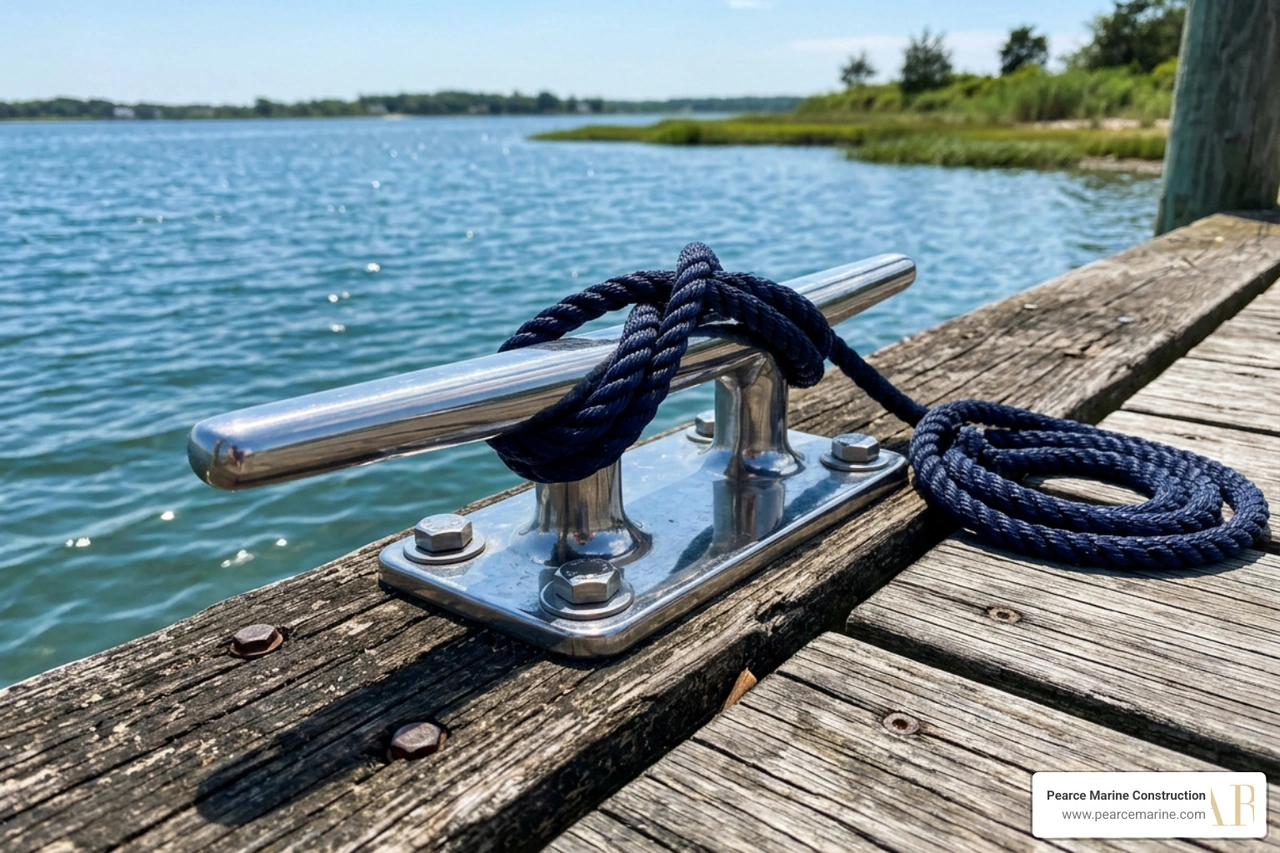
Why Proper Boat Cleat Installation Can Mean the Difference Between a Secure Boat and a Disaster
Professional boat cleat installation is one of the most critical steps in protecting your vessel and your dock — and it requires specialized marine construction expertise to execute correctly.
How Pearce Marine Construction installs a boat cleat correctly:
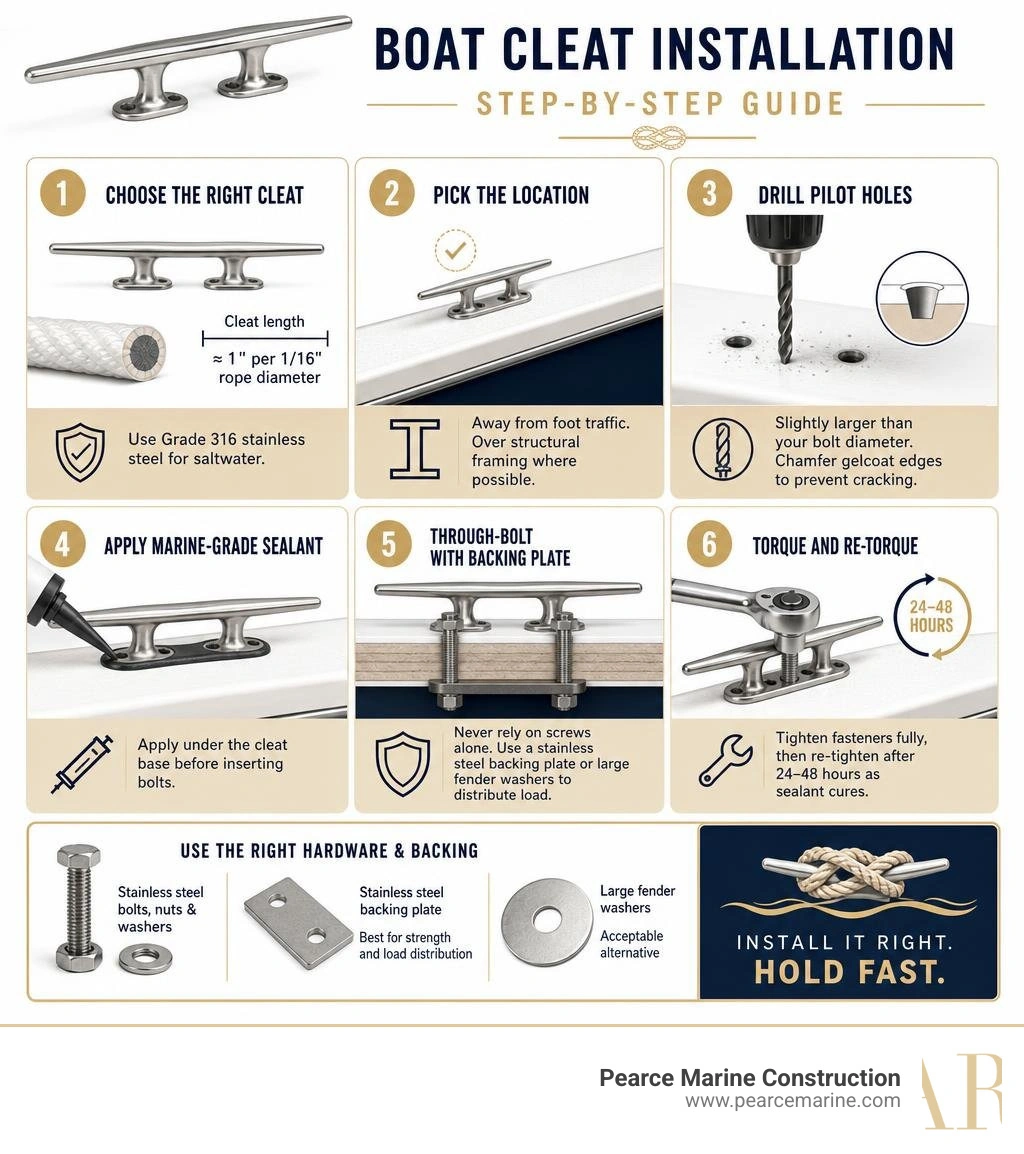
- Choose the right cleat — Grade 316 stainless steel for saltwater; sized at roughly 1 inch of cleat length per 1/16 inch of rope diameter
- Pick the location — Away from foot traffic, over structural framing where possible
- Drill pilot holes — Slightly larger than your bolt diameter; chamfer gelcoat edges to prevent cracking
- Apply marine-grade sealant — Under the cleat base before inserting bolts
- Through-bolt with a backing plate — Never rely on screws alone; use a stainless steel backing plate or large fender washers to distribute load
- Torque and re-torque — Tighten fasteners fully, then re-tighten after 24–48 hours as sealant cures
Improperly installed cleats are one of the leading causes of mooring failures. Cleats fastened with undersized bolts or no backing plate can pull free under moderate load — turning a piece of hardware into a dangerous projectile and leaving your boat adrift.
On Long Island, where docks in Nassau and Suffolk Counties face Nor'easters, freeze-thaw cycles, and relentless saltwater corrosion, the stakes are even higher. A cleat that holds fine on a calm summer day can fail spectacularly in October.
This guide covers the professional material selection, step-by-step installation techniques, structural challenges, and long-term maintenance standards utilized by marine contractors to ensure your cleats hold fast when it matters most.
Easy boat cleat installation glossary:
Engineering Standards for Professional Boat Cleat Installation on Long Island Docks
When we design and build marine infrastructure across Long Island's South Shore and North Shore, we treat hardware installation with the same engineering rigor as driving foundation piles. A dock cleat is not just a decorative accessory; it is the single point of contact where the immense kinetic energy of a moving vessel meets the static resistance of your dock.
In areas like Southampton, West Islip, and West Hampton, high winds and heavy wakes exert multi-ton loads on mooring lines. Standard residential dock builders, such as Bayview Dockbuilders or Kevel, may occasionally take shortcuts by using standard lag screws or skipping heavy-duty backing plates to save time. At Pearce Marine Construction, our 2026 marine engineering standards dictate that every single boat cleat installation must be treated as a structural load point capable of withstanding extreme hurricane-force surges.
To ensure absolute safety, we strictly adhere to rigorous mechanical standards. Understanding how to properly install a boat cleat requires looking beneath the decking boards to see how the load is transferred directly into the dock’s structural framing. For high-performance docks, securing these load points correctly prevents catastrophic deck splintering. You can read more info about dock building services to understand how these elements integrate into a complete marine system.
Selecting Marine-Grade Materials for Heavy-Duty Boat Cleat Installation
The harsh, high-salinity waters of Nassau and Suffolk Counties will rapidly destroy sub-par metals. When selecting hardware, we exclusively use Grade 316 marine-grade stainless steel. While galvanized steel is strong and cost-effective for commercial applications, it eventually rusts and stains your beautiful custom decking. Aluminum is lightweight but performs poorly under the heavy, repetitive loads of larger vessels and is highly susceptible to galvanic corrosion when in contact with dissimilar metals.
Galvanic electrolysis occurs when two different metals (like stainless steel bolts passing through an aluminum cleat) interact in a wet, salty environment. This creates a miniature battery that rapidly eats away the weaker metal, leading to sudden hardware failure.
To prevent failure, we match the cleat material to the vessel size and mooring lines using a precise engineering formula. A standard rule of thumb is that your cleat length should be approximately one inch for every 1/16 inch of dock line diameter. Alternatively, we use the formula:
$$\text{Cleat Length (inches)} = \text{Boat Length (feet)} \times 0.2$$
For a comprehensive breakdown of hardware styles, including traditional horn cleats and low-profile S-style cleats, see The Ultimate Guide to Boat Cleats. Choosing the right materials is just the first step; you can find more info about dock accessories to see how we pair these cleats with high-performance bumpers and whips.
Step-by-Step Engineering Process for Secure Boat Cleat Installation
A secure installation is entirely dependent on the method of fastening. We never rely on wood screws or lag bolts driven directly into the deck boards. Instead, our team utilizes a strict through-bolting process:
- Step 1: Structural Alignment: We position the cleat directly over the main structural timber joists of the dock, rather than the decking planks alone.
- Step 2: Drilling and Gelcoat Protection: When mounting to fiberglass boat gunwales or composite dock surfaces, we drill pilot holes slightly larger than the bolt diameter. We then chamfer the edges of the holes to prevent the gelcoat or composite cap from cracking under stress.
- Step 3: Bedding and Sealing: We apply a premium marine-grade sealant, such as Boat Life LifeSeal, to the underside of the cleat and inside the bolt holes. LifeSeal remains highly flexible and resists UV degradation better than rigid adhesives like 3M 5200, allowing for future hardware servicing if necessary.
- Step 4: Mechanical Fastening: We push the Grade 316 stainless steel bolts through, securing them underneath with a backing plate, lock washers, and nylon-locking nuts.
- Step 5: Curing and Torqueing: The fasteners are snugged down, the excess sealant is cleaned, and we perform a secondary torque check after 24 to 48 hours once the sealant has fully settled.
For more technical details on this process, refer to this How to install a Dock Cleat: Step-by-Step Guide. This professional approach ensures a watertight, structurally sound connection. To see how this fits into our broader construction projects, check out more info about dock installation.
Overcoming Structural Challenges: No-Access Hull and Dock Installations
One of the most common challenges we encounter on existing docks or closed-gunwale boats is a complete lack of access to the underside of the mounting surface. When we cannot physically reach the back to thread a nut onto a bolt, standard through-bolting is impossible.
To overcome this, our marine carpenters utilize specialized blind-fastening techniques. For aluminum boat hulls, we use heavy-duty stainless steel rivet-nuts (riv-nuts) or threaded inserts that expand inside the pre-drilled hole, creating a permanent, threaded socket. On fiberglass vessels, we may install a clean, watertight access hatch to reach the interior bulkhead, allowing us to place a proper backing plate.
For high-end, flush-deck designs, we often install retractable or pop-up cleats. These low-profile options eliminate tripping hazards but require a larger central cutout. When installing these systems, we route dedicated drain tubes from the cleat's recessed canister directly to the bilge or gravity drains to prevent water from pooling inside the structure.
For step-by-step instructions on these low-profile systems, see Installing Retractable Cleats | Boating Mag or download the Attwood Neat Cleat User Manual download pdf.
The Role of Backing Plates and Load Distribution in Dock Construction
The secret to a cleat that never pulls out lies entirely beneath the deck. Standard fender washers are simply not enough to distribute the massive loads generated during a coastal storm. Without a solid backing plate, the bolts will easily pull through timber joists or composite decking under extreme tension.
We custom-fabricate backing plates from marine-grade aluminum, heavy-duty stainless steel, or 1/2-inch marine plywood sealed in epoxy. The backing plate must be at least four times the diameter of the bolt width to spread the load across a wide surface area. This ensures that the force is distributed throughout the entire structural framing of the dock, rather than concentrated on a single deck board.
| Backing Plate Material | Thickness (Min) | Best Use Case | Load Distribution Rating |
|---|---|---|---|
| Grade 316 Stainless Steel | 1/4 inch | Heavy saltwater mooring, large vessels | Exceptional |
| Marine-Grade Aluminum | 3/8 inch | Aluminum docks, medium-duty vessels | Very High |
| Epoxy-Sealed Marine Plywood | 1/2 inch | Timber docks, light-to-medium loads | High |
By utilizing these heavy-duty backing plates, we prevent the structural timber joists from splitting or warping over time. For more insight into how we build our heavy-duty substructures, read more info about boat dock construction.
Long-Term Structural Integrity and Professional Dock Maintenance
A professional boat cleat installation is only as good as the maintenance it receives. On Long Island, our marine structures are constantly subjected to extreme environmental forces. The changing of the seasons brings severe freeze-thaw cycles that cause timber to expand and contract, which can gradually loosen even the tightest bolts.
Furthermore, autumn Nor'easters and winter ice put immense strain on dock hardware. If a cleat has even a tiny amount of play, the constant rocking motion of the boat will quickly enlarge the bolt holes, compromise the waterproof sealant, and allow saltwater to seep into the wood or composite deck. This moisture intrusion leads to rot, structural decay, and eventual failure of the entire mooring point.
Regular inspections are crucial to catching these issues before they turn into a disaster. For more information on identifying early signs of structural wear, you can read more info about boat dock repair.
Preventing Saltwater Corrosion and Freeze-Thaw Damage in Nassau and Suffolk Counties
Long Island's unique geography means our docks must withstand both the high-energy wave action of the Great South Bay and the tight canals of Babylon, Patchogue, and Freeport, where constant boat wakes create non-stop structural stress.
To combat saltwater corrosion and freeze-thaw damage, Pearce Marine Construction provides comprehensive, professional dock inspections and maintenance services. As a premier woman-owned marine construction company in Long Island, NY, we bring generational expertise and meticulous craftsmanship to every project. We serve residential, commercial, and public clients across Nassau and Suffolk Counties, including Massapequa, Merrick, Wantagh, Bellmore, Brightwaters, West Islip, Babylon, West Hampton, Southampton, Bayshore, Cold Spring Harbor, Huntington, and Lloyd Harbor.
Our team inspects your dock's hardware, checks for galvanic corrosion, tightens fasteners to exact engineering specs, and replaces worn-out components with premium marine-grade materials. If your existing mooring system is showing signs of wear, explore more info about dock repair near me to see how we can reinforce your setup.
Don't wait for a storm to test the limits of your dock hardware. Contact Pearce Marine Construction for professional dock and floating dock services today, and let our family protect yours with craftsmanship built to last for generations.
_compressed.webp)

Bring Your Vision to Life
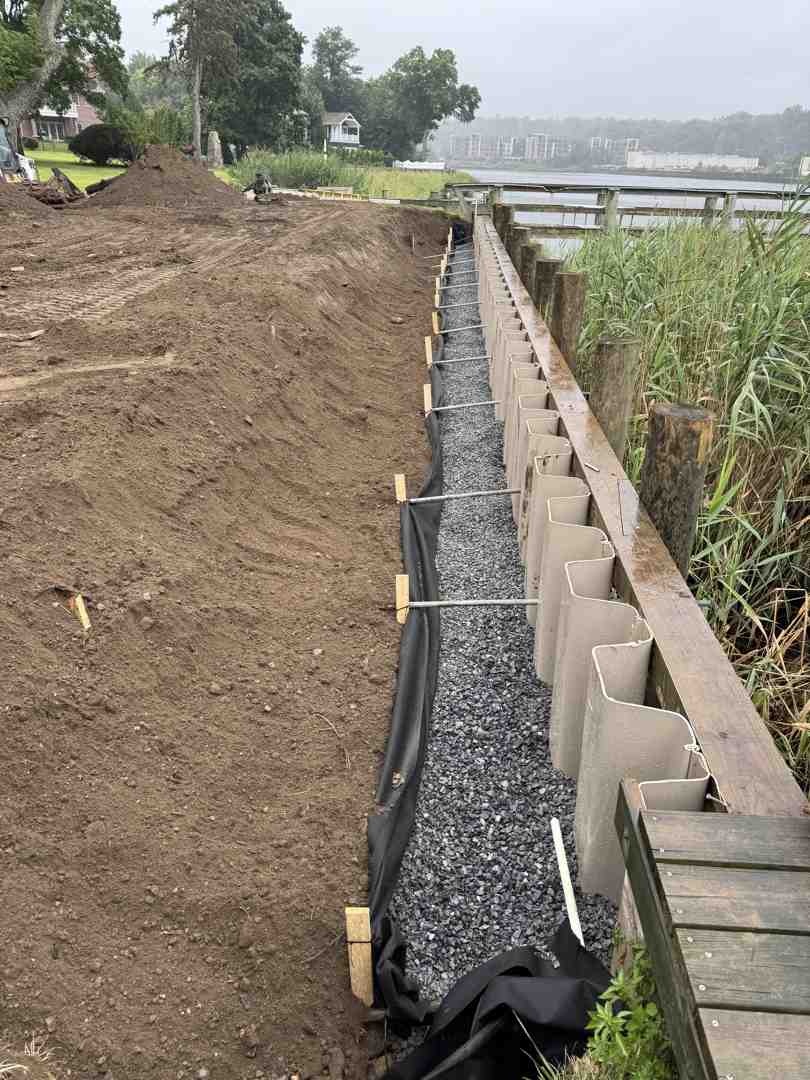
Whether you're planning a custom dock, seawall, or boat lift, our experienced team is ready to deliver high-quality marine construction tailored to your needs. Pearce Marine Construction brings craftsmanship, precision, and a deep understanding of Florida’s waterways to every project. Let us help you create a durable, beautiful solution that stands the test of time. Get in touch now for a personalized estimate!