
A – Z Guide to Boat Dock Installation


Why Proper Boat Dock Installation Matters
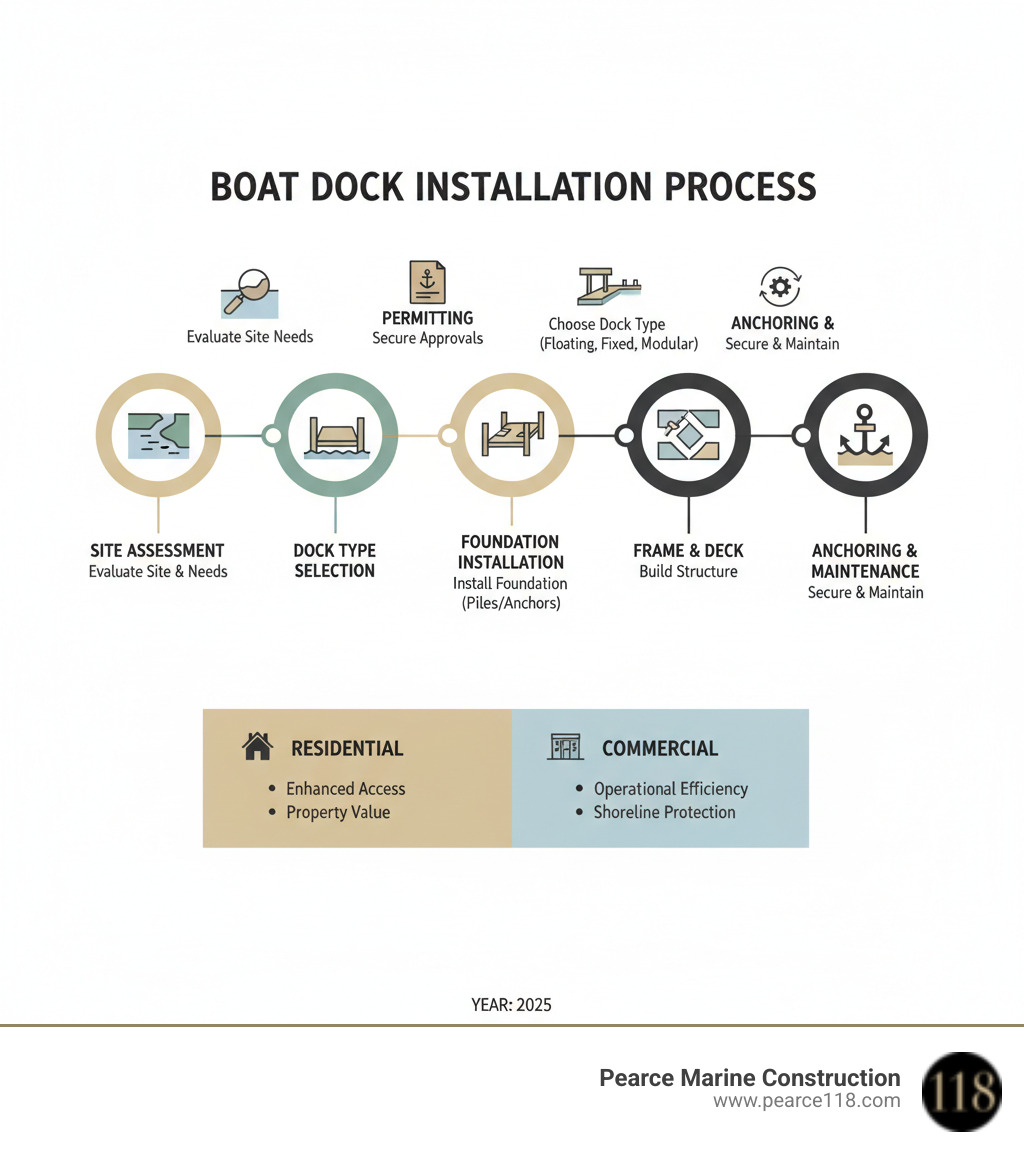
Boat dock installation is a critical process that transforms your waterfront into a functional space for recreation and shoreline protection. A professional installation involves site assessment, permitting, dock selection, foundation work, assembly, and anchoring. A well-built dock is an extension of your property that enhances its usability and provides safe water access for decades.
Conversely, poor installation leads to costly problems. Improperly anchored docks can shift, sink, or suffer structural damage. Skipping permits can result in fines or forced removal, while choosing the wrong dock type for your water conditions creates instability and safety hazards.
Professional boat dock installation requires expertise in marine construction, knowledge of local regulations, and specialized equipment like pile drivers and barges. The process varies significantly based on waterfront conditions—a shallow, sandy bottom requires different techniques than deep water with a rocky seafloor.
For Long Island property owners, installation must account for tidal fluctuations, coastal storms, and strict environmental regulations. This guide walks you through the phases of a professional dock installation so you understand what to expect.
Pre-Installation: Planning Your Waterfront Project
Before construction begins, successful boat dock installation starts with careful planning. This phase involves assessing your waterfront, navigating regulations, and selecting a design that will serve you for decades. Rushing this stage leads to costly mistakes.
Understanding Your Waterfront Conditions
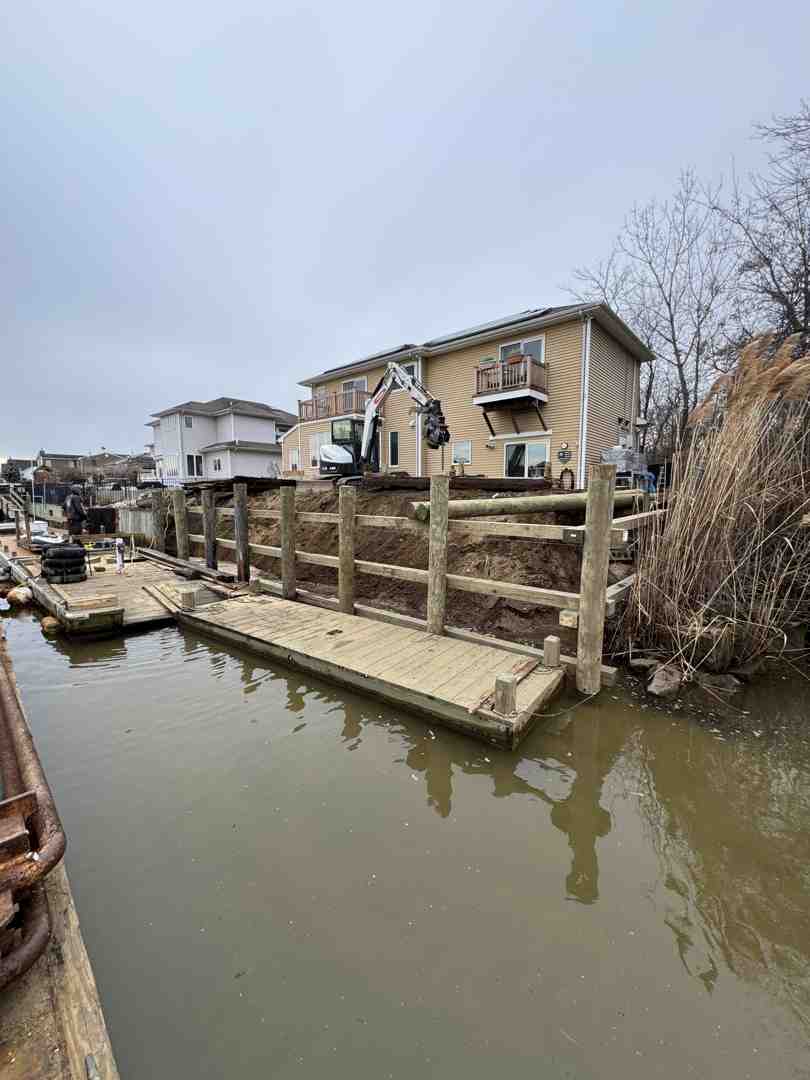
No two waterfronts are alike, so a thorough site assessment is our first step. We examine the physical characteristics that determine the right dock type and installation method.
- Water depth is a primary factor. Pipe docks work in shallow water (under 7 feet), while floating docks are better for deeper areas.
- Bottom composition (mud, sand, or rock) dictates the anchoring approach. Soft bottoms may need larger anchors or specialized piling techniques, while rocky bottoms can make pile driving difficult.
- Water level fluctuation from tides or seasonal changes makes floating docks a smart choice, as they rise and fall with the water. Stationary docks are better where water levels are constant.
- Wave action from wind or boat traffic puts stress on a dock. Stationary docks with sturdy pilings offer superior stability in rougher conditions.
- Shoreline slope affects the practicality of roll-in or sectional docks, which work best with a gradual slope.
These factors are especially important on Long Island. Effective Shoreline Protection Nassau is woven into every project we design.
Navigating Permits and Regulations
Permitting is a complex but mandatory step. Skipping it can lead to fines or removal orders. The regulatory landscape includes:
- Local municipal rules governing zoning, setbacks, and construction standards.
- Homeowners association (HOA) guidelines, which often have aesthetic requirements.
- State and federal agencies like the NYS DEC and the U.S. Army Corps of Engineers (USACE), which regulate work in navigable waters and wetlands to protect the environment.
Permit applications require detailed drawings and assessments, a process that can take weeks or months. Our experience with Massapequa Marine Construction Permits and other Long Island municipalities helps streamline approvals. Working with experienced Dock Builders Long Island means you won't steer these waters alone.
Choosing the Right Type of Dock
With site conditions and regulations understood, you can select the best dock for your needs and budget.
- Stationary Docks: Built on driven pilings, they offer exceptional stability for deep water or heavy wave action. They are a permanent solution but do not adjust to water level changes.
- Floating Docks: These adapt to changing water levels, making them ideal for tidal areas or deep water with soft bottoms. They are modular but less stable in rough conditions.
- Roll-in Docks: Wheeled sections allow for seasonal removal, perfect for areas with harsh winters. They require shallow water and a firm, gradual slope.
- Sectional Docks: Similar to roll-in docks but carried, making them suitable for irregular shorelines. They offer modularity but require manual assembly.
- Crib Docks: Extremely durable, stone-filled structures framed with timber. They offer maximum stability but are costly and labor-intensive to install.
- Pipe Docks: A simple, inexpensive option for shallow water (under 7 feet) with a firm bottom. They are not suitable for deep water or soft bottoms.
We specialize in custom Boat Docks and Floating Docks, tailoring each installation to your property’s unique needs.
The Professional Boat Dock Installation Process
Once planning is complete, the physical boat dock installation begins. This phase requires specialized equipment, skilled labor, and a commitment to safety to build a structure that withstands the marine environment.
Essential Tools and Materials for a Professional Build
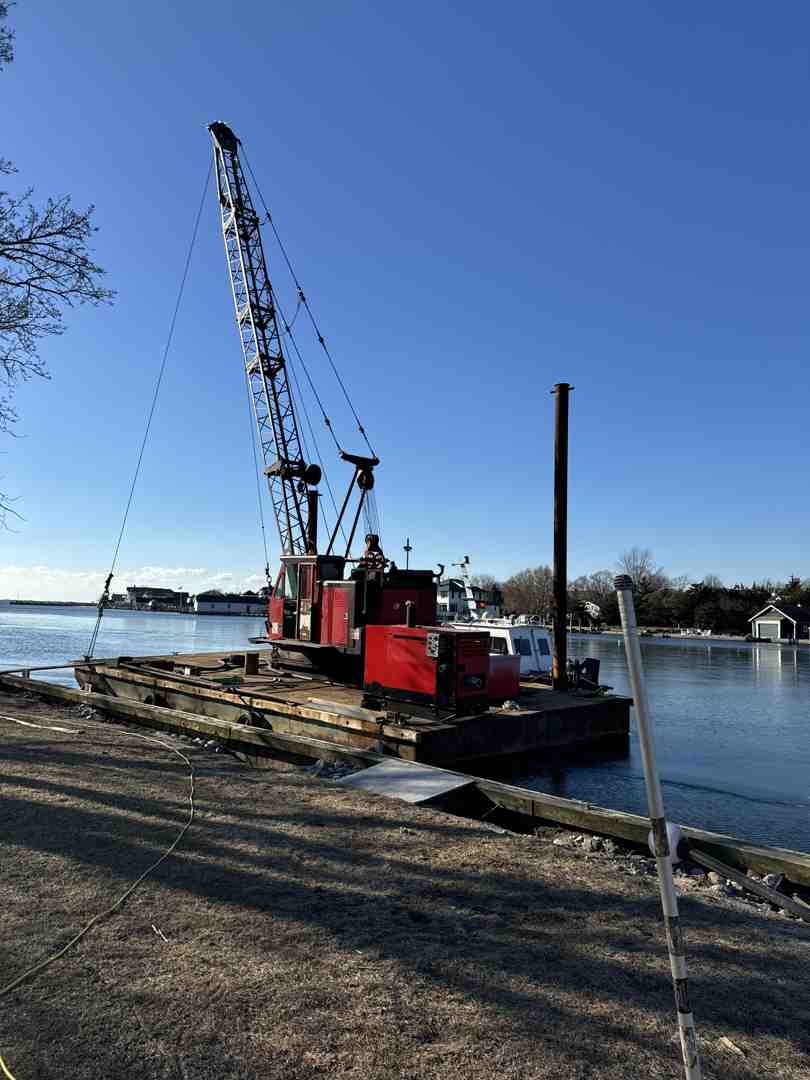
A professional build uses equipment not found at a hardware store. Pile drivers are essential for driving pilings deep into the seafloor for a stationary dock's foundation. We use barges and cranes to transport heavy materials over water and welders for fabricating metal frames. Precision tools like levels and socket sets ensure every connection is secure.
Material selection is critical for longevity. Aluminum alloys in marine construction offer superior corrosion resistance, making them ideal for frames. Pressure-treated timber is a traditional choice for frames and decking, treated to resist rot and insects. Composite decking, made from recycled materials, provides the look of wood without the maintenance, and it excels in harsh marine conditions. You can learn more about Decking and Railings on our site.
Finally, all hardware—fasteners, brackets, and connectors—must be hot-dipped galvanized or stainless steel. Using the wrong hardware can lead to rust and structural failure, a costly mistake that proper Marine Construction Safety practices prevent.
Step-by-Step Guide to a Professional Boat Dock Installation
Every boat dock installation follows a systematic process:
- Site Preparation: We clear the area and ensure safe access for our equipment, navigating any steep grades or protected vegetation carefully.
- Foundation Installation: For stationary docks, we drive wood, steel, or composite pilings to a depth determined by the site assessment. For floating docks, we position and secure heavy concrete anchors.
- Assembly: Whenever possible, we assemble dock sections on land for safety and efficiency before positioning them in the water.
- Frame and Decking: The frame is assembled and leveled, followed by the installation of decking boards with corrosion-resistant fasteners.
- Accessory Attachment: We install cleats, bumpers, ladders, and other custom features, ensuring they are securely fastened to marine construction standards.
- Final Inspection: We conduct a thorough evaluation of the entire structure to ensure it is level, secure, and ready to perform for years. Our experience with Dock Construction Nassau has taught us that this final check prevents future problems.
Safety Best Practices and Common Mistakes to Avoid
Working over water demands respect. Our crew wears personal flotation devices, and we use stable work platforms. We never work in high winds or rough water. Any electrical wiring for lighting or lifts is handled by licensed electricians who specialize in marine codes.
Common mistakes we see from inexperienced contractors stem from cutting corners:
- Skipping site assessment, which leads to choosing the wrong dock type or inadequate anchoring.
- Ignoring permit requirements, resulting in fines and legal headaches.
- Incorrect material selection, such as using untreated wood or non-marine-grade fasteners, which guarantees premature failure.
- Improper leveling, which creates tripping hazards and uneven stress on the structure.
Working with an experienced Marine Construction Contractor ensures these critical errors are avoided from the start.
Anchoring Systems: The Foundation of Dock Stability
Your dock's anchoring system is what secures it against constant forces from wind, waves, and currents. A dock without proper anchoring is at risk of drifting away. Different dock types and water conditions require different anchoring approaches.
Anchoring for Stationary and Pile Docks
Stationary docks require a rock-solid foundation, which is achieved with driven pilings. Using specialized equipment, we drive treated wood, steel, or composite pilings deep into the seafloor. Our expertise in Pile Driving ensures the pilings are set at the correct depth to withstand a lifetime of lateral forces.
Helical piles, which are screwed into the earth, are another excellent option that provides exceptional resistance to uplift. In areas with strong currents, we add cross-bracing between pilings to create a rigid framework that distributes forces evenly. Our experience with Marine Pile Installation across Long Island means we know which technique works best for any seafloor, from soft mud to hard rock.
Secure Methods for a Floating Dock Installation
Floating docks need to be kept in place while still being allowed to rise and fall with the water. The most reliable method is using concrete block anchors. These blocks must be sufficiently heavy—often 250 pounds or more—as concrete loses about a third of its weight underwater. The required weight depends on factors like boat size and local conditions, which we calculate for each project.
We connect these anchors with heavy-duty, galvanized steel chains in a crisscross pattern for maximum stability. The chain length is calculated to ensure the proper shape and tension, with extra length for seasonal adjustments. For stand-alone mooring systems, the seafloor must allow for at least 36 inches of penetration to ensure stability.
When a floating dock connects to a fixed structure like a bulkhead, we can use stiff-arm anchoring. These rigid arms prevent side-to-side movement while allowing vertical motion. Proper Anchoring a Floating Dock is critical for the success of your boat dock installation. You can learn more on our pages about How to Anchor a Floating Dock and Floating Dock Anchoring Systems.
Post-Installation: Maintenance and Professional Services
Your boat dock installation is complete, but ongoing attention is needed to maintain its safety, function, and appearance. Regular care catches small issues before they become expensive repairs.
Dock Maintenance Requirements
We recommend a thorough inspection at least once a year, ideally in the spring. Key maintenance tasks include:
- Regular Inspections: Look for signs of wear like rusted bolts, loose connections, cracked decking, or any shifting in the structure.
- Cleaning: Use an environmentally friendly cleaner to remove slippery algae and grime. A clean dock is a safe dock.
- Hardware Tightening: The constant movement from waves and foot traffic can loosen bolts. Check and tighten all connections periodically.
- Wood Protection: If you have a wooden dock, regular sealing or staining protects it from UV rays and moisture.
- Anchor System Checks: For floating docks, ensure chains are properly tensioned and free of significant rust. For roll-in docks, ensure proper off-season storage.
Staying on top of maintenance extends the life of your dock. Our Repairs and Maintenance services can help. Whether you need Dock Repair Near Me or comprehensive Long Island Dock Repair, we have you covered.
Why and When to Hire a Professional
While some maintenance is DIY-friendly, many situations require a professional.
- Complex Installations and Repairs: Work involving pile driving, structural modifications, or deep water requires specialized equipment and expertise.
- Challenging Conditions: Professionals have the tools and knowledge to work safely and effectively in deep water, rough conditions, or on difficult seabeds.
- Navigating Regulations: If a repair requires a permit, we know the process to ensure your project remains compliant, saving you from potential fines.
- Structural Integrity: For major repairs or modifications, hiring a professional ensures the work is done correctly and safely, protecting your investment.
We offer Full Service Marine Construction for every phase of your dock's life, from installation to ongoing maintenance and repairs.
Frequently Asked Questions about Dock Installation
How long does it take to install a boat dock?
The timeline for a boat dock installation depends on the project's complexity. A simple, pre-fabricated roll-in or sectional dock might take a few hours to assemble. However, custom, permanent structures like pile-driven docks are much more involved. The process includes planning, engineering, and permitting, which can take weeks or months. The on-site construction by a professional Marine Construction Company can then span several days or weeks, depending on water conditions and project scale. Rushing a quality installation is never a good idea.
What is the most durable material for a boat dock?
The most durable material depends on your environment, budget, and maintenance preferences. For frames, aluminum alloys in marine construction: characteristics, application, and problems from a fabrication viewpoint are a top choice for their strength and corrosion resistance. For decking, composite materials are popular for their low maintenance and resistance to rot and splintering. Marine-grade pressure-treated wood is a traditional, durable option that requires periodic sealing. Regardless of the primary material, using hot-dipped galvanized or stainless steel hardware is non-negotiable for longevity.
Can I install a dock myself?
While some lightweight, modular dock kits are designed for DIY assembly in calm, shallow water, most boat dock installations require professional expertise. Any project involving deep water, pile driving, soft or rocky bottoms, or significant wave action demands the specialized equipment and knowledge of a professional. Furthermore, navigating the complex maze of local, state, and federal permits is a challenge best left to an experienced contractor. An experienced Dock and Marine Construction contractor ensures structural integrity, safety, and full compliance with all regulations, protecting your investment for years to come.
Your Partner in Waterfront Construction
A successful boat dock installation is a significant investment in your property. From the initial site assessment to the final inspection, every step demands careful planning and expert craftsmanship. The difference between a dock that lasts for decades and one that requires constant repairs lies in the expertise behind the build.
For property owners in Nassau and Suffolk County, Long Island's unique waterfront challenges—from tidal fluctuations to coastal storms—require a contractor who understands local conditions. Pearce Marine Construction brings generations of marine construction expertise to your waterfront. As a woman-owned company with deep roots in the community, we build custom, resilient solutions that protect your shoreline and enhance your use of the property.
We handle everything—from navigating the permitting maze to driving the final piling—so you can focus on enjoying your waterfront. Our team has the specialized equipment and hands-on experience to deliver results that exceed expectations.
Ready to transform your waterfront property? Explore our boat dock and floating dock services to get started, or reach out to discuss your project.



Bring Your Vision to Life
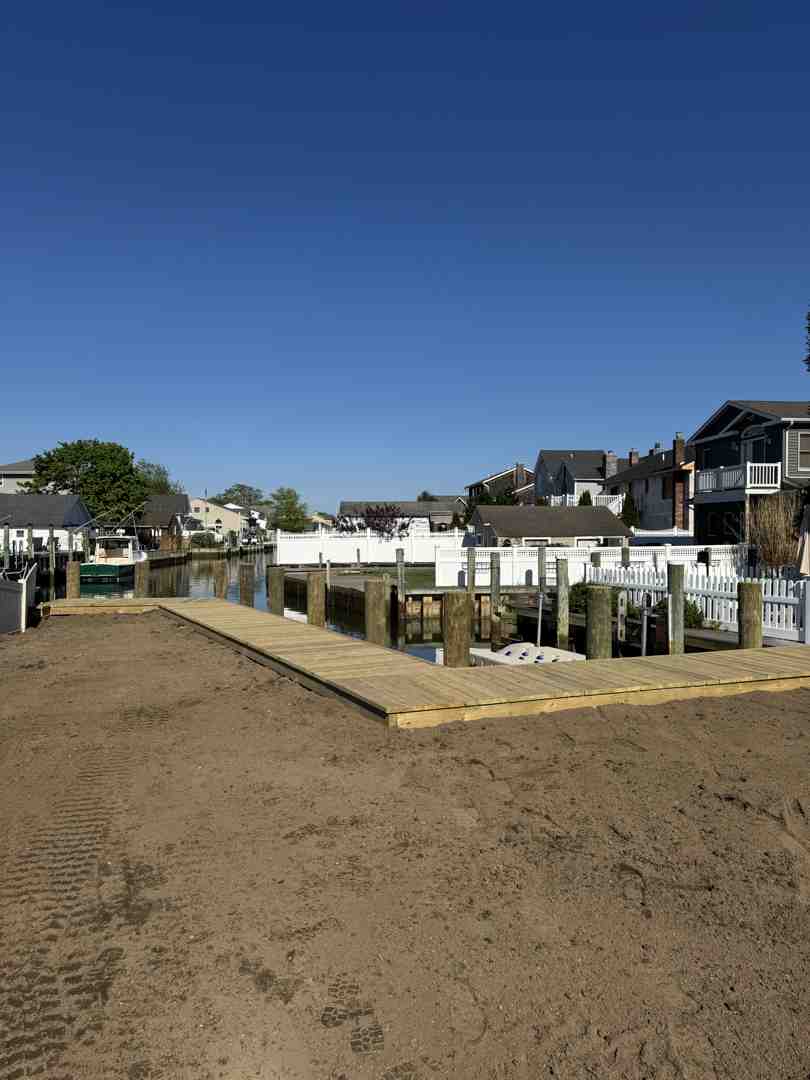
Whether you're planning a custom dock, seawall, or boat lift, our experienced team is ready to deliver high-quality marine construction tailored to your needs. Pearce Marine Construction brings craftsmanship, precision, and a deep understanding of Florida’s waterways to every project. Let us help you create a durable, beautiful solution that stands the test of time. Get in touch now for a personalized estimate!