
Finding the Perfect Boat Dockage for Your Next Adventure


What Is a Boat Slip — and Do You Need One Built?
A boat slip is a dedicated, three-sided mooring space designed to hold a single vessel securely in place — think of it as a parking spot built right into the water. Unlike an open dock where boats tie up along the side, a slip surrounds your boat on three sides, limiting movement and protecting it from neighboring vessels and dock edges.
Quick answer for Long Island property owners:
- A boat slip is a U-shaped or finger-dock structure that encloses a vessel on three sides
- It offers more protection than a standard tie-up dock
- Slips can be built as fixed or floating structures depending on water depth and tidal conditions
- Custom slip construction on Long Island requires marine-grade materials suited to saltwater environments
- Professional pile driving and anchoring are essential for structural stability in Nassau and Suffolk County waters
If you own waterfront property in places like Southampton, West Islip, or West Hampton, having the right slip structure isn't just a convenience — it's a long-term investment in your shoreline and your vessel's safety.
Building a boat slip the right way means more than laying down some decking. It involves pile selection, anchoring systems, bulkhead integration, and materials that can stand up to Long Island's tidal conditions and storm exposure.
This guide breaks down exactly what goes into designing and building a high-performance boat slip — from structural components to repair and long-term maintenance.

Boat slip vocab to learn:
Engineering and Building a Custom Boat Slip for Long Island Waters
When we talk about marine construction in Nassau County and Suffolk County, we aren't just building for today; we are building for the next twenty to thirty years of tides, salt, and winter ice. A boat slip is an engineered system that must be integrated into your existing shoreline protection.
In areas like Massapequa, Merrick, and Wantagh, the soft sediment of the South Shore requires specific pile-driving techniques to ensure your slip doesn't shift over time. We utilize high-capacity foundation systems, including helical piles and driven timber piles, to create a stable frame for the slip. Helical piles are particularly impressive, capable of supporting more than 50 tons in both compression and tension, making them ideal for the varying forces found in coastal New York.
The first step in our process is determining whether a fixed or floating configuration is best for your specific location.
| Feature | Fixed Boat Slip | Floating Boat Slip |
|---|---|---|
| Best For | Deepwater areas with minimal tide change | Shallow areas or high-tide variance |
| Stability | Rigid and immobile | Moves with the water level |
| Maintenance | Lower long-term mechanical wear | Requires periodic anchor checks |
| Construction | Heavy timber or concrete piles | Piles or specialized anchor systems |
Structural Differences Between a Boat Dock and a Boat Slip
While many people use the terms interchangeably, in marine construction, they are quite different. A boat dock is generally a flat platform where a vessel is moored parallel to the structure. A boat slip, however, features a U-shaped design. We build these by extending "finger docks" out from the main pier or bulkhead.
This three-sided protection is the gold standard for vessel safety. By enclosing the boat, we create multiple mooring points that prevent the vessel from banging against the dock during heavy chop. This configuration is especially vital in high-traffic channels in Babylon or Brightwaters where wake action is a constant concern. For more details on the foundation of these structures, you can explore our boat dock construction guide.
Essential Components of a High-Performance Boat Slip
A high-performance boat slip is only as strong as its weakest connection point. At Pearce Marine Construction, we focus on several critical components:
- Bulkhead Integration: Your slip should be an extension of your shoreline protection. If your bulkhead is failing, your slip will eventually follow. We often perform bulkhead repairs or refacing before installing new finger docks.
- Anchoring Systems: Whether it's a boat dock anchor system for a floating slip or heavy-duty pile driving for a fixed one, the anchoring must be calculated based on the maximum weight and windage of your vessel.
- Marine-Grade Materials: We exclusively use pressure-treated marine-grade timber, composite materials like Trex or TimberTech, and stainless steel or galvanized hardware to resist the corrosive South Shore salt air.
- Power and Water Infrastructure: Modern slips aren't just wood and nails. We integrate unmetered or metered power pedestals and freshwater lines directly into the framing.
Custom Boat Slip Design for Nassau and Suffolk County
No two shorelines in Bellmore or Cold Spring Harbor are identical. Custom design is a necessity, not a luxury. When we sit down to design a boat slip, we look at the vessel's length and beam width. A standard slip might be 10 feet wide, but for larger vessels in West Hampton or Southampton, we may need to engineer "double wells" or wider single wells with heavy-duty boat lifts.
Vessel size limits are a major factor. For example, some municipal marinas handle boats up to 26 feet with an 8.5-foot beam, while private residential slips in Suffolk County can be engineered to accommodate yachts up to 100 feet or more. Our custom boat dock design and installation services ensure that the slip is perfectly tailored to your specific boat and water depth requirements.
Professional Maintenance and Repair of Marine Infrastructure
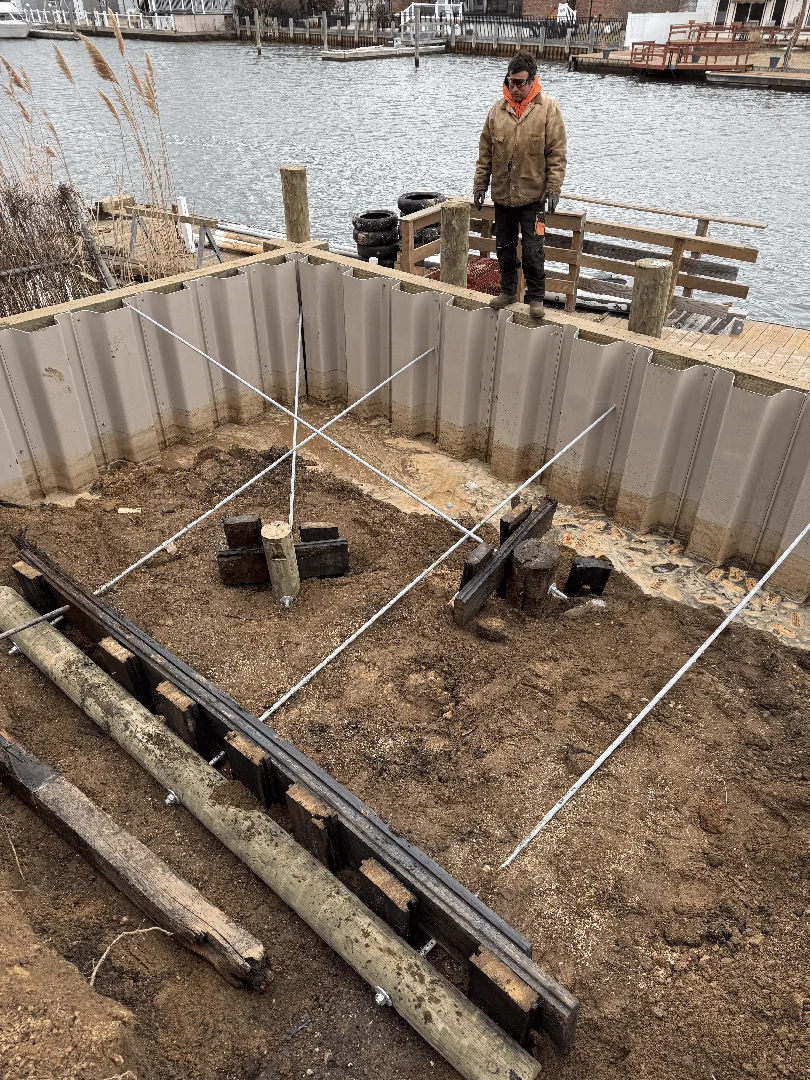
The Atlantic Ocean is a relentless force. Even the best-built boat slip requires professional oversight to maintain its structural integrity. In our decades of experience serving Long Island, we’ve seen how quickly timber rot or shifting piles can compromise a waterfront investment.
Restoring Structural Integrity with Boat Slip Repair
Repairing a boat slip is often more complex than building a new one because we must work around existing structures and stabilize the shoreline. Common issues we address include:
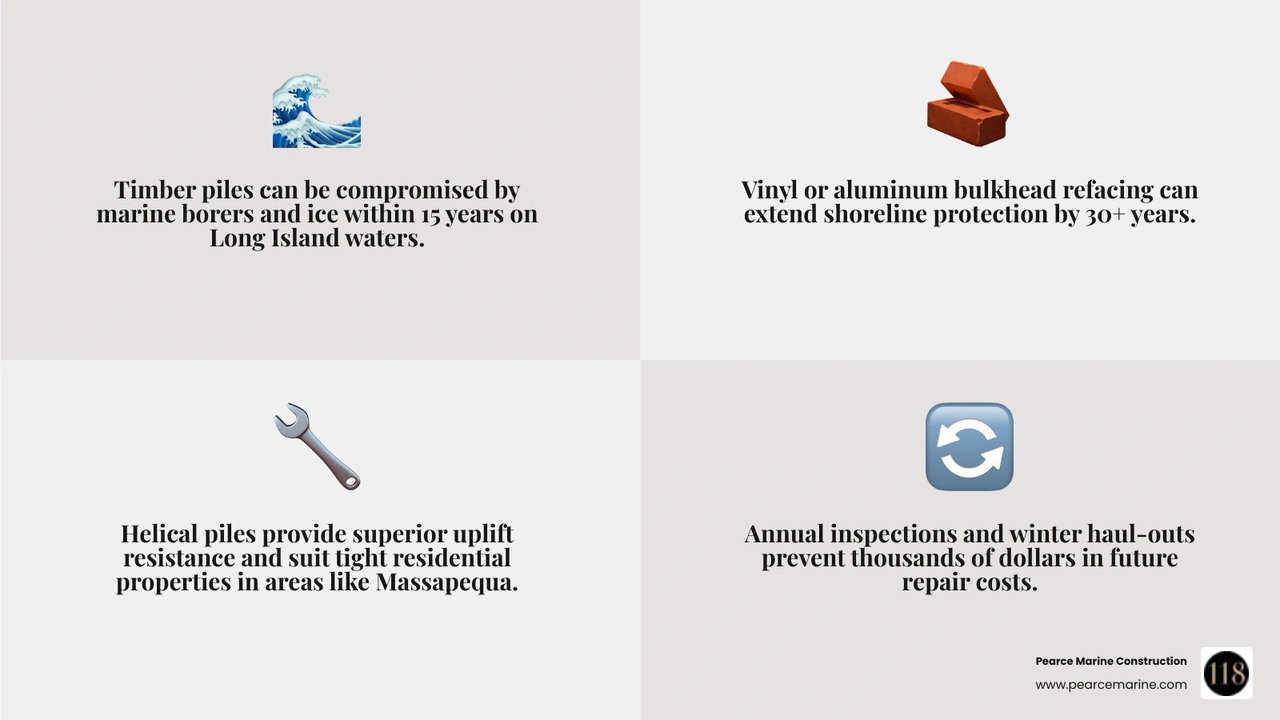
- Pile Replacement: Over time, marine borers or ice can damage timber piles. We use crane services to drive new, treated piles or install helical supports.
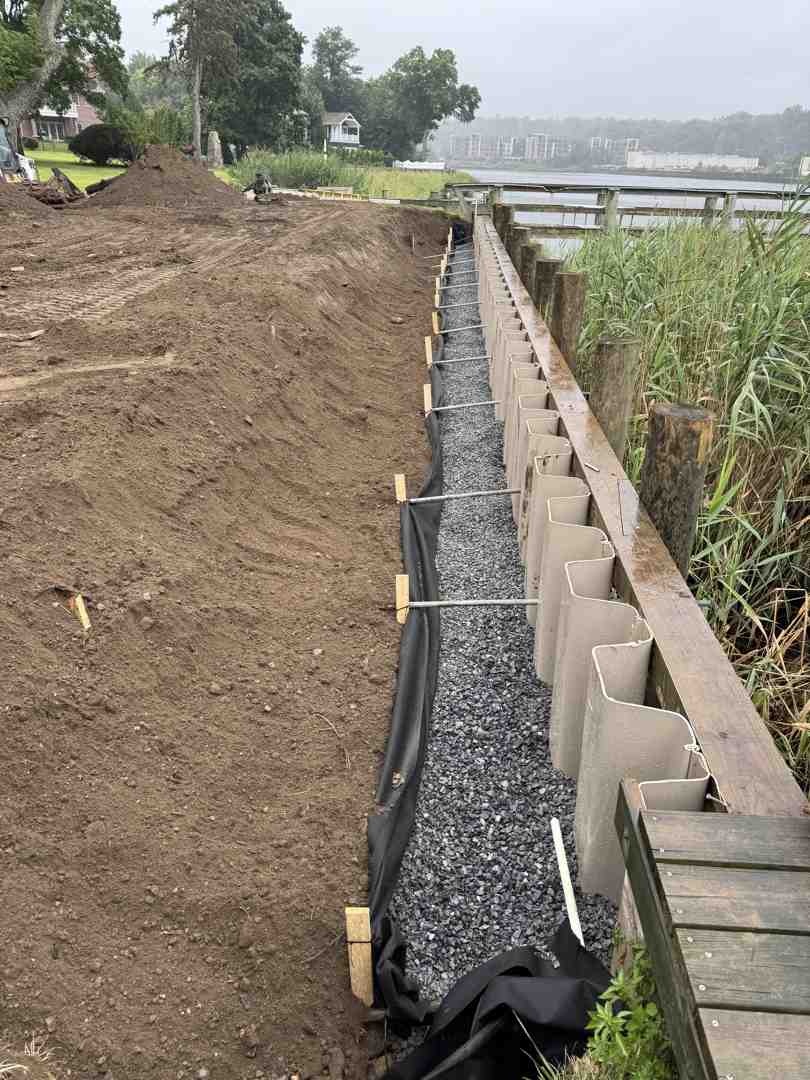
- Bulkhead Refacing: If the wall behind your slip is bowing or leaking soil, we can reface it with vinyl sheathing or aluminum to provide another 30+ years of protection.
- Decking Upgrades: Replacing old, splintered wood with modern PVC-wood composites can significantly improve the safety and lifespan of your finger docks.
For a deeper dive into how we handle these projects, see our boat dock repair complete guide or our focused page on boat dock repair.
Advanced Pile Driving and Anchoring Techniques
The "foundation" of your boat slip is literally underwater. In the challenging soils of Huntington and Lloyd Harbor, we utilize advanced pile-driving techniques. While traditional timber piles are excellent for many residential applications, we also specialize in steel sheet piles and helical piles for more demanding environments.
Helical piles are a game-changer for Long Island marine construction. They can be installed with smaller equipment, which is perfect for the tight backyards of Massapequa or Merrick, and they offer incredible resistance to "uplift" — the force that tries to pull your dock out of the water during a storm surge.
Technical requirements for these structures are rigorous. For more on the role of a professional installer, check out the boat dock installer complete guide.
Long-Term Shoreline Protection and Maintenance
At Pearce Marine Construction, we pride ourselves on being a woman-owned business with generational expertise. We understand that your boat slip is part of a larger ecosystem that includes your bulkhead, your deck, and the shoreline itself.
Meticulous craftsmanship isn't just about how the wood looks; it's about how the joints are bolted, how the piles are notched, and how the drainage is managed to prevent erosion. We recommend annual inspections, especially after the winter freeze-thaw cycle, to check for loose hardware or shifting anchors.
Ongoing maintenance, such as winter haul-outs for floating sections and gangways, can save thousands in repair costs over the life of the structure. Our team provides year-round services to ensure your marine infrastructure remains strong against the elements. If you are looking for a reliable boat dock installer, we are ready to bring our meticulous standards to your next project.
Whether you are in West Islip, Babylon, or South Hampton, your waterfront property deserves a boat slip built with the precision and durability that only local experts can provide. By focusing on engineering, high-quality materials, and professional installation, we ensure your next adventure starts from a foundation of strength.
_compressed.webp)

Bring Your Vision to Life
Whether you're planning a custom dock, seawall, or boat lift, our experienced team is ready to deliver high-quality marine construction tailored to your needs. Pearce Marine Construction brings craftsmanship, precision, and a deep understanding of Florida’s waterways to every project. Let us help you create a durable, beautiful solution that stands the test of time. Get in touch now for a personalized estimate!