
Taming the Tides: Effective Strategies for Coastal Erosion Control

_compressed.webp)
Why Coastal Erosion Control Matters for Long Island Waterfront Properties
Coastal erosion control is the engineering and construction of marine structures designed to prevent wave action, storm surge, and rising sea levels from wearing away your shoreline and threatening your property. For Long Island waterfront owners, this isn't just about protecting land—it's about safeguarding your investment, preventing structural damage, and maintaining safe access to the water.
Quick Answer: What You Need to Know About Coastal Erosion Control
- Structural Solutions: Bulkheads, seawalls, revetments, and retaining walls provide hard barriers against wave energy
- Cost: Ranges from $2,001-$10,000+ per linear foot depending on materials and site conditions
- Effectiveness: Properly designed engineered structures can reduce wave energy by up to 97%.
- Long-Term Value: Prevents land loss valued at roughly $500 million annually in the U.S., protects foundations, and increases property values
- Maintenance: Regular inspections and timely repairs extend structure life by 25+ years
Every year, coastal erosion costs U.S. property owners approximately $500 million in damage and lost land. On Long Island, where over 1,180 miles of shoreline face constant assault from tidal erosion, nor'easters, and rising sea levels, this threat is immediate and personal.
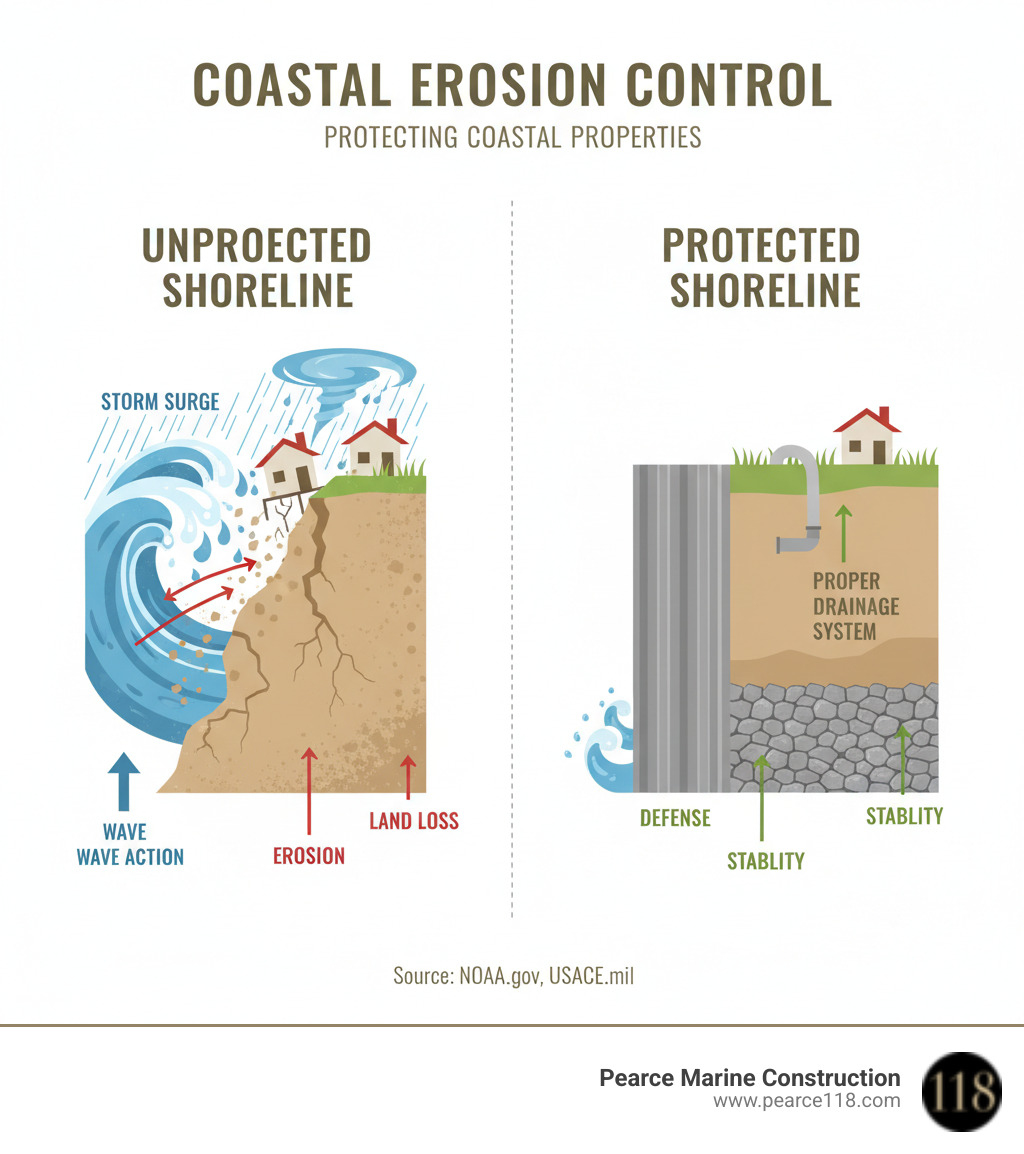
The forces are relentless. Wave action mechanically grinds away soil and rock. Storm surges from hurricanes push water inland, undermining foundations. Rising sea levels—accelerated by climate change—intensify erosion rates that already average 25 feet per year on some barrier islands.
Without proper protection, waterfront property owners face a devastating progression: first, gradual land loss; then, exposed foundations; eventually, structural failure during storms. The question isn't if your shoreline will erode, but when—and whether you'll have engineered defenses in place.
The solution lies in custom-built marine structures designed specifically for your site's wave energy, soil composition, and long-term protection needs. From vinyl bulkheads that hold back soil to stone revetments that absorb wave energy, modern coastal engineering offers proven methods to defend your property.
This guide explains how these structures are designed, built, and maintained to provide lasting shoreline protection for Nassau and Suffolk County properties.
Understanding the Forces Behind Coastal Erosion
Your waterfront property faces a relentless opponent: the combined power of waves, weather, and time. These natural forces work constantly—sometimes quietly, sometimes violently—to reshape Long Island's shoreline. Understanding what's attacking your property is the foundation of effective coastal erosion control.
The Relentless Assault: Primary Causes of Erosion
Wave action delivers the most visible punishment. Every wave that reaches your shore carries energy that chips away at soil and sediment. On calm days, this happens gradually—grain by grain. But during storms, wave energy multiplies exponentially, capable of removing tons of material in hours. The mechanical grinding of water against earth is constant and inevitable.
When powerful nor'easters and hurricanes approach Long Island, they bring storm surge—massive volumes of water pushed inland by wind and low atmospheric pressure. This surge floods low-lying areas and exposes previously protected shoreline to direct wave attack. The most catastrophic damage occurs when storm surge arrives at high tide, combining liftd water levels with powerful waves. The USGS Coastal Change Hazards Portal documents these storm-induced changes, showing how a single event can reshape miles of coastline overnight.
Sea level rise represents the slow-motion threat that makes everything worse. As global temperatures climb, ocean levels steadily advance inland. This isn't just a future problem—it's happening now. Higher baseline water levels mean waves reach further up your property more frequently, turning occasional erosion events into regular occurrences. The acceleration of sea level rise intensifies pressure on coastal infrastructure across Nassau and Suffolk Counties.
Tides and currents constantly move sediment along the shoreline through a process called littoral drift. This natural conveyor belt isn't inherently destructive, but when more material gets carried away than deposited, your property loses ground. The daily rhythm of tides combined with persistent coastal currents creates ongoing sediment transport that can leave vulnerable sections exposed.
Sometimes human activity amplifies these natural forces. Removing stabilizing vegetation from bluffs, disrupting natural drainage patterns, or constructing structures that interfere with sediment flow can accelerate erosion dramatically. This is why proper engineering and construction techniques matter so much—poorly planned projects can trigger erosion problems worse than the original threat. Our experience with Long Island Beach Erosion shows how critical expert planning is for coastal projects.
The Cost of Inaction
The numbers tell a sobering story. Coastal erosion costs U.S. property owners roughly $500 million per year in damaged structures and lost land. More than 80,000 acres of coastal wetlands disappear annually—the equivalent of seven football fields vanishing every hour.
On Long Island's densely developed shoreline, even a few feet of erosion can undermine foundations, collapse retaining structures, and devastate property values. The choice isn't whether to protect your shoreline—it's whether to act before or after significant damage occurs. Properly engineered marine structures provide the barrier between your property and these destructive forces, changing vulnerable shoreline into defended, stable ground.
Engineered Solutions for Coastal Erosion Control
When waves crash against your Long Island shoreline day after day, year after year, you need more than hope—you need engineering. At Pearce Marine Construction, we build the structures that stand between your property and the relentless forces of erosion. Our approach combines proven construction methods with materials designed to last generations.
Hard Armor: Structural Defenses for High-Energy Coasts
Hard armor structures are the workhorses of coastal erosion control—built to absorb punishment and protect your land when nature throws everything it has at your shoreline. These aren't decorative features; they're engineered barriers constructed to withstand the full force of Long Island's coastal environment.
Seawalls are the heavy hitters—massive structures built parallel to your shoreline to take direct hits from waves. Their primary job is reducing wave-induced toe erosion and limiting flooding by stopping water from overtopping your property. We typically build these ocean-facing structures using cast-in-place concrete or heavy-duty sheet piling, materials that can handle high-energy environments. Properties facing the Atlantic or exposed bay areas often need this level of protection. Our Seawall Construction Ultimate Guide walks you through everything involved in these critical installations.
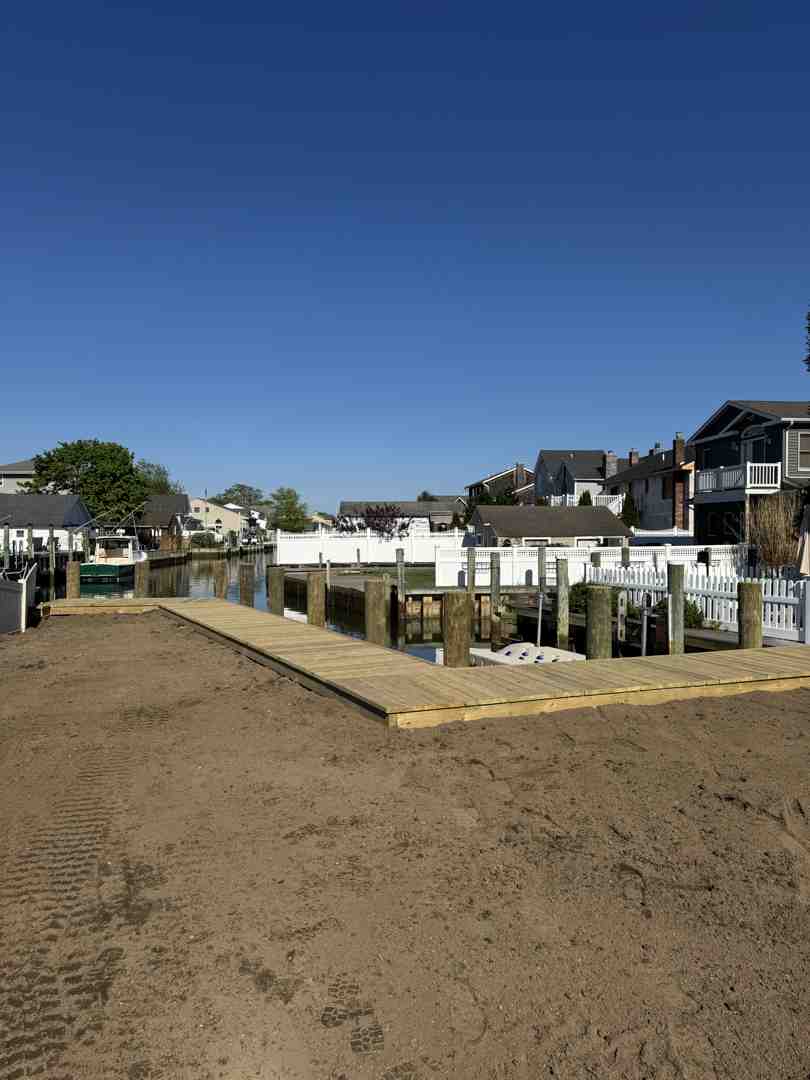
Bulkheads work differently—they're retaining walls first, wave barriers second. While they look similar to seawalls, their main purpose is holding soil in place and preventing your shoreline from sliding away during floods and storms. We install these regularly in the more sheltered waters around Long Island—places like Massapequa, Merrick, and Babylon where wave action is less intense but soil retention is critical. A bulkhead typically consists of vertical sheet piling (we use vinyl, steel, aluminum, or timber depending on your site conditions) driven deep into the seabed, then secured with tie rods and anchors. Learn more about our specialized approach at Seawalls and Bulkheads and in our Bulkhead Construction Ultimate Guide.
Revetments take a different approach entirely. Instead of standing vertical and reflecting wave energy, these sloped structures absorb and dissipate it. We build them directly on the bank using layers of riprap (large stone), concrete blocks, or other durable materials. The slope allows waves to spend their energy gradually rather than slamming into a vertical wall. When local stone is available, revetments offer exceptional durability and flexibility—they can shift slightly with ground movement without failing.
Groins extend perpendicular from your shore into the water, acting as sand traps. They interrupt the longshore drift—the natural movement of sediment along the beach—causing sand to accumulate on the updrift side. This builds up your beach and provides natural protection. The key is careful design; poorly planned groins can starve the downdrift side of sand and cause erosion problems for neighbors.
Breakwaters work from offshore, positioned parallel or at an angle to your shoreline to break up wave energy before it reaches land. By creating a calm "shadow zone" behind them, breakwaters encourage sediment to settle and protect your shore from direct wave attack. We construct fixed breakwaters using rock or concrete, engineered to handle the specific wave conditions at your site.
Choosing the Right Materials
The materials we use determine how long your structure lasts and how well it performs. Here's what we recommend based on decades of building on Long Island:
Vinyl has become the go-to choice for many bulkhead projects. It doesn't corrode, rot, or get eaten by marine borers. It's relatively lightweight, which makes installation faster, but it's incredibly durable in our local conditions. Most homeowners appreciate that it requires minimal maintenance.
Steel brings best strength when you're facing serious wave energy. We use steel sheet piling in demanding environments where nothing else will do. The trade-off is that steel needs proper coating and regular maintenance to prevent corrosion in saltwater. Our expertise in Pile Driving ensures these heavy materials get installed with the precision they require.
Concrete is versatile and tough—we use it for seawalls, caps, and structural components throughout marine projects. It handles compression forces beautifully and can be formed to exact specifications. However, concrete in the marine splash zone needs proper design and maintenance to resist deterioration from salt exposure and reinforcement corrosion.
Wood remains a solid choice, especially treated timber that's been properly prepared for marine environments. Modern treatments dramatically improve its resistance to rot and marine organisms. Many property owners choose wood for its natural appearance and proven track record. You can see our work with wooden marine structures at Retaining Walls Suffolk County.
When we build these structures right—and we do—bulkheads typically last 20 to 30 years or more, while well-constructed revetments can exceed 50 years. Longevity depends on both quality construction and consistent maintenance, which we'll discuss later.
Engineered Shoreline Stabilization: Blending Structure and Site Conditions
Effective coastal erosion control often requires more than just a single structure standing between water and land. Your Long Island property has unique conditions—soil composition, drainage patterns, elevation changes, and wave exposure—that demand a customized approach. We build integrated systems that address all these factors.

Custom retaining walls manage the transition between different land elevations and keep soil where it belongs. Unlike bulkheads that face water directly, these walls handle lateral earth pressure on the upland side of your property. In areas like Suffolk County where bluffs and varied terrain are common, properly engineered retaining walls prevent catastrophic soil movement. We design and build these structures to support the specific loads and conditions at your site.
Drainage systems might be the unsung heroes of shoreline protection. Excess water saturating soil layers is one of the leading causes of bluff slumping and washout behind bulkheads. We engineer comprehensive drainage solutions—both on the surface and within the soil—to remove this excess water before it causes problems. By reducing soil weight and hydrostatic pressure, proper drainage dramatically decreases the likelihood of slides and failures, especially in Long Island's varied geology. Preventing surface runoff from reaching your shoreline in the first place is one of the smartest investments you can make. Our Erosion Control Solutions page details how we approach these integrated systems.
Anchoring systems provide the deep, secure foundation that keeps marine structures stable for decades. Every bulkhead, pier, and dock we build relies on anchoring that resists the immense forces from waves, currents, and shifting soils. We use advanced systems including helical piles—essentially giant screws that we drive deep into stable soil layers. These provide holding power that traditional anchors can't match. Our work with Helical Piles demonstrates our commitment to foundations that simply won't fail.
Foundation integrity is where many marine projects succeed or fail. We don't cut corners here—ever. Through meticulous pile driving techniques, we secure structures deep into stable substrate, providing the rock-solid foundation your investment deserves. This attention to foundational strength is what separates marine construction that lasts from projects that need repair within a few years.
[TABLE] Comparing Types of Engineered Coastal Erosion Control
Choosing the right coastal erosion control method means weighing multiple factors specific to your property. This comparison shows typical applications, costs, and characteristics of the structures we build. Every site is different—these are general guidelines, not absolutes.
| Feature | Seawalls/Bulkheads | Revetments/Breakwaters | Retaining Walls/Anchoring Systems |
|---|---|---|---|
| Best Use Case | Direct shoreline protection in bays, harbors, and residential waterfronts where vertical space is limited; holding back soil and preventing land loss | High-energy coastlines and offshore wave reduction; areas where sloped protection is feasible and natural appearance is desired | Managing elevation changes on upland areas; providing deep foundation support for marine structures in varied soil conditions |
| Initial Cost | $400-$1,200+ per linear foot depending on height, materials (vinyl, steel, wood), and site access | $500-$1,500+ per linear foot for revetments; breakwaters vary widely based on offshore distance and materials | $300-$800+ per linear foot for retaining walls; helical pile systems priced per installation based on depth and load requirements |
| Maintenance Needs | Moderate; periodic inspection for tie rod integrity, cap condition, and washout behind structure; vinyl requires minimal maintenance, steel needs corrosion monitoring | Low to moderate; occasional stone replacement on revetments; settlement monitoring; vegetation management on slopes | Low for properly built walls; drainage system cleaning; anchor inspection; helical piles require minimal ongoing maintenance |
| Environmental Impact | Moderate; creates hard edge that alters natural shoreline processes; can increase wave reflection; limits habitat but protects upland areas | Lower than vertical structures; revetments allow some habitat in gaps; breakwaters can create calm water habitat but alter sediment transport | Minimal when focused on upland areas; proper drainage reduces runoff and sediment discharge; anchoring systems have small footprint |
| Durability | 20-30+ years for vinyl and properly maintained steel; 15-25 years for treated wood; concrete components can last 40+ years with proper design | 30-50+ years for well-built revetments; stone is essentially permanent but may need occasional resetting; breakwaters 40+ years | 30-50+ years for properly engineered retaining walls; helical pile anchoring systems can last the life of the structure (50+ years) |
Every property tells a different story. What works beautifully for a sheltered cove in Massapequa might fail spectacularly on an exposed bay in Suffolk County. That's why we start every project with a thorough site assessment and custom design.
For a comprehensive evaluation and a solution built specifically for your property's unique conditions, explore our Seawalls and Bulkheads services. We bring generational expertise and meticulous craftsmanship to every project, ensuring your shoreline protection stands strong for decades to come.



Bring Your Vision to Life
Whether you're planning a custom dock, seawall, or boat lift, our experienced team is ready to deliver high-quality marine construction tailored to your needs. Pearce Marine Construction brings craftsmanship, precision, and a deep understanding of Florida’s waterways to every project. Let us help you create a durable, beautiful solution that stands the test of time. Get in touch now for a personalized estimate!