
Dock and Pier Construction: A Comparative Guide


Dock and Pier Construction: Understanding Regional Differences
When it comes to dock and pier construction, understanding the differences between these two maritime structures is key. At a glance:
- Dock: An enclosed water area for mooring, loading, and repairing ships.
- Pier: An elongated platform stretching from shore into the water, typically for recreational purposes.
Regional Variations play a significant role in how these terms are understood and used. In American English, "dock" and "pier" are often interchanged, denoting structures extending into the water. However, in British English, they have distinct meanings:
- Docks are enclosed spaces for shipping activity, while
- Piers are unsupported structures over water, primarily for pedestrian use.
This distinction can influence construction choices, design preferences, and regulatory considerations, especially for property owners in the Long Island area looking to improve their waterfront properties with effective, robust solutions to tackle challenges like erosion and flooding.
For a more detailed grasp, let's dive deeper into construction methods, regulations, and everything in between to make an informed choice for your waterfront project.

Basic dock and pier construction vocab:
Understanding Dock and Pier Construction
When it comes to dock and pier construction, understanding the various construction methods, materials, and design considerations is essential for creating durable and functional waterfront structures. Let's explore these components in detail:
Construction Methods
Open Piers:
- Structure: Consist of a deck supported by piles or pillars.
- Materials Used: Commonly use steel, concrete, or timber piles.
- Water Flow: Allow water to move beneath, reducing resistance to waves.
Closed Piers:
- Structure: Solid, compact constructions with an earth-filled foundation.
- Materials Used: Primarily concrete and cement for strength.
- Water Flow: Restrict water movement, offering greater stability.
Floating Piers:
- Structure: Float on water, requiring careful ballast management.
- Materials Used: Often incorporate watertight compartments.
- Water Flow: Adjust to water levels, ideal for fluctuating conditions.
Materials
- Concrete: Offers strength, fire resistance, and corrosion-free properties. Widely used for its durability.
- Steel: Strong but requires regular maintenance due to corrosion.
- Timber: Suitable for small, light-duty piers but not for heavy loads.
- Plastics: Emerging as a corrosion-free, durable option for modern constructions.

Design Considerations
Purpose and Use:
- Working Piers: Designed for handling cargo and passenger vessels.
- Pleasure Piers: Focus on recreational use, often more aesthetic.
- Fishing Piers: Equipped for direct access to fishing grounds.
Environmental Impact:
- Consider local ecosystems and water flow.
- Use eco-friendly materials and designs to minimize disruption.
Local Conditions:
- Water Depth and Tides: Influence the choice of structure type.
- Weather Patterns: Design for resilience against local weather conditions.
- Ensure designs meet state and local regulations.
- Consider permitting requirements and environmental impact assessments.
Selecting the right construction method and materials while considering design factors ensures a successful dock or pier project. We'll dig deeper into the costs associated with these constructions, providing insights into installation, labor, and material expenses.
Types of Docks and Piers
When planning your waterfront structure, understanding the different types of docks and piers is crucial. Each type serves a unique purpose and is suited to specific conditions and needs.
Floating Docks
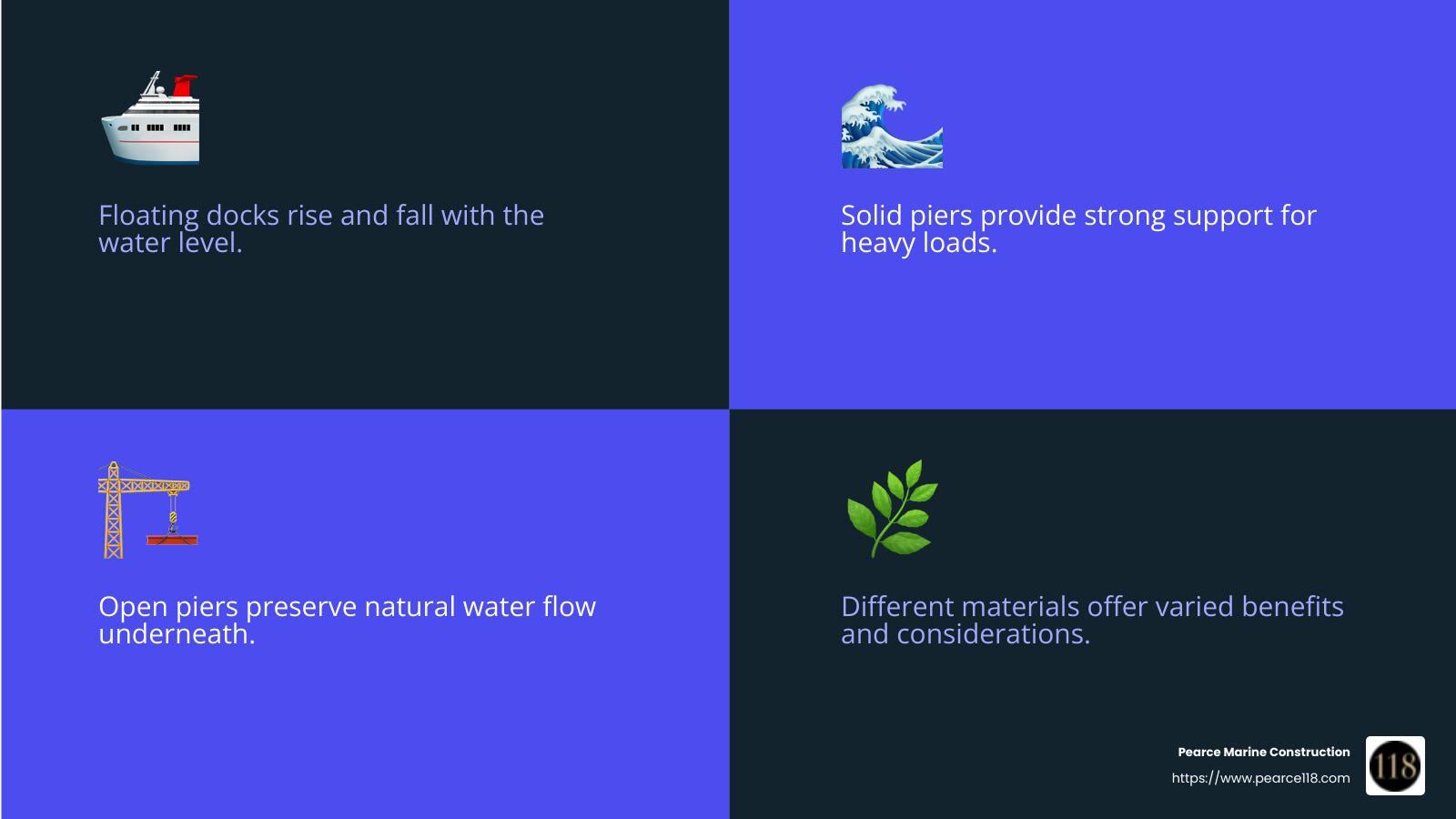
Floating docks are versatile structures that rest on the water's surface. They rise and fall with water levels, making them ideal for areas with fluctuating tides.
- Structure: Composed of buoyant materials that keep the dock afloat. They often consist of modular sections that can be rearranged or expanded.
- Materials: Typically made from durable, corrosion-resistant materials like plastics or treated wood.
- Benefits: Easy to install and adjust; minimal impact on the seabed. They can be moved or reconfigured as needed.
- Considerations: Stability can be an issue in rough waters, and they may require more frequent maintenance compared to fixed structures.
Solid Piers
Solid piers, also known as closed piers, provide robust support and are built to withstand heavy loads.
- Structure: These are compact constructions with a solid foundation, often filled with earth or concrete.
- Materials: Primarily constructed from concrete and steel for maximum strength and durability.
- Benefits: Highly stable and can support significant weight, making them suitable for commercial use.
- Considerations: More expensive to build due to the materials and labor involved. They also restrict water flow, which can impact local marine life.
Open Piers
Open piers offer a balance between stability and environmental harmony.
- Structure: Characterized by a deck supported on piles or pillars, allowing water to flow underneath.
- Materials: Commonly use steel, concrete, or timber for the supporting piles.
- Benefits: Less resistance to water movement, which reduces wave impact and preserves natural water flow.
- Considerations: While they are simpler structures, they may not be as stable as solid piers, especially in high-traffic areas.
Understanding these types of docks and piers will help you choose the best option for your specific needs, whether it's for commercial, recreational, or residential use. We'll explore the costs associated with these constructions, providing insights into installation, labor, and material expenses.
Dock and Pier Construction Costs
When it comes to dock and pier construction, understanding the costs involved is essential for planning your project effectively. Costs can vary widely based on several factors, including installation, labor, and materials.
Installation Costs
The installation of docks and piers involves several steps, each contributing to the overall cost.
- Site Preparation: This involves clearing debris and ensuring the area is suitable for construction. Depending on the complexity, costs can add up quickly.
- Foundation Work: For piers, laying a solid foundation is crucial. This might involve driving piles into the seabed, which can be labor-intensive and expensive.
- Modular Assembly: Floating docks often require assembling modular sections, which can be a quicker and cheaper installation process compared to fixed structures.
Labor Rates
Labor costs can significantly impact the overall budget. Rates vary depending on the region and the complexity of the project. In areas like Long Island, NY, labor rates might be higher due to the skilled expertise required for marine construction.
- Skilled Labor: Hiring experienced contractors is essential for quality construction. Expect to pay more for seasoned professionals who can ensure the structure's durability and compliance with regulations.
- Specialized Equipment: Projects may require the use of specialized equipment, such as cranes or barges, which can increase labor costs if not owned by the contractor.
Material Costs
Materials are another major cost factor in dock and pier construction. The choice of materials affects not only the initial expense but also the maintenance and longevity of the structure.
- Wood: Common for residential docks, wood is a cost-effective option but may require more maintenance over time.
- Composite Materials: These offer a balance between cost and durability, requiring less upkeep than wood.
- Aluminum and Steel: Ideal for commercial use due to their strength and resistance to harsh conditions. However, they come at a higher price point.
- Concrete: Used primarily for solid piers, concrete provides excellent durability but is costly and labor-intensive to install.
Understanding these cost components will help you budget effectively for your dock or pier project. Next, we'll dig into the regulations that govern dock and pier construction, including state requirements and permitting processes.
Dock and Pier Construction Regulations
When planning a dock and pier construction project, understanding the regulations is crucial. These rules ensure safety, environmental protection, and proper use of waterways. Let's break down the key aspects you need to consider.
State Regulations
Each state has its own set of rules for dock and pier construction. These regulations are designed to protect both the environment and public safety. For instance, in New York, you must comply with guidelines that address water quality, wildlife habitats, and shoreline preservation. It's essential to familiarize yourself with your state's specific regulations to avoid potential legal issues.
Permitting Requirements
Getting the right permits is often the most time-consuming part of the construction process. Permits ensure that your project meets all legal and environmental standards. Here's what you need to know:
- Application Process: You may need to submit detailed plans of your dock or pier, including its size, location, and materials used. This helps authorities assess the project's impact on the environment and local communities.
- Approval Time: The permitting process can take anywhere from a few months to over a year, depending on the complexity of the project and the location. For example, in areas like Suffolk County, NY, the process might be longer due to stricter environmental regulations.
- Multiple Agencies: You might need approvals from various agencies, such as the Department of Environmental Conservation or local zoning boards. Working with an experienced contractor can help steer these requirements more efficiently.
Dock Size and Location
The size and location of your dock or pier are critical factors that affect your project. Regulations often dictate:
- Size Limits: There are usually restrictions on the length, width, and height of docks and piers. These limits are in place to ensure safe navigation and minimize environmental impact.
- Location Restrictions: Docks and piers must be built in areas that do not disturb local ecosystems or interfere with public access. For instance, constructing near protected wetlands or marine sanctuaries may require additional permits or be prohibited altogether.
- Water Depth and Tides: Understanding local water conditions is essential. Your dock or pier must be designed to withstand changes in water levels and tides, which can affect its stability and usability.
By adhering to these regulations, you ensure that your dock or pier is not only safe and functional but also compliant with legal standards. This careful planning will save you time and money in the long run and help protect the natural beauty of our waterways.
Next, we'll address some frequently asked questions about dock and pier construction, including the differences between docks and piers and the costs involved.
Frequently Asked Questions about Dock and Pier Construction
What is the construction method for a pier?
Building a pier involves several key steps. First, the construction crew lays out the foundation using piles or pillars. These are typically made of concrete, steel, or timber. The choice of material depends on the pier's intended use and location. For example, concrete is favored for its strength and durability, especially in busy areas. Once the foundation is secure, a deck is constructed on top. This deck is usually made of concrete for stability.
Labor rates for pier construction can vary widely. Factors like location and the complexity of the project play significant roles. In areas with higher costs of living, such as Suffolk County, NY, labor rates may be higher. It's crucial to consider these factors when budgeting for your project.
How much does a 30-foot dock cost?
The cost of a 30-foot dock can vary based on several factors, including materials and location. Here's a quick breakdown:
Material Types: The choice of material greatly affects the cost. Pressure-treated lumber is the most budget-friendly option but requires regular maintenance. Composite decking is more expensive upfront but lasts longer and needs less upkeep. Aluminum is lightweight and strong but comes at a higher price point.
Cost Variations: On average, you might expect to pay between $3,000 and $10,000 for a 30-foot dock. This range depends on the materials used, labor costs, and any additional features you might want, like railings or lighting.
Installation Costs: These can also vary. In regions with cheaper labor, you might find lower installation costs. However, in areas like Long Island, NY, where labor rates are higher, expect to pay more.
What is the difference between a dock and a pier?
The terms "dock" and "pier" often get used interchangeably, but they have distinct meanings depending on where you are.
Terminology: In American English, a dock is generally a platform used for mooring boats. It's often floating and can rise and fall with the water level. A pier, on the other hand, is a structure that extends over the water, supported by piles or pillars. It's usually fixed and more substantial.
Regional Differences: In British English, a dock refers to an enclosed body of water used for loading and unloading ships, while a pier is similar to the American definition. Even within the U.S., these terms can mean different things in different regions. For example, in some areas, a dock might be a private floating structure, while a pier serves as a communal area extending into the water.
Understanding these differences is crucial when planning your waterfront project. Whether you're building a dock or a pier, knowing the terminology and regional nuances will help ensure your project meets your needs and complies with local regulations.
Next, we'll dig into the conclusion, highlighting Pearce Marine Construction's generational expertise and meticulous craftsmanship.
Conclusion
When it comes to dock and pier construction, choosing the right partner is crucial. At Pearce Marine Construction, we pride ourselves on our generational expertise and meticulous craftsmanship. Our team, made up of second and third-generation marine contractors, has a deep understanding of the unique challenges involved in building and maintaining docks and piers.
Our experience allows us to tackle even the most complex projects with ease. We know that every detail matters, and our hands-on approach ensures that each project is executed to the highest standards. From the initial consultation to the final touches, we are committed to delivering structures that stand the test of time.
Serving the communities of Nassau and Suffolk County, NY, we are well-versed in local regulations and environmental considerations. This local knowledge ensures that your project not only meets your needs but also complies with all necessary legal requirements.
Whether you're looking to build a new dock, repair an existing structure, or explore other marine construction services, we are here to help. Our commitment to quality and customer satisfaction means you can trust us to transform your waterfront property.
For more information on how we can assist with your dock and pier construction needs, visit our services page. Let's work together to create a custom solution custom to your specific requirements.
%20(2)%20(1)%20(1).avif)



Bring Your Vision to Life
Whether you're planning a custom dock, seawall, or boat lift, our experienced team is ready to deliver high-quality marine construction tailored to your needs. Pearce Marine Construction brings craftsmanship, precision, and a deep understanding of Florida’s waterways to every project. Let us help you create a durable, beautiful solution that stands the test of time. Get in touch now for a personalized estimate!