
The Ultimate Guide to Marine Pile Installation Methods


Why Marine Pile Installation Is the Foundation of Every Coastal Structure
Marine piling installation is the professional process of driving or drilling structural piles deep into the seabed to create stable foundations for docks, piers, bulkheads, and other waterfront structures.
Here's a quick overview of what our professional installation process involves:
| Step | What Happens |
|---|---|
| Site Assessment | Evaluate seabed type, water depth, tidal range, and currents |
| Pile Selection | Choose steel, concrete, timber, or helical piles based on load and conditions |
| Installation Method | Drive, vibrate, or twist piles to the required depth |
| Depth Requirements | 4-6 ft in sandy bottoms; 6-8 ft for boat lifts; 4-5 ft into rock |
| Corrosion Protection | Apply coatings, galvanization, or cathodic protection systems |
| Verification | Load testing and post-installation inspection confirm structural integrity |
| Typical Cost | $500 to $1,500 per linear foot depending on materials and site conditions |
Every dock, pier, and seawall in Nassau and Suffolk Counties depends on one thing: the professional engineering holding it up from below.
In communities like Massapequa, West Islip, and Southampton, waterfront property owners face some of the most demanding marine conditions on the East Coast. Sandy soils shift. Tidal ranges fluctuate. Nor'easters put enormous lateral pressure on structures. Without properly installed piles by a professional contractor, even a well-built dock won't last.
This overview covers the professional techniques and materials used in marine pile installation — from choosing the right method to understanding depth requirements specific to Nassau and Suffolk County waters.

Know your Marine piling installation terms:
Essential Techniques for Marine Piling Installation
When we talk about marine piling installation, we aren't just talking about hitting a stick into the mud with a big hammer—though that is a simplified version of one method! In reality, the process is a calculated engineering feat. Before a single pile is loaded onto a barge, we must conduct a thorough site assessment.
On the South Shore of Long Island, in places like Massapequa and Merrick, we often deal with deep layers of sand and silt. On the North Shore, in Cold Spring Harbor or Lloyd Harbor, we might encounter much rockier conditions. Understanding the seabed composition is vital because it dictates whether we use an impact hammer, a vibratory driver, or a helical torque motor.
Beyond the soil, we have to account for the tidal range and currents. Long Island's tides can be tricky, and strong currents in the Great South Bay or the Sound can shift equipment during the installation process. We use this data to determine the "scour" potential—the way water moves soil away from the base of a pile—to ensure the foundation remains buried deep enough to stay stable for decades.
For a deeper dive into the mechanics, you can check out our marine-pile-driving-complete-guide.
Comparing Piling Techniques
Choosing the right method depends on the project goals, the budget, and the local environment. Here is how the primary techniques stack up:
| Method | Best For | Noise Level | Environmental Impact |
|---|---|---|---|
| Impact Driving | Hard soils, rock, high-load piers | High | High (Vibration/Noise) |
| Vibratory Driving | Sandy/granular soils, sheet piles | Moderate | Moderate |
| Helical Piling | Sandy soils, residential areas | Low | Very Low |
| Drilling/Jetting | Extremely hard rock or very deep foundations | Moderate | High (Sediment) |
When it comes to marine pile installation, the goal is always the same: transfer the weight of the structure through the soft surface layers down to a stable, load-bearing layer or bedrock.
Driving Steel and Concrete Marine Piling Installation
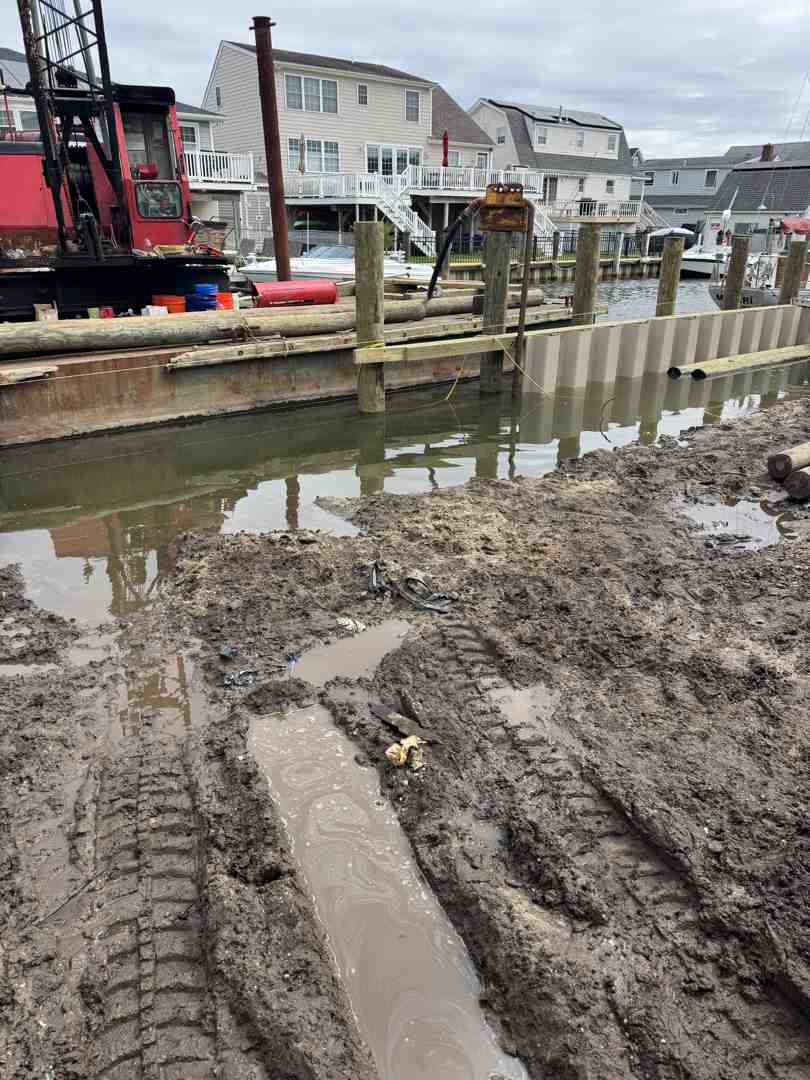
For heavy-duty applications like large commercial piers or boat lifts for heavy vessels in Babylon or Bayshore, we often turn to driven piles. This involves using a pile driver—a specialized machine mounted on one of our barges—to physically force the pile into the ground.
Steel Pipe PilingsSteel pipes are a favorite in modern marine construction. They are typically 12 to 36 inches in diameter and can be driven anywhere from 20 to 100 feet deep to reach stable layers. One of the biggest advantages of steel is its strength; a single steel pipe can support loads between 60 and over 400 kips (one kip equals 1,000 pounds). In some cases, we drive them "open-ended" to cut through tough soil, or "closed-ended" if we need to fill them with concrete later for added stiffness.
Prestressed Concrete PilesIn saltwater environments, concrete is a powerhouse. We use prestressed concrete piles because they are incredibly robust and naturally resist the abrasive components of the sea. For concrete docks, we often recommend 12”x12” prestressed piles. These are reinforced with steel cables that are tensioned before the concrete is poured, giving the pile the ability to withstand both high compression and the lateral forces of waves and wind.
Impact and Vibratory HammersTo get these heavy materials into the seabed, we use two main types of hammers:
- Hydraulic Impact Hammers: These deliver repeated, powerful blows to the top of the pile. They are essential for driving piles into dense soils or rocky conditions found in North Shore locations like Huntington.
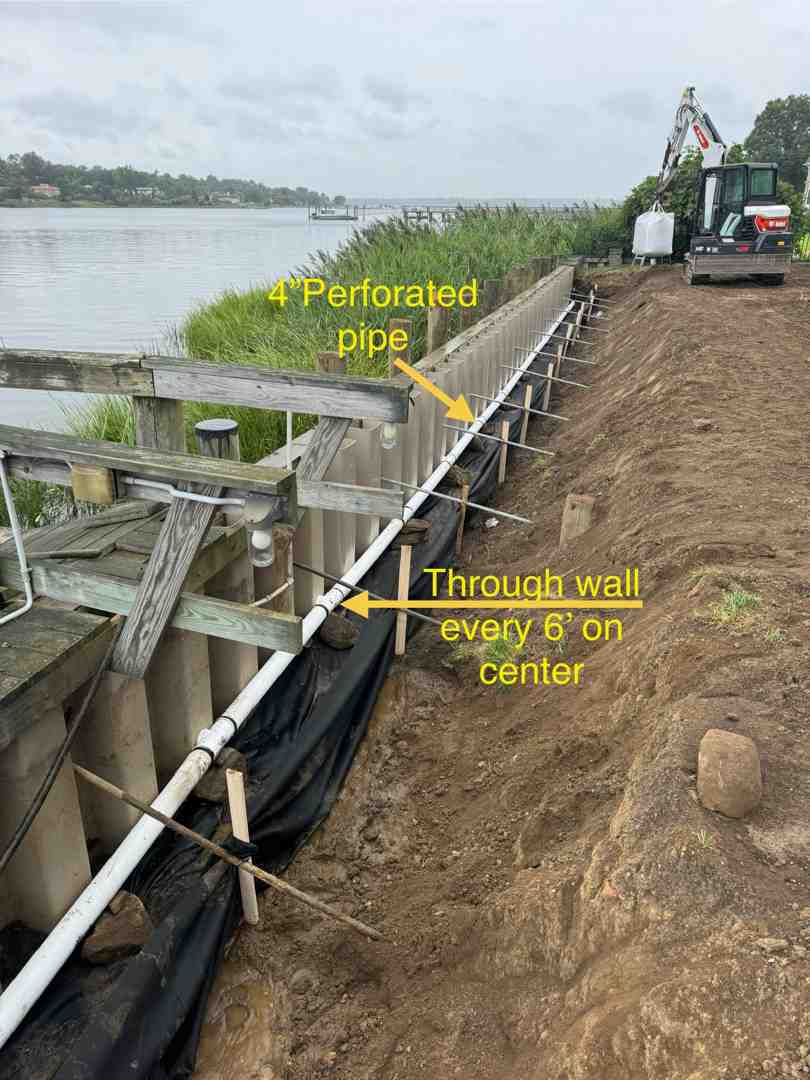
- Vibratory Hammers: Instead of striking the pile, these use high-speed vibrations to "liquefy" the soil around the pile, allowing it to sink under its own weight and the weight of the hammer. This is much faster in sandy conditions and is often used for installing sheet piling for bulkheads.
For more on the heavy machinery involved, see our page on pile-driving.
Innovative Helical and Drilled Marine Piling Installation
Not every project requires a massive hammer. In fact, in many residential areas of West Islip or Southampton, we prefer a more "surgical" approach.
Helical PilesHelical piles are essentially giant steel screws. We use hydraulic machinery to twist these piles into the ground. They feature helical blades (or flights) that anchor the pile deep into the stable sub-layers of soil.
- Why they work on Long Island: Our South Shore is predominantly sandy. Traditional hammered piles can sometimes loosen over time if the sand shifts during a major storm. Helical piles, however, provide both downward and lateral load capacity, making them exceptionally resistant to storm surges.
- Minimal Disruption: Because they are twisted in, there is almost no vibration. This is a huge plus if we are working near an existing seawall or a neighbor's delicate property. We monitor the "torque" (the twisting force) in real-time; the higher the torque, the higher the load capacity we know the pile can handle.
Learn more about this modern method at helical-piles-installation.
Drilled CaissonsIn areas where the soil is exceptionally weak or where we need to support massive vertical loads, we might use drilled caissons. This involves drilling a deep hole into the seabed, often down to bedrock, and then filling it with reinforced concrete. This creates a "cast-in-place" pillar that is custom-fitted to the exact site conditions.
Material Selection and Corrosion Protection
Choosing the right material is a balance of budget, load requirements, and expected lifespan.
- Treated Timber: This is the classic Long Island look. We use timber piles treated with CCA (Chromated Copper Arsenate), which acts as a fungicide and insecticide. While affordable, they typically last 15–25 years. To extend their life, we often use tidal area wraps to prevent marine borers from eating the wood.
- Steel: As mentioned, steel is the strongest option. However, saltwater is steel's natural enemy. To combat this, we use galvanized steel or apply high-performance epoxy coatings. We also utilize products from Denso North America, such as petrolatum tapes, which provide a long-lasting barrier against moisture and oxygen in the "splash zone"—the area of the pile most prone to rusting.
- Concrete: While concrete doesn't rust, the steel reinforcement inside can. We ensure our concrete piles are high-density and properly sealed to prevent saltwater from reaching the rebar.
For existing structures that are starting to show their age, we offer specialized marine-piling-repair services, including concrete jackets and poly wraps.
Planning and Executing Your Shoreline Project
A successful marine piling installation doesn't happen by accident. It requires meticulous planning and a deep understanding of the local environment. Whether we are building a simple dock in Wantagh or a complex pier in West Hampton, the process follows a strict protocol to ensure safety and durability.
Site Conditions and Depth Requirements
How deep is deep enough? It depends on what you’re building and what you’re building it on.
- Sandy Bottoms: For standard docks, piles generally need to be driven 4-6 feet into the sand.
- Boat Lifts: Because boat lifts carry significant weight and experience "torque" as the boat is raised, we drive those piles 6-8 feet deep.
- Rocky Conditions: If we hit rock, the rule of thumb is to penetrate at least 4-5 feet into the rock layer to ensure the pile won't "walk" or shift laterally.
- Storm-Prone Areas: In areas exposed to the open bay, we may drive piles 40-50 feet deep to account for "scour"—the erosion of the seabed that happens during heavy storms.
To maintain precision, we use templates. These are temporary frames that hold the piles in the exact position and angle while they are being driven. In the turbulent waters of the Great South Bay, even a small shift in the barge can throw off the alignment, so laser levels and templates are our best friends.
For more details on residential dock standards, see our guide on dock-piling-installation.
Environmental Mitigation and Safety Standards
We love our Long Island waters, and we take our responsibility to protect them seriously. The noise and vibration from pile driving can be disruptive to marine life, specifically fish and marine mammals.
To mitigate this, we employ several techniques:
- Bubble Curtains: We place a perforated hose around the piling site that pumps out air. This creates a "curtain" of bubbles that breaks up the sound waves, significantly reducing the noise that travels through the water.
- Soft-Start Piling: Instead of starting with full-power blows, we begin with low-energy strikes. This gives fish and other marine life a chance to leave the immediate area before the heavy work begins.
- Silt Curtains: During installation, sediment can get stirred up, clouding the water. Silt curtains act as a floating barrier that keeps that sediment contained, protecting local seagrass and habitats.
Choosing a Professional Marine Contractor in Nassau and Suffolk Counties
When you are investing in a shoreline project, the contractor you choose is the most important variable. Marine piling installation is a highly specialized field that requires heavy equipment, engineering expertise, and an intimate knowledge of local soil and water conditions.
At Pearce Marine Construction, we are a woman-owned business with a foundation built on generational expertise. We don't just "drive poles"; we engineer foundations that are meant to protect your property and your investment for decades. We serve both Nassau and Suffolk Counties, including West Islip, Southampton, the canals of Massapequa, and the estates of the Hamptons.
Our team is known for meticulous craftsmanship. We understand that a bulkhead or a dock isn't just a structure—it's your shoreline's first line of defense. We take pride in our ability to complete projects on time and with a level of precision that "the other guys" often overlook.
If you are ready to start your next project, explore our full range of services or learn more about our expertise in seawalls-and-bulkheads.
Whether you need a new dock foundation or are looking to reinforce a failing bulkhead, we have the tools, the experience, and the local knowledge to get the job done right. Give us a call, and let's build something that lasts.

Bring Your Vision to Life
Whether you're planning a custom dock, seawall, or boat lift, our experienced team is ready to deliver high-quality marine construction tailored to your needs. Pearce Marine Construction brings craftsmanship, precision, and a deep understanding of Florida’s waterways to every project. Let us help you create a durable, beautiful solution that stands the test of time. Get in touch now for a personalized estimate!