
Beyond the Basics: Exploring the Many Faces of Bulkhead Walls


Understanding Bulkhead Walls: Your First Line of Defense Against Shoreline Erosion

Bulkhead walls are vertical retaining structures built along shorelines to hold back soil and protect waterfront property from erosion. Here's what you need to know:
Quick Answer: What Are Bulkhead Walls?
- Primary Purpose: Retain fill and prevent soil from sliding into the water
- Secondary Purpose: Provide protection from wave action in sheltered areas
- Common Materials: Vinyl sheet piling, steel, pressure-treated timber, or concrete
- Typical Applications: Marina basins, protected shorelines, residential waterfronts
- Wave Limitation: Designed for areas with 3-4 foot wave heights or less
- Key Components: Sheet piling, wales (support beams), tie-back rods, and deadman anchors
If you own waterfront property in Nassau or Suffolk County, understanding bulkhead walls is essential, as time and erosion are constant threats to your investment. Unlike massive seawalls built for the open ocean, bulkhead walls are engineered for sheltered coastal areas like the bays and harbors common in Southampton, West Islip, and West Hampton.
A properly constructed bulkhead wall does more than hold back soil. It also:
- Prevents costly land loss from wave action and tidal fluctuations
- Maintains property boundaries at the water's edge
- Protects adjacent structures like homes and businesses
- Provides a clean, defined shoreline that improves property value
The construction of bulkhead walls requires careful engineering, accounting for soil conditions, water depth, and tidal range. For Long Island property owners, choosing the right design and construction method is critical. The wrong approach can lead to premature failure, ongoing maintenance costs, or even accelerated erosion.
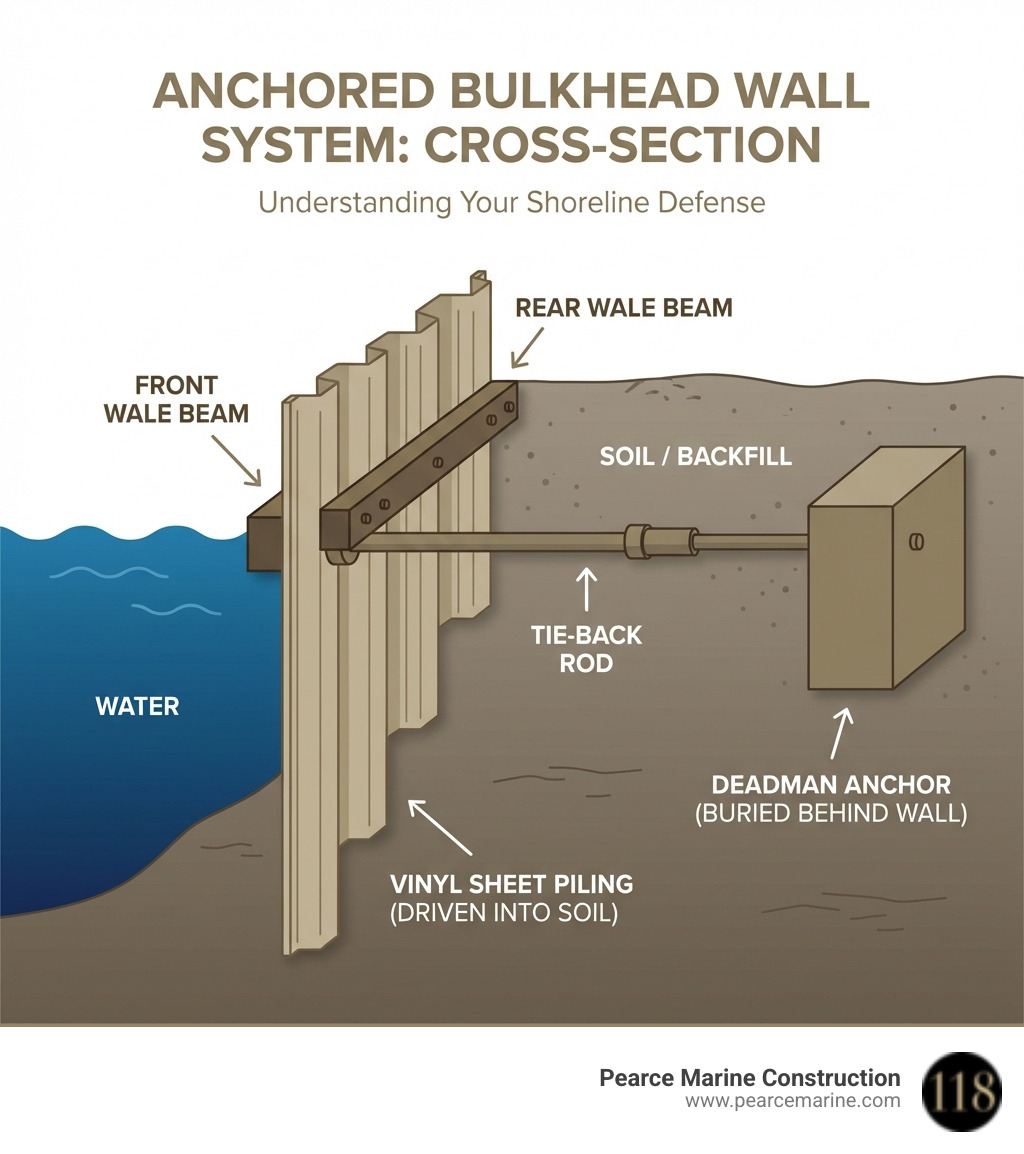
Bulkhead walls terms at a glance:
A Deep Dive into Bulkhead Walls: Construction, Materials, and Function
At Pearce Marine Construction, we understand that an effective bulkhead wall is not just a barrier, but a carefully engineered system designed to preserve your Long Island waterfront property. Let's explore the intricacies of these vital structures.
The Core Function: Retaining Land and Preventing Erosion
The primary function of a bulkhead wall is to retain land and prevent soil from sliding into the water. For properties on the Great South Bay or a canal in Massapequa, natural forces like waves and currents constantly erode valuable land.
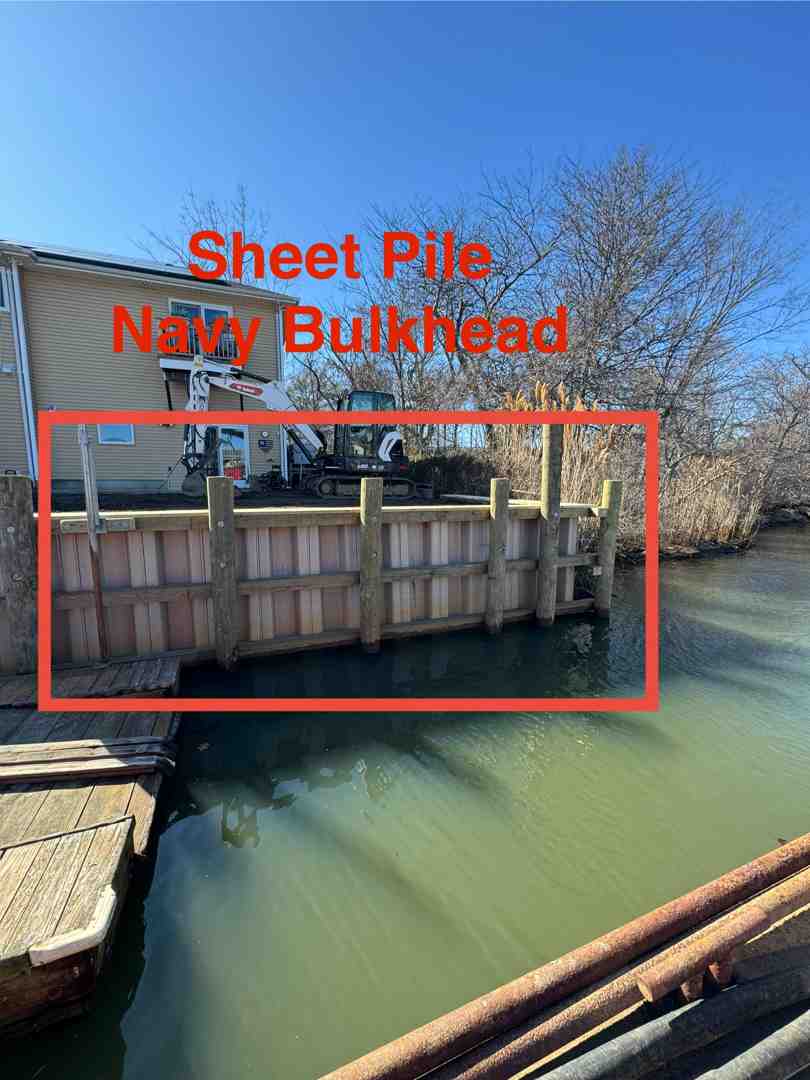
Our bulkhead walls create a robust separation between your property and the water, which is crucial in the protected coves and marinas across Nassau and Suffolk Counties. Beyond land retention, these walls also protect the upland from mild to moderate wave action, fluctuating water levels, and runoff, preventing topsoil loss.
A well-installed bulkhead wall is an effective erosion control system that stabilizes soil and protects nearby structures. At Pearce Marine Construction, we provide comprehensive shoreline erosion solutions and robust erosion control solutions to safeguard your investment for generations.
Bulkhead vs. Seawall vs. Retaining Wall: Key Distinctions
While the terms are often used interchangeably, bulkhead walls, seawalls, and traditional retaining walls each have distinct purposes and applications.
| Feature | Bulkhead Walls | Seawalls | Retaining Walls (General) |
|---|---|---|---|
| Primary Purpose | Retain soil, prevent land sliding | Defend against significant wave attack | Laterally bolster soil mass |
| Size/Scale | Smaller, for residential/small commercial properties | Larger, for extensive coastal settlements | Varies greatly, from garden walls to large embankments |
| Water Interface | Soil on one side, water on the other | Direct, often heavy, exposure to open water/waves | Typically retains soil on both sides (or one side, dry) |
| Wave Resistance | Limited (3-4 ft significant wave height max) | High (designed for severe wave action) | Not designed for water/wave forces |
| Stability | Relies on deep embedment and tie-backs | Relies on mass, weight, and deep foundations | Relies on gravity, cantilevering, or anchors |
All bulkhead walls are a type of retaining wall, but their defining characteristic is the water interface: soil on one side and water on the other. This differs from a typical land-based retaining wall that holds back soil without direct water contact.
Seawalls are heavy-duty structures built for open-ocean conditions, designed to withstand severe waves and storm surges. In contrast, bulkhead walls are engineered for the calmer waters of Long Island's bays and protected estuaries. Seawalls rely on sheer mass for stability, while bulkhead walls are generally smaller and use deep embedment and tie-back systems.
For a more comprehensive look, explore our Bulkhead vs Seawall Guide 2025. For land-based applications, see our retaining wall construction guide.
Common Materials for Building Durable Bulkhead Walls
The choice of material is paramount for a durable bulkhead wall on your Long Island property. Each offers a unique combination of strength, longevity, aesthetics, and cost, allowing us to tailor solutions for shorelines in places like Babylon or Cold Spring Harbor.
_compressed.webp "pressure-treated timber bulkhead under construction in Nassau County - bulkhead walls")
The most common materials we use for bulkhead walls include:
- Pressure-Treated Timber: Offering a natural, aesthetic look, wood has been a staple in marine construction for centuries. Timber pilings can be more affordable than other options. A properly treated timber bulkhead typically lasts about 25 years, resisting rot and marine borers. For more details, see our Timber Bulkhead Construction Guide.
- Vinyl Sheet Piling: A modern option, vinyl offers exceptional longevity, with correctly installed bulkhead walls lasting over 50 years. It is strong, weather-resistant, and impervious to insects and marine degradation. While the upfront cost of a bulkhead from vinyl may be higher, its long lifespan and minimal maintenance make it a cost-effective choice. Learn more in our Vinyl Seawall Construction insights.
- Steel Sheet Piling: For maximum strength, steel is an excellent choice, especially for high bulkheads or in dense soil. However, steel in saltwater requires diligent corrosion control, such as protective coatings, to ensure its long-term integrity, as it will eventually corrode if not maintained.
- Concrete: Concrete bulkhead walls, either cast-in-place or using precast panels, offer immense strength and a very long lifespan. They are highly resistant to marine borers and are often used in more demanding applications where mass and rigidity are beneficial.
When selecting materials, we consider factors like wave action, soil conditions, aesthetics, and budget. Our team at Pearce Marine Construction brings generational expertise to help you make the most informed decision for your shoreline.
Key Construction Methods for Bulkhead Walls
The construction of bulkhead walls is a specialized field. On Long Island, we use several key methods, each suited to different site conditions. Our Marine Bulkhead Construction expertise ensures we choose the best technique for your property.
Here are the primary types of bulkhead wall construction methods:
Cantilever Walls: This simple design relies on deep embedment of its base into the soil for stability. The wall acts as a rigid vertical beam. Cantilever walls are best for shorter heights and stable soil conditions but can "creep" over time without proper design.
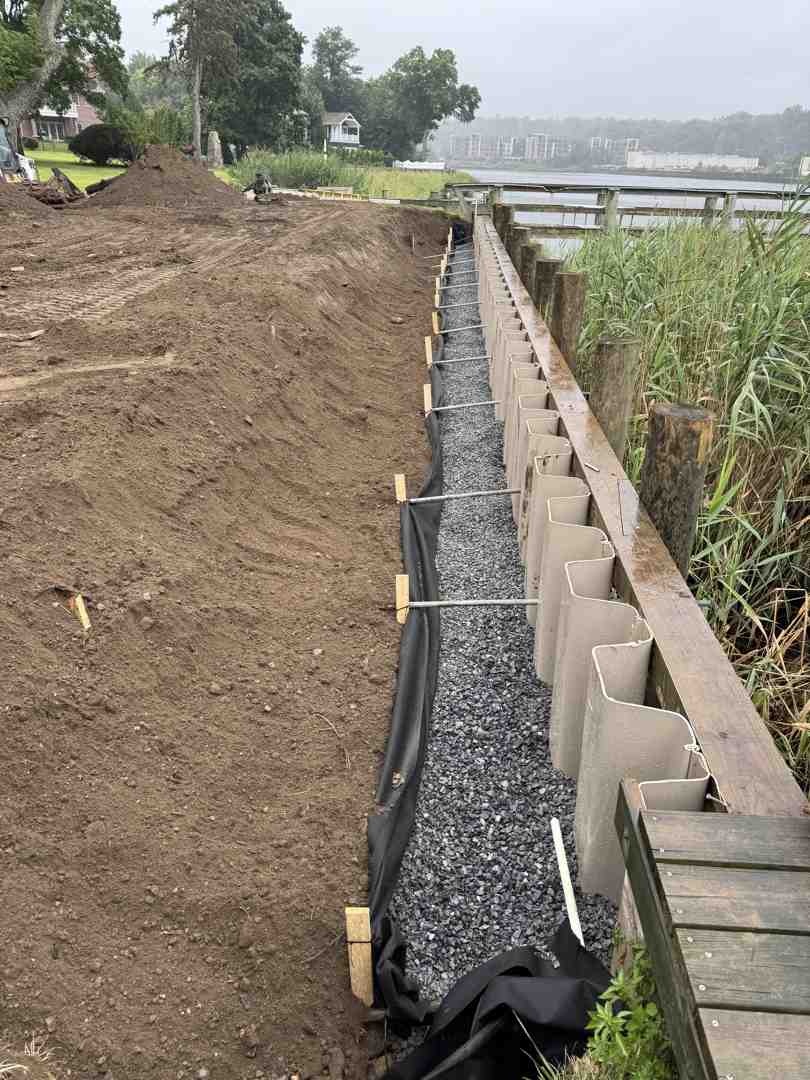
Anchored Walls: The most common type on Long Island, anchored walls feature a tie-back system connecting the wall to a "deadman" anchor buried in the soil behind it. This provides additional resistance against lateral pressure, allowing for taller, more stable walls, ideal for properties in Massapequa, West Hampton, or Bayshore.
Gravity Structures: These walls rely on their sheer weight for stability. Examples include rock-filled cribs or large, interlocked sheet pile cells filled with earth. They are robust but require substantial space for their base and stable foundation soil.
Relieving Platforms: For very high walls or those supporting heavy loads, a horizontal relieving platform can be built behind the main wall. Supported by piles, it reduces lateral pressure on the main wall by transferring weight to a deeper level.
Soldier Pile Walls: Also known as King Pile Walls, this method uses heavy, widely spaced vertical piles with lighter sheeting between them. The soldier beams provide the primary structural support, offering significant strength for challenging applications.
Our expertise in bulkhead building means we carefully assess your site's unique conditions to recommend and implement the most effective construction method.
Critical Design and Installation Considerations for Long Island Shorelines
Designing and installing bulkhead walls on Long Island demands a deep understanding of local environmental factors and engineering principles. Our team at Pearce Marine Construction, a woman-owned company with generational expertise, prides itself on meticulous craftsmanship from Merrick to Lloyd Harbor.
Several critical considerations guide our process:
Permitting and Regulations: In New York, bulkhead construction requires local, state, and federal permits to protect water quality and habitats. Navigating agencies like the NYS DEC can be complex. We have experience in Nassau and Suffolk Counties, guiding clients through the permitting process. For local specifics, see our information on bulkhead design in Nassau.
Toe Scour: Bulkheads reflect wave energy, which can erode soil at the wall's base (toe scour), potentially undermining its stability. Our designs incorporate robust toe protection, such as quarry stone or filter fabric, to resist this force.
Flanking Prevention: A common vulnerability is "flanking," where erosion occurs at the ends of the bulkhead. We prevent this by tying the ends into adjacent structures or extending them landward into the retained soil.
Drainage and Hydrostatic Pressure: Water pressure behind a wall can be a significant force. We incorporate effective drainage controls, like weep holes with filter material, to relieve hydrostatic pressure without losing soil.
Soil Pressure and Tie-Back Systems: The lateral earth pressure from retained soil is a primary design load. For anchored walls, the tie-back system must be designed with sufficient capacity to resist these forces. Embedment depth and structure weight must be carefully calculated for overall stability, as detailed in design criteria for bulkheads.
Material-Specific Protections: Steel requires corrosion control in saltwater, while timber must be pressure-treated to prevent rot and infestation by marine borers common in Long Island waters.
Environmental Impact Mitigation: We are mindful of environmental impacts like altered wave reflection. Where appropriate, we explore integrated solutions, combining hard structures with elements like riprap to balance protection with habitat conservation.
For existing walls showing wear, prompt bulkhead repair in Suffolk County is vital to prevent further damage.
Secure Your Shoreline with Expert Bulkhead Construction
Protecting your waterfront property in Nassau or Suffolk County is more than just a construction project; it's an investment in your peace of mind and the long-term value of your home or business. At Pearce Marine Construction, we specialize in crafting durable, high-quality bulkhead walls that stand as your first line of defense against the relentless forces of nature.
The benefits of installing a well-designed and expertly constructed bulkhead wall are clear:
- Unrivaled Erosion Control: Our bulkhead walls actively prevent the loss of your valuable shoreline, stabilizing the soil and preserving your property line. They absorb and deflect wave energy, rainfall runoff, and fluctuating water levels, effectively reducing erosion and protecting your embankments.
- Improved Property Value and Aesthetics: A robust bulkhead wall not only provides essential protection but also creates a clean, defined, and visually appealing edge to your waterfront. This improves the overall beauty of your property, contributing significantly to its market value.
- Long-Term Investment: With materials like vinyl offering lifespans of 50+ years and properly treated timber providing decades of service, a bulkhead wall is a durable, long-term investment that safeguards your real estate for generations.
- Protection for Structures: By stabilizing the shoreline, bulkhead walls protect adjacent structures such as homes, docks, and landscaping from undermining and damage caused by erosion.
Choosing the right marine contractor for your bulkhead wall project is paramount. As a woman-owned business based right here on Long Island, Pearce Marine Construction brings generational expertise and a commitment to meticulous craftsmanship. We understand the unique challenges and regulatory landscape of Nassau and Suffolk Counties, from Massapequa to Southampton. Our team is dedicated to providing custom solutions that not only meet but exceed your expectations for durability, functionality, and aesthetic appeal.
Don't let erosion diminish the value and safety of your waterfront property. Partner with the local experts who know Long Island's shorelines best. Contact Us today for a consultation, or get a quote for your bulkhead project. Let us help you secure your shoreline with a bulkhead wall built to last.



Bring Your Vision to Life
Whether you're planning a custom dock, seawall, or boat lift, our experienced team is ready to deliver high-quality marine construction tailored to your needs. Pearce Marine Construction brings craftsmanship, precision, and a deep understanding of Florida’s waterways to every project. Let us help you create a durable, beautiful solution that stands the test of time. Get in touch now for a personalized estimate!