
Retaining Wall Construction 101


Introduction to Building Retaining Walls
Retaining wall construction creates strong, reliable barriers that hold back soil. These structures are essential for managing different ground levels, preventing erosion, and making sloped land usable. On Long Island, particularly in Nassau and Suffolk Counties, a well-built retaining wall is vital for protecting waterfront properties and enhancing outdoor spaces, from steep hillsides in West Islip to garden beds in Southampton.
Proper construction involves several core steps: planning the wall's design and materials, preparing a level base, laying the first course with precision, stacking and reinforcing subsequent layers, installing a robust drainage system, and finishing with backfill and capstones.
At Pearce Marine Construction, we specialize in durable, high-quality retaining walls. Building a wall that lasts requires a deep understanding of soil mechanics, drainage, and structural integrity. This guide outlines the essential steps to ensure your retaining wall provides lasting stability and protection.
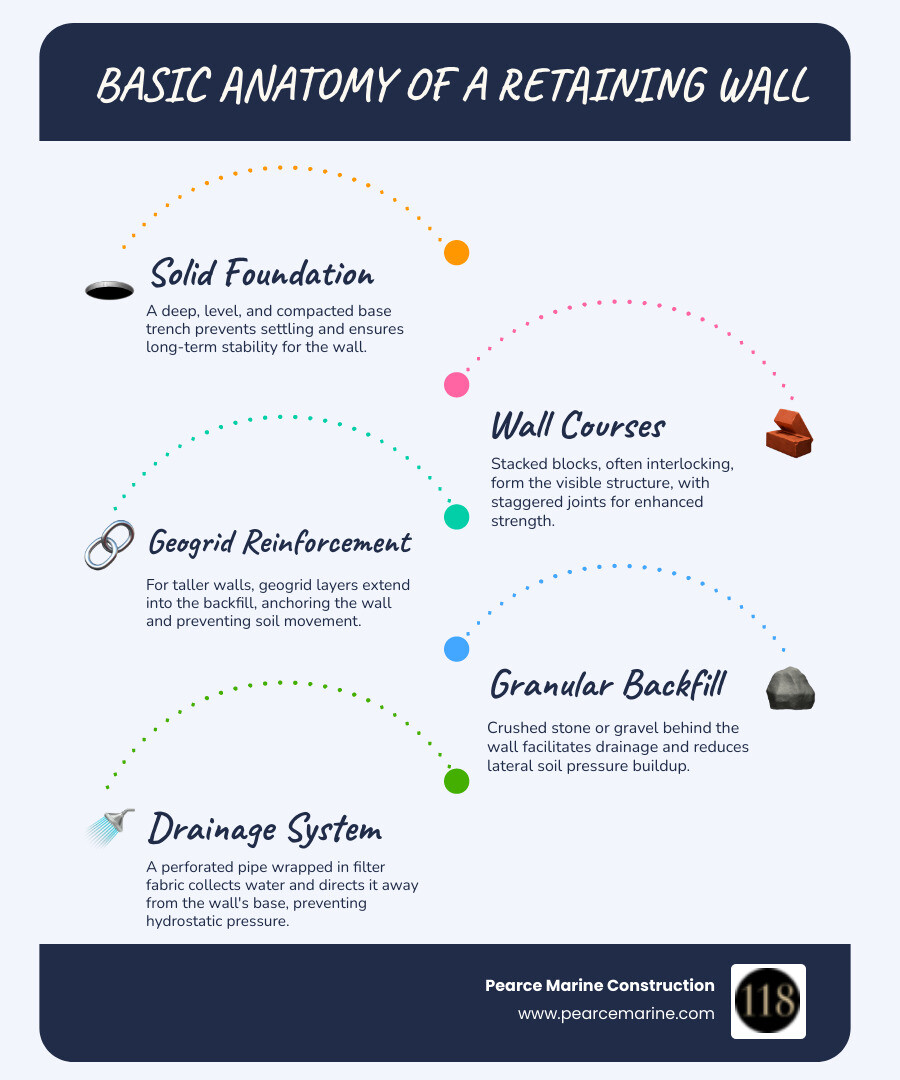
A retaining wall supports soil laterally, preventing it from moving downslope. This is critical for shoreline protection and erosion control along the coasts of Nassau and Suffolk County. Walls are generally categorized as non-structural or structural. Non-structural walls are typically under 2 feet high and used for decorative landscaping. Structural walls are over 2 feet high and engineered to withstand significant soil pressure, requiring more complex design and materials. Our focus is on building robust structures that provide lasting solutions for residential and commercial clients across Long Island.
The Core Process of Retaining Wall Construction
Building a retaining wall that stands the test of time requires careful planning, the right materials, and proven construction techniques. This is especially true on Long Island, where waterfront properties in West Hampton, Brightwaters, and across Nassau and Suffolk Counties face unique challenges. Following these core steps ensures your wall provides lasting stability.
Planning & Preparation: The Blueprint for Success
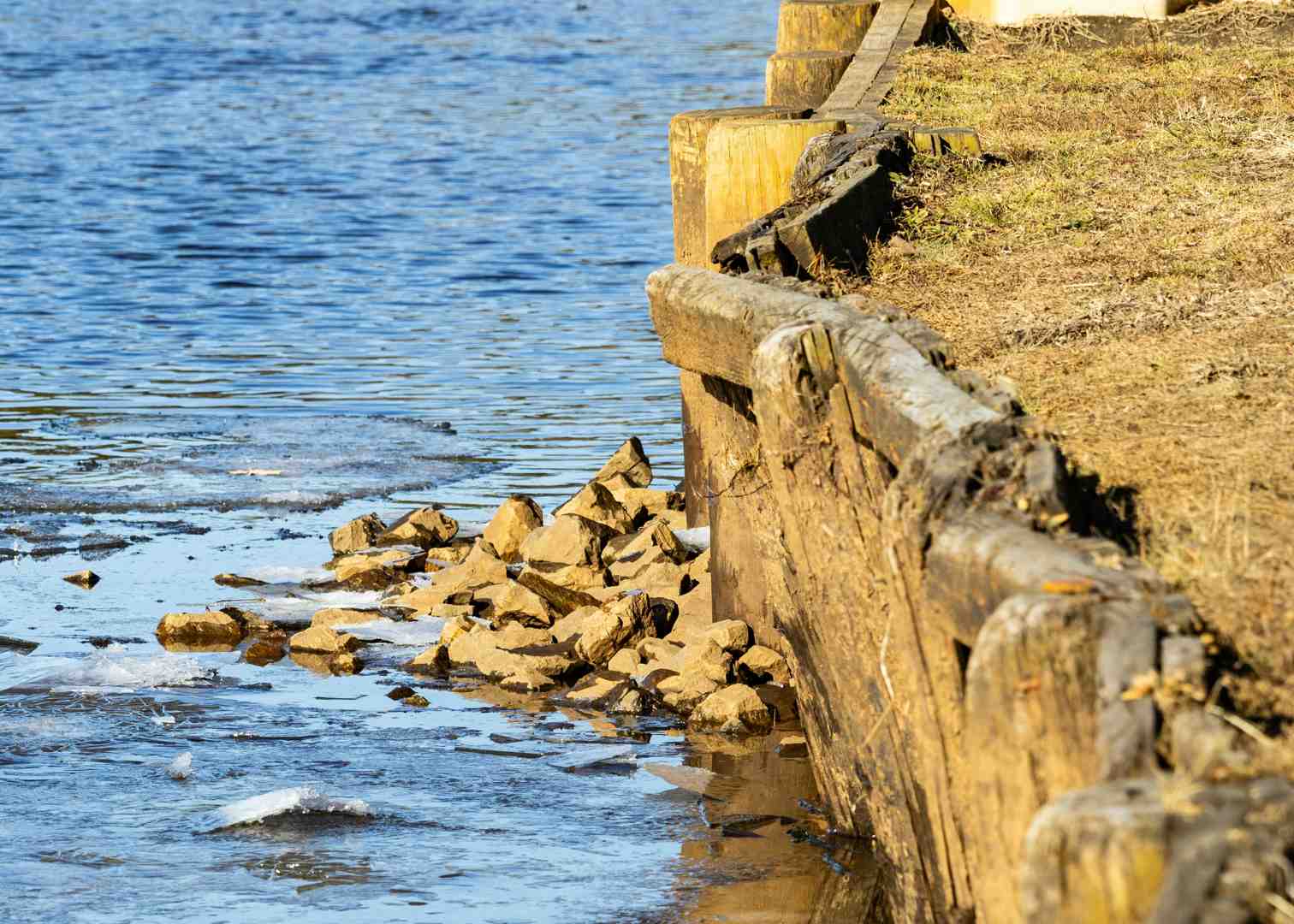
Every successful retaining wall construction project begins with a solid plan. The first decision is the wall type. Gravity walls, often built with interlocking concrete blocks, rely on their own mass and a slight backward lean. They are ideal for walls up to about four feet. For taller or more demanding applications, cantilevered walls (reinforced concrete) or anchored walls (using cables) may be necessary. Segmental retaining walls, which use modular blocks, are a flexible and durable choice we often use in communities like Southampton and West Islip.
Material selection affects both appearance and longevity. Concrete blocks are a popular choice for their durability, modular design, and low maintenance. Natural stone offers timeless beauty but requires more skilled labor and is more expensive. Treated timbers or railroad ties are an economical option but are prone to decomposition in Long Island's humid climate and are often prohibited by local codes for structural use in towns like Merrick or Lloyd Harbor.
Wall height and setback are dictated by physics and local regulations. On Long Island, walls over two to four feet often require permits and professional engineering plans. Walls exceeding four feet almost always require geogrid reinforcement to handle soil pressure. Before starting any project in Babylon or Cold Spring Harbor, it's crucial to verify local permit requirements, a process Pearce Marine Construction can manage for you.
For more inspiration on what's possible with well-designed retaining walls, explore our guide on retaining wall ideas.
| Material | Durability | Cost (Installation) | Installation Difficulty |
|---|---|---|---|
| Concrete Blocks | High | Moderate | Moderate |
| Natural Stone | Very High | High | High |
| Timber (Railroad Ties) | Low to Moderate | Low | Moderate |
Building a Solid Foundation: Trenching and the First Course
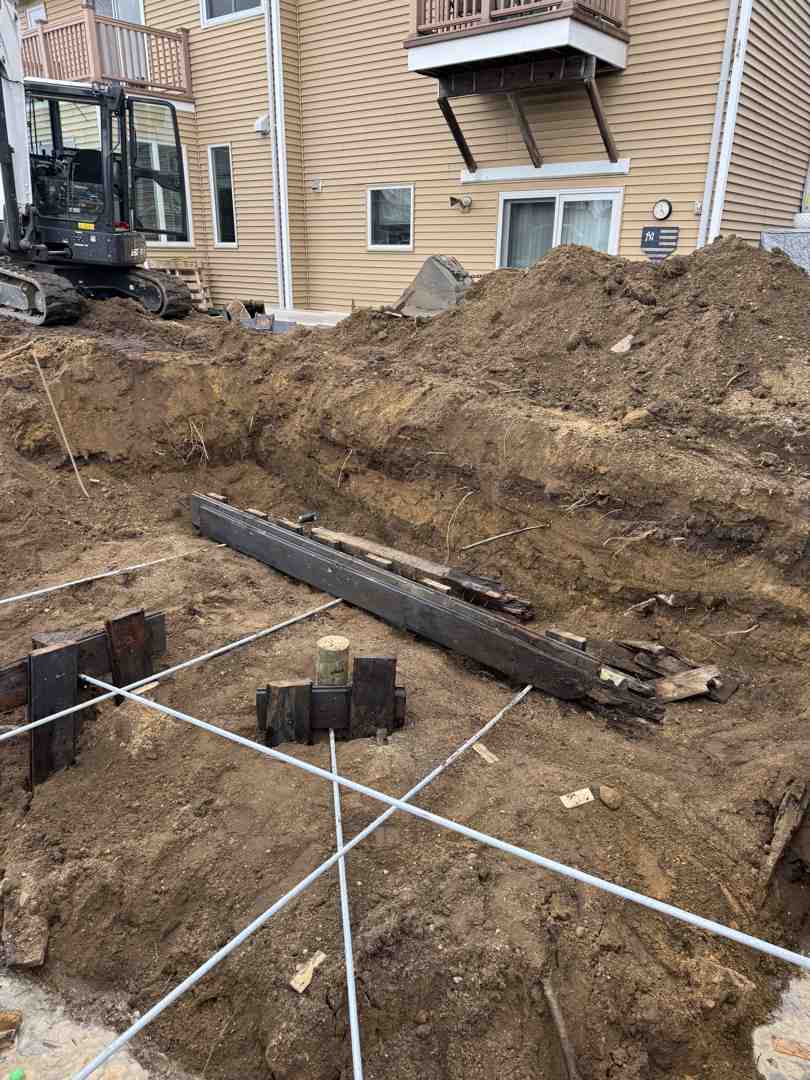
A retaining wall is only as strong as its foundation. Before digging, call 811 to locate underground utilities. The trench must be deep enough to bury about half of the first course of blocks, plus 3-6 inches for a compacted gravel base. This typically means a trench depth of 8-16 inches, depending on block size and overall wall height. The width should be about twice the block's depth to allow room for drainage material.
Excavate the trench down to solid, undisturbed ground. Line the trench with landscape filter fabric to prevent soil from clogging your drainage stone. Add a 4- to 8-inch layer of free-draining gravel and compact it thoroughly with a plate compactor to create a firm, level pad.
Laying the first course requires absolute precision. Start at the lowest point, ensuring each block is perfectly level front-to-back and side-to-side, using a rubber mallet for minor adjustments. Any error here will be magnified as the wall gets taller. Once the first course is set, fill in and around the blocks with more gravel to lock them in place.
For detailed guidance on foundation best practices that professional builders follow, check out this comprehensive resource.
Stacking for Strength: Building Up and Reinforcing
With a solid foundation, the wall begins to take shape. This phase of retaining wall construction in Long Island communities like Massapequa and Wantagh requires close attention to detail.
The primary rule is to stagger the joints, offsetting the vertical seams of each new layer by at least one-quarter of a block's length. This interlocking pattern distributes weight and prevents weak points. You will likely need to cut some blocks with a wet masonry saw to start new rows and create this pattern.
With each course, sweep the tops of the blocks clean of debris before adding the next layer. Continuously check that the wall is level and properly aligned. After placing each course, fill the block cores and the space immediately behind the wall with free-draining gravel and compact it.
For walls over four feet high, geogrid mesh reinforcement is essential. This polymer mesh is laid horizontally between courses and extends back into the soil. It mechanically locks the wall facing to the soil mass behind it, creating a reinforced zone that prevents the wall from overturning. Geogrid is typically installed every two courses (about 16 inches vertically) and must extend into the backfill for a length equal to at least 60% of the wall's total height. For timber walls, similar reinforcement is achieved with "deadman" anchors.
When you're ready to build a retaining wall that combines structural integrity with lasting beauty, working with experienced professionals makes all the difference. Learn more about professional retaining wall builders who understand what it takes to build walls that last.
Critical Finishing Details & Long-Term Integrity
The final steps in retaining wall construction are where precision meets longevity. These details are critical for ensuring the structure performs flawlessly for decades, especially in the challenging coastal environments across Long Island.
Mastering Drainage in Retaining Wall Construction
Water is the primary enemy of retaining walls. The force of water-saturated soil, known as hydrostatic pressure, can cause even well-built walls to bulge, crack, and fail. This is a major concern in Long Island communities like Bayshore and West Islip. A comprehensive drainage system is non-negotiable.
This system includes:
- Gravel Backfill: A column of free-draining gravel (at least 12 inches wide) is placed directly behind the wall. This allows water to percolate down instead of pushing against the blocks.
- Filter Fabric: This fabric is placed between the native soil and the gravel backfill. It acts as a separator, allowing water to pass through while preventing soil particles from clogging the gravel.
- Perforated Drain Pipe: For walls over 4 feet or in areas with poor drainage, a 4-inch perforated pipe is laid at the base of the gravel column. This pipe collects water and channels it away from the wall to a suitable outlet.
- Surface Grading: The ground above the wall should be graded to direct surface runoff away from the structure.
By implementing these solutions in our projects from Huntington to Wantagh, we ensure our retaining walls are built to last. Proper drainage is the difference between a wall that lasts twenty years and one that lasts a lifetime.
For more insights into creating durable structures on Long Island, refer to our guide on Long Island retaining walls.
Finishing Touches and Common Mistakes in Retaining Wall Construction
The final steps ensure a polished look and long-term durability. Backfill the area behind the gravel drainage zone with suitable soil, adding it in 8-inch layers (lifts) and compacting each one thoroughly. This prevents settlement and directs pressure downward.
Capstones are installed on the top course to provide a finished look and protect the blocks below. They are secured with construction adhesive and should have a slight overhang (1-1.5 inches) to help shed water away from the wall's face.
Avoiding common construction mistakes is critical for a wall's longevity. Be sure to avoid:
- Improper Foundation: A base that is too shallow, narrow, or poorly compacted will lead to failure.
- Inadequate Drainage: Without a proper system of gravel, fabric, and pipe, hydrostatic pressure will build up.
- Not Burying the First Course: At least half of the first block course must be buried for stability.
- Ignoring Setback: Gravity walls require a slight backward lean (batter) to resist pressure.
- Using Poor Backfill: Organic soil or uncompacted fill behind the wall will settle and retain water.
- Forgetting Reinforcement: Walls over 4 feet must have geogrid reinforcement to handle soil loads.
By avoiding these pitfalls in communities like Bellmore and Brightwaters, we ensure our retaining walls are structurally sound for decades.
Understanding the investment involved is also key. Learn more about the cost to build a retaining wall.
Regulations and Maintenance in Nassau and Suffolk County
Building a retaining wall in Nassau and Suffolk County requires adherence to local regulations. Permits are typically required for walls exceeding a certain height, often 2 to 4 feet. Taller walls, especially those near property lines, usually require plans from a structural engineer and must meet setback requirements. Pearce Marine Construction has generational expertise in navigating these local codes in towns from Massapequa to Merrick, ensuring your project is fully compliant.
While professionally built walls are low-maintenance, regular inspections are wise.
- Inspect the Wall: Periodically check for any signs of cracking, bulging, or shifting.
- Check Drainage: Ensure drain outlets are clear of debris so water can flow freely.
- Monitor Surface Water: Make sure the grade still directs water away from the wall.
- Manage Vegetation: Prevent aggressive plant roots from growing into the wall structure.
- Prevent Erosion: Address any soil erosion at the base of the wall promptly.
At Pearce Marine Construction, we build retaining walls with meticulous craftsmanship. We understand the unique challenges of Long Island's environment and construct walls that are not only beautiful but engineered to withstand the test of time. For expert retaining wall and seawall construction on Long Island, trust the generational expertise of Pearce Marine Construction to build structures that last.




Bring Your Vision to Life
Whether you're planning a custom dock, seawall, or boat lift, our experienced team is ready to deliver high-quality marine construction tailored to your needs. Pearce Marine Construction brings craftsmanship, precision, and a deep understanding of Florida’s waterways to every project. Let us help you create a durable, beautiful solution that stands the test of time. Get in touch now for a personalized estimate!