
Deep Anchor Techniques for Sturdy Dock Pilings


Professional Boat Dock Piling Installation for Lasting Stability
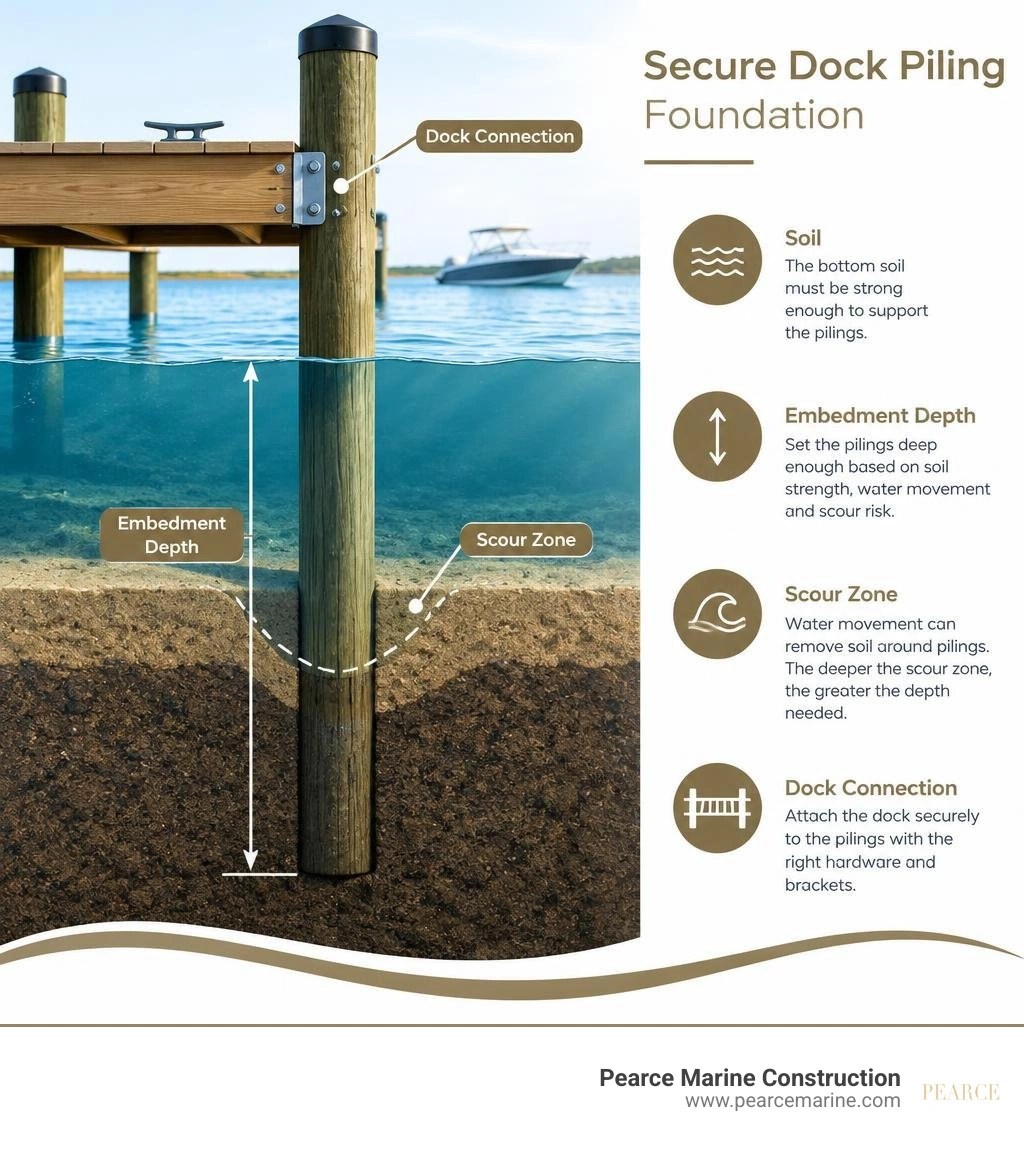
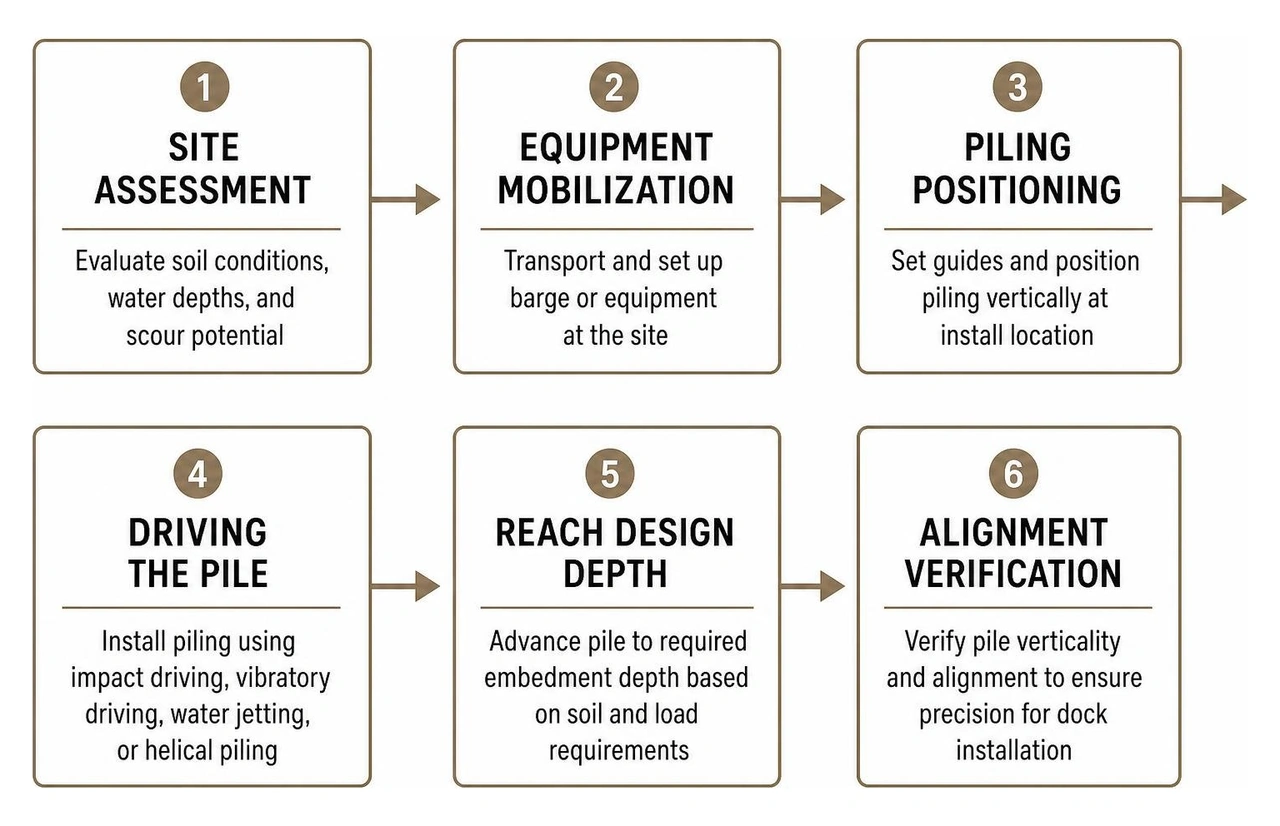
Executing a resilient boat dock piling installation requires comprehensive substrate geotechnical analysis and precise calculations of dynamic marine loads. Marine contractors determine exact pile placement before selecting the mechanical driving or jetting method engineered for seabed density. Whether undertaking a new residential boat dock installation, an expansive commercial dock installation, or specialized dock repair services, establishing sufficient embedment depth protects against seabed scour, shifting currents, and vertical uplift.
In Nassau and Suffolk Counties, severe tidal fluctuations and changing bottom conditions make advanced marine engineering critical. Pearce Marine Construction is a woman-owned marine construction company serving residential, commercial, and public clients across Long Island, NY.
Boat Dock Piling Installation Methods for Long Island Marine Construction
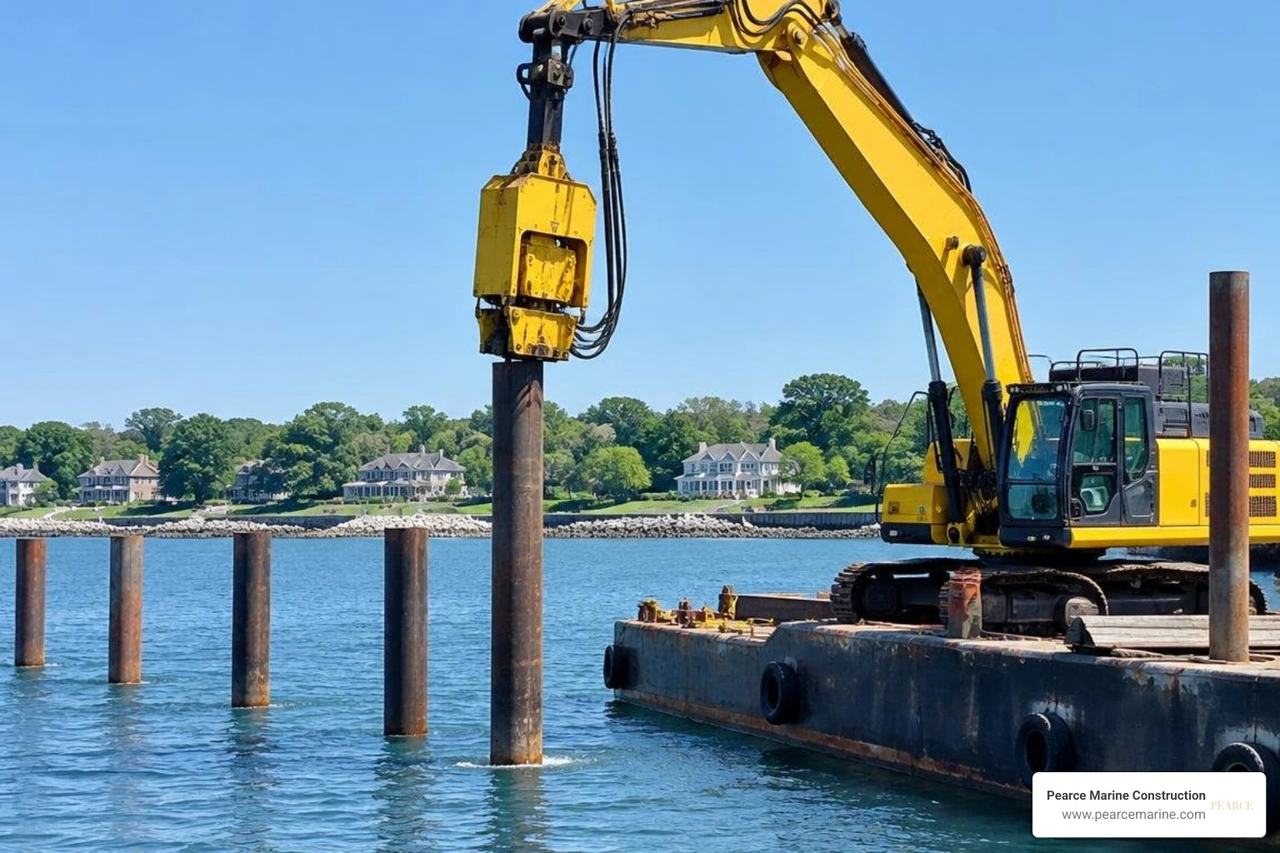
A marine dock is only as resilient as the subterranean foundation holding it against relentless tides, storm surges, and shifting currents. When engineering waterfront structures in Nassau County and Suffolk County communities such as Southampton, West Islip, and West Hampton, choosing the proper mechanical installation method is the single most critical engineering decision. Whether we are constructing fixed piers or integrating custom engineered boat docks and floating docks, the interaction between mechanical drive equipment, soil mechanics, and pile geometry dictates long-term structural integrity.
Floating dock configurations often rely on heavy-duty piling guide brackets that slide along vertical pilings as water levels fluctuate. To ensure these systems function without binding or warping, the supporting vertical piles must be installed with millimeter precision using specialized marine machinery.
For an overview of floating dock systems, see Snap Dock’s Floating Dock System.
Core Methods in Boat Dock Piling Installation
Pearce Marine contractors utilize four primary mechanical methods to advance pilings into coastal substrates: impact driving, vibratory installation, water jetting, and helical screw installation.
- Impact Driving: Using crane-mounted diesel, hydraulic, or drop hammers, impact driving delivers high-energy blows (often exceeding 10,000 foot-pounds per strike) directly to the pile head. This method is the benchmark for load verification because engineers track "blow counts" (the number of hammer strikes required per inch or foot of penetration) to verify end-bearing capacity in dense clay or hardpan.
- Vibratory Driving: Hydraulic vibratory drivers clamp onto the pile head and oscillate rapidly at high frequencies. This temporarily fluidizes granular soils (like saturated sands), allowing the pile to descend smoothly under the combined weight of the driver and pile. It creates significantly less structural shock than impact hammers and operates with moderate noise levels.
- High-Pressure Water Jetting: Water pumps deliver pressurized streams through high-pressure nozzles down the tip of the piling, displacing loose sands and silts to create a temporary pilot void. Once the piling reaches design depth, the water flow stops, and sediment settles tightly around the shaft.
- Helical Piling: Hydraulic torque motors rotate high-strength steel shafts with welded helical plates deep into the seabed. By monitoring real-time installation torque, operators can calculate precise axial hold-down and compressive load ratings instantly.
To explore these construction processes further, see our breakdown of specialized marine pile driving techniques.
| Installation Method | Soil Suitability | Noise & Vibration Levels | Primary Equipment Required |
|---|---|---|---|
| Impact Driving | Dense sand, stiff clay, hardpan, rock layers | High noise, high ground vibration | Marine barge crane, impact hammer (diesel/hydraulic), driving leads |
| Vibratory Driving | Loose-to-dense saturated sands, fine gravel, soft silts | Moderate noise, low impact vibration | Hydraulic vibratory driver, power pack, excavator or barge crane |
| Water Jetting | Non-cohesive sands, loose gravel, soft mud | Low noise, minimal vibration | High-pressure commercial water pump, jetting manifold, hoist crane |
| Helical Piling | Layered sands, clays, sensitive soils near structures | Very low noise, negligible vibration | High-torque hydraulic drive head, mini-excavator or barge setup |
Soil Substrates and Depth Requirements for Boat Dock Piling Installation
Embedment depth is calculated based on soil cohesion, active scour potential, and total vertical and lateral load calculations. On Long Island, geological conditions vary dramatically. The South Shore—including communities like Massapequa, Wantagh, Bellmore, Babylon, Bayshore, and West Islip—is characterized by deep layers of marine sand and silt. Conversely, North Shore locations like Cold Spring Harbor, Huntington, and Lloyd Harbor feature glacial till, dense clay layers, and embedded rock.
In heavy clay soils, jetting is completely ineffective past the top few inches because cohesive clays do not fluidize under water pressure; such soils require impact driving or pre-drilling. Furthermore, scour—the erosion of seabed sediment around the pile base caused by strong currents—reduces effective embedment over time if not accounted for during engineering.
Standard structural penetration baselines include:
- Standard Pedestrian Walkways & Docks (Sandy Substrates): Minimum embedment of 4 to 6 feet into competent load-bearing layers.
- Heavy Boat Lifts & Structural Mooring Piles: Minimum embedment of 6 to 8 feet into dense sand or stiff clay to counteract massive dynamic loading.
- Rocky Substrates & Hardpan (North Shore Harbors): 4 to 5 feet of seated penetration, frequently utilizing drilled sockets or rock-pointed steel tips.
- Storm-Exposed Open Bays: Embedment reaching 15 to 25+ feet to account for localized storm scour and extreme wave action.
For deep anchoring in varied substrates, review our engineered helical pile installation.
Piling Material Selection and Durability Factors
Choosing the right structural material ensures your marine installation withstands biological attack, saltwater corrosion, and tidal stresses.
- CCA-Treated Timber: Timber pilings treated with Chromated Copper Arsenate (at marine retention levels of 2.5 pounds per cubic foot for saltwater) provide excellent resilience and traditional aesthetics. They typically last 15 to 25 years in marine environments. To prevent infestations from marine borers (such as shipworms), high-density polyethylene (HDPE) or PVC barrier jackets are heat-shrunk or clamped over the splash and mud zones.
- Prestressed Concrete: Manufactured with high-strength concrete cast over tensioned steel strands, prestressed concrete piles resist saltwater intrusion, eliminate rot, and deliver immense compressive load capacities. They are ideal for heavy commercial installations and exposed wave environments.
- Steel Pipe Pilings: Capable of supporting massive structural loads (ranging between 60 and over 400 kips, where 1 kip equals 1,000 pounds), steel pipe pilings provide unmatched shear strength in rocky or deep-water locations. To protect against severe splash-zone corrosion, steel pilings utilize epoxy coatings, heavy hot-dip galvanization, and sacrificial anode cathodic protection.
- Fiberglass & Composite Pilings: Impervious to marine borers, rust, and chemical degradation, fiberglass composites offer exceptional service life in harsh saltwater environments with virtually zero material degradation.
To discover comprehensive infrastructure designs, read about our long-term marine construction solutions.
| Piling Material | Expected Marine Lifespan | Load Bearing Capacity | Saltwater Corrosion & Degradation Resistance |
|---|---|---|---|
| CCA-Treated Timber | 15–25 Years (30+ with PVC jackets) | Moderate (Residential docks, light berthing) | Vulnerable to marine borers; requires preservative treatment and mechanical jacketing |
| Prestressed Concrete | 50+ Years | Extremely High (Commercial piers, severe wave action) | Highly resistant to marine rot and saltwater; requires dense aggregate and correct concrete cover |
| Structural Steel Pipe | 30–50+ Years (with cathodic protection) | Superior (60 to 400+ kips) | Subject to splash-zone oxidation; requires epoxy coatings and sacrificial zinc anodes |
| Fiberglass Composite | 50+ Years | High (Excellent flexural strength) | Completely immune to rot, rust, marine borers, and chemical leaching |
Engineering Sturdy Dock Foundations in Nassau and Suffolk Counties

Waterfront construction along Nassau and Suffolk Counties requires deep local knowledge of tidal ranges, littoral drift, and micro-climates. From Southampton and West Hampton to Merrick and Brightwaters, every coastal installation demands engineered defenses against lateral drift and seasonal freeze-thaw cycles.
Ice Heave Mitigation and Alignment Best Practices
In cold coastal bays, ice sheets freezing around dock pilings create massive vertical uplift forces during rising tides. When winter ice sheet thickness expands, the upward buoyancy can literally jack pilings out of the seabed if they lack sufficient friction or anchorage.
To prevent ice jacking and structural shifting:
- Uplift-Resistant Embedment: Pilings must penetrate well below the dynamic scour line and active frost layers, utilizing deep friction layers or mechanical helical flights that lock into dense basal stratums.
- Structural Cross-Bracing: Bolting heavy timber or galvanized steel sway braces in an "X" pattern above mean high water transfers lateral wind and current loads evenly across the entire pile cluster.
- Alignment Rigging: To prevent crooked driving, contractors utilize rigid steel driving templates secured to the barge or existing framework, verified continuously using multi-plane optical lasers and digital inclinometers.
For detailed framing methods following pile installation, consult our dock installation process.
Professional Execution and Long Island Marine Construction Standards
Executing marine construction in Long Island waterways requires precise construction controls that protect the shoreline while crews build durable docks, piers, walkways, retaining walls, bulkheads, and anchoring systems.
Environmental protection during pile installation requires:
- Turbidity Control: Deploying weighted silt curtains around the marine work zone to contain suspended sediments during jetting or driving.
- Acoustic Mitigation: Using soft-start hammer sequences and pneumatic bubble curtains to disrupt underwater shockwaves and protect local fish habitats.
- Equipment Staging and Load Control: Positioning marine cranes, pile-driving barges, and material deliveries to maintain safe working clearances, protect adjacent shoreline structures, and keep pile alignment consistent throughout installation.
Conclusion
Building a dock that withstands fierce Atlantic nor'easters, shifting tidal currents, and winter ice heave demands expert engineering and precision driving equipment. Settling for undersized pilings, shallow penetration depths, or improper driving methods can lead to structural shifting, dock sagging, and costly foundation failures.
Pearce Marine Construction is a woman-owned marine construction company serving residential, commercial, and public clients in Nassau and Suffolk Counties on Long Island, NY. With unrivaled local expertise, heavy-duty marine equipment, and meticulous craftsmanship across Massapequa, Merrick, West Islip, Babylon, Southampton, West Hampton, Cold Spring Harbor, Huntington, and Lloyd Harbor, Pearce Marine stands out as the superior choice for durable waterfront infrastructure.
When you demand marine construction built right the first time, Pearce Marine Construction delivers superior craftsmanship and proven local engineering. Contact our marine engineering team today to schedule your shoreline site evaluation and explore our professional waterfront dock installation services.



Bring Your Vision to Life
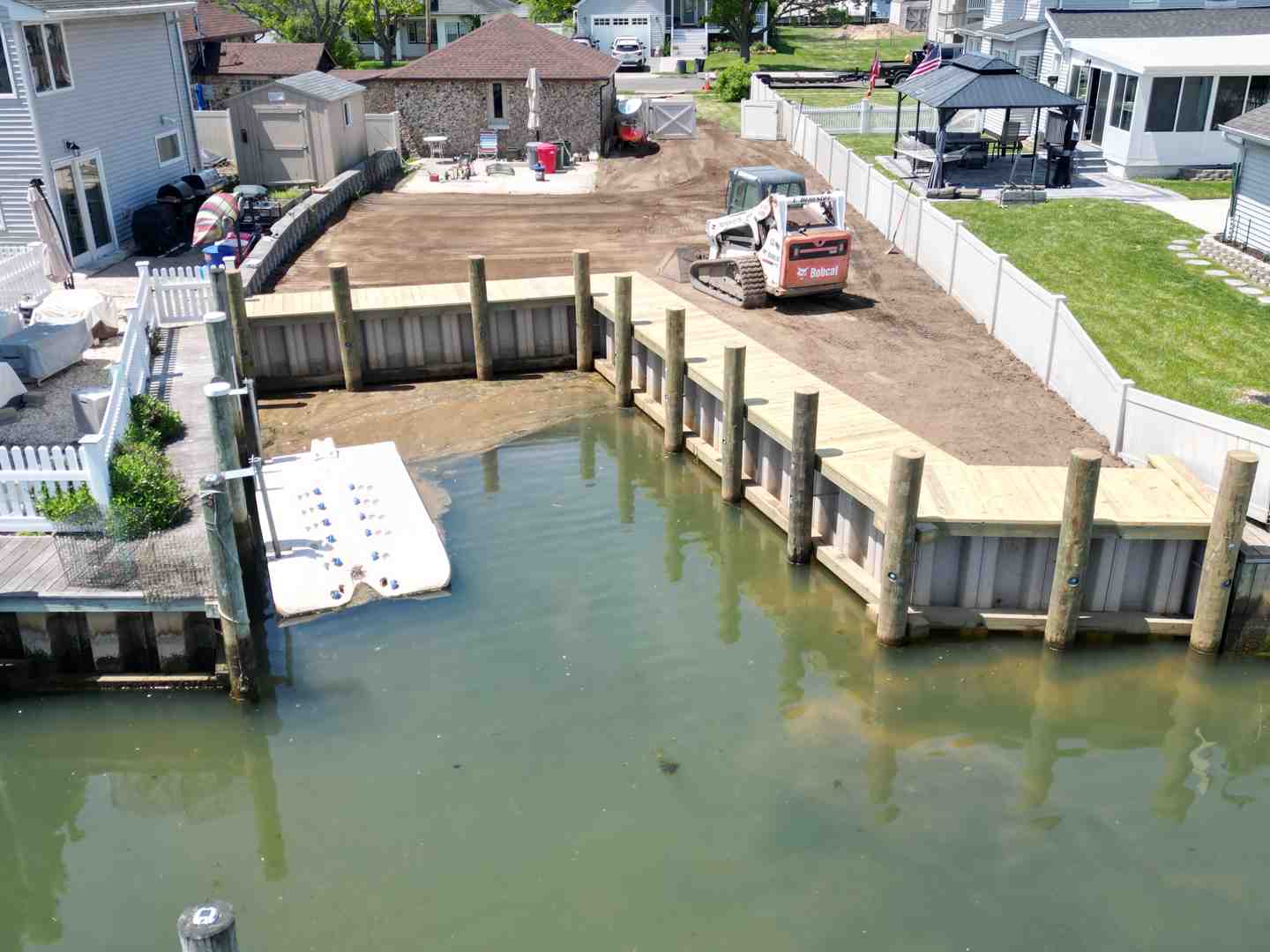
Whether you're planning a custom dock, seawall, or boat lift, our experienced team is ready to deliver high-quality marine construction tailored to your needs. Pearce Marine Construction brings craftsmanship, precision, and a deep understanding of Long Island's waterways to every project. Let us help you create a durable, beautiful solution that stands the test of time. Get in touch now for a personalized estimate!