
The Unsung Heroes of the Coast: A Deep Dive into Waterfront Retaining Walls

_compressed.avif)
Fortifying Your Long Island Shoreline
_compressed.jpg?alt=media&token=6cc600ed-e04d-4ff9-8a04-5b0519367465 "Waterfront retaining wall - Waterfront retaining walls")
If you own waterfront property in Nassau or Suffolk County, you know the challenge: Long Island's shorelines face a constant assault from storms and wave action. Without proper protection, your land can disappear into the water. Homes along the Southampton, West Hampton, and West Islip shorelines survive because of waterfront retaining walls—engineered structures that prevent erosion and protect valuable property.
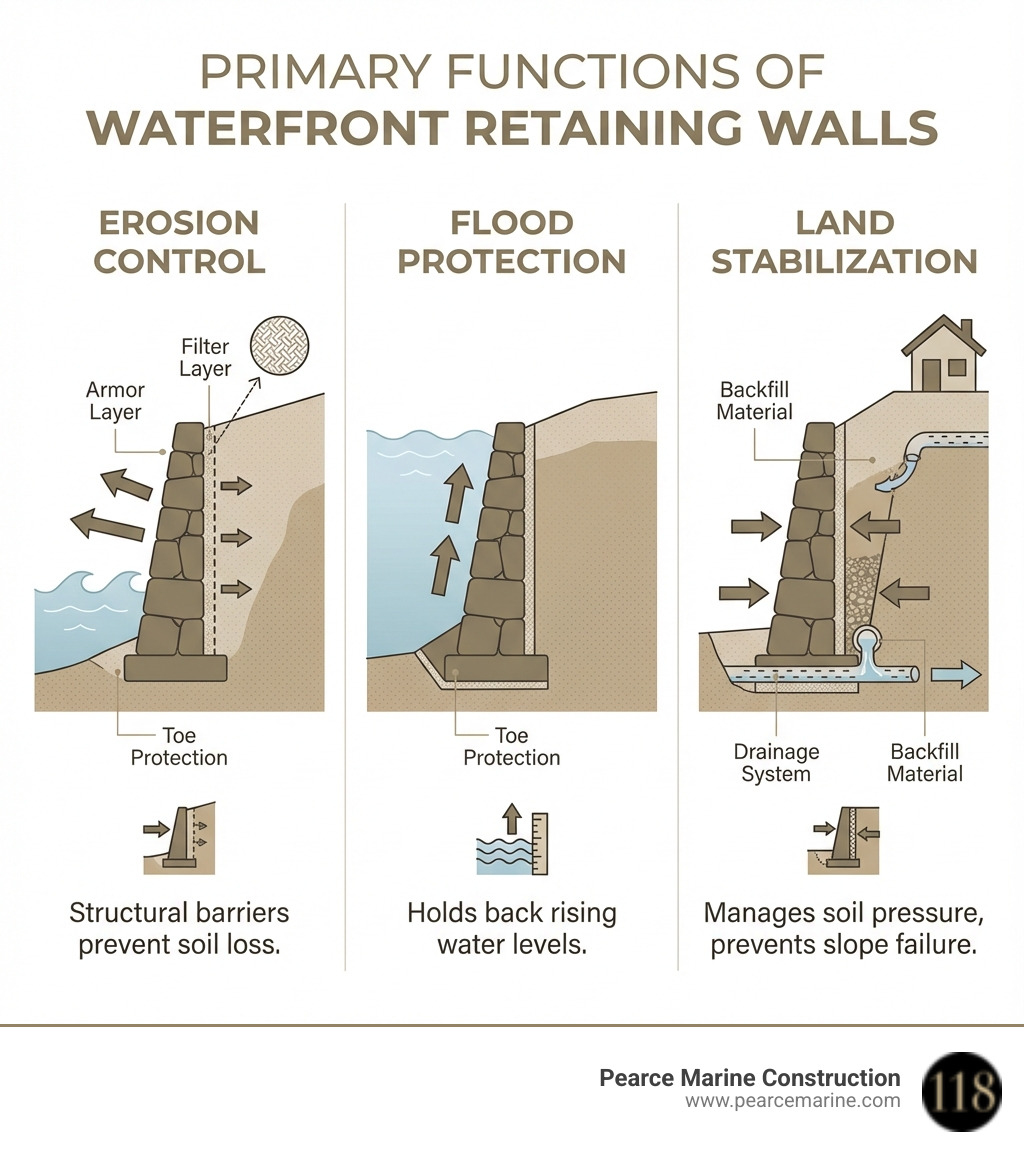
These aren't just piles of stone; they are precision-built systems. A retaining wall's primary function is to hold back soil and manage land elevation, differing from a seawall which is built to withstand direct wave forces.
Key Components of Waterfront Retaining Walls:
- Armor Layer - The visible face that resists water and wave forces
- Filter Layer - Prevents soil migration while allowing drainage
- Toe Protection - Anchors the base and prevents undermining
- Drainage System - Manages hydrostatic pressure behind the wall
- Backfill Material - Supports the structure and distributes loads
When constructed correctly by experienced marine contractors, these walls can protect your property for 30 to 50 years or more. When built poorly, they can fail within seasons, taking your investment with them. Understanding the fundamentals of their construction is key to making an informed decision about protecting your property.
Mastering the Build: A Guide to Constructing Waterfront Retaining Walls
The Foundation of Protection: Functions and Benefits
At Pearce Marine Construction, we know waterfront retaining walls are strategic investments in your Long Island property. Their functions are critical for any owner in Nassau or Suffolk County, from Massapequa to Babylon.
- Erosion Control: A retaining wall is a robust shield against the relentless lapping of waves and storm surge that eats away at your shoreline, preventing land loss. This is the foundation of effective coastal erosion control.
- Flood Mitigation: While seawalls are for direct wave impact, retaining walls also hold back rising floodwaters during storms, protecting your home from inundation and the toxins they carry.
- Soil Stabilization & Usable Land: For sloped properties, a wall prevents soil slides and stabilizes the ground, which is essential for any structures built above. This process can also transform unstable slopes into flat, usable land for gardens or patios.
- Aesthetic & Value Increase: A well-built wall improves the curb appeal of your home in West Hampton or Southampton. It defines property lines and provides a clean edge to your waterfront, increasing property value for decades.
Choosing Your Armor: Materials for Waterfront Retaining Walls
Selecting the right material for your waterfront retaining wall in Nassau and Suffolk Counties is a crucial decision balancing durability, aesthetics, and budget. Each option has unique characteristics suited for different shoreline conditions.
| Material | Lifespan | Pros | Cons | Best Use Case |
|---|---|---|---|---|
| Concrete | Decades (50+ years) | Extremely strong, durable, versatile in design, low maintenance, can be textured/stained. | Higher initial cost, can be rigid and crack if not properly engineered/maintained. | High-impact areas, commercial properties, where maximum strength and longevity are paramount, such as in Huntington or Bellmore. |
| Steel Sheet Pile | 30-40+ years | Very strong, resists high wave action, good for deep water applications, relatively thin profile. | Susceptible to corrosion in saltwater (requires protective coatings), can be aesthetically industrial, higher cost. | High-energy shorelines, commercial docks, deep water applications, critical infrastructure in areas like Brightwaters. |
| Vinyl | 50+ years | Non-corrosive (ideal for saltwater), resistant to marine borers/UV, lightweight, various colors, low maintenance. | Can be more expensive than wood, installation can be complex, may not suit all aesthetic preferences. | Saltwater environments, where longevity and corrosion resistance are key, residential applications in coastal areas of Nassau County. |
| Wood/Timber | 20-30 years | Natural aesthetic, relatively lower initial cost, easier to repair. | Susceptible to rot, marine borers, requires regular maintenance (treatments), shorter lifespan than other materials. | Calmer waters, freshwater applications, natural aesthetic preference, areas with less severe wave action. See our timber bulkhead construction guide. |
| Stone/Riprap | Decades (often 50+ years) | Natural appearance, environmentally friendly (allows water permeability), flexible, easy to repair/replace individual stones. | Requires significant footprint, not suitable for vertical walls, can be costly for large projects, may shift over time. | Natural shorelines, low-to-moderate energy environments, where a softer, more permeable solution is desired. See our insights on rock revetment. |
| Composite Polymers | 50+ years | Extremely durable, resistant to rot, marine borers, UV, no corrosion, often made from recycled materials. | Higher initial cost, can be difficult to install, may have a less natural appearance than wood or stone. | Similar to vinyl but often with improved strength and durability, excellent for long-term, low-maintenance solutions. |
Our experts help you choose the right material by assessing your property's specific conditions—from calm canals in Massapequa to exposed bayfronts in West Islip. We consider water type, wave action, and soil conditions to recommend the best solution, whether it's robust concrete sea wall construction or corrosion-resistant vinyl seawall construction.
Design & Engineering: Types of Walls and Key Considerations
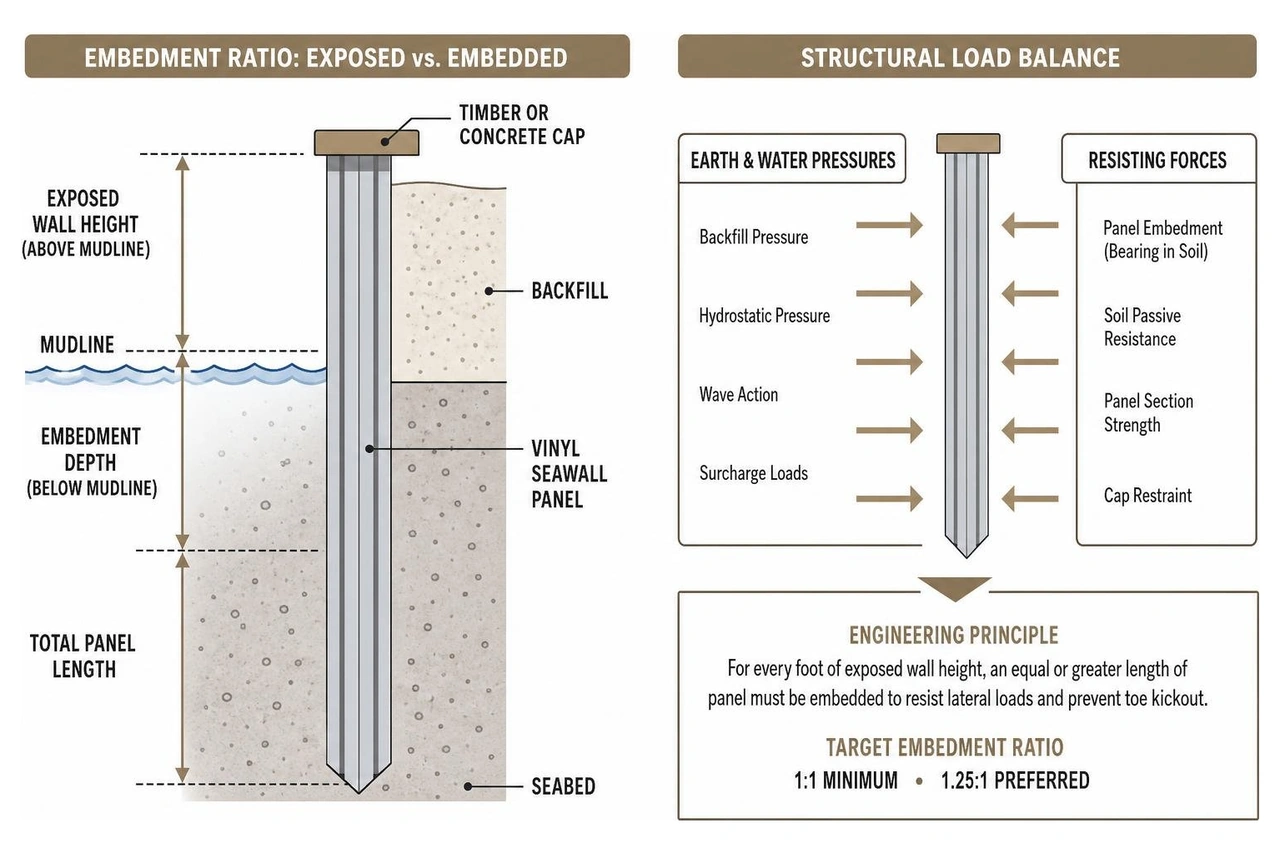
Proper engineering is crucial for a long-lasting waterfront retaining wall. While a retaining wall's main job is to hold back soil, a seawall is specifically built to protect against direct wave action, a key distinction we cover in our guide to bulkhead and seawall construction.
Common structural types include:
- Gravity Walls: Rely on their own massive weight (large stones, mass concrete) to resist soil pressure. Best for shorter walls.
- Cantilever Walls: Use a footing that extends under the backfill, using the soil's weight to stabilize a thinner vertical stem. Made of reinforced concrete or steel, they are effective for taller walls.
- Anchored Walls: Used for very tall walls or high-pressure situations, these are cantilever-style walls with additional support from anchors drilled into stable soil behind the wall.
Our designs follow rigorous engineering principles, like those from the U.S. Army Corps of Engineers. We carefully analyze several critical site factors for every Long Island project:
- Wave Action: The energy of the water body, whether a calm canal in Massapequa or the open bay in West Islip, dictates the required wall strength.
- Soil Conditions: Geotechnical assessments of your Nassau County property's soil (sandy, clay, etc.) are vital for designing a stable foundation.
- Hydrostatic Pressure: We design effective drainage systems (weep holes, granular backfill) to relieve water pressure behind the wall, preventing failure.
- Aesthetics: Functionality is key, but we also ensure the wall improves your property's beauty, integrating features from our retaining wall ideas ultimate guide.
Ensuring Longevity: Maintenance, Repair, and Regulations
A well-built waterfront retaining wall requires proper maintenance to ensure its longevity against the forces of nature on Long Island. We advise property owners to conduct regular inspections.
Maintenance and Repair:Periodically check for cracks, bulging, or shifting. Ensure weep holes—small drainage openings—are clear of debris to relieve hydrostatic pressure. Prompt repair is essential. Minor cracks can be sealed, but significant bulging or leaning requires immediate professional attention to prevent catastrophic failure. Our team is experienced in all types of seawall repair services, including bulkhead washout repair.
Permitting and Regulations:Navigating local regulations is a critical part of any waterfront construction in Nassau and Suffolk Counties. New walls, replacements, and even major repairs require permits from agencies like local town building departments and the NYSDEC. This is where the importance of a local expert is non-negotiable. Pearce Marine Construction has decades of experience with the specific requirements in towns like Merrick, Wantagh, and West Islip. We manage the complex permit process, from engineering plans to environmental assessments, ensuring your project is compliant and avoiding costly delays. Our guide to marine construction permits in Massapequa offers more local insight.
Partnering with Experts for Your Shoreline Project
The Cost and Lifespan of Your Waterfront Retaining Walls Investment
Investing in a waterfront retaining wall is a significant decision. While a final price requires a site assessment, key cost factors include:
- Material Choice: Concrete and steel have higher upfront costs than wood but offer greater longevity.
- Wall Size: Longer and taller walls require more material and labor.
- Site Accessibility: Difficult access for machinery on properties in West Hampton or Southampton increases logistical costs.
- Complexity: Engineering needs, soil conditions, and specialized equipment all affect labor costs.
- Permitting & Engineering: These are necessary costs to ensure a legal and structurally sound project.
For a detailed breakdown, see our guide on the cost to build a retaining wall.
The Typical Lifespan varies by material:
- Steel: 30-40+ years with proper corrosion protection.
- Concrete: 50+ years with maintenance.
- Vinyl & Composites: 50+ years, offering excellent corrosion resistance.
- Wood/Timber: 20-30 years, requires regular maintenance.
- Stone/Riprap: 50+ years, highly durable and flexible.
A retaining wall is a long-term investment that protects against erosion and flooding, adding immense value and peace of mind for generations on Long Island.
Why Professional Construction is Non-Negotiable
For waterfront retaining walls on Long Island, professional construction is a necessity. The marine environment demands specialized expertise that only seasoned marine contractors possess.
At Pearce Marine Construction, we bring generational expertise and meticulous craftsmanship to every project from Massapequa to Southampton. Our engineering knowledge is paramount; we analyze soil mechanics and calculate hydrostatic pressure to design a wall that lasts. A poorly engineered wall is destined to fail.
Our local experience across Nassau and Suffolk Counties is invaluable. We understand the unique environmental conditions and regulatory landscapes of towns like West Islip and Huntington. We have a proven track record of navigating the complex permitting process, ensuring your project is compliant and proceeds smoothly.
As a woman-owned company serving Long Island, we are committed to excellence. Our services, including the expert pile driving services often required for these walls, are delivered with unparalleled skill. Entrust your property to experts who understand the science and craft of building structures that stand the test of time and tide.



Bring Your Vision to Life
Whether you're planning a custom dock, seawall, or boat lift, our experienced team is ready to deliver high-quality marine construction tailored to your needs. Pearce Marine Construction brings craftsmanship, precision, and a deep understanding of Florida’s waterways to every project. Let us help you create a durable, beautiful solution that stands the test of time. Get in touch now for a personalized estimate!