
From Plans to Piers: Crafting Your Finger Pier Floating Dock


Finger pier floating dock construction is a crucial aspect of creating effective and adaptable waterfront spaces, whether for leisure or utility. Floating docks stand out due to their ability to rise and fall with the water, offering versatility for different water levels and conditions. These docks connect seamlessly with main docks, providing additional space while maintaining a minimal footprint. Here's a quick summary of why they're important:
- Versatility: Adaptable to changing water levels
- Efficiency: Easy to install and modify
- Space Maximization: Long, narrow size fits tight areas
- Customizable: Configurable to suit specific needs and environmental conditions
Floating docks are invaluable for waterfront property owners in places like Long Island. They provide a stable yet flexible solution to common challenges like shoreline erosion and water level fluctuations.
Understanding Finger Pier Floating Dock Construction
Materials and Tools
When constructing a finger pier floating dock, the choice of materials is critical for ensuring durability and performance. Treated wood is a popular option due to its resistance to rot and insects, which is essential for withstanding the harsh marine environment. For improved structural integrity, galvanized connectors are used to join wooden components. These connectors resist corrosion, prolonging the lifespan of the dock.
Aluminum is another material often considered for floating docks. It offers a lightweight yet strong alternative to traditional materials. Aluminum docks are low-maintenance and do not rust, making them ideal for areas with high salinity.
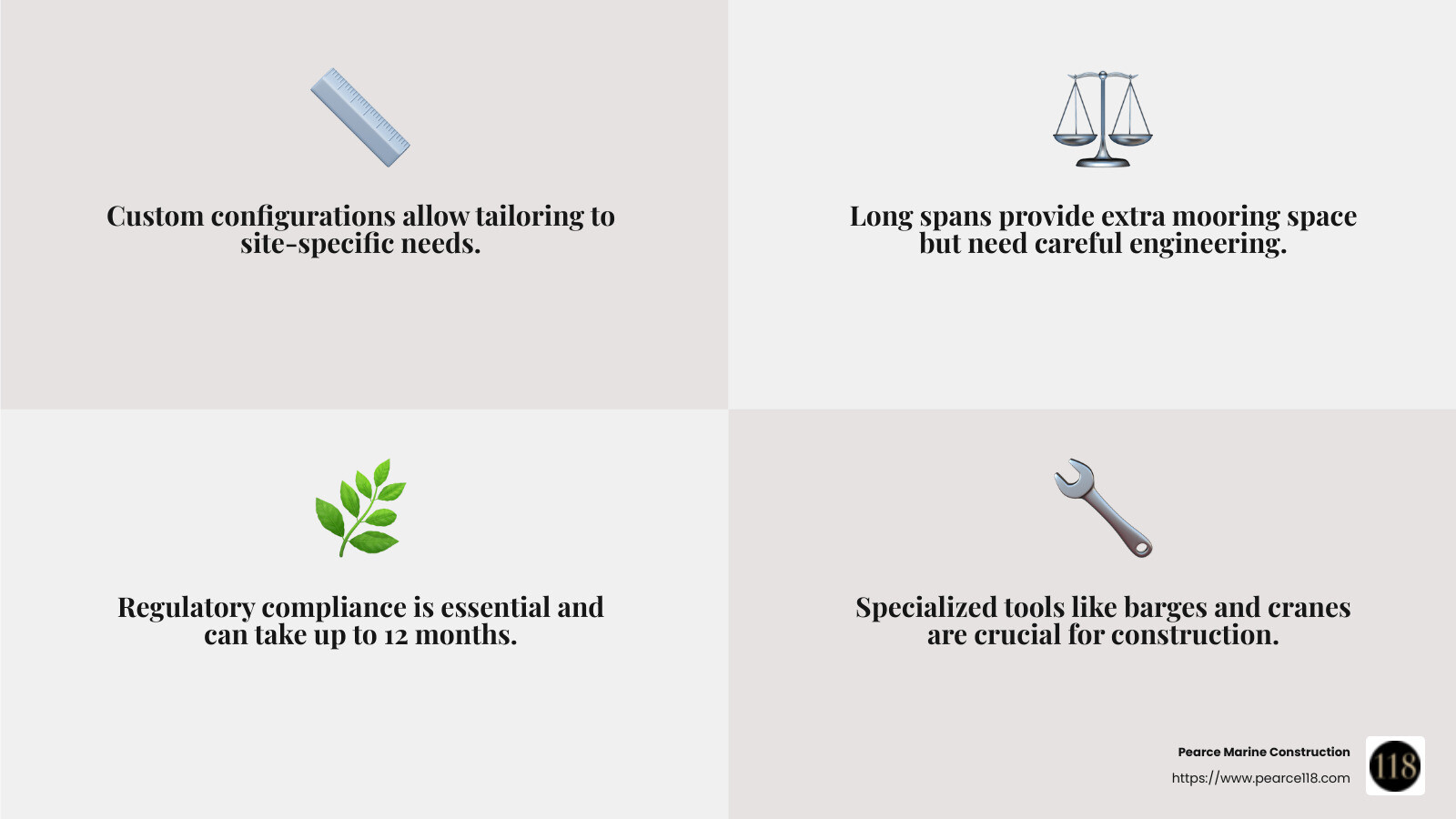
For tools, specialized marine construction equipment is necessary. This includes barges and cranes for transporting and positioning heavy materials. Ensuring your contractor has access to such equipment is key to a successful build.
Design Considerations
Designing a finger pier floating dock involves several important considerations. Custom configurations are often required to meet the unique needs of each site. This means that the dock can be custom in terms of length, width, and shape to fit specific spaces or to comply with local regulations.
Long spans are a common feature in finger piers, allowing them to extend from the main dock and provide additional mooring space. However, these spans must be carefully engineered to ensure stability and safety.
Regulatory constraints can greatly impact the design and construction process. Permitting is a crucial step, as docks must comply with local zoning laws and environmental regulations. This process can be lengthy, often taking 9-12 months, especially in regions with complex regulatory environments like Dade County. Partnering with a company experienced in navigating these requirements can expedite the process and ensure compliance.
By considering these materials, tools, and design aspects, you can ensure a well-constructed finger pier floating dock that meets your specific needs and withstands the test of time.
Next, we will dig into the Building Your Finger Pier Floating Dock section, where we’ll explore the installation process and considerations for joist spacing and water depth.
Building Your Finger Pier Floating Dock
Step-by-Step Guide
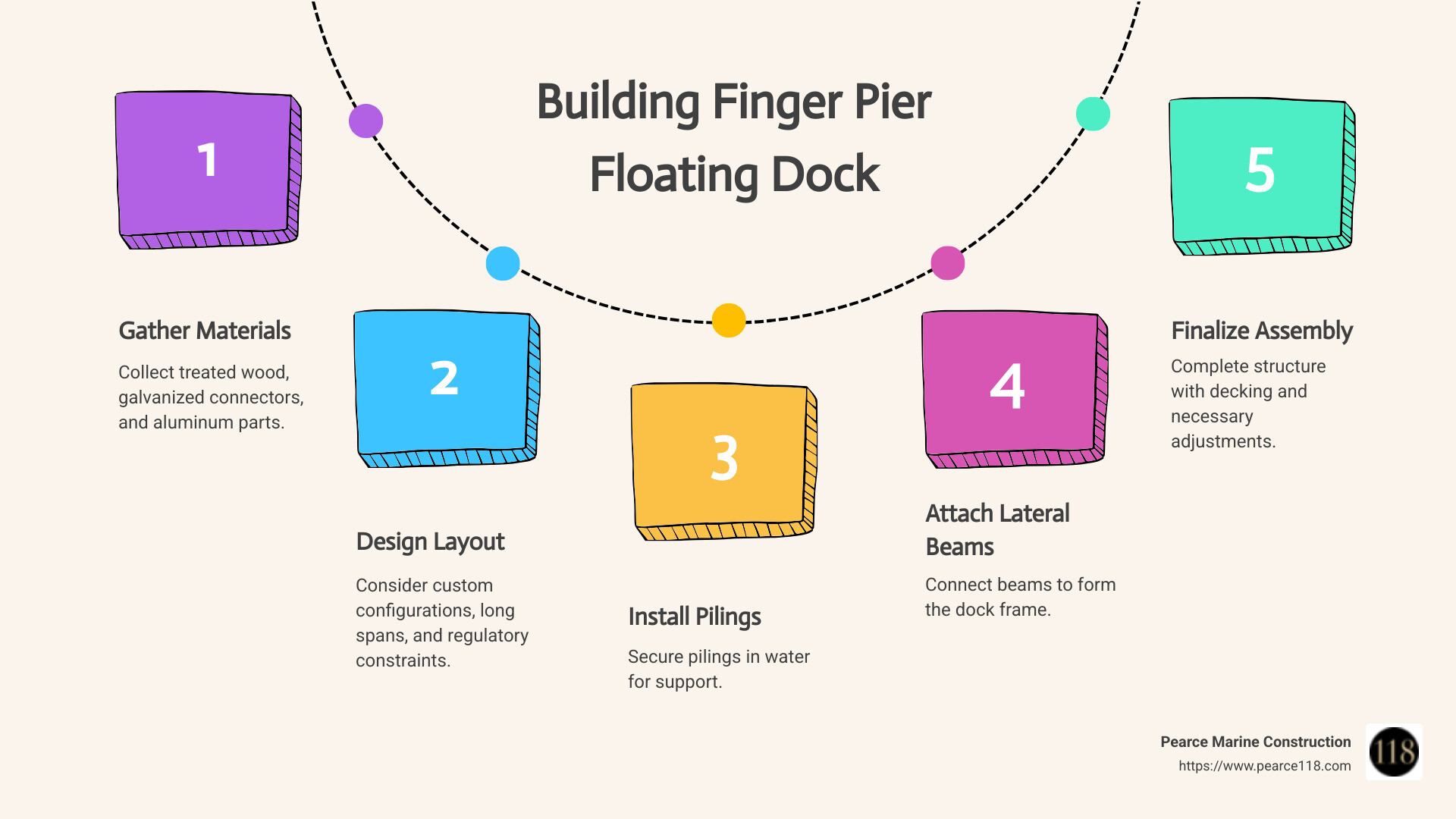
Building a finger pier floating dock can seem complex, but breaking it down into steps makes it manageable. Here’s a simple guide to get you started:
Plans and Permits: Begin with detailed plans. Consider the dock's length, width, and intended use. Before starting construction, ensure you have all necessary permits in place. This step can take time, especially in areas with strict regulations.
Installation of Pilings: Pilings are the backbone of your dock. They provide support and stability. Use treated wood or aluminum for durability. Pilings should be driven deep into the waterbed to withstand environmental forces.
Lateral Beams: Once pilings are in place, install lateral beams. These connect the pilings and form the framework of your dock. Ensure they are level and securely fastened with galvanized connectors.
Joist Spacing: Proper joist spacing is crucial for structural integrity. Typically, joists are spaced 16 inches apart. This provides adequate support for the decking while allowing for some flexibility.
Decking Installation: Choose materials like treated wood or composite decking for a durable surface. Ensure the decking is laid perpendicular to the joists with a small gap for water drainage.
Water Depth Considerations: Ensure the dock is designed for the water depth at your site. A depth of 1.5 to 2 feet is usually sufficient for buoyancy. Adjust the dock’s height to accommodate changes in water level.
Alternatives and Innovations
When building a finger pier floating dock, exploring alternatives and innovations can offer benefits in terms of durability and cost:
Glulams: These are laminated timber beams that provide excellent strength and durability. They are ideal for long spans and heavy loads.
Aluminum Sections: Aluminum is lightweight and resistant to corrosion. It’s a great choice for areas with high salinity or where a low-maintenance solution is preferred.
Scaffold Sections: Using scaffold sections can speed up construction and provide a flexible design. They are easy to install and adjust, making them a popular choice for temporary or seasonal docks.
By following these steps and considering alternative materials, you can build a robust and adaptable finger pier floating dock. Next, we'll explore the Advantages and Disadvantages of Floating Docks, highlighting the pros and cons to help you make informed decisions.
Advantages and Disadvantages of Floating Docks
Floating docks offer unique benefits, but they also come with some challenges. Understanding these can help you decide if a floating dock is the right choice for your needs.
Pros
1. Flexibility and Adaptability
Floating docks are highly flexible. They rise and fall with water levels, making them suitable for areas with fluctuating tides or water levels. This adaptability ensures your dock is always at the right height, providing easy access to your boat or jet ski.
2. Minimal Load on Shoreline
Since floating docks don't require deep pilings, they impose minimal load on the shoreline. This makes them ideal for delicate ecosystems or areas where you want to minimize environmental impact.
3. Ease of Maintenance
Floating docks generally require less maintenance than stationary ones. The materials used, like aluminum or composite decking, are often designed to withstand harsh conditions with minimal upkeep. Regular checks for wear and tear, however, are still essential to prolong their lifespan.
4. Long Lifespan
With proper care, floating docks can last 20-30 years. Using high-quality materials and conducting regular maintenance can extend their life even further, making them a worthwhile investment.
Cons
1. Damage Risk
While floating docks are versatile, they are more susceptible to damage from severe weather conditions. High winds and strong currents can shift or even damage the dock, requiring repairs or adjustments.
2. Noise
Floating docks can produce noise due to movement and contact with the water. This might be a concern in quiet residential areas or for those seeking a tranquil waterfront experience.
3. Water Level Dependency
While floating docks adjust to water levels, their performance can be affected by extreme conditions. Very low water levels might limit their use, while exceptionally high levels could pose safety risks.
By weighing these pros and cons, you can determine if a floating dock aligns with your waterfront goals. Next, we'll tackle some frequently asked questions about finger pier floating dock construction to provide further clarity.
Frequently Asked Questions about Finger Pier Floating Dock Construction
What is the life expectancy of a floating dock?
Floating docks, when well-maintained, can last anywhere from 20 to 30 years. The key to achieving this lifespan is regular maintenance. This includes checking for wear and tear, ensuring all connections are secure, and addressing any damage promptly. Using high-quality materials like treated wood and aluminum can also help extend the dock's life.
How deep does the water need to be for a floating dock?
For optimal performance, the water depth should be at least 1.5 to 2 feet. This depth ensures the dock remains buoyant and stable, even as water levels fluctuate. Shallower waters might not provide the necessary buoyancy, leading to potential instability or grounding of the dock.
What are the disadvantages of a floating dock?
While floating docks offer many advantages, they do come with some drawbacks:
Damage Risk: Floating docks are more prone to damage from severe weather conditions. High winds or strong currents can cause them to shift or sustain damage, necessitating repairs.
Noise: The movement of floating docks can create noise, which might be disruptive in quiet residential areas. This noise results from the dock's contact with the water and its natural movement.
Water Level Dependency: Although floating docks adjust to water level changes, extreme conditions can affect their usability. Very low water levels can limit their functionality, while exceptionally high levels may pose safety concerns.
Understanding these aspects can help you make informed decisions about your dock construction project. Next, we'll explore more about the innovative alternatives available in finger pier floating dock construction.
Conclusion
At Pearce Marine Construction, we pride ourselves on our generational expertise and meticulous craftsmanship. Our dedication to quality ensures that every finger pier floating dock we build is not only functional but also built to last. Based in Long Island, NY, we serve the communities of Nassau and Suffolk County, bringing our skills and passion to every project.
Our team understands the unique challenges of marine construction and works closely with you to design and build docks that meet your specific needs. Whether it's selecting the right materials like treated wood and aluminum or navigating regulatory constraints, we ensure the process is smooth and efficient.
Choosing Pearce Marine Construction means investing in a dock that stands the test of time. Our commitment to excellence and attention to detail are evident in every project we undertake. We don't just build docks; we create lasting structures that improve your waterfront property and your enjoyment of it.
For more information about our floating dock services and how we can help you craft the perfect finger pier floating dock, visit our Boat Docks and Floating Docks service page.
Thank you for considering Pearce Marine Construction. We look forward to helping you bring your waterfront vision to life.



Bring Your Vision to Life
Whether you're planning a custom dock, seawall, or boat lift, our experienced team is ready to deliver high-quality marine construction tailored to your needs. Pearce Marine Construction brings craftsmanship, precision, and a deep understanding of Florida’s waterways to every project. Let us help you create a durable, beautiful solution that stands the test of time. Get in touch now for a personalized estimate!