
Drowning in Options? Find Your Perfect Flood Management Solution


Why Waterfront Properties Need Flood Water Management Solutions Now
Flood water management solutions are engineered systems that protect waterfront properties from rising water, erosion, and storm damage. These solutions rely on professionally constructed defenses, integrated drainage, and site-specific designs to create a resilient shoreline.
Key construction options include:
- Permanent Structural Defenses: Seawalls, bulkheads, and retaining walls that form physical barriers against floodwater.
- Integrated Drainage Systems: French drains and stormwater diversion systems built into your shoreline infrastructure.
- Hybrid Solutions: Combining hard structures with green elements like rain gardens, all supported by marine-grade construction.
The urgency is clear. With global flood damage exceeding $80 billion in 2022 and heavy downpours increasing, the threat is growing. For Long Island property owners in Nassau and Suffolk Counties, rising sea levels, stronger storm surges, and overwhelmed drainage systems are immediate concerns.
This guide focuses on the construction, installation, and engineering of marine structures that protect your property. We'll cover structural defenses like seawalls and bulkheads, engineered drainage, and how professional marine construction creates shorelines that withstand decades of coastal conditions. Understanding these construction options is the first step toward effective flood management.

Understanding Your Flood Risk on Long Island
Living on the waterfront in Nassau and Suffolk Counties means facing real flood risks that require professional structural defenses. Before designing flood water management solutions, we must understand the specific hazards your property faces, the performance of existing infrastructure, and the consequences of failure.
Coastal flooding is a primary concern, caused by storm surges, high tides, and rising sea levels. The immense force of ocean water can overwhelm poorly built shoreline defenses, which is why the engineering and materials behind a seawall or bulkhead are critical for withstanding hydraulic pressure.
Pluvial flooding occurs when heavy rainfall overwhelms drainage systems, causing water to pool on saturated ground. This has become more frequent and intense, making professionally constructed retaining walls and drainage systems essential for managing runoff.
Riverine flooding happens when local waterways, creeks, and estuaries overflow during intense rain, eroding unprotected shorelines and undermining nearby marine structures.
The consequences include long-term erosion, structural failure of bulkheads and seawalls, and expensive foundation damage. Proactive construction is the only way to mitigate these risks.
We encourage property owners to use resources like First Street™ to learn if your home is threatened by flooding to assess their specific risk. You can also read more info about Long Island Beach Erosion to understand local shoreline changes. A complete understanding of your flood risk allows us to engineer and construct shoreline protection that provides lasting security.
Hardened Defenses: Constructing Permanent Flood Protection
For Long Island waterfront property, hope is not a strategy. You need engineered barriers that can withstand the Atlantic's forces. Permanent structural defenses are the backbone of effective flood water management solutions, protecting your investment for decades.
This level of construction requires creating structures to face relentless wave action and storm surges. Our work in Marine Structures Design is focused on building protection that lasts.
Our process begins with a thorough site investigation and subsurface modeling to analyze soil composition, groundwater levels, and water movement. This data-driven approach determines the forces your defenses will face and how to anchor them securely. We use only materials proven in Long Island's harsh marine environment, including marine-grade concrete, rust-proof vinyl sheet piling, high-strength steel sheet piling, and treated timber.
However, the best materials fail if not installed correctly. Marine construction requires specialized equipment and experienced crews who understand coastal dynamics. Every pile driven and every connection made is critical to the structure's integrity. When you work with experienced Shoreline Protection Contractors, you're investing in peace of mind.
The Role of Seawalls and Bulkheads in Flood Water Management Solutions
While often used interchangeably, seawalls and bulkheads are different structures designed for specific challenges.
Seawalls are heavy-duty defenses built parallel to the shoreline to absorb and deflect direct wave energy from storm surges. They are engineered for open water where forces are strongest. Our Seawall Construction Ultimate Guide details how these critical defenses are designed and built.
Bulkheads primarily serve to retain land, acting as retaining walls at the water's edge. They are essential along canals and calmer waterways to prevent your property from eroding into the water. Learn more in our Bulkheads Construction Ultimate Guide.
Both structures combat erosion (gradual land loss) and scour (sediment removal from under a structure). By creating a physical barrier, they stop floodwaters during storm surges and high tides. However, they only work if properly maintained. A small failure point can lead to a catastrophic collapse, which is why our Bulkhead Repair Long Island services focus on early detection and repair.
Whether you need a seawall or a bulkhead, professional construction is the key to creating flood water management solutions that are engineered right and built to last.
Building Resilient Retaining Walls for Flood Control
Effective flood defense extends beyond the water's edge. Resilient retaining walls are essential components of comprehensive flood water management solutions, managing elevation and controlling stormwater flow across your property.
These are not decorative walls; they are engineered structures designed to hold back tons of soil. The type of wall—gravity, cantilevered, or anchored—depends on your property's specific conditions, such as soil pressure and available space.
The most critical factor in retaining wall construction is managing hydrostatic pressure—the force of water-saturated soil. Without proper drainage, this pressure can cause walls to fail. Every retaining wall we build includes robust drainage systems like gravel backfill and weep holes to relieve this pressure.
Properly integrated retaining walls do more than prevent erosion; they channel stormwater toward engineered drainage systems, reducing the load on your seawall or bulkhead. Our experienced Retaining Wall Builders know how to construct walls that handle both everyday conditions and extreme weather. For local considerations, see our Retaining Walls Nassau County Tips.
Integrated Site Drainage and Water Flow Solutions
Even the strongest bulkhead or seawall can fail without proper site drainage. Rainwater from your property, if not managed, will pool behind your marine structures, saturate the soil, and create immense hydrostatic pressure.
This is why integrated site drainage and water flow solutions are as critical as the hard defenses at the water's edge. We engineer comprehensive stormwater management systems specifically for the complex challenges of waterfront properties.
During a Long Island thunderstorm, unmanaged runoff flows downhill, collecting behind your bulkhead or against your foundation. Our approach is to design drainage pathways that capture and channel this runoff safely away from your structures. This may involve perimeter drains, swales, or subsurface drainage layers built into retaining walls.
Integrating drainage with hard defenses is fundamental to our design. When we construct a retaining wall or bulkhead, we simultaneously build in drainage solutions like gravel backfill and perforated pipes. Our expertise in Water Flow Solutions means we engineer complete systems where every component works together to create a resilient waterfront that handles water predictably and permanently.
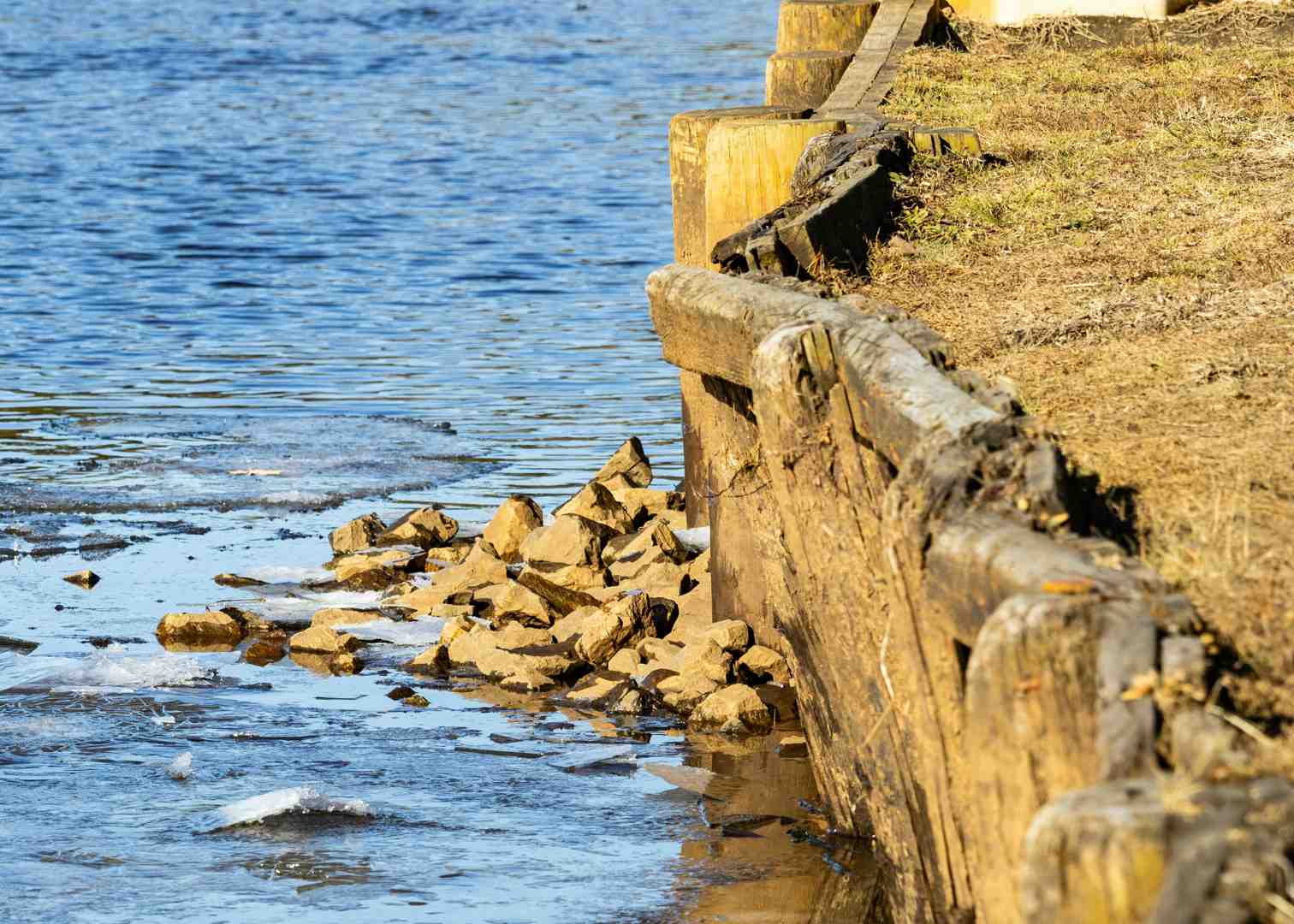
Constructing Effective Drainage Systems for Shoreline Protection
To protect the soil behind your bulkhead and prevent water pooling, few solutions are as effective as a professionally installed French drain. While simple in concept—a sloped trench with a perforated pipe and gravel—its correct installation in a marine environment is critical.
The construction process begins with excavating a trench at a precise downward slope toward a suitable discharge point. We line the trench with permeable geotextile fabric, which allows water to pass through but prevents soil from clogging the system—a critical step often missed in DIY attempts.
Next, a bed of clean gravel is laid, followed by the perforated pipe (holes facing down). The pipe is then completely surrounded with more gravel, and the fabric is folded over the top before backfilling. Ensuring proper elevation and discharge is where professional experience is vital, as the entire system relies on gravity. The outfall is engineered to prevent erosion at the discharge location.
While you can learn how to install a French drain for a typical yard, waterfront applications require calculating for heavy rainfall and integrating the system with your marine structures. A French drain may also be part of a larger system using other Stormwater Management Products to keep water moving away from your property.
Integrating Engineered Green Elements with Hard Flood Water Management Solutions
The most effective flood water management solutions often combine hard structures with natural systems. These hybrid systems create stronger, more resilient shoreline protection by integrating green elements with the same engineering rigor as our seawalls.
For example, when we construct foundational support for rain gardens adjacent to marine structures, we are engineering the subsurface for proper infiltration and overflow without compromising the nearby bulkhead. A poorly planned rain garden can increase water pressure; a properly engineered one reduces it.
Bioswales, or vegetated channels, are also engineered to slow, filter, and absorb stormwater runoff. We carefully grade the land, amend soils, and select appropriate plants to ensure the bioswale effectively captures runoff before it reaches the water's edge.
The advantage of this hybrid approach is combining natural absorption with engineered diversion. Your bulkhead provides the primary defense against waves, while rain gardens and bioswales manage stormwater from your property, reducing the burden on the hard structures. This integrated approach often proves more cost-effective, a benefit documented by resources like the EPA’s Green Infrastructure resources.
These green elements also support broader Erosion Control Solutions by stabilizing soil and reducing runoff velocity. The key is that they are designed and built as one comprehensive flood protection system.
The Future of Flood Defense: Technology in Marine Construction
Changing climate and rising flood risks demand that flood water management solutions evolve. We accept technology and data-driven approaches to build marine structures that are not just strong, but resilient and adaptable for generations.
Our design philosophy aligns with the four principles of flood defense: Prepare, Absorb, Recover, and Adapt. Before construction, we conduct extensive data-led design for marine structures. This involves using sophisticated GIS mapping for site planning and hydraulic modeling for structural stress testing. These tools allow us to simulate how a proposed seawall or bulkhead will respond to a major storm, enabling us to refine the design for optimal performance.
The field is being revolutionized by new technologies. AI-powered modeling helps us analyze historical data to predict flood scenarios with greater accuracy, informing everything from pile depth to wall height. Another emerging tool is digital twins for infrastructure simulation—a complete virtual replica of your marine structure. We can test this digital twin against virtual storms and simulate decades of wear, optimizing the design and predicting maintenance needs before breaking ground.
We actively engage with the Research and Development in flood management community to stay at the forefront of innovation. Our meticulous Marine Project Management approach ensures these advanced technologies are integrated seamlessly into every project. The future of flood defense is about building smarter, using every tool available to protect your waterfront investment for generations.

Frequently Asked Questions about Flood Water Management Solutions
What are the most effective construction-based flood mitigation solutions for a waterfront property?
The most effective flood water management solutions combine robust structural defenses with smart drainage. Key solutions include:
- Professionally installed French drains to redirect groundwater and reduce hydrostatic pressure on bulkheads and retaining walls.
- Custom rain gardens with marine-grade support to manage runoff without compromising shoreline structures.
- Permeable paver installations for walkways and patios to allow rainwater to infiltrate the ground instead of creating runoff.
- Engineered drainage systems that connect to downspouts to channel roof water safely away from your foundation.
- Durable retaining walls and bulkheads as the primary hard defenses against storm surges and coastal erosion.
What materials are used in marine construction to ensure longevity?
To ensure our structures withstand Long Island's harsh marine environment, we use only proven, high-quality materials. Key materials include marine-grade concrete, high-strength steel sheet piling, rust-proof vinyl sheet piling, and pressure-treated timber. The selection of materials is a critical part of the engineering process, based on factors like water salinity, soil composition, and the hydraulic forces the structure will face.
Why is professional engineering and construction so critical for shoreline structures?
Shoreline structures operate in a dynamic environment and must withstand immense forces from water, ice, and soil. Professional engineering is essential for site analysis and proper design, ensuring the structure is built to handle specific local conditions. Professional construction ensures that every component is installed correctly using specialized equipment and techniques. A small flaw in design or installation—such as improper pile depth, inadequate drainage, or weak connections—can lead to premature and catastrophic failure, which is why expert construction is the only way to guarantee a lasting defense.
Conclusion: Building a Resilient Shoreline for Tomorrow
Your Long Island waterfront property is a valuable legacy, but rising sea levels and powerful storms threaten it. Protecting this investment requires professionally constructed flood water management solutions built to last.
This guide has covered the essential construction solutions, from the strength of seawalls and bulkheads to the intelligent engineering of integrated drainage systems. These components must work together as a comprehensive defense system. Professional marine construction is not optional; it requires deep expertise in Long Island's unique coastal conditions, subsurface modeling, and quality craftsmanship to ensure your defenses stand strong for generations.
The long-term value of investing in quality shoreline protection is immense. It prevents property loss from erosion, protects your home's foundation, preserves property value, and provides peace of mind during storms.
At Pearce Marine Construction, we combine our generational expertise with a commitment to protecting your property. As a woman-owned business serving Nassau and Suffolk County, we build custom, durable marine structures that stand the test of time. The threats are real, but with the right construction partner, you can face them with confidence.
Contact our experts to discuss your shoreline protection needs and let's build the resilient shoreline your property deserves.
_compressed.webp)



Bring Your Vision to Life
Whether you're planning a custom dock, seawall, or boat lift, our experienced team is ready to deliver high-quality marine construction tailored to your needs. Pearce Marine Construction brings craftsmanship, precision, and a deep understanding of Florida’s waterways to every project. Let us help you create a durable, beautiful solution that stands the test of time. Get in touch now for a personalized estimate!