
Don't Drift Away: Choosing the Right Floating Dock Anchoring Hardware


Why Professional Floating Dock Anchoring Hardware is Critical for Long Island Waterfront Properties
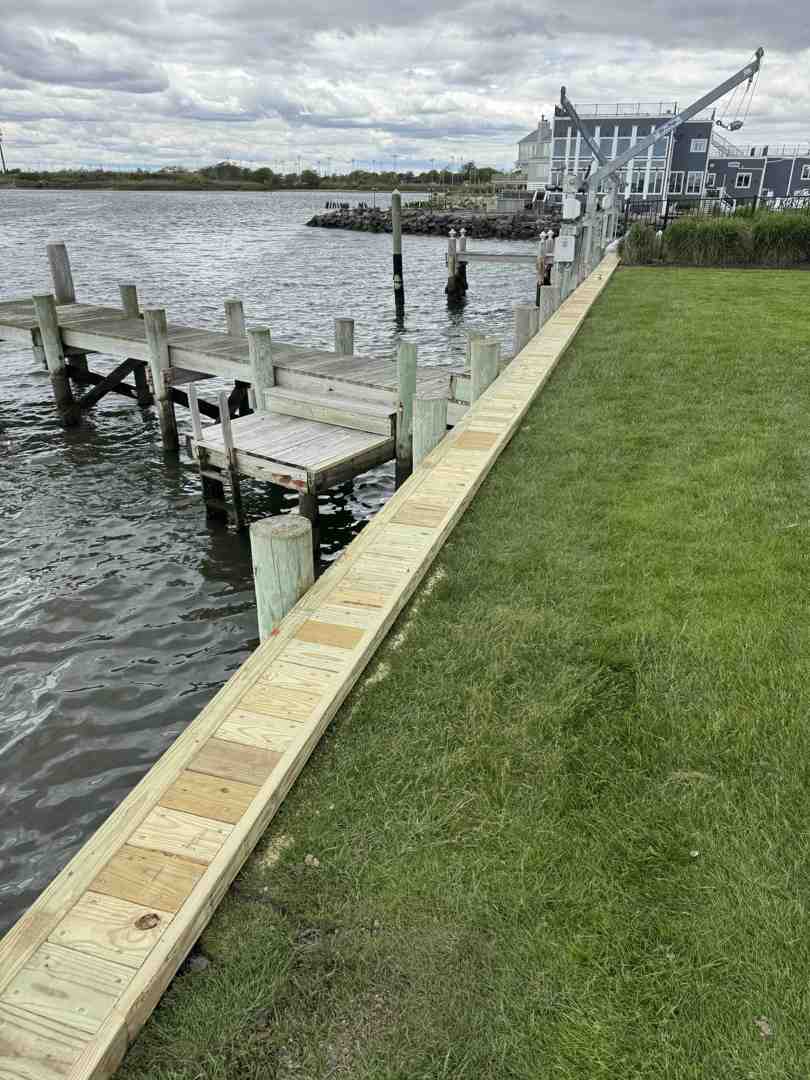
Securing your waterfront investment requires a professional floating dock anchoring hardware system designed to withstand the storms, ice, and powerful tidal fluctuations common across Nassau and Suffolk Counties. A system engineered and installed by Pearce Marine Construction is not a luxury—it's a necessity to prevent your dock from becoming a liability.
Key Floating Dock Anchoring Hardware Components:
- Concrete or Granite Anchors - 600+ lbs per corner for stable holding power
- Galvanized or Stainless Steel Chains - 3/8" minimum diameter for durability
- Marine-Grade Shackles and Eyebolts - Hot-dip galvanized or stainless steel
- Specialized Brackets - For pile, stiff arm, or cable anchoring systems
- Proper Spacing - Anchor points every 24-30 feet for optimal stability
Every Long Island location presents unique challenges. A dock in a protected Huntington Harbor cove requires a different approach than one exposed to open water in Southampton or West Hampton. Factors like water depth, seabed composition (mud, sand, or rock), wave action, and tidal range all dictate the right anchoring system for long-term security.
Professional marine contractors understand that underwater weight is not the same as dry weight. For example, a 150-pound concrete anchor provides only about 75 pounds of holding force once submerged. This is why expert engineering is essential for calculating anchor weights and spacing.
At Pearce Marine Construction, we engineer and install anchoring systems across West Islip, Southampton, and all of Long Island's waterfront communities. We know that improper anchoring risks property damage and safety. That's why we use only marine-grade materials designed to withstand saltwater, ice, and powerful nor'easters, ensuring your dock is built to last.

Professional Design of Floating Dock Anchoring Hardware Systems
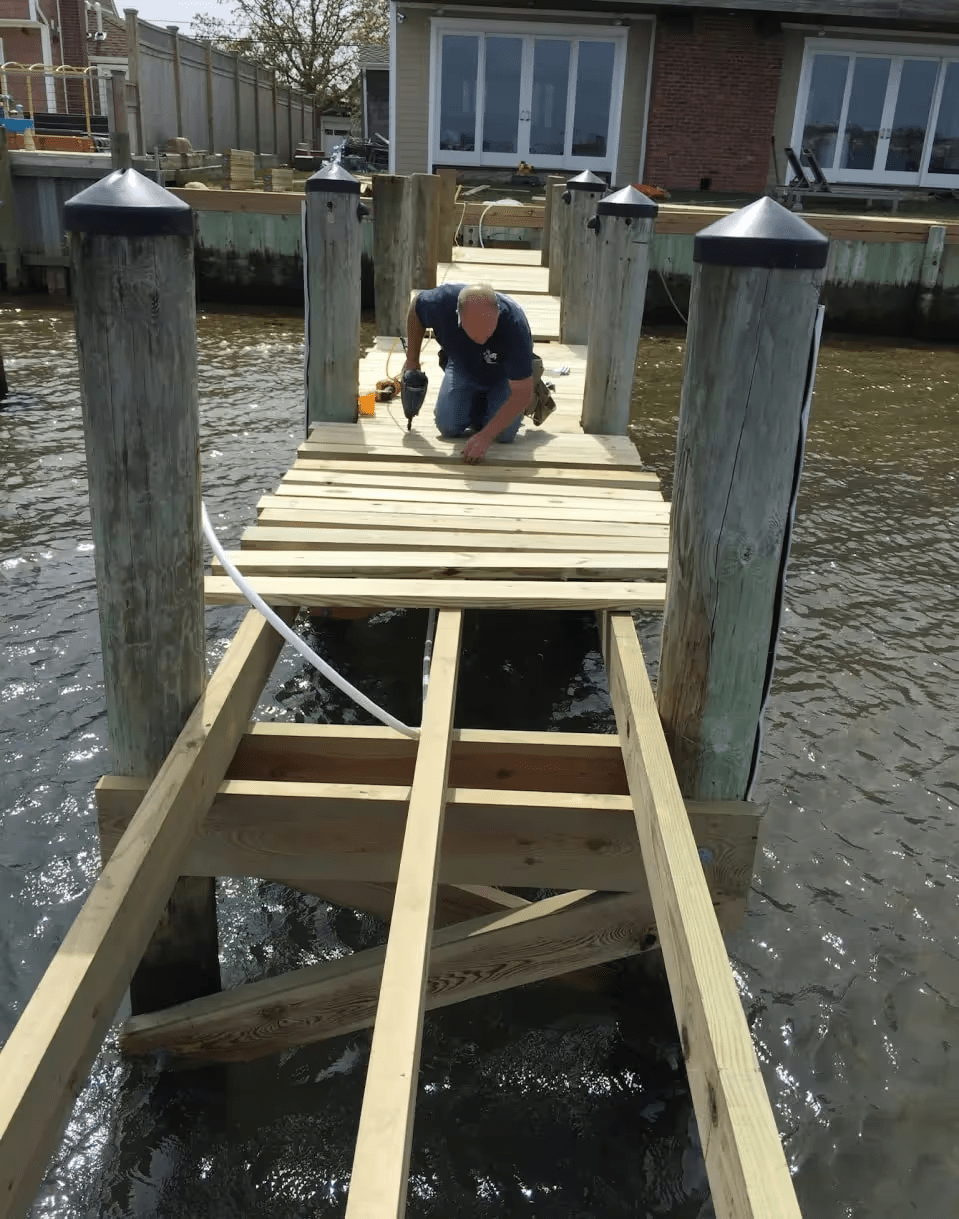
Designing a robust floating dock anchoring hardware system requires specialized marine engineering. It involves a meticulous site assessment, precise load calculations, and careful material selection to withstand Long Island's harsh marine environment. At Pearce Marine Construction, our expertise ensures every anchoring system we design for properties in Massapequa, Babylon, and Cold Spring Harbor is built for stability and longevity.
The primary goal is to prevent the dock from drifting or swaying excessively by accounting for forces like wind, currents, and waves. We prioritize corrosion resistance, using hot-dip galvanized steel or marine-grade stainless steel components, which are crucial for durability in the saltwater conditions around Southampton and the Great South Bay.
Key Factors in Anchoring System Design
We evaluate several critical factors unique to your Long Island property:
- Water Depth and Seabed Composition: The depth and bottom type determine the anchor style. A sandy bottom in Merrick requires a different solution than a muddy seabed in Bellmore. Deeper waters, especially those over 8-10 feet, demand specialized, heavy-duty equipment.
- Wave Action and Fetch: The intensity of wave action, influenced by the "fetch" (the distance wind travels over open water), dictates the forces on a dock. A sheltered cove in Lloyd Harbor has different needs than an exposed location in the Great South Bay.
- Tidal Range: We measure the difference between high and low tide to ensure anchor chains have enough slack to let the dock rise and fall without pulling the anchors or allowing excessive drift. This is critical in all Long Island tidal areas.
Understanding these factors is central to our approach. For a deeper dive into how we engineer resilient waterfront solutions, you can explore more info about marine structure design.
Comparing Professional Anchoring Methods
Choosing the right anchoring method is a cornerstone of a stable floating dock. We specialize in installing these systems across Long Island, from Port Washington to Southampton.
| Anchoring Method | Pros | Cons | Best Use Case |
|---|---|---|---|
| Cable Anchoring | - Cost-effective for smaller residential docks - Simple installation with minimal shoreline disruption - Adaptable to varying depths and bottom types when properly engineered | - Lower stability in strong currents and heavy wave action - More susceptible to swaying and lateral movement - Chains and cables can experience accelerated wear from constant motion | - Protected coves in Merrick, Bellmore, and Wantagh - Smaller residential docks in low-energy waterways - Sites where budget-conscious solutions are appropriate and conditions are relatively calm |
| Stiff Arm Anchoring | - Excellent lateral stability and predictable dock movement - Ideal for moderate water level changes common in Nassau and Suffolk Counties - Reduces dependence on heavy offshore anchors | - Limited by water depth and required reach - Requires a strong shore connection or structural pilings - Can be visually intrusive along some residential shorelines | - Protected coves in Port Washington, Huntington, and Cold Spring Harbor - Residential docks with reliable bulkheads or shoreline structures for attachment - Locations with moderate water fluctuation but limited wave exposure |
| Pile Anchoring | - High stability and long-term security for larger structures - Accommodates significant water level changes and tidal ranges - Minimal seabed movement once piles are properly driven | - Requires specialized pile-driving equipment and access - Higher upfront construction cost - Not ideal for very deep water or extremely rocky bottoms | - Commercial marinas in West Islip and Bayshore - Residential docks in areas with high tidal ranges, such as Babylon and Brightwaters - Heavier-duty applications in parts of Southampton and West Hampton |
| Helix Anchoring | - Superior holding power (often 4-5x conventional block anchors in soft bottoms) - Minimal seabed disturbance, making it more environmentally friendly - Performs exceptionally well in soft or silty substrates | - Requires specialized hydraulic installation tools and experienced installers - Higher upfront cost compared to simple concrete blocks - Less suitable for very hard, dense, or rocky bottoms | - Environmentally sensitive areas in Brightwaters and Lloyd Harbor - Docks requiring maximum security in soft substrates around the Great South Bay - Commercial and high-value residential installations in South Hampton and West Hampton where long-term holding power is critical |
Note: This table highlights general characteristics. Specific conditions at your Long Island property will determine the most suitable solution.
Essential Components of a Professional Floating Dock Anchoring Hardware Installation
A robust floating dock anchoring hardware system is a sum of its parts. We use only marine-grade materials to ensure durability and performance.
- Anchors: We use heavy-duty anchors like concrete, granite, or mushroom types. For most docks, we recommend a minimum of 600 pounds of anchor weight at the corners, but this is adjusted based on site conditions. For example, a 1,200-pound concrete block is needed to achieve 600 pounds of holding force underwater.
- Chains & Hardware: We use a minimum of 1/4" galvanized chain, upgrading to 3/8" for larger docks or rougher waters, like those in Babylon or West Islip. For saltwater environments, marine-grade stainless steel hardware is a superior long-term investment to prevent corrosion. It's critical not to mix metals (e.g., stainless shackles with galvanized chain) to avoid galvanic corrosion.
- Connectors: All shackles, eyebolts, and connectors are heavy-duty, hot-dip galvanized or stainless steel, engineered with robust pins and bolts for secure connections.
For docks requiring vertical stability, our expertise extends to specialized marine piling installation. You can learn more about this crucial aspect of dock construction at more info about marine piling installation.
Ensuring Longevity Through Expert Installation and Maintenance
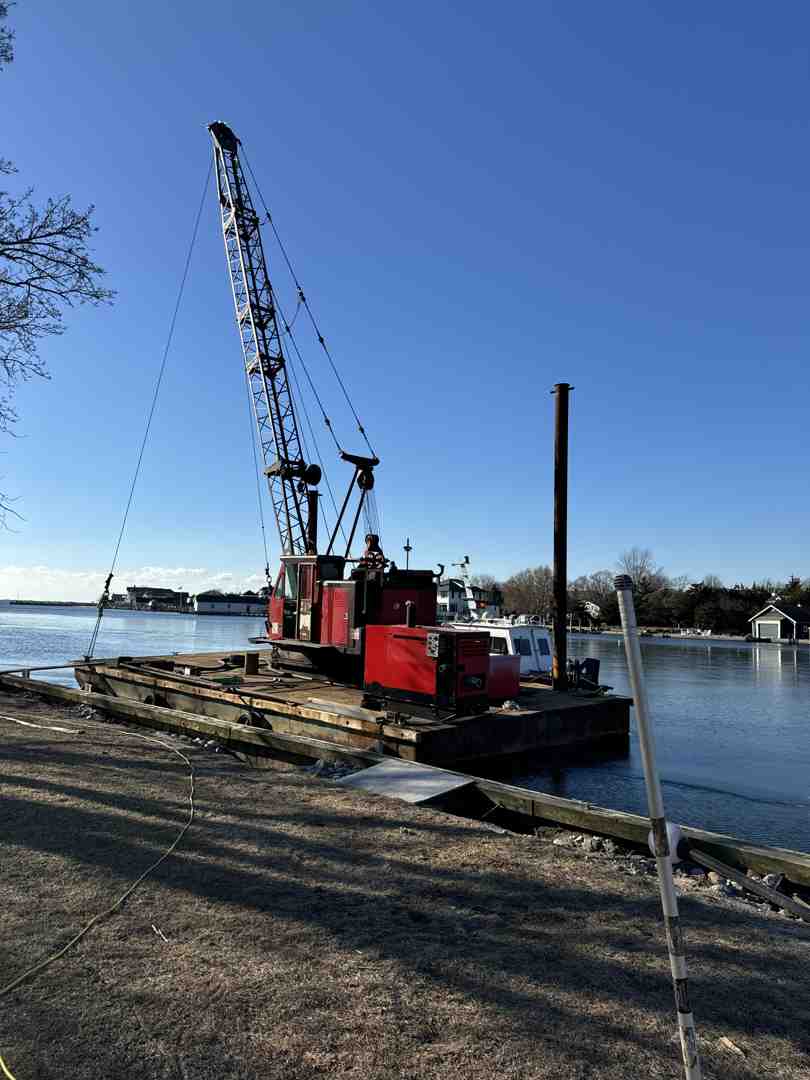
A professionally designed floating dock anchoring hardware system is only as good as its installation. Our marine construction crew brings meticulous craftsmanship to every project, from residential docks in Brightwaters to commercial marinas in West Islip. Proper installation, followed by our professional maintenance services, is vital for protecting your waterfront investment.
Sizing and Spacing: The Engineering Behind a Secure Floating Dock
Precision in sizing and spacing your floating dock anchoring hardware is a non-negotiable part of professional marine construction. We take this engineering challenge seriously, especially given the diverse conditions across Long Island, from Cold Spring Harbor to West Hampton.
- Anchor Weight: We calculate the required anchor weight based on your dock's size and local conditions, accounting for the fact that anchors lose about half their weight underwater (Archimedes' Principle). A minimum of 600 pounds of effective anchor weight at the corners is a common starting point, but this is often increased for docks in exposed areas like the Great South Bay.
- Anchor Spacing: Anchors are strategically spaced every 24 to 30 feet along the dock to distribute forces evenly and prevent stress on any single point.
- Chain Length: Anchor chains must be long enough to accommodate tidal changes. We recommend a length of 1.5 to 2 times the maximum water depth, with an additional 1-2 feet of slack, ensuring the dock can rise and fall without issue in tidal areas like Babylon or Southampton.
Our expertise in these calculations ensures your dock stands firm. For more on our dock construction services, see more info about dock construction.
The Professional Installation Process for Floating Dock Anchoring Hardware
Our installation process is a multi-step operation demanding precision and specialized equipment to ensure the stability of your dock in Nassau and Suffolk Counties.
- Site Assessment: We begin with a thorough site evaluation, confirming water depth, bottom type, and tidal range to finalize the installation plan.
- Anchor Deployment: Using specialized barges and equipment, we carefully place each anchor. For soft bottoms, we may use mushroom anchors that are "drag-set" to maximize holding power, while helix anchors are screwed deep into the substrate with hydraulic tools.
- Chain Connection and Pattern: We connect the chains and often use a crisscross (X-pattern) layout. This configuration significantly improves stability against multi-directional forces and is a best practice for docks in active waterways like those in Merrick and Wantagh.
- Tensioning and Final Inspection: We adjust chain tension to allow for water level changes and conduct a comprehensive final inspection to verify all connections and ensure the system is secure.
Our commitment to professional installation standards is why property owners across Long Island trust us. Learn more about our expert floating dock construction services.
Long-Term Maintenance and Storm Damage Repair Services
To ensure the longevity of your investment, Pearce Marine Construction offers comprehensive maintenance and repair services for floating dock anchoring hardware. Our professional inspections are vital for protecting your property from the harsh Long Island weather.
Our maintenance service includes a thorough audit of all anchoring components. We inspect chains for wear and corrosion, check the integrity of shackles and connectors, and verify anchor positioning and tension. This proactive service, available for properties from Southampton to Cold Spring Harbor, identifies potential failures before they lead to costly damage.
Following a major storm, our team provides expert post-storm assessments and storm damage marine repair services. We can quickly diagnose and repair any damage to your anchoring system, restoring the security of your dock. For clients in areas with heavy ice, we also provide professional consultation and services for seasonal dock removal to prevent ice damage. Trust Pearce Marine Construction to keep your Long Island waterfront property secure year after year.


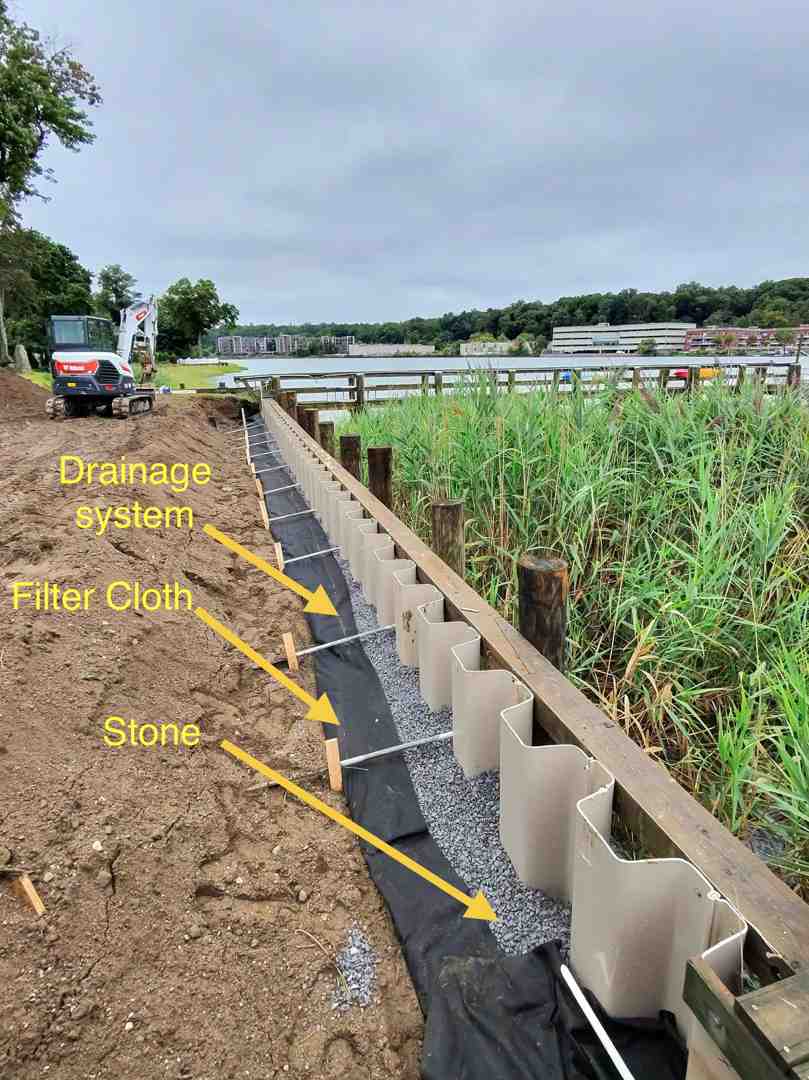

Bring Your Vision to Life
Whether you're planning a custom dock, seawall, or boat lift, our experienced team is ready to deliver high-quality marine construction tailored to your needs. Pearce Marine Construction brings craftsmanship, precision, and a deep understanding of Florida’s waterways to every project. Let us help you create a durable, beautiful solution that stands the test of time. Get in touch now for a personalized estimate!