
The Ultimate Floating Dock Repair Guide: Replacing Floats and Fixing Cracks

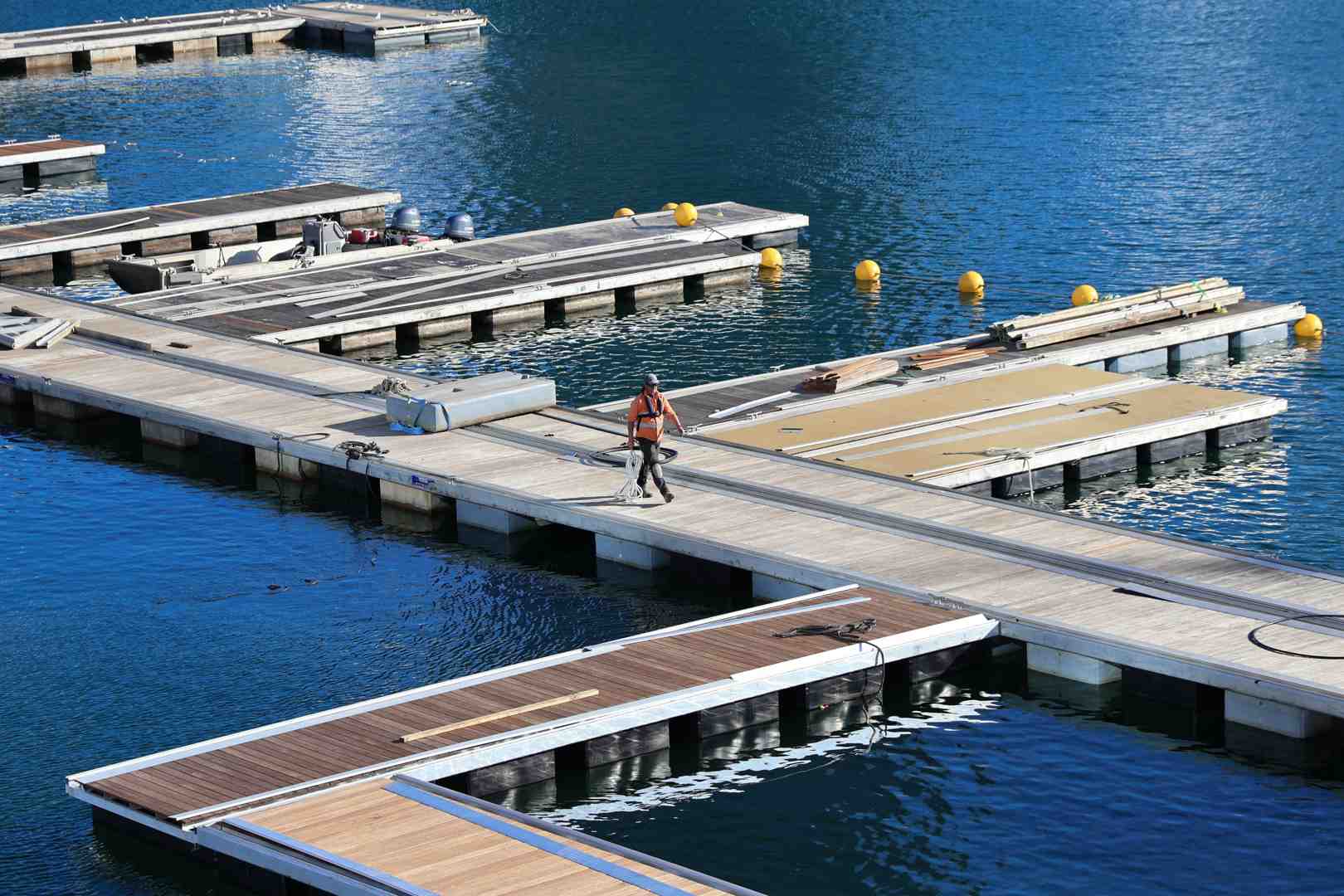
When Your Floating Dock Starts to Sink: What Long Island Property Owners Need to Know
Floating dock repair is the process of restoring a dock's structural integrity, buoyancy, and hardware after damage from tidal forces, saltwater corrosion, UV exposure, or physical wear. Here's a quick overview of what professional marine construction involves:
Quick Answer: Floating Dock Repair at a Glance
- Signs you need repair: Listing or sagging deck, loss of freeboard, visible cracks, corroded hardware, excessive wobble
- Common repairs: Float replacement, deck board replacement, hardware tightening, anchor line adjustment, biofouling removal
- Professional execution: Structural, buoyancy, and in-water float work requires a licensed marine contractor with specialized heavy equipment
- Lifespan with proper care: High-quality floats last 10–15 years; a well-maintained dock can last decades
- When to act: Address any signs of damage immediately — small issues compound fast in saltwater environments
Long Island's waterways are some of the most demanding in the country. Tidal fluctuations along the bays of Southampton, West Islip, and West Hampton create constant movement and stress on floating dock systems. Add saltwater corrosion, ice pressure in winter, and heavy wave action — and even a well-built dock will eventually need professional attention.
A floating dock that looks fine from the surface can be quietly failing underneath. Waterlogged floats, corroded bolts, and weakened frames don't always announce themselves — until a storm does it for them.
This guide explains what floating dock repair really involves, why the Long Island marine environment makes professional construction the only reliable option, and how to protect your waterfront investment for the long term.
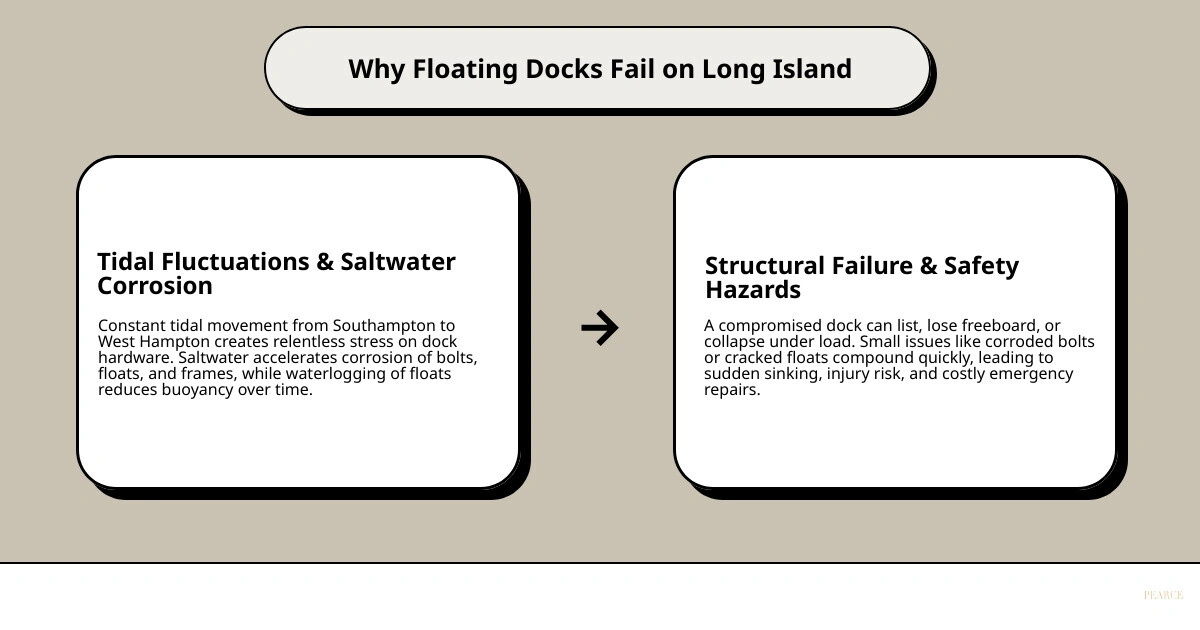
Floating dock repair terms to remember:
Professional Floating Dock Repair: Engineering Standards for Long Island Waterways
Marine environments demand specialized engineering and heavy-duty construction techniques. The South Shore and North Shore of Long Island present a relentless combination of high-salinity water, strong tidal currents, and heavy wave action. Standard hardware and improper construction techniques fail rapidly here, leading to sudden structural failure.
Executing a floating dock repair requires professional engineering, specialized marine equipment, and strict adherence to local environmental guidelines. When a heavy dock frame is suspended over water, precise load calculations and commercial-grade rigging are essential to prevent structural damage and ensure safety. For comprehensive, long-term safety, property owners rely on professional Repairs and Maintenance to ensure their waterfront assets comply with strict marine standards. You can read more about the technical complexities of marine wear in The Ultimate Guide to Floating Dock Repair: Troubleshooting, Costs, and Expert Tips - Hiseadock .
Structural Assessment: Signs Your Waterfront System Needs Floating Dock Repair
Identifying structural issues early is the key to preventing a catastrophic dock failure. Because a floating dock is constantly in motion, small structural weaknesses can quickly escalate.

When performing a routine assessment, we look for several key indicators of distress:
- Listing or Uneven Decking: If one corner or side of your dock sits lower than the rest, it is a clear sign of compromised buoyancy.
- Loss of Freeboard: A healthy dock maintains a consistent height above the water. A noticeable decrease in freeboard indicates waterlogging or punctured float drums.
- Stress Cracks and Warping: Heavy wave action causes localized stress, leading to fractures in plastic floats, composite panels, or wooden frames.
- Hardware Fatigue and Rust Trails: Orange rust streaks bleeding down your dock's connections indicate that the underlying fasteners are corroding and losing their structural strength.
- Severe Biofouling: Heavy accumulation of algae, barnacles, and marine growth adds massive dead weight to the structure, dragging it lower into the water.
To understand the full scope of these warning signs, consult our comprehensive Marine Dock Repair Guide 2026.
The Engineering Behind Professional Floating Dock Repair and Float Replacement
Replacing a damaged dock float while the structure remains in the water is a complex engineering challenge. It requires specialized rigging, precise buoyancy calculations, and heavy-duty marine equipment.
We utilize heavy-duty salvage airbags and specialized winches to temporarily elevate sections of the dock frame without removing the entire structure from the water. This allows our commercial crews to access the underside safely. Our team then unbolts the damaged units and aligns new, heavy-duty commercial floats.
Additionally, we inspect and adjust the pile guide alignment to ensure the dock slides smoothly along its pilings during extreme tidal changes. Any weakened steel connections undergo on-site structural welding to restore maximum rigidity. For an example of high-standard marine engineering specifications, review the technical requirements outlined in REPAIR FLOATING DOCK #3 (SET B) . If your system has suffered structural frame damage, professional Boat Dock Repair is essential to preserve the system's structural integrity.
Why Professional Marine Construction Outperforms Temporary Fixes
Temporary or uncertified repairs do not distribute load forces evenly, leading to sudden structural collapse, frame twisting, or catastrophic connection failures under storm conditions.
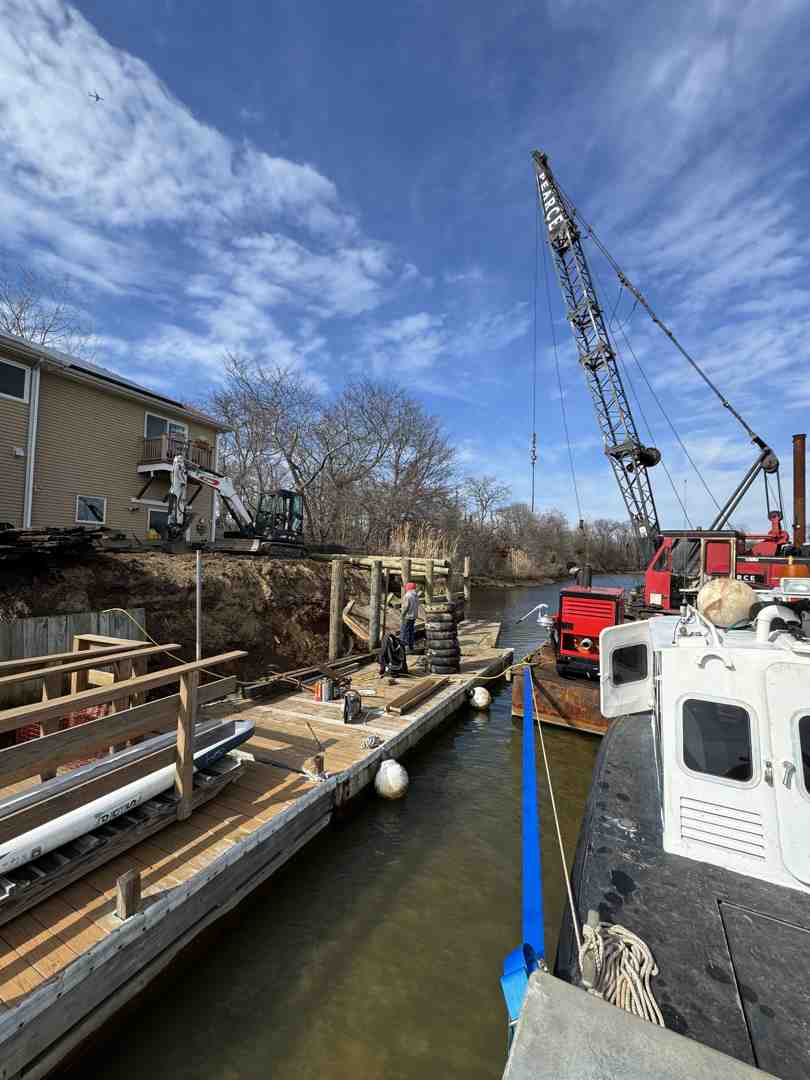
Professional marine contractors utilize commercial-grade barges, specialized cranes, and heavy-duty rigging to execute repairs safely and efficiently. This ensures that every connection, float, and piling guide is restored to its original engineering specifications, providing long-term stability and safety.
By partnering with a professional marine construction company, you ensure your repairs withstand the extreme forces of Long Island's coastal storms. You can also explore how other coastal regions handle these challenges by reviewing professional repair services and Dock Repair Services | How to Fix & Maintain Floating Docks .
Engineering Solutions for Long-Lasting Shoreline Structures
The longevity of any floating dock depends directly on the quality of its engineering and the materials selected. In places like Babylon, Bayshore, and Huntington, docks must survive freezing winter ice, blazing summer UV rays, and constant saltwater immersion.
Selecting Marine-Grade Materials for Long Island's Harsh Environments
To prevent frequent repair cycles, we build and repair docks using only premium, marine-grade materials engineered for high-salinity environments.
- Heavy-Duty Polyethylene Floats: We install heavy-duty, outer-shell polyethylene floats filled with encapsulated polystyrene. This design ensures that even if the outer shell is punctured by marine debris, the float remains completely buoyant.
- Corrosion-Resistant Hardware: We use 316 stainless steel and hot-dipped galvanized hardware to prevent the rapid degradation caused by saltwater exposure.
- Premium Decking Options: We recommend high-performance composite decking or marine-grade PVC. These materials resist warping, splintering, and UV damage far better than traditional pressure-treated wood.
- Flexible Connection Systems: Heavy-duty rubber dampeners and steel hinge assemblies allow the dock sections to flex naturally with wave action, preventing structural snapping.
For more details on selecting the right materials for your waterfront, explore our guide on Boat Docks and Floating Docks. You can also learn about seasonal wear patterns in Floating Dock Repair, An After-Summer Guide | The Dock Experts .
Long Island's Premier Waterfront Construction Experts
At Pearce Marine Construction, we bring generations of marine expertise and meticulous craftsmanship to every project we undertake. As a premier, woman-owned marine construction company serving Nassau and Suffolk Counties, we understand the unique coastal dynamics of Long Island's bays.
Whether you need a comprehensive structural restoration in Southampton, a pile guide realignment in West Islip, or a complete float replacement system in West Hampton, our team delivers unmatched durability and precision. We design and build shoreline structures to last for decades, ensuring your peace of mind through every storm and high tide.
Don't wait for a minor listing issue to turn into a sunken dock. Contact us today to schedule a professional marine inspection and safeguard your waterfront investment. Discover our complete range of services by visiting our Boat Docks and Floating Docks page.
_compressed.webp)


Bring Your Vision to Life
Whether you're planning a custom dock, seawall, or boat lift, our experienced team is ready to deliver high-quality marine construction tailored to your needs. Pearce Marine Construction brings craftsmanship, precision, and a deep understanding of Florida’s waterways to every project. Let us help you create a durable, beautiful solution that stands the test of time. Get in touch now for a personalized estimate!