
Patchogue Dock Maintenance for a Longer-Lasting Dock


Patchogue Dock Maintenance Starts With Regular Checks
Professional dock maintenance in Patchogue requires rigorous structural inspections, hardware evaluations, and substructure reinforcement below the waterline before the marine construction season and after major storms. Along the Patchogue River and Great South Bay, continuous saltwater exposure, shifting tides, and severe weather wear on waterfront framing year-round. Property owners across Long Island invest in proactive long island marine construction services to protect foundational integrity and prevent costly structural failures.

Working with experienced dock builders on Long Island ensures leaning pilings, structural deflection, and joist rot are identified and repaired before compromising the entire pier. Maintaining critical patchogue marine infrastructure through routine commercial-grade engineering protects shoreline investments against persistent tidal scour and nor'easter storm surges.
Essential Strategies for Patchogue Dock Maintenance

Maintaining marine structures across Long Island’s South Shore demands proactive attention to structural engineering and marine-grade materials. The brackish environment of the Patchogue River and the higher salinity of Great South Bay present distinct chemical and physical stresses to waterfront infrastructure. Without systematic oversight, timber structures degrade rapidly under continuous tidal action and seasonal weathering.
Structural Inspections and Patchogue Dock Maintenance Routines
A comprehensive evaluation requires analyzing the primary load-bearing members that keep your pier stable against heavy wave action. Substructure evaluation must go beyond visible framing above the water deck. Remember: if your dock bounces under load, it is not acting as a trampoline—it is demonstrating significant structural deflection and stringer failure.
Contractors experienced in Long Island dock repair execute systematic structural probing to identify internal decay that remains hidden behind superficial wood layers.

A thorough bi-annual inspection protocol includes:
- Substructure Probing: Probing underwater timber pilings to check for hollow cores, mechanical scouring, or soft spots near the mudline.
- Stringer and Joist Soundness: Examining primary framing stringers for rot, splitting, or sag beneath load zones.
- Cross-Bracing Integrity: Verifying that diagonal braces and structural sway bracing remain bolted tightly to resist lateral shear.
- Hardware Assessment: Checking through-bolts, tie-back rods, and framing brackets for loss of cross-sectional thickness.
- Pile Alignment: Measuring vertical plumblines to ensure heavy-timber pilings have not shifted, heaved from ice, or settled into unstable sediment.
Combating Marine Borers, Tidal Wear, and Storm Surges
Submerged timber in Suffolk County waters faces relentless attack from wood-boring organisms like gribbles (Limnoria) and shipworms (Teredo navalis). These marine organisms bore deep into untreated or damaged wood, hollowing out structural pilings right at the intertidal zone.
To protect critical foundation members and ensure resilience against nor'easter surges, modern engineering utilizes heavy-duty pile protection jackets. These barrier systems encapsulate the piling, cutting off oxygen and halting biological deterioration. High-energy tidal friction, winter ice sheets, and storm surges also impart heavy impact loads along the shoreline. Incorporating robust cross-bracing and properly engineered anchoring systems prevents catastrophic framing racking when high water levels lift dock structures.
Proactive Decking and Hardware Patchogue Dock Maintenance
Fastener integrity is the backbone of shoreline construction. Standard galvanized hardware eventually breaks down when exposed to constant saltwater mist, leading to galvanic corrosion and bolt shear. High-quality marine builds utilize 316 marine-grade stainless steel fasteners, structural carriage bolts, and framing clips to secure decking to joists.
For multi-slip residential waterfronts—such as those serving the Fairfield Creekside At Patchogue Village community—as well as private piers situated near high-traffic hubs like Sunset Harbour Marina slip, dock, mooring reservations - Dockwa, implementing high-durability decking materials ensures long-term performance. Pressure-treated timber requires regular protective wood sealers every two to three years to minimize splintering, checking, and UV breakdown. Upgrading to capped composite decking provides superior structural stability, eliminating surface rot and providing up to 40 years of service life with minimal structural degradation.
Navigating Local Regulations, Costs, and Marine Upgrades
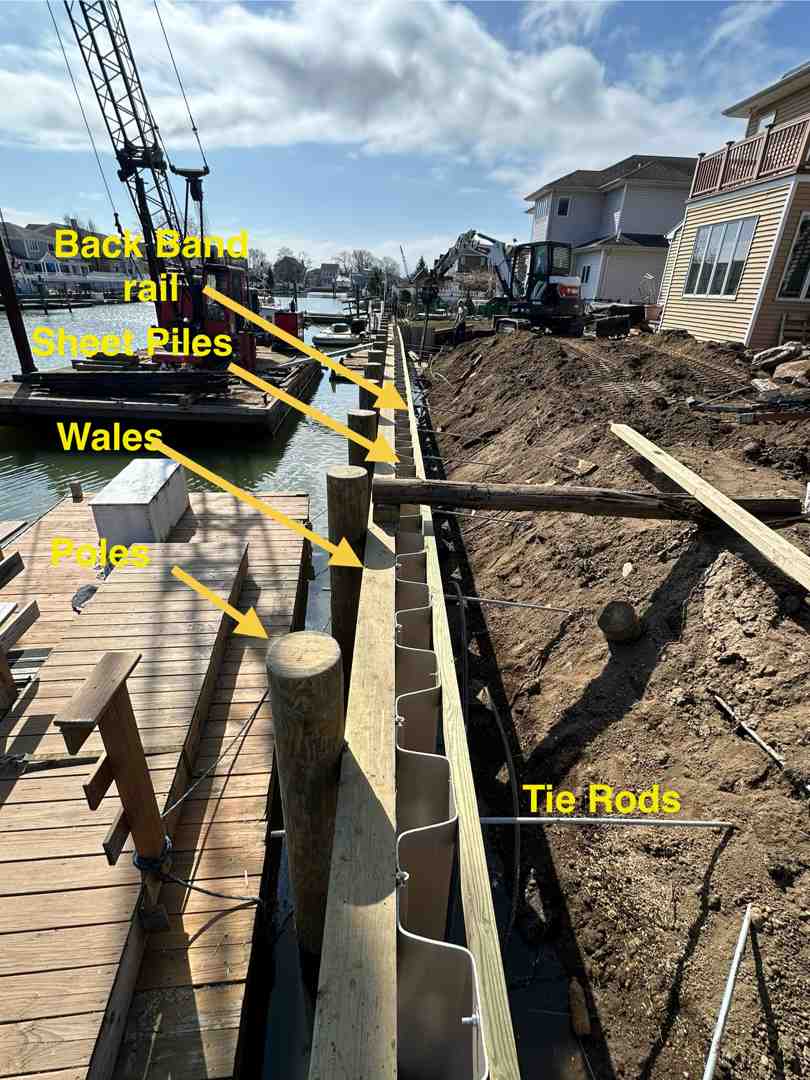
Waterfront property owners in Patchogue, West Islip, and Southampton must balance structural needs with environmental regulations and capital budgeting. Understanding repair thresholds ensures you invest effectively in your shoreline.
Evaluating Repair vs Replacement Costs and the 40 Percent Rule
Deciding between targeted restoration and a total rebuild comes down to the structural health of the primary framework. We apply the industry-standard 40 percent rule: if more than 40% of the primary framing members, stringers, or foundation pilings are structurally compromised, full replacement is more cost-effective over a ten-year lifecycle than recurring patch repairs. Our Dock Repair Criteria 2026 outlines comprehensive criteria for assessing load paths and framing damage.
| Project Scope | Typical Cost Range | Expected Service Life | Key Structural Considerations |
|---|---|---|---|
| Surface Decking Repairs | $500 – $2,000 | 10 – 15 Years | Replaces split or warped top boards while retaining existing joists |
| Single Heavy-Timber Piling | $800 – $2,500 per pile | 20 – 30 Years | Requires specialized pile-driving equipment and seabed seating |
| Substructure Restoration | $10,000 – $30,000 | 15 – 25 Years | Replaces compromised stringers, cross-braces, and hardware |
| Full Dock Replacement (Wood) | $35,000 – $90,000+ | 15 – 25 Years | Complete reconstruction using marine-grade pressure-treated timber |
| Full Dock Replacement (Composite) | $50,000 – $200,000+ | 25 – 40 Years | Complete build with heavy composite decking and 316 stainless steel |
Mascot Dock Infrastructure and Coastal Resilience Standards
Public and private marine engineering across Patchogue is directly shaped by local regulations and federal maintenance projects. Municipal dock safety protocols, detailed in municipal documentation like the Board of Trustees Meeting March 10, 2025, emphasize strict structural compliance and notice-of-defect procedures under local building codes.
Significant federal and state investments highlight the importance of shoreline resilience:
- Mascot Dock Restoration: Rebuilt following severe storm damage, Facilities • Mascot Dock secured $1.4 million through FEMA to restore structural framing, electrical systems, and boardwalk integrity.
- Patchogue River Jetty: Enhanced with $600,000 in state funds, $300,000 from the town, and $100,000 from the village to stabilize the river mouth and reduce channel shoaling.
- Channel Dredging: As reported in the FACT SHEET-Long Island Intracoastal Waterway, New York - Federal Navigation Channel > New York District > Fact Sheet Article View, the U.S. Army Corps of Engineers completed dredging of 48,000 cubic yards in Shinnecock Bay and 20,000 cubic yards in Moriches Bay. During FY2026, allocations provide for the removal of approximately 35,000 cubic yards of sand across Bellport Bay, Narrow Bay, and Moriches Bay shoals, repurposing clean sand for shoreline stabilization.
Any residential or commercial marine project involving pile driving, seawall reconstruction, or dock expansion requires structural design that complies with New York State Department of Environmental Conservation (DEC) and local building departments.
Upgrading Materials and Selecting Licensed Suffolk Marine Contractors
When restoring deteriorated waterfront structures, material selection dictates decades of durability. Upgrading standard timber substructures to high-grade composite systems and heavy-timber framing ensures structural stability against marine environments. Working with a specialized contractor for Dock and Pier Repair prevents premature structural degradation.
Pearce Marine Construction is a woman-owned marine construction company serving residential, commercial, and public clients in Nassau and Suffolk Counties on Long Island, NY. Pearce Marine provides unmatched local expertise, rigorous engineering standards, and superior craftsmanship across communities such as Massapequa, West Islip, Babylon, Bayshore, Huntington, Lloyd Harbor, Wantagh, West Hampton, and Southampton. From pile driving and retaining walls to engineered seawalls and custom bulkheads, our team delivers unmatched durability for every shoreline installation.
Ready to reinforce your waterfront? Explore our custom boat docks and floating docks to schedule a professional engineering assessment today.



Bring Your Vision to Life
Whether you're planning a custom dock, seawall, or boat lift, our experienced team is ready to deliver high-quality marine construction tailored to your needs. Pearce Marine Construction brings craftsmanship, precision, and a deep understanding of Long Island's waterways to every project. Let us help you create a durable, beautiful solution that stands the test of time. Get in touch now for a personalized estimate!