
The Price of Protection: Understanding Seawall Construction Costs

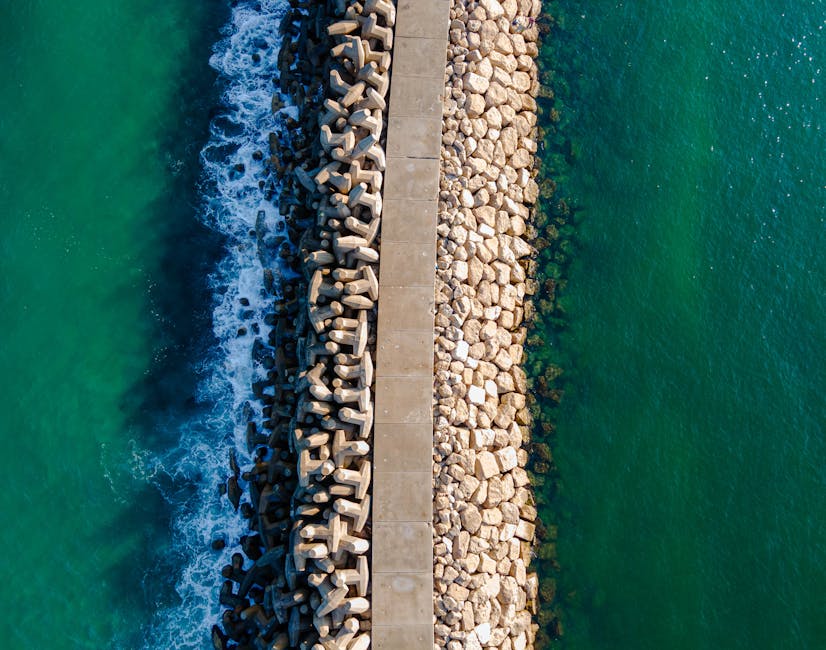
Understanding the Real Cost of Building a Seawall: Shoreline Protection
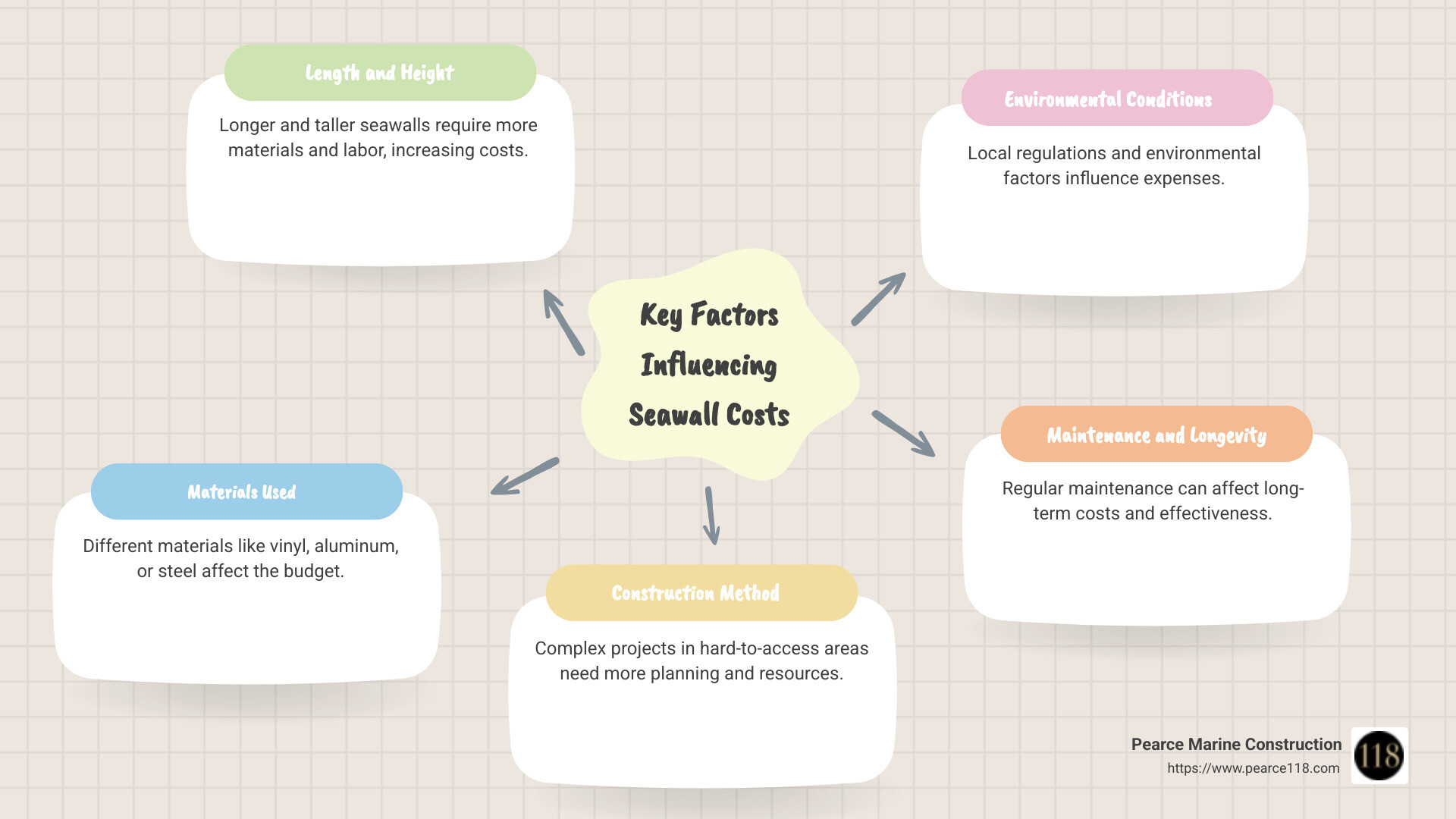
Cost of building a seawall is a crucial topic for Long Island homeowners and property owners facing erosion and flooding challenges. To ensure effective shoreline protection, it’s vital to understand what goes into these costs:
- Length and Height: The longer and taller the seawall, the greater the cost due to increased materials and labor needs.
- Materials Used: Choices like vinyl, aluminum, or steel can significantly impact the overall budget.
- Construction Method: Complex projects, especially in hard-to-access areas, require more planning and resources.
- Environmental and Regulatory Conditions: Local regulations and environmental factors influence project expenses.
These elements combine to form the total expense required to construct and maintain a robust seawall, adding protection to your property for decades to come.
Seawalls serve as barriers against the relentless forces of nature. Rising sea levels and storms can erode coastlines, putting properties at risk. A well-built seawall not only preserves the land but also adds value by safeguarding investments against natural calamities.
With the right approach, investing in a seawall offers peace of mind, knowing your shorelines are protected from erosion and storm damage. Continue reading to dig deeper into the varied aspects affecting these costs and learn how to make a wise investment for shoreline guardianship.
Factors Influencing the Cost of Building a Seawall
When considering the cost of building a seawall, several key factors come into play. These elements can significantly impact the overall expense and are crucial for property owners to understand.
Soil Condition
The type of soil where a seawall is constructed plays a pivotal role in determining costs. Hard or rocky soil can be challenging to work with, requiring more labor and specialized equipment, which increases expenses. Conversely, softer soil might be easier to dig but could necessitate additional stabilization measures to ensure the seawall’s durability. Proper assessment of soil conditions is essential to avoid unexpected costs during construction.
Job Site Accessibility
The ease of access to the construction site is another critical factor. Sites that are difficult to reach may require additional logistics, such as transporting materials and equipment over long distances or using specialized machinery. For example, building a seawall in a remote area or on a cliffside can be more expensive than in a location with straightforward access. Efficient planning and site assessment can help mitigate these costs.
Material Options
The choice of materials is perhaps the most significant factor affecting seawall costs. Different materials offer unique benefits and come with varying price tags:
- Concrete: Known for its strength and longevity, concrete is a popular choice but can be expensive.
- Steel: Offers durability and is suitable for high-impact areas, though it can be costly, especially if galvanization is required.
- Vinyl: A more budget-friendly option with a long lifespan, ideal for areas with less severe conditions.
- Wood: Provides a natural aesthetic but may require more maintenance and have a shorter lifespan.
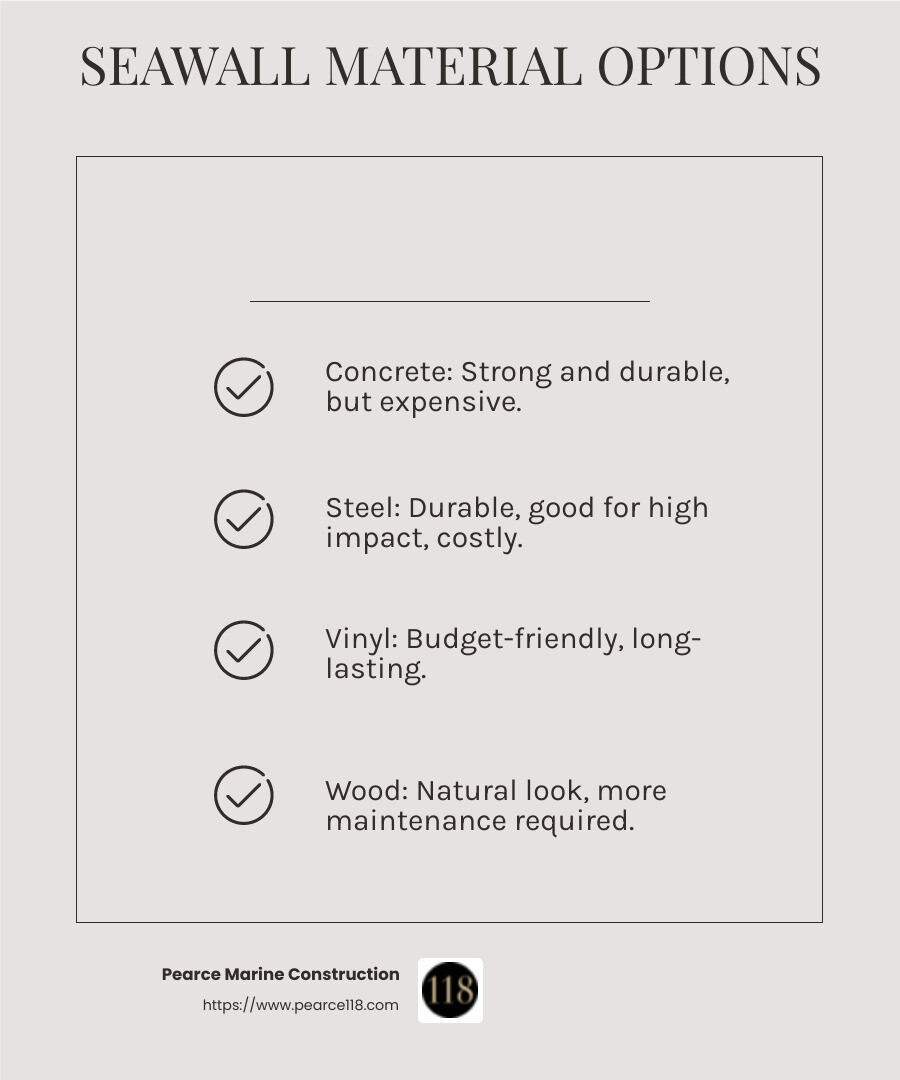
Each material has its own set of pros and cons, and the choice will depend on factors like environmental conditions, budget, and desired longevity.
Understanding these factors can help property owners make informed decisions and manage their budgets effectively. By considering soil conditions, job site accessibility, and material options, you can better estimate the cost of building a seawall and ensure a successful project.
Cost of Building a Seawall
When determining the cost of building a seawall, it's important to consider several key elements that can influence the final price. These include the cost per linear foot, regional variations, and the methods used during installation. Here's a closer look at each of these factors:
Cost Per Linear Foot
The cost of constructing a seawall is often calculated on a per linear foot basis. On average, residential seawall projects can range from $150 to $600 per linear foot. However, for commercial or high-erosion zones, the price can escalate to between $700 and $2,000 per linear foot. These figures can vary significantly due to factors such as material choice, labor costs, and the complexity of the project.
Regional Variations
Regional differences can also affect seawall construction costs. For example, building a seawall in Long Island, NY, where Pearce Marine Construction operates, might differ from other regions due to local building codes, labor rates, and environmental regulations. Additionally, areas with challenging terrain or high erosion rates may require more robust construction, further increasing costs.
Installation Methods
The method used to install a seawall can greatly impact costs. Traditional methods might involve more manual labor and take longer to complete, while modern techniques can be more efficient but may require specialized equipment. For instance, using advanced construction techniques like helical piles for stabilization in areas with unstable soil can add to the overall cost but provide improved durability and longevity.
Understanding these factors helps property owners anticipate the cost of building a seawall more accurately. By considering the cost per linear foot, regional variations, and installation methods, you can make informed decisions and ensure your investment is well-planned and executed.
Now that we've explored the cost considerations, let's dig into the materials used in seawall construction and how they affect both cost and durability.
Seawall Construction Materials
When it comes to constructing a seawall, the choice of materials plays a significant role in both the cost of building a seawall and its durability. Different materials offer varying benefits and challenges, impacting not only the initial investment but also long-term maintenance and lifespan. Let's explore the most common materials used in seawall construction:
Concrete
Concrete is a popular choice for seawall construction due to its strength and durability. It can withstand harsh marine environments and offers a lifespan of 30 to 50 years when properly maintained. Concrete seawalls are ideal for areas with high wave action as they provide robust protection against erosion and flooding.
- Pros: Long-lasting, strong, effective in high-erosion areas
- Cons: Higher initial cost, requires professional installation
Steel
Steel seawalls are known for their strength and ability to support heavy loads. Typically, these are galvanized or coated to prevent corrosion, making them suitable for both freshwater and saltwater environments. Steel seawalls have an average lifespan of 35 years, potentially longer if well-maintained.
- Pros: Strong, durable, versatile
- Cons: Can be expensive, prone to corrosion if not properly treated
Wood
Wood, particularly pressure-treated pine, is often used for its aesthetic appeal and cost-effectiveness. However, it requires regular maintenance to prevent rot and insect damage, especially in marine environments.
- Pros: Cost-effective, natural appearance
- Cons: Requires ongoing maintenance, shorter lifespan compared to other materials
Vinyl
Vinyl is gaining popularity due to its low maintenance and resistance to rot and corrosion. Vinyl seawalls can last up to 50 years, making them a durable option for many property owners. Although the initial cost may be higher than wood, the reduced maintenance needs can make vinyl more economical in the long run.
- Pros: Long-lasting, low maintenance, resistant to corrosion
- Cons: Higher upfront cost compared to wood
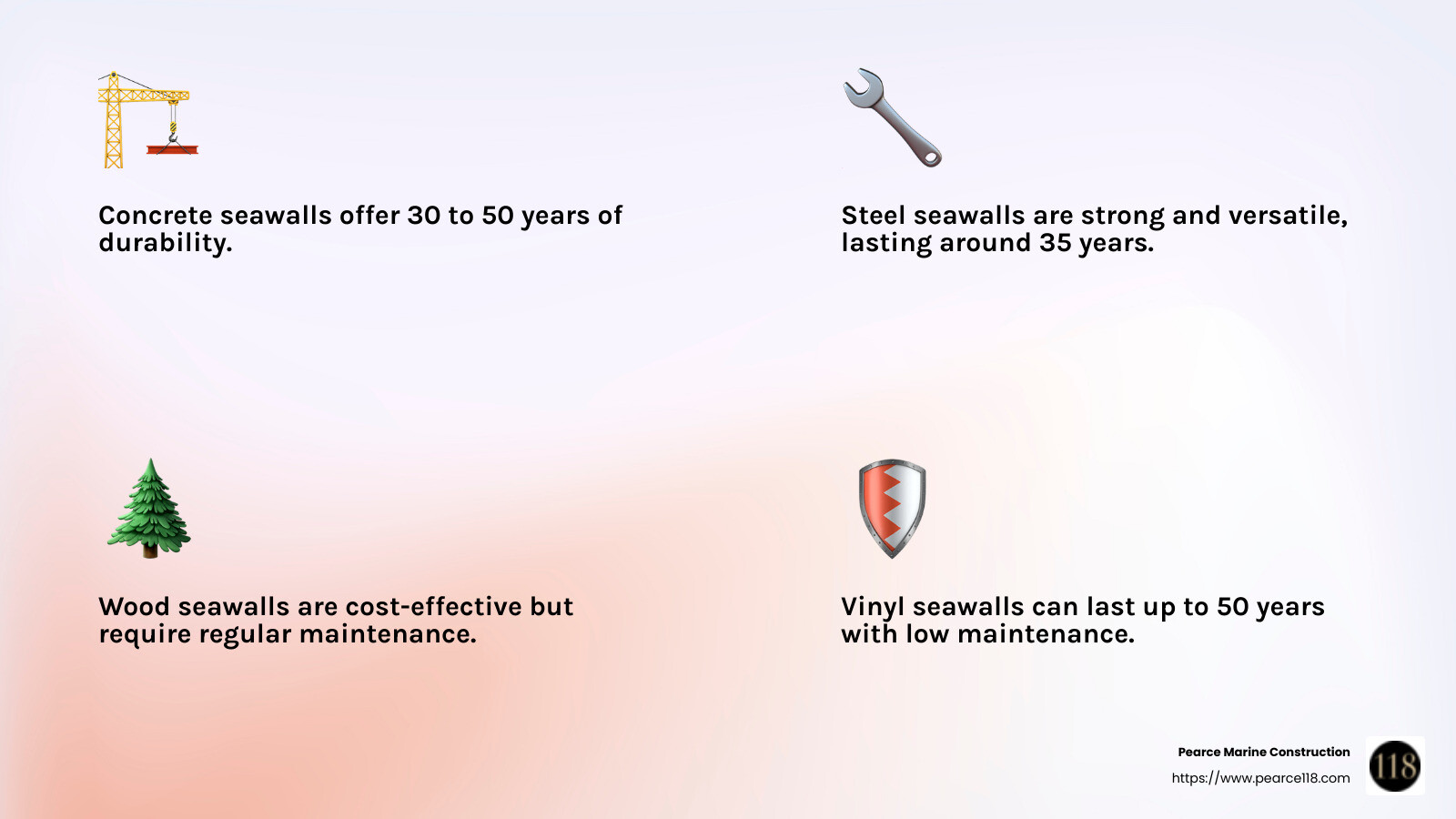
In conclusion, selecting the right material for your seawall depends on your specific needs, budget, and the environmental conditions of your location. Concrete and steel offer durability and strength, while wood and vinyl provide more economical and aesthetically pleasing options. Each material has its own set of advantages and challenges, so weigh these factors carefully to ensure a seawall that meets your protection needs and budget constraints.
In the next section, we will dig into how to calculate seawall costs, providing a detailed look at the cost formula, and the importance of length, height, and unit price in determining the overall investment.
Calculating Seawall Costs
Understanding the cost of building a seawall involves more than just material expenses. It's about using a formula that considers several key factors to give you a clearer picture of the total investment required.
Cost Formula
The basic formula to calculate the cost of a seawall is:
C = (L * H * P) + (L * W * M)
Where:
- C is the total cost of the seawall.
- L is the length of the seawall.
- H is the height of the seawall.
- P is the unit price per square foot of the seawall material.
- W is the width of the seawall.
- M is the unit price per linear foot of the seawall construction.
This formula helps you see how different factors contribute to the overall cost. By adjusting these variables, you can estimate expenses more accurately.
Length and Height
Length and height are crucial in determining the cost. A longer or taller seawall naturally requires more materials, increasing costs. For example, a 50-meter long and 5-meter high seawall will cost more than a shorter or lower one, simply due to the amount of material needed.
Unit Price
The unit price of materials can vary widely. High-quality materials like concrete or steel have higher unit prices but offer greater durability and lifespan. On the other hand, materials like wood might have a lower unit price but require more frequent maintenance, potentially adding to long-term costs.
Practical Example
Let's say you're planning a seawall that is 50 meters long and 5 meters high. If the unit price per square foot of material is $100, and the construction cost per linear foot is $200, your calculation would look like this:
- Material Cost: 50 (L) * 5 (H) * $100 (P) = $25,000
- Construction Cost: 50 (L) * $200 (M) = $10,000
- Total Cost (C): $25,000 + $10,000 = $35,000
This example illustrates how the formula works in practice, allowing you to estimate costs based on your specific project dimensions and material choices.
In the next section, we'll address frequently asked questions about seawall costs, including affordable building options and regional price differences.
Frequently Asked Questions about Seawall Costs
What is the cheapest way to build a seawall?
When it comes to finding the cheapest way to build a seawall, consider using materials like vinyl or wood. While wood is less durable and requires more maintenance, vinyl offers a longer lifespan and is resistant to rot and corrosion, making it a cost-effective choice over time.
Erosion prevention and property protection are key benefits of seawalls, but it's important to balance initial costs with long-term durability. Choosing the right material can save money in the long run by reducing maintenance and repair expenses.
How much does a seawall cost per foot?
The cost of building a seawall can vary significantly, typically ranging from $1,000 to $2,000 per linear foot. This range depends on factors like the type of materials used, the complexity of the construction, and regional variations. For example, in Southern Florida, costs might lean towards the higher end due to local conditions and labor rates.
In Long Island, where Pearce Marine Construction operates, prices can be influenced by local soil conditions and accessibility, which we'll discuss further in the next question.
What factors affect seawall pricing?
Several factors influence seawall pricing, including:
Soil Density: The condition of the soil affects the type of materials and construction methods needed. Harder soil may require more robust materials and larger equipment, increasing costs.
Equipment Needs: The accessibility of the job site determines whether construction can occur from land or water. Installing from the water typically costs 30-40% more due to the need for barges and additional logistics.
Regional Differences: Prices can vary by region due to differences in labor costs, regulations, and environmental conditions. For instance, building a seawall in a densely populated area might involve higher expenses compared to a more rural location.
Understanding these factors helps in making informed decisions about your seawall project, ensuring both cost-effectiveness and long-term protection for your property.
In the next section, we'll explore the different materials used in seawall construction and how they impact overall costs.
Conclusion
At Pearce Marine Construction, we understand that the cost of building a seawall is not just a financial investment but a commitment to protecting your property and the environment. Our approach is rooted in generational expertise and meticulous craftsmanship. This ensures that every seawall we construct is built to withstand the test of time and the forces of nature.
Generational Expertise
With roots stretching back decades, our team brings a wealth of experience to every project. This legacy of knowledge means we can tackle even the most complex marine construction challenges with confidence. Our expertise allows us to deliver projects on time and within budget, while also navigating the unique challenges of Long Island’s coastal environment.
Meticulous Craftsmanship
Attention to detail is at the heart of what we do. From selecting the highest quality materials to executing precise construction techniques, we ensure that every seawall we build is both functional and aesthetically pleasing. This meticulous approach not only improves the durability of our seawalls but also ensures they integrate seamlessly with the surrounding landscape.
Choosing Pearce Marine Construction means partnering with a company that values quality and durability. We are committed to providing our clients with peace of mind, knowing that their property is safeguarded against erosion and tidal flooding.
To learn more about our services and how we can help protect your shoreline, visit our Seawalls and Bulkheads page. Let us bring our expertise and craftsmanship to your next seawall project.



Bring Your Vision to Life
Whether you're planning a custom dock, seawall, or boat lift, our experienced team is ready to deliver high-quality marine construction tailored to your needs. Pearce Marine Construction brings craftsmanship, precision, and a deep understanding of Florida’s waterways to every project. Let us help you create a durable, beautiful solution that stands the test of time. Get in touch now for a personalized estimate!