
The Ultimate Guide to Building A Waterfront Wooden Walkway

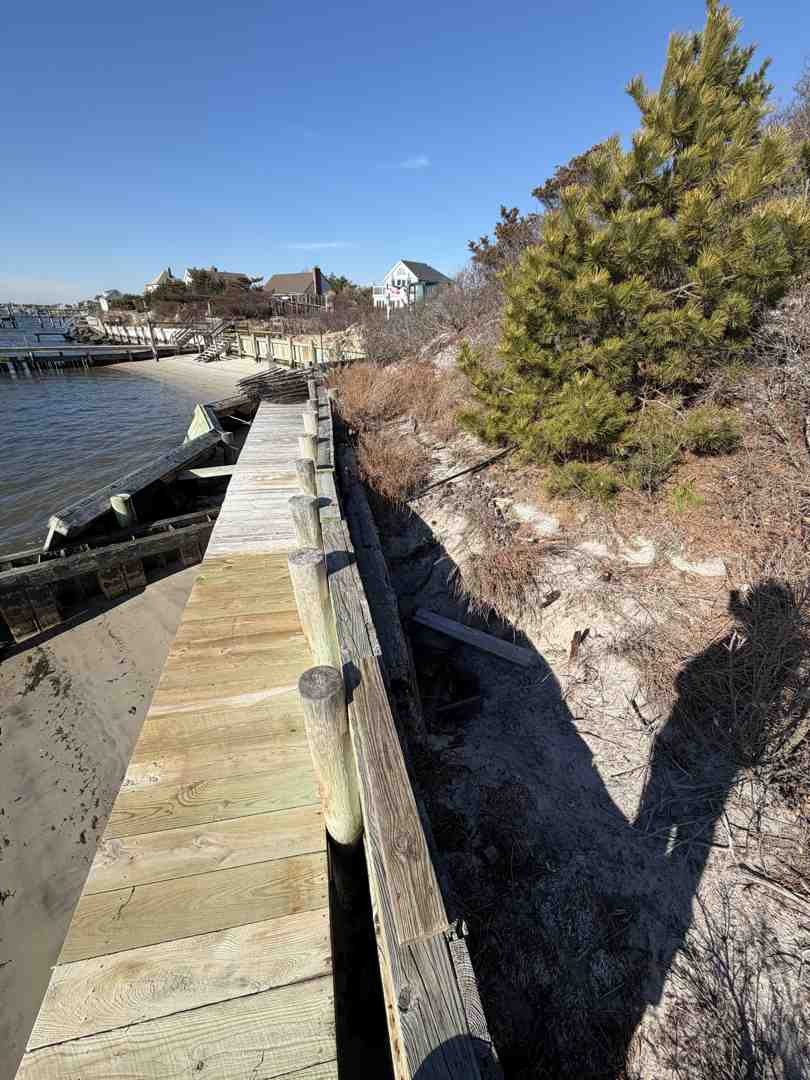
Why Professional Wooden Walkway Construction Matters on Long Island
Wooden walkway construction is the process of engineering and building a durable timber pathway — typically using framed joists, structural posts, and weather-resistant decking — to provide safe, lasting access across challenging terrain like shorelines, slopes, and waterfront properties.
Here's a quick overview of what professional wooden walkway construction involves:
| Stage | What It Includes |
|---|---|
| Material Selection | Marine-grade hardwoods (Ipe, Cumaru, Cedar) or CCA treated lumber |
| Foundation | Pile driving, buried posts, or sleeper systems set below frost line |
| Framing | 2x6 joists, 4x4 posts, joist hangers — engineered for load and stability |
| Decking Installation | Boards spaced for drainage, fastened with stainless steel hardware |
| Finishing | Marine-grade sealants, railings, and ADA-compliant safety features |
| Inspection | Structural review for code compliance and long-term durability |
On Long Island — where saltwater exposure, shifting soils, and storm activity are constant realities in Nassau and Suffolk Counties — a walkway is a structural asset that demands proper marine engineering and high-grade materials.
Done right, a professionally built walkway can withstand decades of coastal weather while adding significant value to your property. A structurally sound, beautifully crafted walkway is a critical investment in your shoreline infrastructure.
The following standards are what Pearce Marine Construction applies to every walkway project across Long Island's shoreline communities.
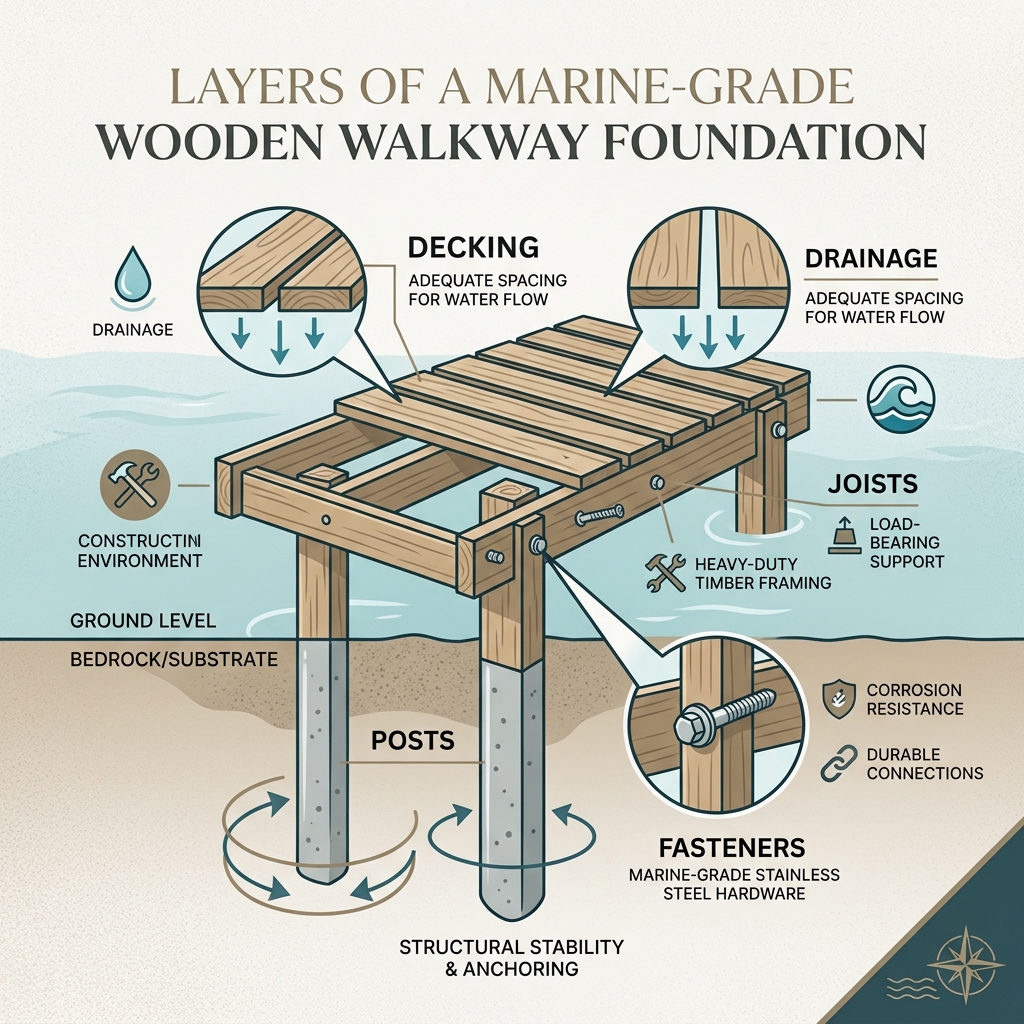
Terms related to wooden walkway construction:
Professional Standards for Wooden Walkway Construction
In the demanding environments of Massapequa, Bellmore, and South Hampton, the standard for wooden walkway construction must be exceptionally high to ensure long-term structural integrity. We approach every walkway as a marine structure, meaning it must account for moisture saturation, soil movement, and heavy foot traffic.
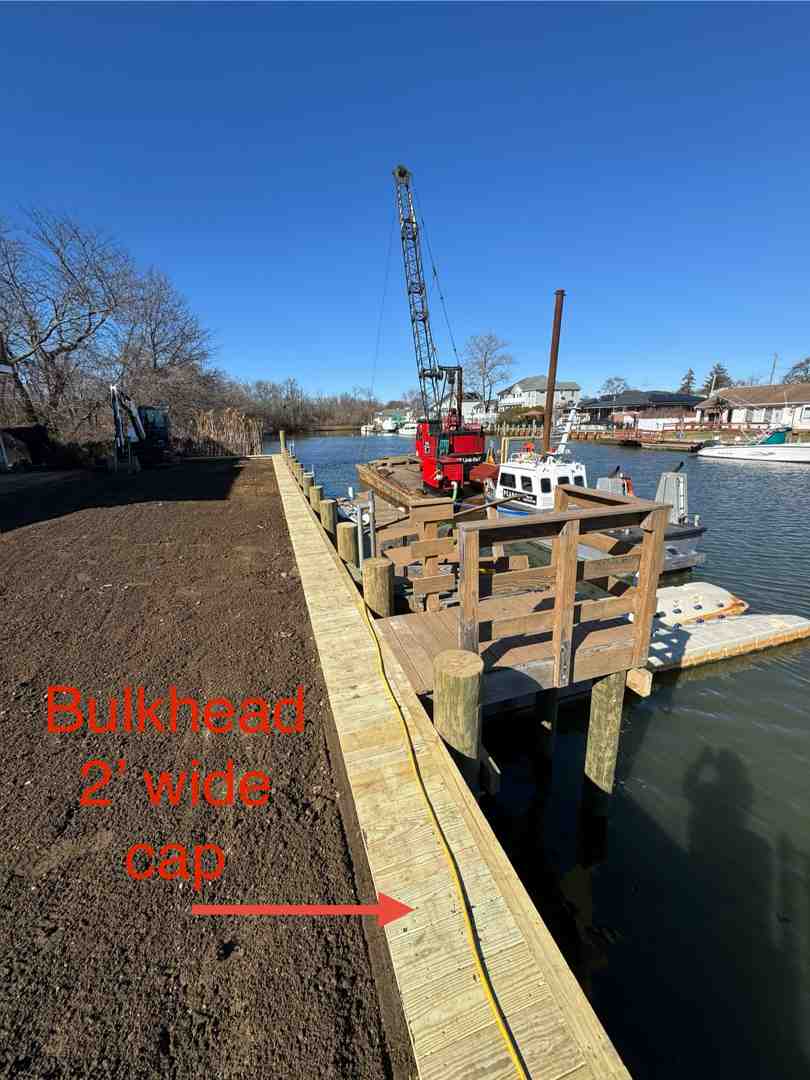
When we design a walkway for a client in Brightwaters or West Islip, we focus on the structural integrity of the entire system. Professional construction ensures that the path remains level and safe, even as the Long Island shoreline shifts over time.
Selecting Premium Materials for Wooden Walkway Construction
The longevity of any marine-grade structure begins with the species of wood selected. For coastal durability, we prioritize woods that possess natural oils and high density to repel water and resist pests.
- Ipe and Cumaru: These Brazilian hardwoods are legendary in the marine construction industry. Ipe is so dense it does not float; it carries a Class A fire rating and can last 40+ years in harsh coastal conditions without rotting.
- Western Red Cedar: A classic choice for North Shore bluffs in Huntington and Lloyd Harbor. Cedar naturally resists decay and insects, reducing the need for heavy chemical treatments.
- Mahogany: Often used for high-end handrails and visible trim, providing a sophisticated finish for waterfront estates.
- CCA Treated Wood: Chromated Copper Arsenate (CCA) treated lumber is a staple for structural components like pilings and stringers. We utilize specialized barriers to protect these posts, significantly extending their service life in ground-contact scenarios.
In addition to the wood itself, the hardware is a critical component. We exclusively use 316-grade stainless steel or hot-dipped galvanized fasteners. Standard screws will corrode within months when exposed to the salt air of the Great South Bay.
For more inspiration on how these materials come together, explore our Walkway Design Ideas.
Engineering Foundations and Support Structures
A walkway is only as stable as the ground beneath it. In Nassau and Suffolk Counties, the frost line is a critical calculation. If posts are not set deep enough, frost heave can push the walkway out of the ground, leading to warping and tripping hazards.
We utilize several foundation methods depending on the terrain:
| Foundation Type | Best Use Case | Key Benefit |
|---|---|---|
| Driven Pilings | Marshy shorelines or tidal zones | Maximum stability in soft soil |
| 4x4 Buried Posts | Sloped bluffs or stable soil | Cost-effective and structurally sound |
| Sleeper Systems | Flat, well-drained areas | Low profile for ground-flush designs |
| No-Dig Systems | Environmentally sensitive areas | Minimal soil disruption |
For professional wooden walkway construction projects, we dig postholes to a minimum of 24 to 36 inches, often resting the posts on a bed of compacted gravel to facilitate drainage. This prevents the bottom of the post from sitting in stagnant water, which is the primary cause of premature rot.
Learn more about these technical requirements in our Walkway Construction Guide.
Precision Installation and Safety Compliance
Once the foundation is set, the framing process begins. We typically frame our walkways with 2x6 or 2x8 joists spaced 16 inches on center. This spacing is crucial; it prevents the "bouncy" feeling and ensures the walkway can handle significant weight loads.
Safety and accessibility are non-negotiable. Whether we are building in a commercial setting in Babylon or a private residence in West Hampton, we adhere to high safety standards:
- ADA Compliance: For wheelchair accessibility, walkways should ideally be 36 to 48 inches wide with a slope no steeper than 1:12 (one inch of rise for every 12 inches of length).
- Traction: Wood can become slippery when wet. We incorporate non-slip strips or specific wood textures to ensure safety during Long Island’s rainy seasons.
- Load-Bearing: Our walkways are engineered for foot traffic, but we can reinforce specific sections for equipment access if needed.
If you are looking for local expertise, you can find our teams performing Walkway Installation Near Me throughout the South Shore.
Long-Term Durability and Expert Implementation
In coastal areas like Southampton and West Hampton, the environment is constantly trying to reclaim the land. Professional wooden walkway construction acts as a vital part of your shoreline protection strategy, directing foot traffic away from sensitive dunes or eroding bluffs.
Advanced Techniques in Wooden Walkway Construction
Building a walkway that meanders down a 40-foot bluff in Cold Spring Harbor requires advanced engineering techniques:
- Custom Curves: We use precision scribing and pre-calculated radius cuts to create organic paths that flow with the natural landscape.
- Elevation Changes: Incorporating stairs and landings is essential for steep properties. We use heavy-duty 3-inch treated stringers and exotic wood handrails to create "Bluff Stairs" that are as beautiful as they are durable.
- Drainage Grading: Every walkway we build features a 1-2% slope to ensure water runoff, preventing puddles that lead to wood degradation and slip hazards.
Our team specializes in these complex Decks, Walkways, Railings and Stairs projects, ensuring every transition is seamless and structurally sound. For more on maximizing your property's potential, see Enhancing Your Outdoor Space: Walkway Ideas and Construction Tips.
Protecting Your Investment in Long Island
Even the best-built walkway requires professional oversight to reach its full lifespan. In Nassau and Suffolk Counties, we recommend:
- Annual Inspections: Checking for loose fasteners, shifting posts, or signs of marine borers.
- Marine-Grade Sealants: While hardwoods like Ipe can be left to weather to a beautiful silver-grey, applying a UV-protectant sealant every 1-2 years can preserve the rich, natural color and provide an extra layer of moisture protection.
- Clearing Debris: Allowing wet leaves or organic matter to sit on the wood can trap moisture. Regular cleaning with mild soap and water is all that is typically required.
For More info about walkway services, our team is always available to discuss maintenance schedules tailored to your specific wood type and location.
Conclusion: Partnering with Pearce Marine Construction
Building a wooden walkway on Long Island is an investment in your property's accessibility, safety, and value. From the initial soil compaction to the final stainless steel screw, every step of the wooden walkway construction process requires a deep understanding of marine engineering and local environmental factors.
Pearce Marine Construction brings generational expertise and meticulous craftsmanship to every project. As a woman-owned business serving Nassau and Suffolk Counties, we take pride in building structures that protect your shoreline and enhance your waterfront experience. Whether you are in Merrick, Wantagh, or Bayshore, we are your local experts in durable, high-quality marine construction.
Ready to secure your shoreline and improve your property access? Consult our Walkway Construction Guide or contact us today to start your project.



Bring Your Vision to Life
Whether you're planning a custom dock, seawall, or boat lift, our experienced team is ready to deliver high-quality marine construction tailored to your needs. Pearce Marine Construction brings craftsmanship, precision, and a deep understanding of Florida’s waterways to every project. Let us help you create a durable, beautiful solution that stands the test of time. Get in touch now for a personalized estimate!