
Dive Into Docking: Top Boat Docks and Ramps for Every Need


Why Every Waterfront Property Needs the Right Dock or Ramp Solution
Boat docks and ramps are essential marine structures providing safe, reliable water access for residential and commercial properties. The right solution protects your shoreline, improves property value, and enables watercraft use.
Quick Answer: Types of Boat Docks and Ramps
- Fixed/Pile-Supported Docks - Permanent structures anchored to the seabed, ideal for stable water levels.
- Floating Dock Systems - Modular platforms that rise and fall with water levels, perfect for tidal areas.
- Gangways - Liftd walkways connecting shore to dock, useful over difficult terrain.
- Boat Ramps - Sloping structures for launching watercraft or moving heavy cargo.
For Long Island property owners, a dock or ramp is critical infrastructure built to withstand the unique challenges of Nassau and Suffolk County waters. The stakes are high, with state guidelines limiting dock dimensions (e.g., General Permit docks to 220 sq. ft. waterward of mean high water). These are regulatory requirements that shape your project.
Proper construction involves navigating tidal fluctuations, substrate conditions, and environmental rules. A poorly designed dock can fail quickly, while a professionally constructed one lasts for decades. This guide covers the essential dock and ramp types, materials, design factors, and permitting, all from the perspective of professional marine construction on Long Island.

Understanding the Core Types of Dock and Ramp Structures
Choosing the right structure depends on your shoreline, water conditions, and intended use. An assessment of water depth, tidal patterns, and seabed composition is essential for selecting a dock that performs correctly on Long Island's varied coastline.
Fixed and Pile-Supported Docks
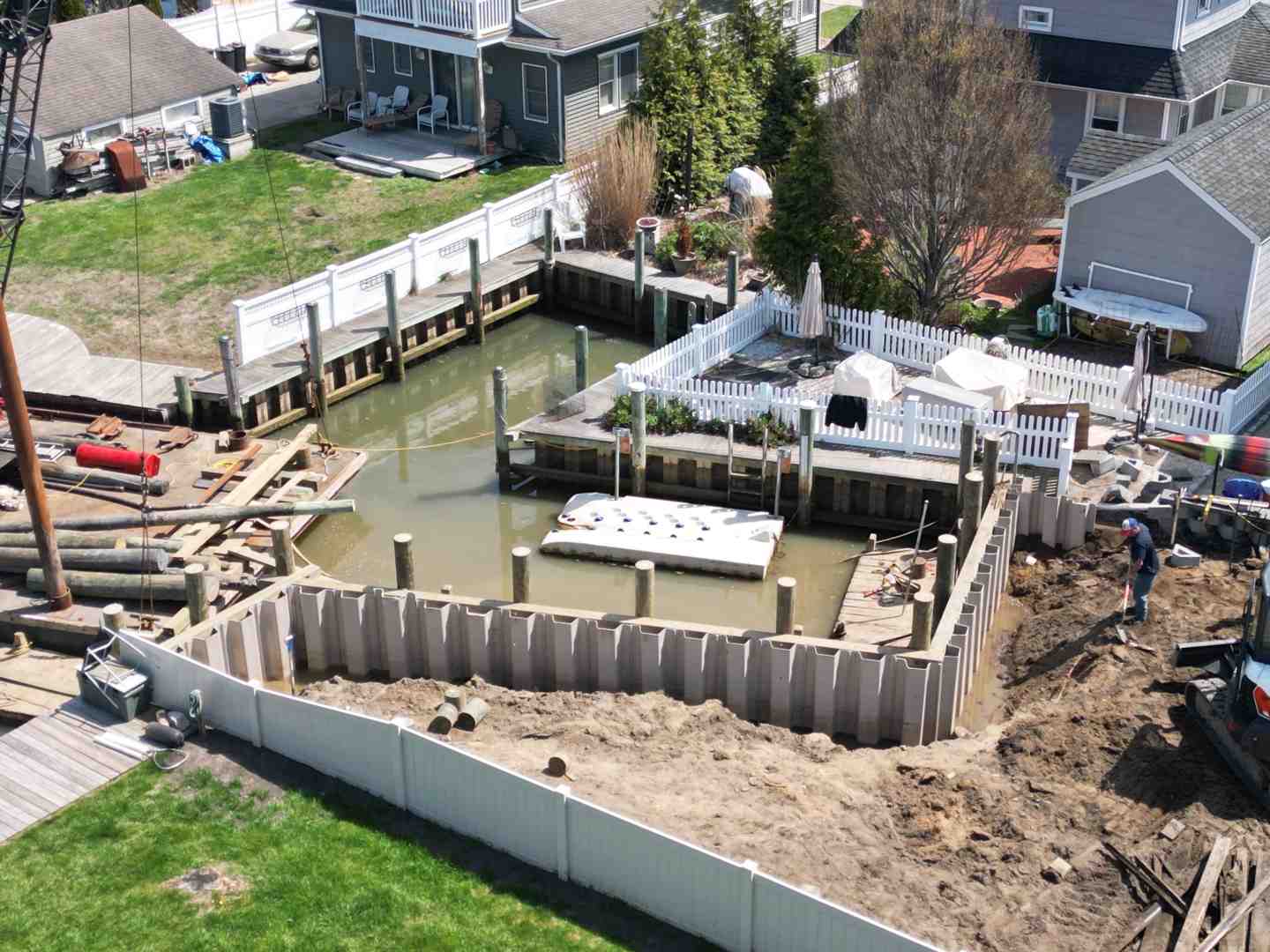
Fixed docks are permanent structures anchored to the seabed with piles made of wood, steel, or concrete. This pile-supported construction offers exceptional foundational stability, making it ideal for areas with minimal water level changes. A properly built fixed dock remains level and secure even in rough water. Our Residential Dock Construction projects in Nassau and Suffolk Counties always begin with an analysis of the seabed to ensure the correct pile type and depth. The main drawback is that fixed docks do not adjust to tidal fluctuations, which can make access difficult at high or low tide.
Floating Dock Systems
Floating dock systems work with the water, not against it. These modular platforms rise and fall with tidal changes, keeping the deck at a consistent height above the water. This adaptability makes them a perfect solution for Long Island's tidal waterways and areas with seasonal water level swings. Our Floating Dock Construction uses durable floats and robust anchoring systems. The modular design also allows for future expansion or reconfiguration. Proper anchoring is critical to the success and stability of any floating dock.
Gangways and Ramps for Access
Though often used interchangeably, gangways and ramps serve different functions.
Dock gangways are hinged walkways connecting a floating dock to the shore. They pivot to accommodate the vertical movement of the dock, often spanning difficult terrain and including handrails for safety.
Dock ramps are typically wider, more robust structures designed for heavy loads, such as moving equipment or launching small watercraft. They are a key component of many Marine Structures. For boat launching, ramps require specific design considerations, such as a slope between 12% and 15% for safe operation. The best choice depends on your site's elevation, tidal range, and how you plan to use the structure.
Key Materials in Modern Dock and Ramp Construction
The materials used in boat docks and ramps dictate their appearance, longevity, and maintenance needs. Building on Long Island's coast requires materials proven to withstand saltwater, sun, and storms.
Wood and Composite Decking
The decking surface is critical for safety and durability.
- Pressure-treated wood is a budget-friendly choice that resists rot and insects but requires regular sealing and staining to prevent splintering and decay.
- Cedar decking offers natural resistance to decay and a classic look, though it also needs maintenance to preserve its color and integrity.
- Ipe hardwood is a premium, dense tropical wood that naturally resists rot, insects, and UV damage, lasting 50+ years with minimal upkeep.
- Composite decking, made from recycled wood fibers and plastics, is a popular low-maintenance option. It eliminates splintering, warping, and the need for staining or sealing, making it economical over the dock's lifetime despite a higher upfront cost.
Aluminum and Steel Frameworks
The underlying framework provides the dock's strength.
- Aluminum frames are lightweight, strong, and highly corrosion-resistant, making them ideal for floating docks and gangways in saltwater environments. Our Marine Structures Design often uses custom aluminum fabrication for custom solutions.
- Galvanized steel offers superior structural strength for heavy-duty applications, such as fixed docks or structures bearing significant loads. The zinc coating provides excellent corrosion protection, and its weight adds to the stability of permanent structures.
Polyethylene for Flotation
For floating docks, polyethylene floats are the industry standard. They are exceptionally durable, cost-effective, and resistant to impacts and UV radiation. Quality floats are filled with encapsulated foam (expanded polystyrene), which prevents water absorption and environmental pollution if the outer shell is punctured. This design is environmentally safe and integrates perfectly with modular dock systems, allowing for flexible and expandable configurations.
Design and Selection Factors for Boat Docks and Ramps
Selecting the right boat docks and ramps for a Long Island property requires a thoughtful process that balances environmental conditions, regulations, and your specific needs. The best designs arise from careful site observation and planning.

Environmental and Site-Specific Considerations
Every shoreline has unique conditions that dictate the best dock or ramp design.
- Tidal Changes: Minimal fluctuations suit fixed docks, while significant tidal ranges require floating systems. Proper engineering ensures ramp elevations are correct for both high and low water.
- Water Depth: The dock must extend to a depth that allows safe boat approach without grounding props.
- Sensitive Habitats: Regulations protect Submerged Aquatic Vegetation (SAV) and tidal wetlands. Our Custom Dock Design in Massapequa prioritizes minimizing shading over SAV and avoiding permanent structures in wetlands, guided by an understanding of the environmental impacts of overwater structures.
- Shoreline Composition: The substrate—be it sand, mud, or rock—determines the appropriate foundation technique, such as driven piles or helical anchors.
Customization for Accessibility and Use
We build boat docks and ramps custom to your use.
- Accessibility: ADA-compliant features like proper ramp slopes (1:12), wider gangways, and correctly placed handrails ensure safe access for everyone.
- Cargo Handling: For moving heavy equipment, we engineer structures with heavy-duty frameworks (often galvanized steel) and reinforced decking to handle significant weight.
- Custom Fabrication: Our Full Service Marine Construction includes custom aluminum fabrication to solve unique challenges, like irregular shorelines or specialized equipment needs.
Anchoring Systems for Floating Boat Docks and Ramps
A floating dock's stability depends on its anchoring system. Our expertise in Floating Dock Anchoring Systems ensures the right method is chosen for your site.
- Pile-Guided Systems: The dock slides vertically on piles driven into the seabed, preventing lateral movement. Ideal for moderate tidal areas.
- Cable-Guided Systems: Heavy-duty cables anchor the dock to the shore and seabed, allowing for a greater range of vertical movement in areas with dramatic water level changes.
- Stiff-Arm Anchoring: Pivoting arms connect a floating section to a fixed structure like a seawall, maintaining a continuous surface.
- Shore Anchoring: Secure landward connections for gangways are achieved with concrete deadmen, helical piles, or robust brackets. Learn more in our guide on How to Anchor a Floating Dock.
Navigating Permits, Maintenance, and Safety
Building boat docks and ramps on Long Island involves navigating regulations, planning for long-term maintenance, and prioritizing safety. These elements ensure your waterfront structure is a lasting, secure investment.

The Marine Construction Permitting Process
Permits are a necessary and complex part of any dock project. Oversight comes from multiple agencies:
- Local Town/Village: Governs zoning, setbacks, and local building codes.
- NYSDEC: The New York State Department of Environmental Conservation protects marine ecosystems and water quality.
- U.S. Army Corps of Engineers: Regulates structures in navigable waters to ensure public access.
Projects must also respect the public trust doctrine, which is why regulations often limit dock sizes. Depending on the scope, an environmental impact assessment may be required. For more information, see these Residential Dock Guidelines. Timelines can range from three months for a General Permit to over a year for complex projects. As experienced Dock Builders Long Island, we manage this entire process to prevent costly delays.
Essential Maintenance for Dock Longevity
Proper care protects your investment. Key maintenance tasks include:
- Decking Care: Wood decking requires regular cleaning and sealing. Composite decking needs only occasional cleaning to prevent mildew.
- Framework & Hardware Inspection: Periodically check aluminum and galvanized steel frames for corrosion and tighten all bolts, screws, and fasteners.
- Float Inspection: For floating docks, check polyethylene floats for any punctures or damage.
- Winterization: Preparing your dock for ice and harsh weather is crucial to prevent damage.
We recommend professional inspections every few years to catch subtle issues. If you need Dock Repair Near Me, we provide services from minor fixes to major restoration.
Safety Features in Modern Boat Docks and Ramps
Safety is integral to our construction process. Standard features include:
- Slip-Resistant Surfaces: Textured composite, grooved wood, or specialized coatings provide traction on wet surfaces.
- Handrails and Railings: Sturdy, code-compliant railings on gangways and ramps ensure secure access for all users.
- Lighting: Downward-facing solar or low-voltage LED lights illuminate pathways without creating navigational glare.
- Cleat Placement: Cleats are strategically positioned for secure mooring without creating tripping hazards.
- Protective Bumpers: Fenders absorb impacts, protecting both the dock and vessels.
- Proper Dimensions: Adequate walkway widths and ramp clearances ensure safe maneuvering.
Understanding Dock and Ramp Construction Costs
Investing in boat docks and ramps is a significant decision. While the final price varies, understanding the key cost factors is crucial for budgeting and planning your waterfront project.

Factors That Influence Project Pricing
Several key elements influence the final cost of a dock or ramp project:
- Dock Type: Fixed, pile-supported docks often have higher initial costs due to foundation work, while floating docks have costs associated with anchoring and modular components.
- Dimensions & Configuration: Larger and more complex designs require more materials and labor.
- Material Selection: Premium materials like Ipe or composite decking cost more upfront but offer lower long-term maintenance than pressure-treated wood. Aluminum frames are typically more expensive than galvanized steel but provide superior corrosion resistance.
- Site Complexity: Difficult access, challenging seabed conditions, or work in sensitive environmental areas can increase costs.
- Labor & Permitting: Professional marine construction expertise and the fees for local, state, and federal permits are significant parts of the total investment.
How Project Costs Are Determined
Because every waterfront project is custom, providing a generic price list is not feasible. The total investment is a combination of the factors mentioned above. For example, a simple, fixed dock with pressure-treated wood decking in an easily accessible area will cost significantly less than a complex, multi-slip floating dock system using Ipe hardwood and requiring specialized anchoring in a sensitive habitat. The cost of a project is determined by a comprehensive quote that includes:
- Design and Engineering: Creating plans that meet your needs and all regulatory requirements.
- Materials: The cost of all decking, framework, floats, and hardware.
- Labor: The skilled workforce required for fabrication and installation.
- Permitting: The fees and professional time needed to secure all necessary approvals.
We provide detailed quotes that break down these elements, ensuring a transparent and complete understanding of the investment. This approach guarantees a solution that fits your needs and budget without hidden fees or surprises.
Conclusion
Your dock or ramp is a fundamental part of your waterfront property's value and functionality. As this guide has shown, selecting the right structural type, materials, and design for your specific site is critical for longevity and performance. A well-built boat dock or ramp is a generational asset, while one that cuts corners can lead to costly repairs.
Navigating Long Island's tidal fluctuations, regulatory problems, and sensitive marine habitats requires professional expertise. Guesswork is not an option when making such a significant investment.
At Pearce Marine Construction, our generational knowledge of Nassau and Suffolk County shorelines ensures your project is built with meticulous craftsmanship. We understand the local conditions, from substrate to tides, and use materials proven to last. Whether you need a fixed dock, a floating system, or a custom ramp, we guide you from design and permitting through final construction.
Your waterfront vision deserves expert execution. Contact us to begin designing your custom boat dock or ramp project and let's build a structure that will serve you for years to come.



Bring Your Vision to Life
Whether you're planning a custom dock, seawall, or boat lift, our experienced team is ready to deliver high-quality marine construction tailored to your needs. Pearce Marine Construction brings craftsmanship, precision, and a deep understanding of Florida’s waterways to every project. Let us help you create a durable, beautiful solution that stands the test of time. Get in touch now for a personalized estimate!