
Easy Tips for a Perfect Boat Lift Canopy Installation

What You Need to Know About Professional Boat Lift Canopy Installation
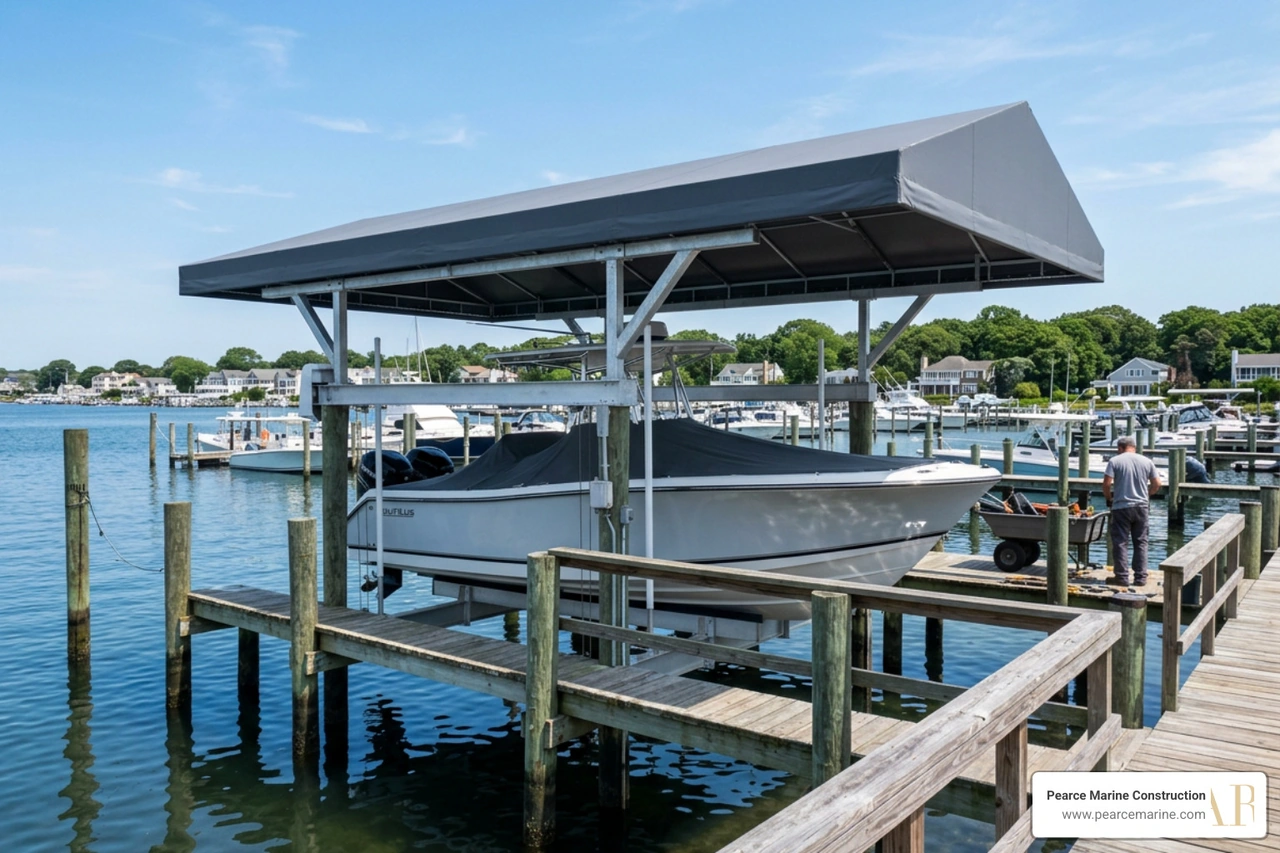
Boat lift canopy installation is one of the most important steps you can take to protect your vessel from sun, rain, wind, and salt air damage while it sits on the lift.
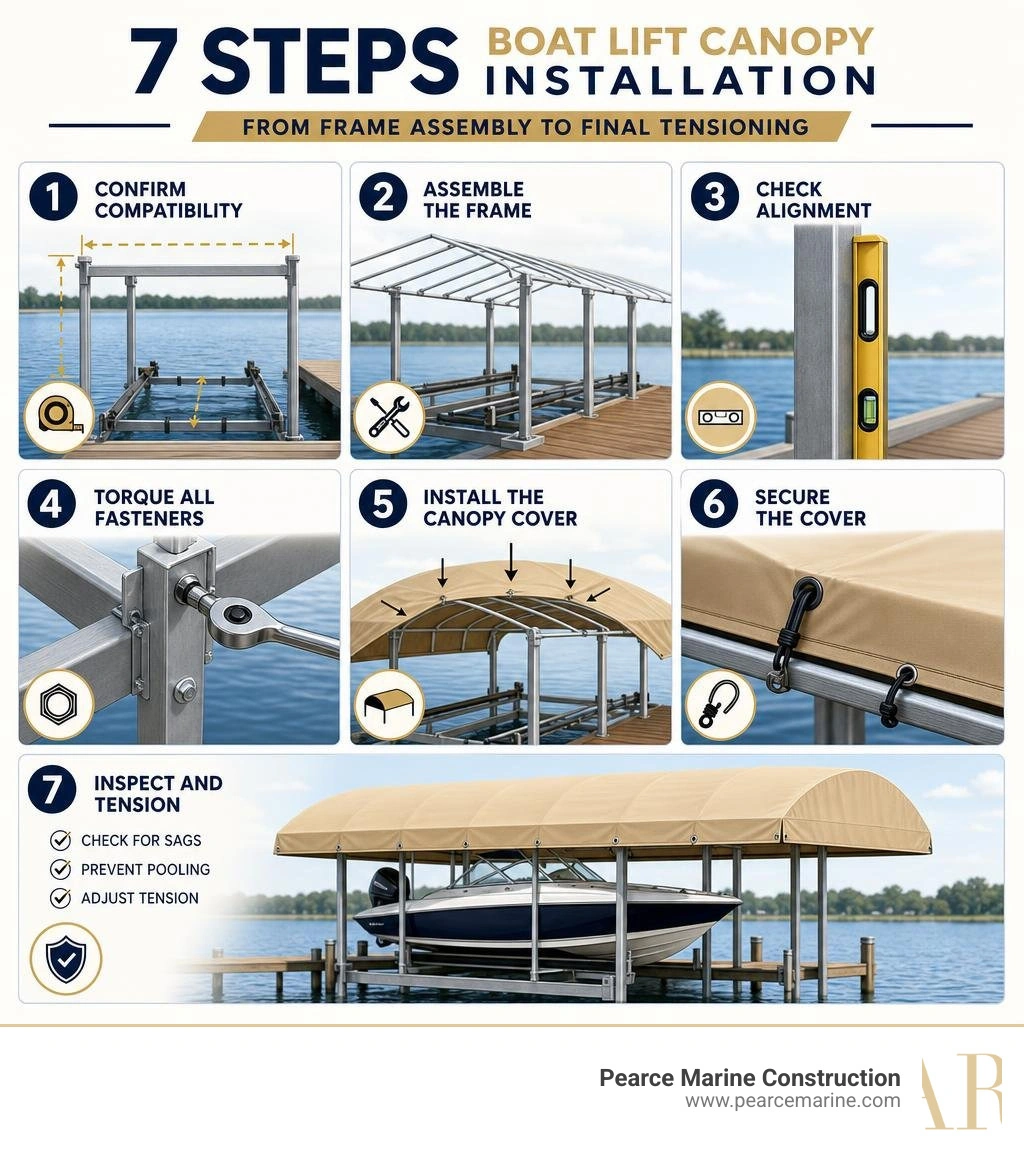
Here is a quick overview of the core steps involved in our professional installation process:
- Confirm compatibility — Our team measures your lift frame and matches dimensions to the engineered canopy system.
- Assemble the frame — We attach heavy-duty baseplates, install vertical uprights, then connect horizontal bows and rafters.
- Check alignment — We use precision levels to confirm uprights are plumb and spacing is perfectly even on both sides.
- Torque all fasteners — We apply marine-grade thread locker and tighten bolts to exact engineering specifications.
- Install the canopy cover — We center the premium fabric over the frame with equal overhang on all sides.
- Secure the cover — We attach advanced bungee or lash systems every two feet around the perimeter, working from the center outward.
- Inspect and tension — We check for sags, pooling spots, or uneven tension and adjust the system for maximum wind resistance.
This process requires precision — a lot of it. A canopy installed with uneven tension or the wrong hardware for your local conditions will wear faster and may not survive a strong storm.
On Long Island, where Nassau and Suffolk County properties face serious salt air, UV exposure, and seasonal nor'easters, the stakes are even higher. A quality canopy cover made with durable fabric can last five to seven years or more — but only when the frame beneath it is properly engineered and installed by professional marine contractors.
The sections below walk through every stage of our professional process, from frame engineering standards to seasonal storm prep specific to Long Island waterfront properties.
Basic boat lift canopy installation glossary:
Engineering Standards for Professional Boat Lift Canopy Installation
When we design and execute a professional boat lift canopy installation, we treat the structure as an engineered system. A canopy is essentially a sail anchored to your dock; without precise calculations and heavy-duty materials, high winds can twist the frame, damage your lift, or even compromise your dock's structural integrity.
For a successful Boat Hoist Installation, we utilize structural marine-grade aluminum and high-tensile stainless steel fasteners. Aluminum provides the optimal strength-to-weight ratio, preventing unnecessary load on the lift's structural uprights while resisting the aggressive salt air of Long Island’s bays. Every frame we install is selected and positioned based on local wind load calculations, ensuring the structural arches can withstand the high-velocity wind shear common to our coastal communities. For detailed step-by-step methodologies on structural assembly, we reference the industry-standard canopy installation guide.
Key Components of a Heavy-Duty Boat Lift Canopy Installation
A reliable canopy system relies on several critical structural components working in unison:
- Canopy Frame: The overhead skeleton that defines the shape of the cover and sheds water.
- Vertical Uprights (Legs): Heavy-walled aluminum tubes that slide into the lift's corner posts to support the frame.
- Horizontal Bows & Rafters: Curved or angled structural members that support the fabric and prevent water from pooling.
- Baseplates & Mounting Brackets: The connection points that secure the canopy legs to the main structure of Boat Lifts.
During installation, we ensure the structural load is distributed evenly. While industry-standard systems often rely on just two or three baseplates per side, we utilize four heavy-duty baseplates per side on larger systems to achieve superior load distribution. Additionally, we specify frames with tighter rafter spacing. By reducing the physical gap between each horizontal bow, we minimize fabric deflection under heavy rain and wind, which drastically reduces stress on the cover material and extends its lifespan.
Step-by-Step Professional Frame Assembly and Alignment
Achieving a perfectly square and level canopy frame requires a meticulous, systematic approach. Our professional crews follow a rigorous assembly sequence:
- Component Inventory & Pre-Assembly Inspection: We lay out all aluminum extrusions on a protected surface to inspect for any shipping damage, manufacturing defects, or sharp edges that could tear the fabric cover.
- Baseplate Integration: We mount the heavy-duty baseplates to the lift structure, ensuring even spacing on both sides of the slip.
- Upright Installation: The vertical uprights are inserted into the corner posts. We use precision levels to ensure every leg is perfectly plumb before securing them.
- Truss and Bow Connection: We hoist the pre-assembled side frames and connect the horizontal bows and rafters. All components are kept finger-tight to allow for final squaring.
- Alignment and Leveling: We measure diagonally across the frame from corner to corner. The two diagonal measurements must be identical to ensure the frame is perfectly square.
- Torque to Specification: Once squared, we tighten all fasteners using calibrated torque wrenches.
- 3/8-inch bolts are torqued to 25-30 ft-lbs.
- 1/2-inch bolts are torqued to 50-65 ft-lbs.
- 5/8-inch bolts are torqued to 90-110 ft-lbs.
- Thread Locking Compound: We apply a marine-grade thread locker to every bolt. This prevents fasteners from backing out due to the constant vibrations caused by wind, waves, and tidal movement.
This precise alignment process is vital for the long-term stability of the entire system. For a comprehensive look at how these systems integrate with your overall dock layout, consult our Boat Dock Installation Complete Guide.
Advanced Tensioning Systems in Boat Lift Canopy Installation
The longevity of a canopy cover is directly tied to how tightly and evenly it is secured to the frame. Loose fabric creates "wind whip," which rapidly degrades the material, tears seams, and destroys attachment points.

To prevent this, we utilize advanced tensioning systems. High-quality covers constructed from Patio 500 fabric—a premium, vinyl-coated polyester fabric—typically last five to seven years in intense coastal environments before needing replacement, while the structural aluminum frame can easily last 10 years or more with basic maintenance.
To secure these covers, we employ several specialized attachment methods:
- EasyLash System: This innovative system utilizes a 3-inch-wide woven webbing strip with 1.25-inch hot-knifed slits cut every 3 inches. Because it avoids traditional metal grommets, which can pull out under high wind loads, the EasyLash Canopy Attachment Installation System has been tested and proven to be 25% stronger than leading traditional grommet designs. It allows us to position toggle ball bungees or bungee hooks exactly where they are needed for balanced tension.
- QuickLash System: Utilizing a perforated webbing track running the length of the canopy, this system allows bungees to hook directly into the corresponding frame ribs or support bars, streamlining seasonal removal.
- Continuous Bungee Rope: For specific frame designs, we thread a continuous bungee cord in a balanced pattern around the perimeter. We maintain slight slack during the initial threading, then tension the cord systematically to pull the fabric taut without over-stressing any single corner.
Structural Integrity and Long Island Weather Challenges
Long Island’s waterfront properties face some of the most demanding environmental conditions in the northeast. From the intense South Shore wind exposure across the Great South Bay to the dramatic North Shore tidal fluctuations in Long Island Sound, marine structures take a beating.
Saltwater spray accelerates the corrosion of sub-standard hardware, while intense UV exposure degrades low-grade fabrics within a single season. When we install a canopy in towns like Babylon, Bayshore, or Huntington, we engineer the system to withstand these exact regional pressures. If your existing dock or lift has suffered from storm damage or seasonal wear, our team can provide structural reinforcement through our comprehensive Boat Dock Repair services.
Specialized Tilting and Roll-Up Canopy Systems
To combat extreme wind shear and simplify seasonal maintenance, we install advanced, specialized canopy designs that depart from traditional fixed-frame systems:
- Motorized Tilting Canopies: Systems like the Floe Maxis Tilting Canopy utilize heavy-duty 24V actuators rated at 400 lbs capacity to tilt the canopy frame. This allows for easier boat clearance and lets you tilt the frame away from prevailing winds during storm events. Installing these systems requires precise alignment—vertical guides must be positioned exactly 5 inches from the top of the canopy leg, and actuator wiring must be routed carefully over pivoting connections with built-in slack to prevent binding.
- Roll-Up Canopy Systems: The ShoreStation Revolution Series features an innovative "Roll and Store" design. Instead of removing the fabric entirely, a specialized gear wrench allows the operator to roll the canopy cloth directly onto the frame's side roll bars. With an ultra-deep 20-inch rigid frame valance, this system provides exceptional vertical coverage and wind protection while eliminating the physical strain of folding and lifting heavy seasonal canvas.
These highly engineered systems must be configured by an experienced Boat Dock Installer to ensure all electrical connections, limit switches, and mechanical pivot points are perfectly calibrated for the harsh marine environment.
Seasonal Maintenance and Hurricane Preparedness in Nassau and Suffolk Counties
In South Shore communities like West Islip, Wantagh, and Massapequa, as well as East End destinations like Southampton and West Hampton, seasonal changes dictate strict maintenance protocols. Leaving a canopy cover on its frame during a hurricane or a severe winter nor'easter is a recipe for disaster—it risks destroying the cover, bending the aluminum frame, and severely damaging your boat lift or dock.
| Action Item | Seasonal Autumn Storage | Hurricane / Major Storm Prep |
|---|---|---|
| Fabric Status | Remove completely, clean with mild soap, dry thoroughly, and store. | Remove completely from the frame immediately. |
| Bungee/Lashings | Inspect for UV degradation; replace worn cords. | Remove and store safely with the cover. |
| Frame Hardware | Inspect and lubricate pivot points and fasteners. | Check torque on all structural frame bolts. |
| Motorized Systems | Disconnect power sources; protect actuators. | Ensure actuators are retracted and locked. |
| Storage Location | Clean, dry, rodent-free indoor space. | Secure indoor storage area. |
When preparing for winter storage, always ensure the fabric is completely dry before folding it loosely. Storing a damp canopy cover will lead to mold and mildew growth, which weakens the fabric fibers and ruins the aesthetic of your investment.
The Value of Professional Marine Construction Services
Installing heavy-duty marine infrastructure requires specialized equipment, commercial-grade rigging, and deep engineering expertise. A professional marine construction crew, equipped with specialized floating work platforms and extensive experience, ensures that every canopy frame is anchored flawlessly and aligned to withstand extreme coastal forces.
At Pearce Marine Construction, we bring generational expertise and meticulous craftsmanship to every project we touch across Nassau and Suffolk Counties. As a premier, woman-owned marine contractor, we understand the local building codes, environmental setbacks, and structural engineering required for Long Island's unique waterways.
We custom-fabricate and install heavy-duty systems designed to outlast generic, off-the-shelf options. Unlike mass-market handymen or other local builders, we do not cut corners. We use superior marine-grade materials, apply precise torque specifications, and back our work with an unwavering commitment to structural durability.
If you want to ensure your watercraft is protected by a canopy system built to withstand Long Island's toughest seasons, trust the local experts. Contact us today to discuss your waterfront project and explore our professional Boat Docks and Floating Docks construction services.

Bring Your Vision to Life
Whether you're planning a custom dock, seawall, or boat lift, our experienced team is ready to deliver high-quality marine construction tailored to your needs. Pearce Marine Construction brings craftsmanship, precision, and a deep understanding of Florida’s waterways to every project. Let us help you create a durable, beautiful solution that stands the test of time. Get in touch now for a personalized estimate!