
The Homeowner's Guide to Residential Dock Installation and Design

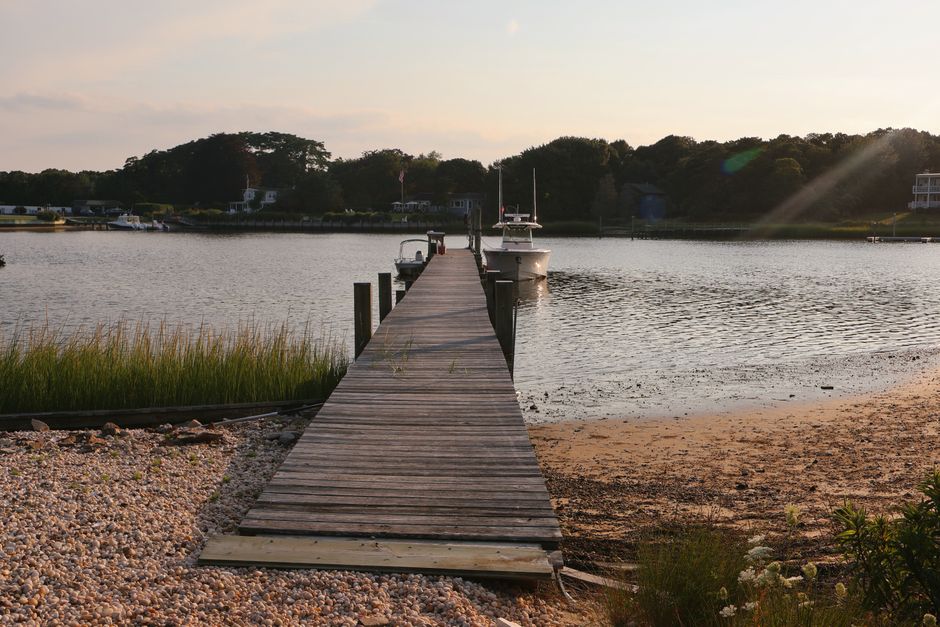
Custom Dock Construction Services for Long Island Waterfront Properties
Custom dock construction by Pearce Marine Construction is a specialized service focused on designing and building a dock tailored to your specific waterfront property — accounting for water depth, shoreline conditions, structural loads, and local marine environments.
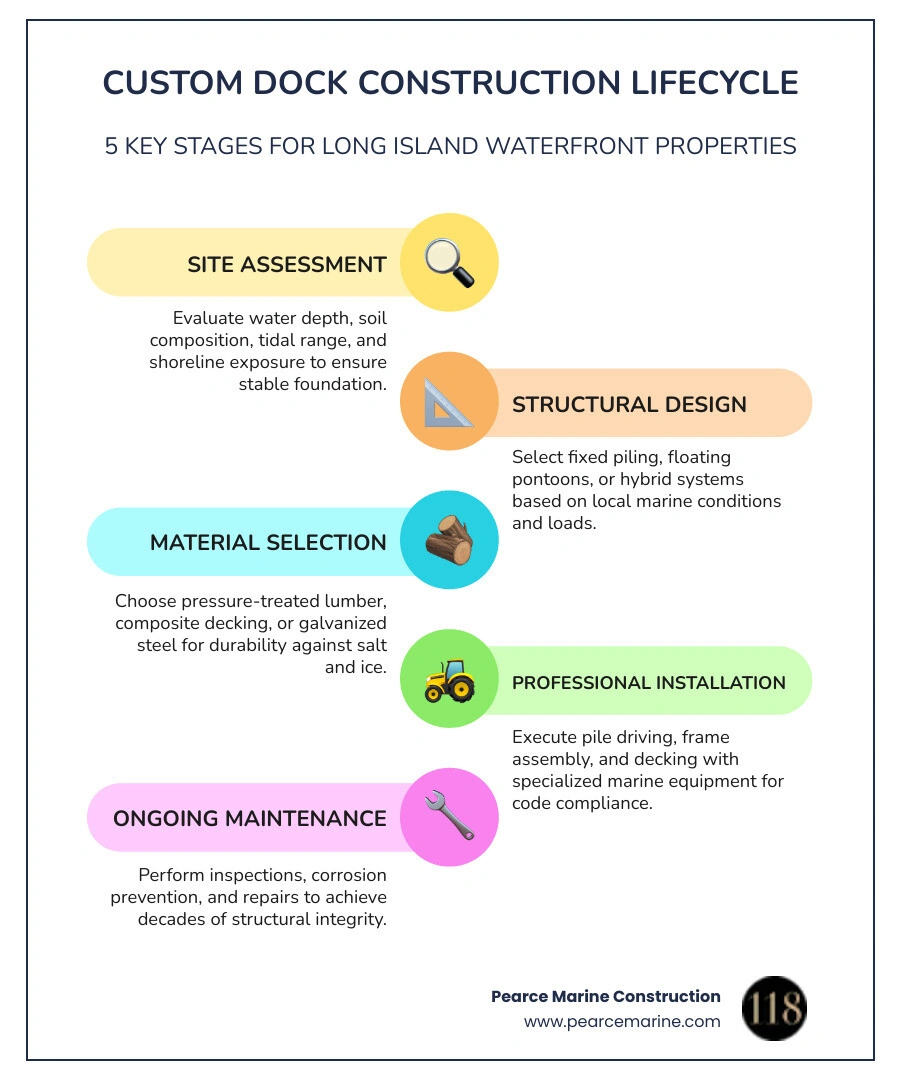
Our professional construction process involves:
- Site assessment — evaluating water depth, soil, tidal range, and exposure
- Structural design — choosing between fixed piling, floating, or hybrid systems
- Material selection — pressure-treated lumber, composite decking, aluminum, or galvanized steel
- Professional installation — pile driving, frame assembly, and decking by licensed marine contractors
- Code-compliant finishing — railings, cleats, boat lifts, and safety features built to spec
If you own waterfront property in Nassau or Suffolk County, your dock needs to hold up against Long Island's demanding marine conditions — tidal fluctuations, ice, wind exposure, and salt corrosion. A generic, off-the-shelf structure simply won't cut it.
That's exactly why our professional custom dock construction services are essential for Long Island homeowners. Every property along the Long Island Sound, Great South Bay, or the East End's tidal waterways has its own engineering requirements. Pearce Marine Construction ensures those details are handled correctly from the start, determining whether your dock lasts a decade — or several generations.
Our team manages every stage of the process, from initial site engineering through material choices, structural systems, accessories, and long-term maintenance.
Related Custom dock construction services:
Engineering and Planning for Custom Dock Construction
When we sit down to plan a new project, we aren’t just looking at where the wood meets the water. We are looking at the invisible forces that will act on that structure for the next 30 to 50 years. On Long Island, from the calm inlets of West Islip to the more exposed shorelines of Southold, the engineering phase is the most critical part of the journey.
Site Assessment and Environmental Analysis
The first step in Custom dock construction is a comprehensive site assessment. We evaluate the "fetch"—the distance wind can travel over open water before hitting your dock. This determines the wave load the structure must endure.
We also conduct a deep-dive into:
- Water Depth and Tidal Range: In areas like Merrick and Bellmore, tidal fluctuations can be significant. We need to ensure that at low tide, your structure isn't sitting in the mud, and at high tide, it isn't submerged.
- Soil Composition: What lies beneath the water? Is it the firm sand typical of some South Shore areas, or the thick "black Mayonnaise" (organic silt) found in certain North Shore harbors? This dictates how deep our piles must be driven to achieve the necessary "skin friction" and "end bearing" for stability.
- Ice Exposure: Long Island winters are no joke. In April 2026, we are still seeing the effects of winter "ice jacking," where frozen shelves of ice grip pilings and pull them out of the ground as the tide rises. Engineering for ice is a non-negotiable part of our planning.
For more localized insights, you can explore our guide on Dock Construction Nassau.

Selecting Materials for Custom Dock Construction
Choosing the right materials is where your budget meets longevity. In the harsh salt spray of Suffolk County, the "cheapest" option often becomes the most expensive when it needs replacement in seven years. We prioritize materials that offer a balance of structural integrity and aesthetic appeal.
Timber vs. Composite vs. Steel
- Pressure-Treated Lumber: The traditional choice. It is cost-effective and offers natural flexibility, which is great for absorbing the energy of moving water. However, it requires regular sealing to prevent splintering and rot.
- Tropical Hardwoods (Ipe/Cumaru): These are the "gold standard" for luxury Custom dock construction. They are naturally resistant to rot and insects and are so dense they often sink in water. They offer a beautiful, high-end finish for properties in the Hamptons or Lloyd Harbor.
- Reinforced Polymeric Decking: Products like WearDeck (reinforced with fiberglass) are becoming the go-to for low-maintenance docks. They don't absorb water, won't rot, and stay much cooler under the July sun than traditional composites.
- Hot-Dipped Galvanized Steel: For the frame, steel offers unrivaled strength. We ensure all steel is hot-dipped galvanized to create a metallurgical bond that protects against the corrosive Long Island salt air.
| Material Type | Durability | Maintenance Level | Best Use Case |
|---|---|---|---|
| Pressure-Treated Wood | 10-15 Years | High (Annual sealing) | Budget-friendly residential docks |
| Tropical Hardwood | 25-40 Years | Moderate (Oiling for color) | High-end aesthetic waterfronts |
| Reinforced Polymeric | 30+ Years | Low (Soap and water) | High-traffic, low-maintenance piers |
| Galvanized Steel | 40+ Years | Low (Periodic inspection) | Heavy-duty frames and rough water |
For a deeper dive into the technical specs of these materials, check out our resource on Boat Dock Construction.
Structural Types: Floating vs. Fixed Systems
The debate between floating and fixed docks is one we have with almost every client. The "right" answer depends entirely on your geography.
Fixed Piling Docks
Fixed docks are permanent structures built on top of pilings driven deep into the seabed.
- Pros: They are incredibly stable and can support heavy structures like boathouses or second-level sundecks.
- Cons: Because they don't move, the distance between the deck and the water changes with the tide. This can make boarding a boat difficult during extreme low or high tides.
- Best For: Areas with minimal tidal range or where a "pier-style" look is desired, such as parts of Southampton or Cold Spring Harbor.
Floating Dock Systems
Floating docks sit on top of encapsulated foam floats or pontoons and move up and down with the tide.
- Pros: They provide a constant "freeboard" (the distance from the dock to the water), making boat access much safer and easier. They are often the better choice for the varying water levels in Merrick and Wantagh.
- Cons: They can feel less stable underfoot and are more susceptible to damage in high-energy wave environments.
- Best For: Tidal creeks, lagoons, and areas where easy boat access is the primary goal.
Hybrid and Articulating Systems
In some cases, we design hybrid systems—a fixed pier that leads to a gangway, which then connects to a floating platform. This gives you the stability of a permanent walkway with the convenience of a floating boat slip. For homeowners in West Hampton, an articulating lift dock might be the answer, allowing the structure to be raised out of the water during the winter to avoid ice damage.
Learn more about these options at More info about boat docks and floating docks.
Essential Features and Custom Dock Construction Accessories
A dock isn't finished until the functional accessories are installed. These aren't just "add-ons"; they are integral to the structural utility of your waterfront.
- Boat Lift Integration: We don't just "bolt on" a boat lift. We engineer the dock frame to handle the torque and weight of the lift system. Whether it's a 4-post pile mount or a specialized elevator lift for narrow canals in Massapequa, the construction must be precise.
- Marine-Grade Railings: Safety is paramount. We offer custom aluminum or stainless steel cable railings that provide safety without blocking your view of the Great South Bay.
- Underwater Lighting: Beyond the "cool factor," underwater LED lighting helps with nighttime navigation and safety.
- Heavy-Duty Cleats and Bumpers: We use powder-coated or galvanized hardware to ensure your mooring points don't rust through.
Proper piling is the foundation of all these features. See our guide on Dock Piling Installation for more detail.
Professional Installation and Long-Term Maintenance
Professional Custom dock construction on Long Island requires specialized equipment. You cannot build a high-quality marine structure from the land alone.
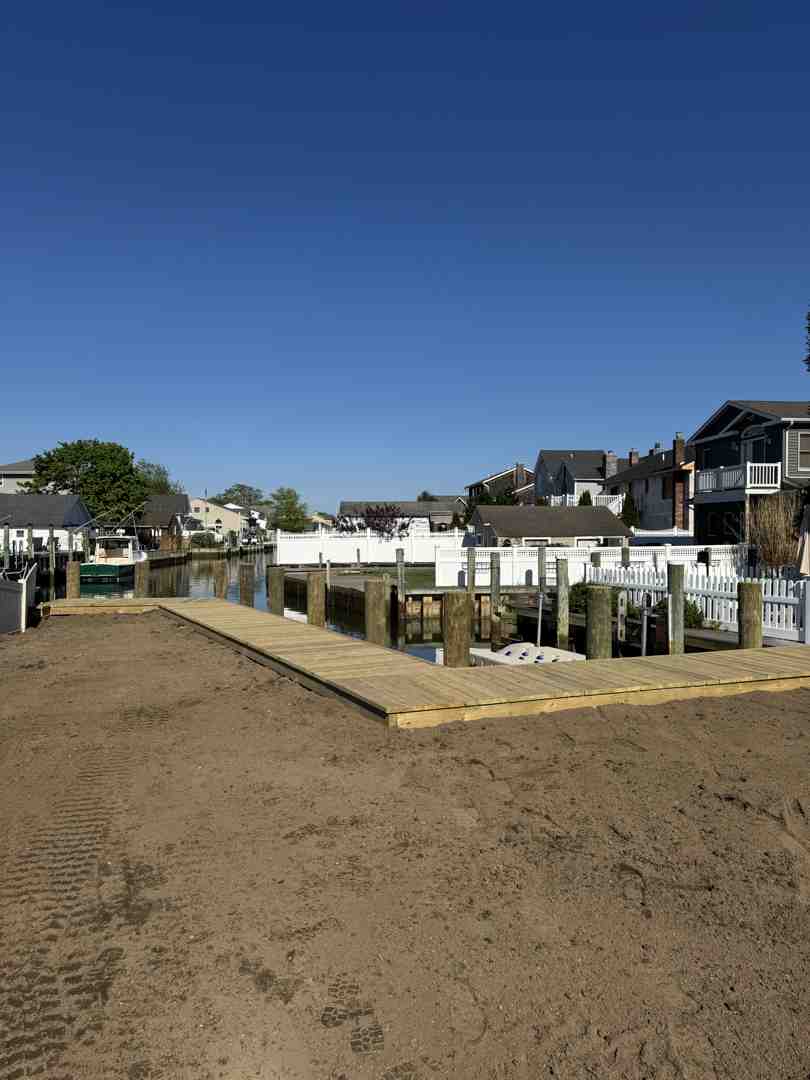
The Installation Process from Piling to Decking
Our process begins with our marine barge and pile-driving fleet.
- Pile Driving: We use vibratory or impact hammers to set the pilings. In Babylon and Bayshore, we ensure every pile is driven to "refusal" or the calculated depth to ensure it won't settle over time.
- Framing: Once the pilings are set and cut to the correct height, we install the "stringers" and "rim joists." We use heavy-duty galvanized bolts—never just nails—to ensure the frame can handle the racking forces of waves.
- Decking: The final layer is installed with precision spacing to allow for the natural expansion and contraction of materials in the Long Island humidity.
For a step-by-step breakdown, refer to our Boat Dock Installation Complete Guide.
Maintenance and Repair for Marine Longevity
Even the best-built dock needs love. The Atlantic is a "universal solvent," and it will eventually try to reclaim your dock.
- Structural Inspections: We recommend a professional inspection every 2-3 years to check for "gribbles" (wood-boring organisms) or loose hardware.
- Bulkhead Refacing: Often, a dock is only as strong as the bulkhead it's attached to. If your bulkhead is showing signs of age, we can perform a "refacing" to strengthen the shoreline interface without a full replacement.
- Ice Protection: Using "bubbler" systems or de-icers can prevent ice from forming around your pilings, significantly extending the life of your dock.
Read more about maintaining your investment at Residential Dock Construction.
Choosing a Long Island Marine Contractor
When you are ready to invest in Custom dock construction, the contractor you choose makes all the difference. At Pearce Marine Construction, we bring generational expertise to every project. As a woman-owned business serving Nassau and Suffolk County, we pride ourselves on meticulous craftsmanship and an "artist's eye" for marine design.
We understand the local codes in Huntington, the tidal quirks of Brightwaters, and the environmental regulations of West Hampton. We don't just build docks; we build the gateway to your waterfront lifestyle.
If you’re looking for a team that values structural integrity as much as you value your view, we are here to help.
Contact us for seawalls and bulkheads to start your project today.



Bring Your Vision to Life
Whether you're planning a custom dock, seawall, or boat lift, our experienced team is ready to deliver high-quality marine construction tailored to your needs. Pearce Marine Construction brings craftsmanship, precision, and a deep understanding of Florida’s waterways to every project. Let us help you create a durable, beautiful solution that stands the test of time. Get in touch now for a personalized estimate!