
Keep Your Boat Safe with This Mooring Whip Installation Guide

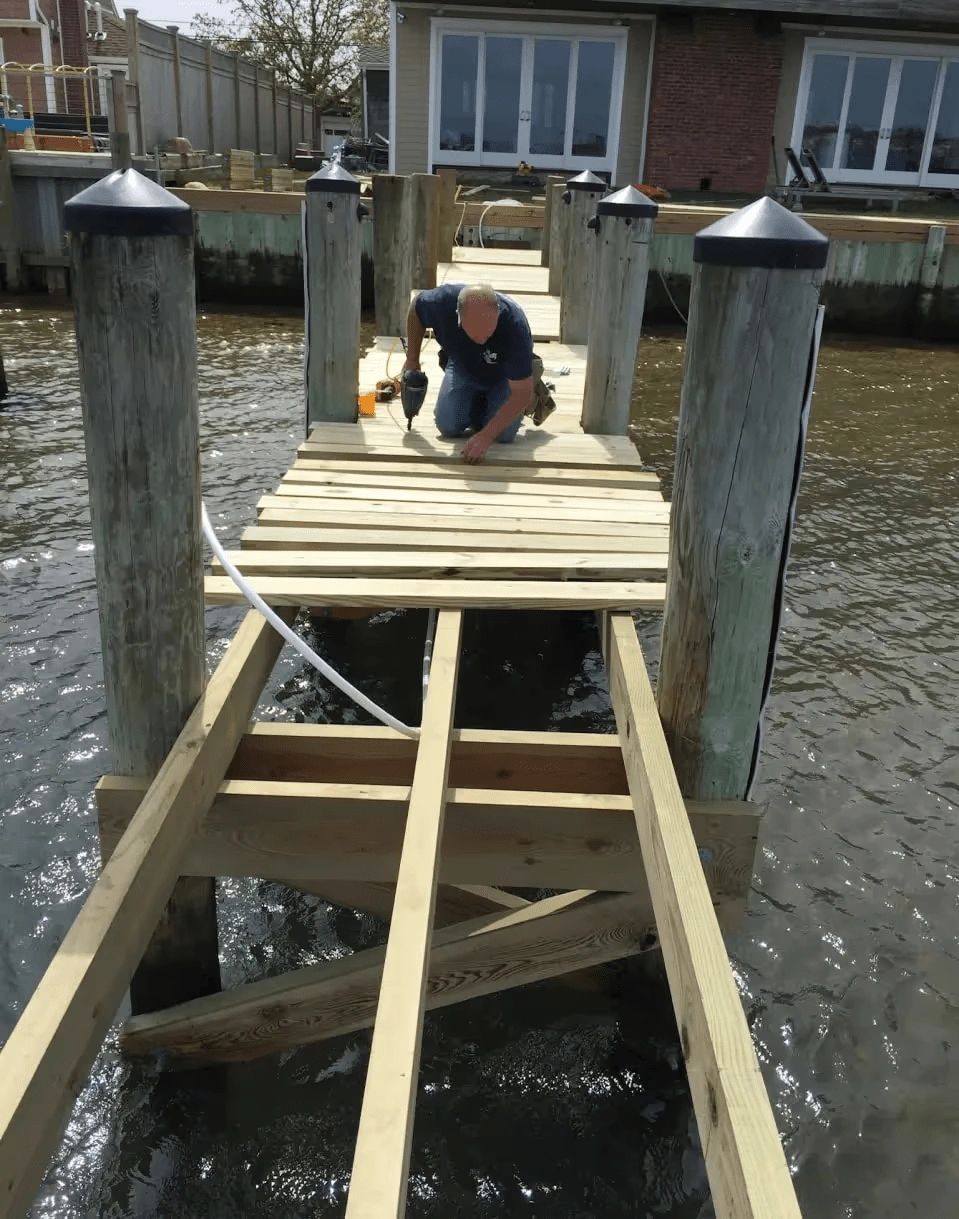
Professional Engineering: How to Install Mooring Whips on Long Island Docks
Installing mooring whips correctly is a highly specialized marine construction service designed to protect vessels from costly dock damage. When executed by professional marine contractors, a mooring whip system ensures structural load distribution, preventing damage to the dock framing, bulkhead, or vessel hull.
Professional Mooring Whip Installation Standards:
- Engineering Assessment: Evaluating dock structural integrity and selecting the correct whip length and weight rating.
- Precision Placement: Positioning bases 4–5 inches from the dock edge, spaced exactly 2/3 of the vessel's length.
- Structural Anchoring: Drilling pilot holes and securing bases with heavy-duty marine-grade hardware adapted to the dock material.
- Whip Assembly: Assembling heavy-duty fiberglass poles and threading marine-grade lines through roller tips.
- Alignment & Calibration: Inserting poles into bases and aligning roller tips with deck cleats to prevent line chafing.
- Tension Calibration: Setting precise tension using the professional inch-per-foot rule.
- Spring Line Integration: Rigging spring lines in an X, M, or V pattern to maintain parallel alignment.
- Final Load Testing: Verifying the vessel sits safely 3–6 feet from the dock face under equalized tension.
Wakes, wind, and tidal swings are constant challenges on Long Island's waterways — from the canals of West Islip to the open bays of Southampton and Westhampton. A professionally installed mooring whip system creates a soft mooring: the boat floats safely away from the dock face, held under steady tension rather than impacting the dock structure during high-energy wake events.
The Engineering Stakes of Installation: The dock itself must be structurally engineered to handle the constant outward torque of the whip system. Softwood decking, aging hardware, and the harsh saltwater environment common across Nassau and Suffolk Counties introduce structural failure points that standard installations fail to address. Pearce Marine Construction ensures every installation is backed by rigorous structural standards.

Relevant articles related to install mooring whips:
To install mooring whips safely, marine contractors must design the system around the physics of a soft mooring. Unlike traditional boat fenders, which act reactively by cushioning a vessel after impact, mooring whips act proactively. They apply continuous, variable outward pressure to keep the vessel suspended a safe distance (typically 3 to 6 feet) away from the dock face.
This tension is generated by tapered, heavy-duty fiberglass poles manufactured through pultrusion, which pulls glass fibers through a resin bath to build a pole that is incredibly strong under tension. When wind loads or heavy wakes from passing boats in busy channels like Babylon or Bayshore push the vessel toward the dock, the fiberglass poles flex further, absorbing the kinetic energy and gently pushing the boat back into its safe resting position.
However, this constant dynamic load means that the entire system is only as strong as its connection to your dock. If the bases are misaligned or the dock structure itself is compromised, the torque generated by the whips can warp deck boards or pull fasteners right out of the timber.
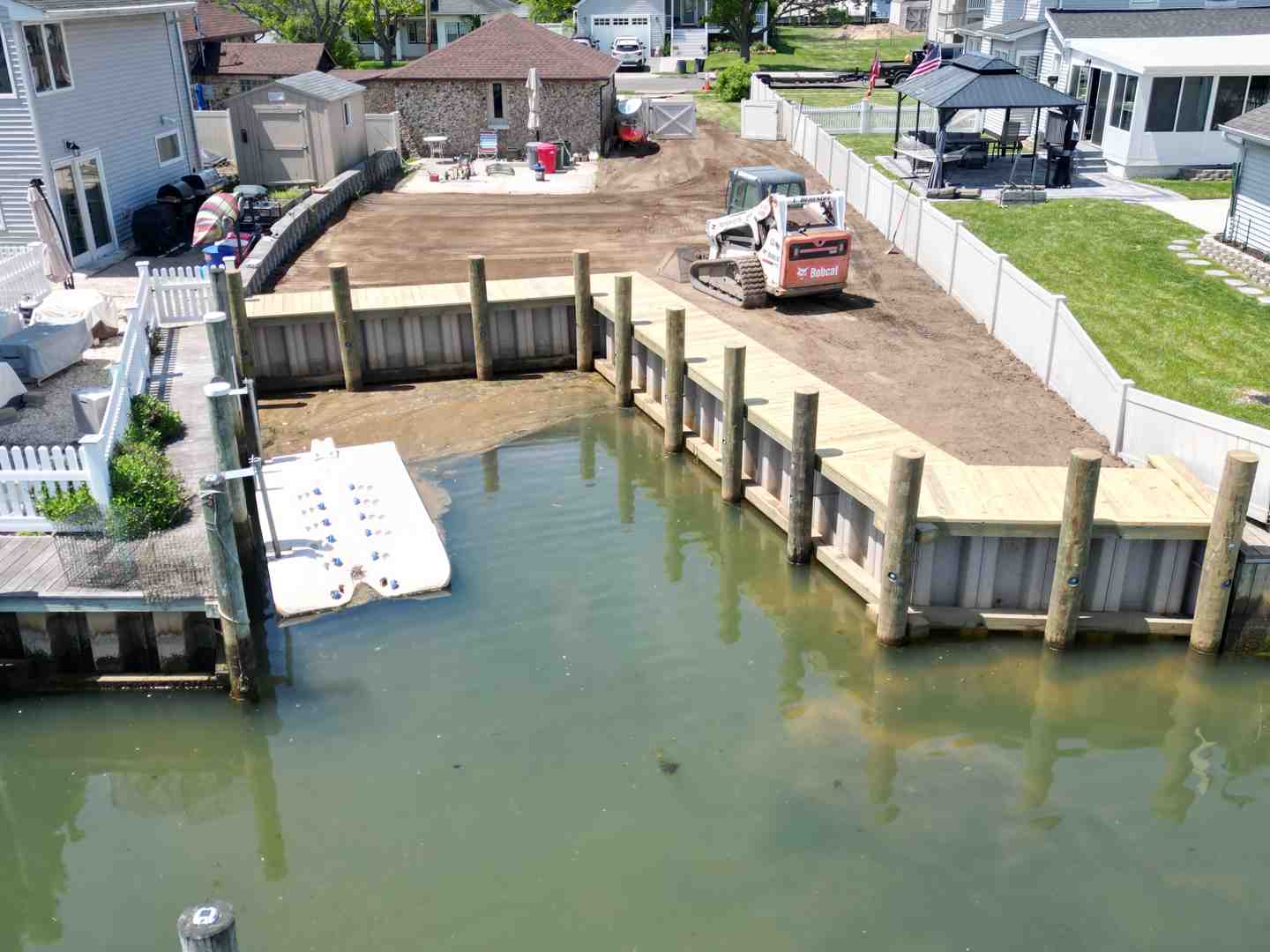
When we design a mooring system, we ensure the whips are positioned perpendicular (90 degrees) to the boat's centerline. This ensures the fiberglass poles bend directly forward and backward without twisting or bending sideways, which drastically reduces their structural integrity and can lead to splintering. For more details on integrating these systems with your waterfront layout, read our guide on Boat Docks and Floating Docks. To learn more about how these systems function dynamically, you can also consult How to Use Mooring Whips: A Comprehensive Guide.
Structural Requirements to Install Mooring Whips Safely
Before any hardware is mounted, our marine construction team carefully evaluates the structural integrity of your dock. A standard residential dock deck is often built using softwood planks, such as cedar or pressure-treated pine. While beautiful, these softwoods do not have the density required to hold standard lag screws under the constant, heavy torque of a tensioned fiberglass pole.
Securing cast aluminum bases to softwood decking using simple lag screws will cause the wood fibers to slowly strip out over time, eventually causing the base to pull free during a storm or high-wake event. To prevent this, our engineering standards require:
- Through-Bolting: We drill completely through the deck boards and structural joists, securing the bases with heavy-duty stainless steel carriage bolts, backing washers, and locking nuts.
- Under-Deck Reinforcement: If the existing deck boards show signs of wear, we install structural backing plates or sister new pressure-treated blocking timber directly beneath the mounting zone to distribute the tension load across multiple joists.
- Concrete Dock Adaptation: For concrete docks common in some deep-water canals in Huntington or Lloyd Harbor, we use specialized masonry plug inserts and heavy-duty anchor bolts to prevent concrete spalling.
To review manufacturer-grade structural specifications for heavy-duty systems, you can refer to the Premium & Ultimate documentation. For a complete look at the hardware options available for your waterfront, explore our insights on Boat Dock Accessories.
Step-by-Step Professional Process to Install Mooring Whips
When our team installs a mooring whip system, we follow a meticulous, multi-step process to guarantee absolute safety and performance.

- Positioning and the 2/3 Rule: We locate the cast aluminum bases exactly 4 to 5 inches back from the dock's edge. The distance between the two bases (the span) must equal approximately two-thirds of the boat's overall length. Each base is aligned perpendicularly to the dock, positioned directly across from the boat's bow and stern deck cleats.
- Drilling and Mounting: Using the aluminum bases as templates, we mark the holes. On standard hardwood or reinforced docks, we drill precise pilot holes. If we are working on softwood docks, we drill 3/8-inch through-holes to accommodate carriage bolts.
- Pole Assembly and Epoxy Curing: For two-part whip systems, we sand the connecting joint, thoroughly mix the manufacturer-specified two-part epoxy, and apply it to the bottom pole. We insert the bottom pole into the top pole coupler with a twisting motion to align the cuts, allowing it to cure completely for 2 to 4 hours.
- Inserting and Aligning the Poles: We slide the assembled fiberglass poles into the aluminum base sockets. We align the roller tips so they are perfectly parallel to the dock surface and directly in line with the boat's deck cleats. This alignment is critical; if the roller tip is angled, the whip line will chafe prematurely against the pulley housing. We tighten the base thumb screws just enough to prevent the pole from lifting out — overtightening can crush the delicate fiberglass strands.
- Line Rigging and Tensioning: We thread high-quality marine-grade lines through the roller tips. We mount the pole cleats no more than 14 inches from the whip bases. To set the correct tension, we use the "inch-per-foot" rule: the whip tip should only be pulled down in inches equal to the pole's total length in feet (for example, a 12-foot pole is tensioned by pulling the tip down exactly 12 inches).
- Spring Line Configuration: Mooring whips only provide outward tension; they cannot prevent your boat from moving fore and aft. Therefore, we must install a robust spring line system using the "X", "M", or "V" method. These spring lines work in perfect tandem with the whips to keep the boat parallel to the dock. We always melt and seal the cut ends of the nylon lines with a flame to prevent fraying.
For more details on anchoring hardware and cleat placement, see our Boat Cleat Installation Guide 2026.
Selecting the Right Mooring Whip System for Long Island Tides
Long Island's coastal geography presents highly variable tidal environments. In the protected canals of Massapequa or West Islip, the tidal range might be moderate, but in the open bays of Southampton and West Hampton, water levels can fluctuate by several feet daily.
Choosing the right base type is essential to prevent system failure:
- Fixed-Angle Bases (60-Degree): These are ideal for floating docks or areas with minimal water level fluctuations (under 2 feet). Because a floating dock rises and falls with the vessel, the relative angle between the whip and the boat remains constant.
- Rocker Arm (Pivoting) Bases: For stationary docks in high-tidal zones, rocker bases are a necessity. These bases feature a spring-loaded hinge that allows the whip poles to pivot up and down, automatically compensating for tidal swings exceeding 2 feet. If you use a fixed base on a stationary dock in a high-tide zone, the lines can go slack at high tide (allowing the boat to drift into the dock) or become over-tensioned at low tide (risking structural damage to the poles).
When selecting a system, boat weight and profile are far more critical than length. A high-profile cabin cruiser catches significantly more wind than a low-profile center console of the same length, requiring upgraded pole diameters (such as 1-inch premium poles instead of 13/16-inch standard poles). To ensure your dock is ready for these dynamic environmental forces, it is wise to consult a certified Boat Dock Installer.
Why Professional Marine Construction Outperforms Standard Dock Hardware Setup
While some property owners consider mounting dock hardware a simple task, marine environments are unforgiving. An unengineered installation often overlooks the hidden chemical and physical forces at play on the water.
One of the most common installation mistakes is ignoring galvanic corrosion. When stainless steel mounting bolts are placed directly into cast aluminum whip bases in a saltwater environment, an electrochemical reaction occurs. The saltwater acts as an electrolyte, causing the aluminum base to rapidly corrode, bubble, and eventually crack under load. Our professional teams prevent this by placing non-conductive nylon washers between the steel fasteners and the aluminum bases, isolating the dissimilar metals.
Furthermore, if the fiberglass poles are over-tensioned or the base thumb screws are over-torqued during an unengineered setup, the fiberglass fibers can suffer localized crushing. This micro-damage is invisible to the naked eye but will cause the pole to suddenly snap when subjected to a heavy storm surge. Professional installation ensures all manufacturer warranties remain fully intact while protecting your valuable vessel from catastrophic dock collisions.
Integrating Mooring Whips with Custom Dock Construction
At Pearce Marine Construction, we believe that dock protection hardware shouldn't be an afterthought. When we build custom docks, bulkheads, and piers across Nassau and Suffolk Counties, we integrate anchoring systems directly into the structural engineering of the build.
Our team brings generational expertise and meticulous craftsmanship to every project, ensuring that your custom decking, pile driving, and structural framing are built to handle the exact wind and wave loads of your specific waterfront location. Whether you are building a new timber pier in Brightwaters or repairing a bulkhead in Westhampton, we ensure every cleat, whip base, and deck board is engineered for maximum durability and seamless performance.
Get in Touch for Expert Waterfront Solutions
Ready to secure your waterfront property with professional-grade marine construction? Contact Pearce Marine Construction today to discuss custom dock building, structural repairs, and heavy-duty marine installations tailored to Nassau and Suffolk Counties.
.avif)

Bring Your Vision to Life
Whether you're planning a custom dock, seawall, or boat lift, our experienced team is ready to deliver high-quality marine construction tailored to your needs. Pearce Marine Construction brings craftsmanship, precision, and a deep understanding of Florida’s waterways to every project. Let us help you create a durable, beautiful solution that stands the test of time. Get in touch now for a personalized estimate!