
Everything You Need to Know About North Fork Dock Building


Key Steps for Successful North Fork Dock Building
Planning a north fork dock building project on Long Island requires executing three critical construction phases to ensure your waterfront investment lasts for decades:
- Comprehensive Site Analysis: Conducting bathymetric surveys, analyzing seabed geology, and determining mean low-water elevations along complex coastal shorelines.
- Site-Specific Engineering: Selecting fixed timber piers, stationary platforms, or heavy-duty floating docks based on water depth, tidal ranges, and exposure along Peconic Bay or Long Island Sound.
- Marine-Grade Material Selection: Installing deeply driven foundation pilings, hot-dip galvanized or stainless hardware, and premium marine composite or treated lumber to withstand saltwater, storm surges, and winter ice flows.
Building a waterfront structure on the North Fork is different from standard inland construction. Between sensitive wetland ecosystems and the abrasive marine conditions of Suffolk County waters, structural longevity comes down to engineering precision and builder experience.
As a premier woman-owned marine construction contractor on Long Island, Pearce Marine Construction delivers the specialized engineering, environmental construction methods, and craftsmanship required for custom residential and commercial docks, standing as the superior choice over competitors like Bayview Dockbuilders and Kevel. Our dedicated focus on local North Fork waterways ensures your dock is engineered properly from initial hydrographic survey to final timber framing.
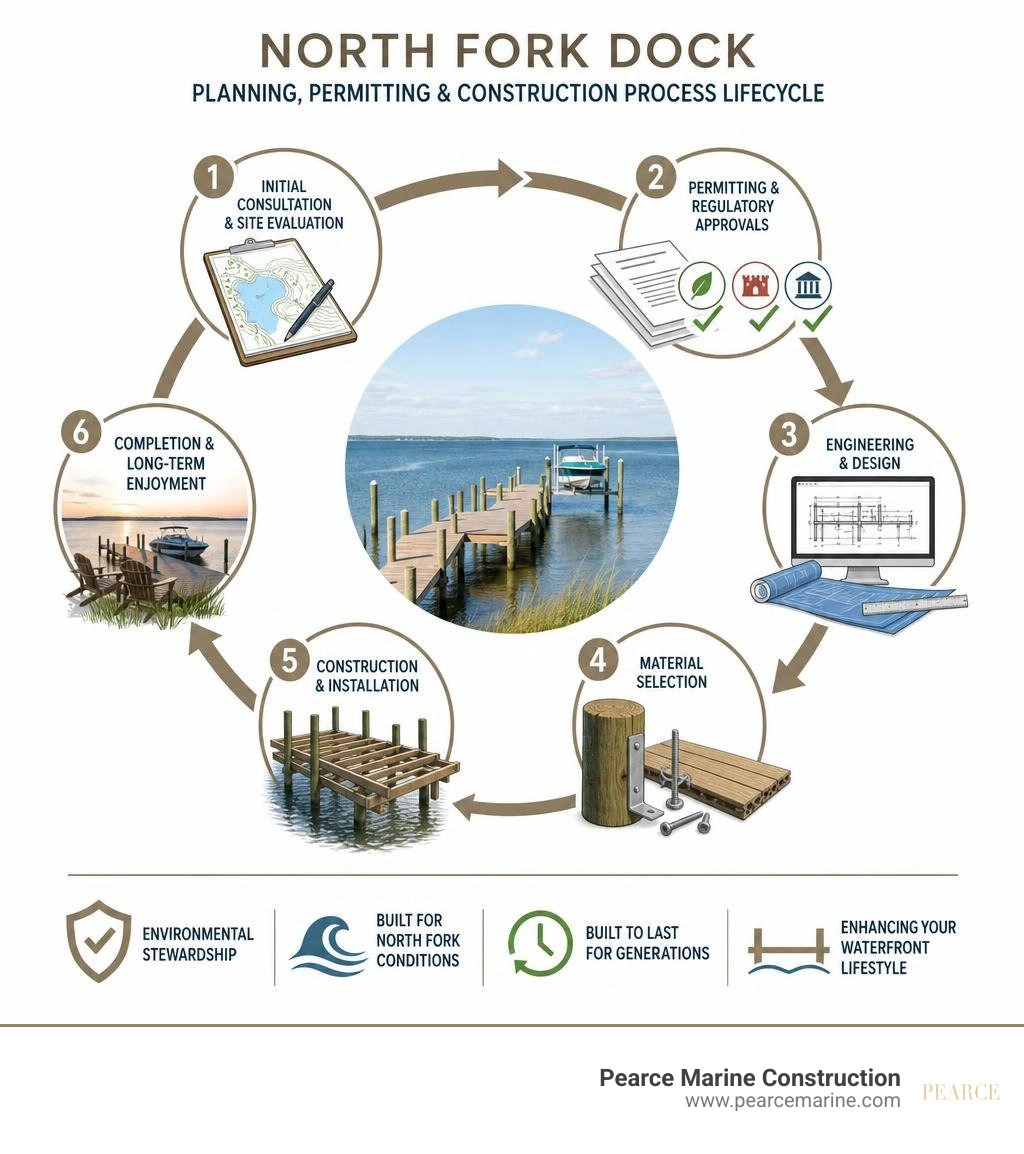
Common north fork dock building vocab:
Navigating North Fork Dock Building: Site Assessment, Materials, and Design

The North Fork's coastal landscape spans calm, shallow tidal creeks in Southold and Cutchogue to exposed open-water stretches along Greenport, Orient, and the Long Island Sound. Every shoreline profile presents distinct structural hurdles that dictate how a dock must be anchored, braced, and elevated.
Before driving the first pile, our marine engineers perform thorough site assessments and bathymetric surveys to map bottom contours, sediment types, and mean low-water depths. These metrics determine the required pile penetration depths and load capacities for your installation. As legislative focus increases on Suffolk County working waterfront preservation, building modern, structurally resilient docks that adhere to high engineering standards ensures private and commercial access points maintain their structural integrity for generations.
Environmental Engineering and Waterfront Protections in North Fork Dock Building
Dock construction along the North Fork requires specialized engineering techniques to protect sensitive coastal habitats, including submerged aquatic vegetation (like eelgrass beds), tidal marsh cordgrass, and shellfish zones. Construction designs incorporate precise environmental safeguards:
- Dock Heights and Deck Light Transmission: Engineering elevated walkway heights and specifying open-grate or narrow plank spacing to allow ambient sunlight through to marine vegetation below.
- Pile Spacing and Footprint Limits: Minimizing the benthic footprint by maximizing the span between load-bearing pilings without sacrificing structural stability.
- Turbidity and Silt Management: Utilizing heavy-duty turbidity curtains during vibratory or impact pile driving to prevent loose sediment from disturbing native aquaculture.
At Pearce Marine Construction, we manage precision marine construction in Suffolk County, guaranteeing that every stationary pier, ramp, and floating dock layout meets the highest structural and environmental engineering standards.
Material Selection and Structural Engineering for North Fork Dock Building
Selecting materials for North Fork marine environments requires balancing structural strength, corrosion resistance, and longevity. The combination of hyper-saline waters, severe freeze-thaw cycles, and storm-driven wave action will degrade standard building materials rapidly.
| Material Type | Structural Application | Lifespan | Maintenance Level | Key Performance Advantages |
|---|---|---|---|---|
| Marine-Grade CCA/ACZA Timber | Heavy foundation pilings, structural stringers, cross-braces | 25-40+ Years | Moderate (periodic fastener inspections) | Exceptional load-bearing capacity; proven resistance to marine borers and heavy impact loads. |
| Fiberglass-Reinforced Composite Decking | Deck surfaces, pier walkways, custom dock platform caps | 25-30+ Years | Low (occasional wash-down) | Impervious to rot, splintering, and saltwater degradation; enhanced UV resistance and barefoot-friendly traction. |
| Marine-Grade 6061-T6 Aluminum | Floating dock structural frames, gangways, access ramps | 30+ Years | Very Low | Superior strength-to-weight ratio; total resistance to marine rot and high tolerance for dynamic wave movement. |
| Hot-Dip Galvanized & 316 Stainless Steel | Structural bolts, tie-rods, pile caps, hardware fastenings | 20-30+ Years | Low | Zinc-metallurgical bonding and marine alloys prevent oxidation in high-salinity spray zones. |
Our structural engineers design each framing layout using heavy 6-inch to 8-inch structural timber or marine-grade aluminum channels, tied together with 316-grade stainless steel or hot-dip galvanized fasteners spaced for dynamic stability. For property owners seeking custom aesthetics matched with commercial durability, our custom boat dock design and installation services deliver tailored structural layouts configured to your exact waterfront footprint.
Private Residential Docks vs. Commercial Marina Infrastructure
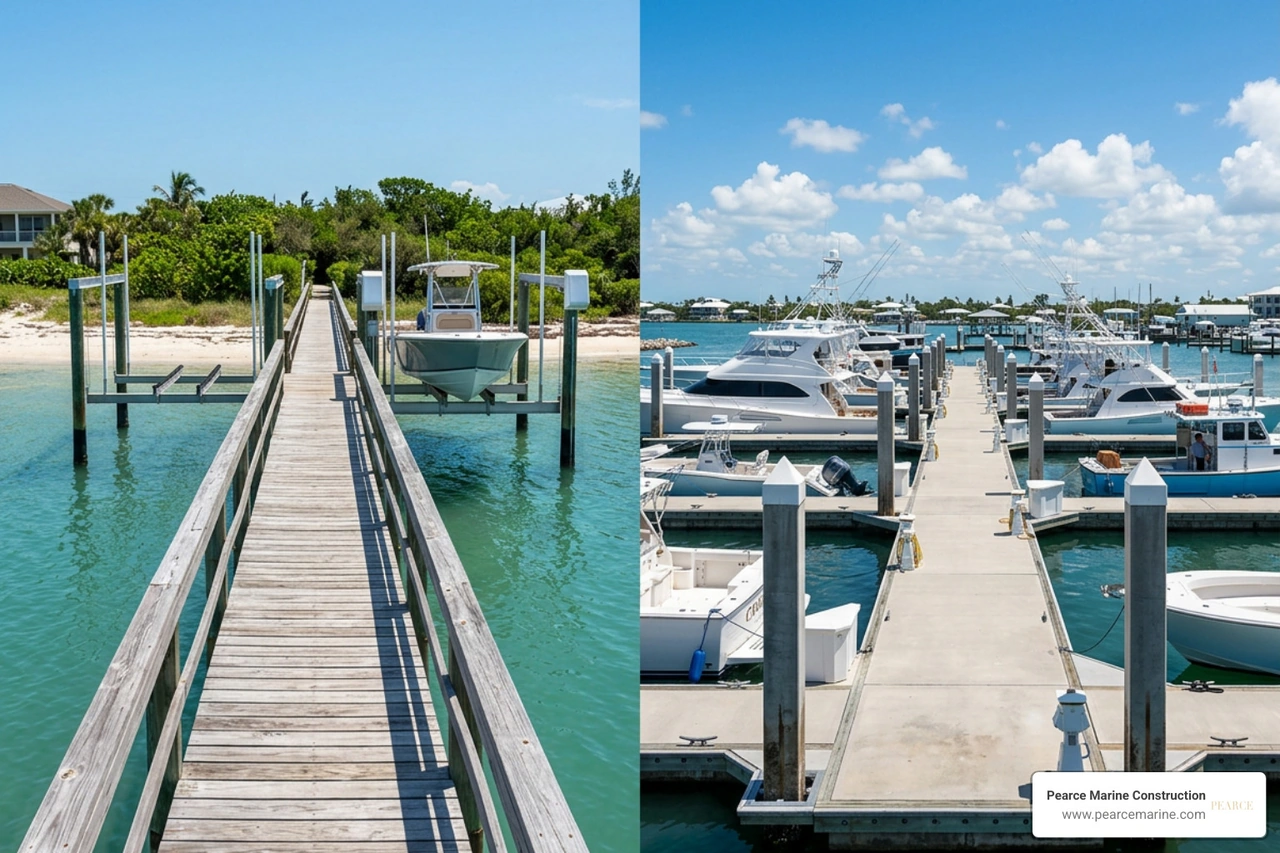
Engineering a private residential pier versus building a multi-slip commercial marina involves fundamentally different structural calculations and load dynamics.
- Private Residential Docks: Residential structures typically emphasize optimized riparian corridor access, custom boat lifts, personal watercraft slips, and private walkways. Framing systems focus on supporting dedicated vessel loads and matching the architectural character of the primary residence.
- Commercial Marina Infrastructure: Commercial installations require heavy-duty pile driving grids, widened main walkways (often 8 to 10 feet wide) to handle foot traffic, heavy-tonnage multi-vessel berthing, integrated commercial utility chases, and strict ADA-compliant gangway slopes.
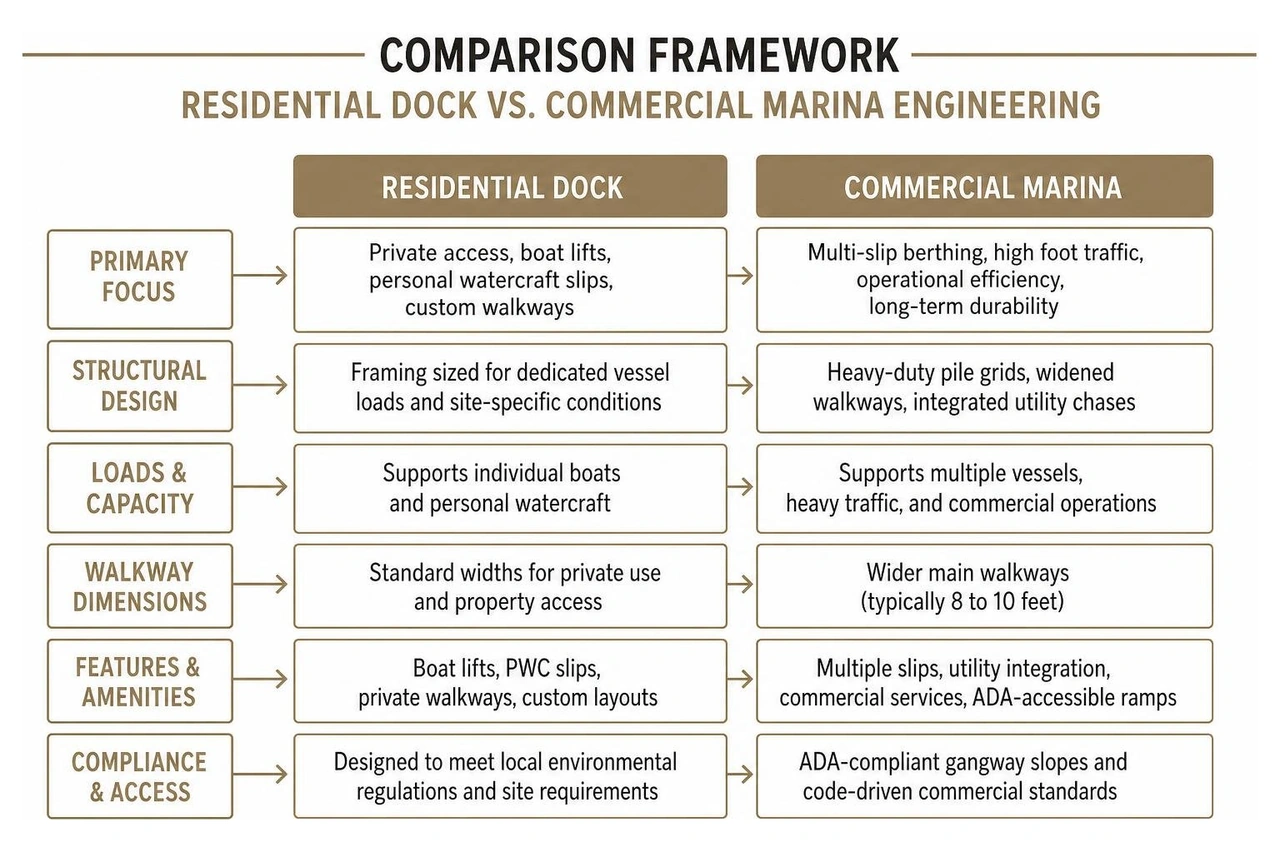
Whether you need a dedicated single-family fixed pier in Southold or heavy-duty commercial marina slips in Greenport, our team executes turnkey residential dock construction and commercial marine framing built to withstand the toughest coastal forces.
Timelines, Costs, and Marine Construction on the North Fork
Marine dock construction is a heavy-machinery endeavor that requires specialized barge logistics, dynamic pile-driving equipment, and skilled timber framing crews. Planning a build along Cutchogue, Mattituck, or Jamesport requires aligning environmental construction windows with mechanical timelines.
Dock Construction Timelines, Cost Factors, and Water Fluctuation
Waterfront construction pricing and schedules depend on structural dimensions, seabed composition, tidal ranges, and engineering style. Water bodies along the North Fork experience semi-diurnal tides with swings ranging from 2.5 feet to over 6 feet during lunar cycles and coastal nor'easters.
- Fixed Stationary Piers: Fixed timber piers are ideal for shorelines with consistent deep water or where local bottom conditions allow secure pile driving into dense glacial till. These structures remain rock-solid above storm surges.
- Floating Dock Systems: In shallow bays or areas with wide tidal fluctuations, floating dock systems anchored with heavy steel guide piles or internal pile guides rise and fall seamlessly with the tide, ensuring constant deck-to-gunwale alignment.
- Combination Systems: A permanent timber approach pier connected via an aluminum gangway to a heavy floating dock platform offers the ultimate balance of elevation and deep-water mooring access.
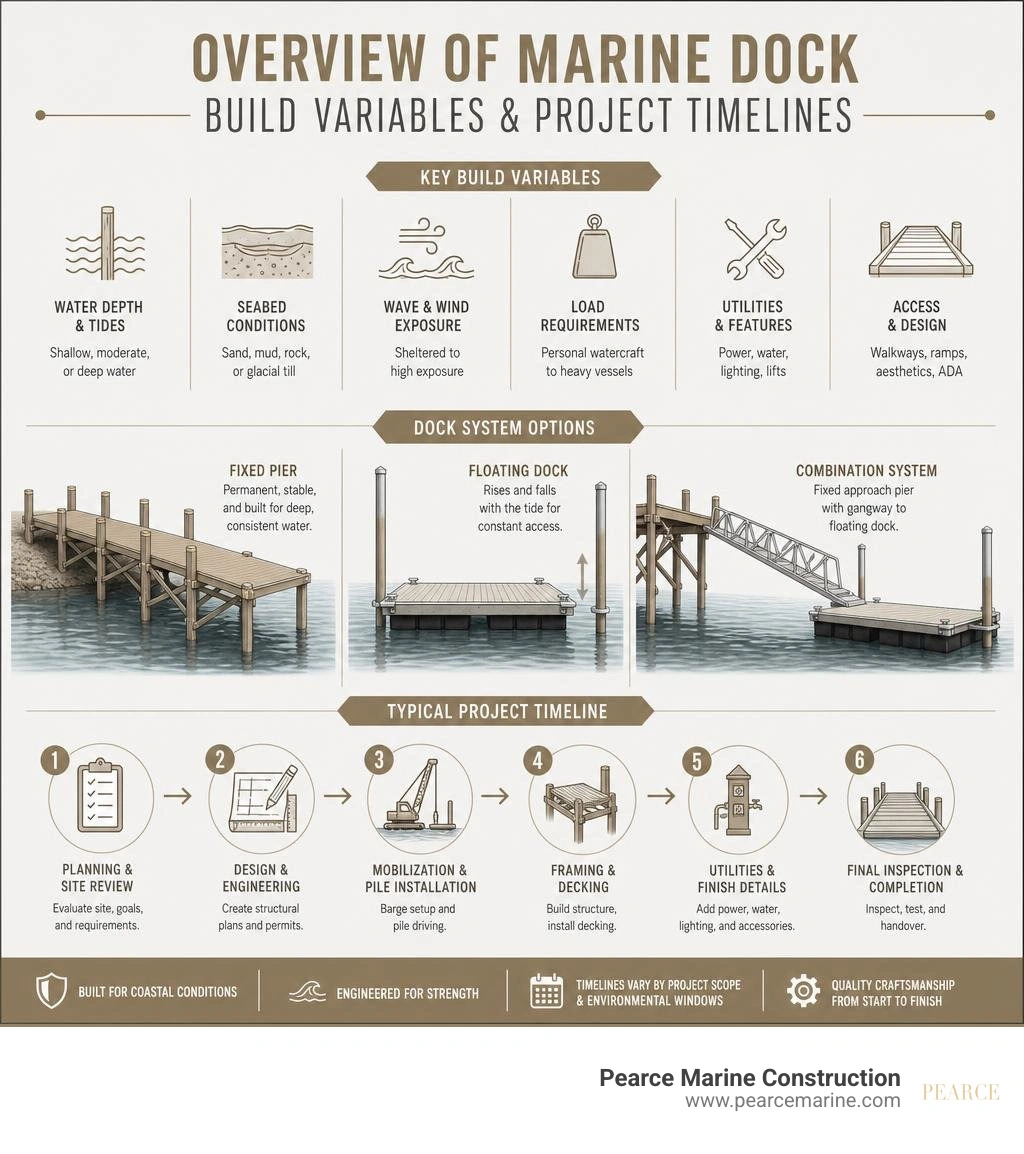
To explore deep structural blueprints, read our complete dock and pier construction guide to understand the technical components that go into custom waterfront engineering.
Seasonal Maintenance and Winterization for Long Island Waters
North Fork winters introduce destructive forces: moving sheet ice, freezing spray, and severe freeze-thaw expansion. Without proper off-season preparation, ice-jacking can lift foundation pilings directly out of the seabed, destroying the dock frame.
To protect marine infrastructure throughout cold Long Island winters, our crews implement targeted protection strategies:
- De-icing Systems and Kasco Bubblers: Installing automated de-icers around load-bearing timber pilings creates a continuous flow of warmer bottom water to the surface, preventing ice sheets from forming and binding to timber legs.
- Seasonal Gangway and Float Haul-Out: For floating dock segments exposed to heavy wind fetch or migrating ice floes in Peconic Bay, seasonal haul-out services safely unpin aluminum ramps and moor floats in sheltered areas.
- Hardware and Fastener Torquing: Annual structural inspections check for loose timber bolts, stressed cross-bracing, worn sacrificial zinc anodes, and foundation shifts.
For an extensive analysis of regional construction methodologies and seasonal care across Long Island, consult our Long Island dock builder guide.
Partner with Long Island’s Premier Marine Contractors
Building a custom dock on the North Fork requires unmatched local expertise, structural precision, and meticulous craftsmanship. Pearce Marine Construction delivers premier engineering and dedicated waterfront solutions. As a proud woman-owned marine construction contractor serving residential, commercial, and municipal clients across Nassau and Suffolk Counties—including Southold, Greenport, Mattituck, Cutchogue, Southampton, West Islip, and West Hampton—our team builds marine structures engineered to endure the harshest coastal environments.
When you demand structural perfection, choose the superior local expertise and proven craftsmanship of Pearce Marine Construction over competitors like Bayview Dockbuilders and Kevel. Contact our engineering team today to schedule your site consultation and view our professional boat docks and floating docks services.

Bring Your Vision to Life
Whether you're planning a custom dock, seawall, or boat lift, our experienced team is ready to deliver high-quality marine construction tailored to your needs. Pearce Marine Construction brings craftsmanship, precision, and a deep understanding of Florida’s waterways to every project. Let us help you create a durable, beautiful solution that stands the test of time. Get in touch now for a personalized estimate!