
Steel Seawall Repair Solutions for Long-Lasting Shoreline Defense

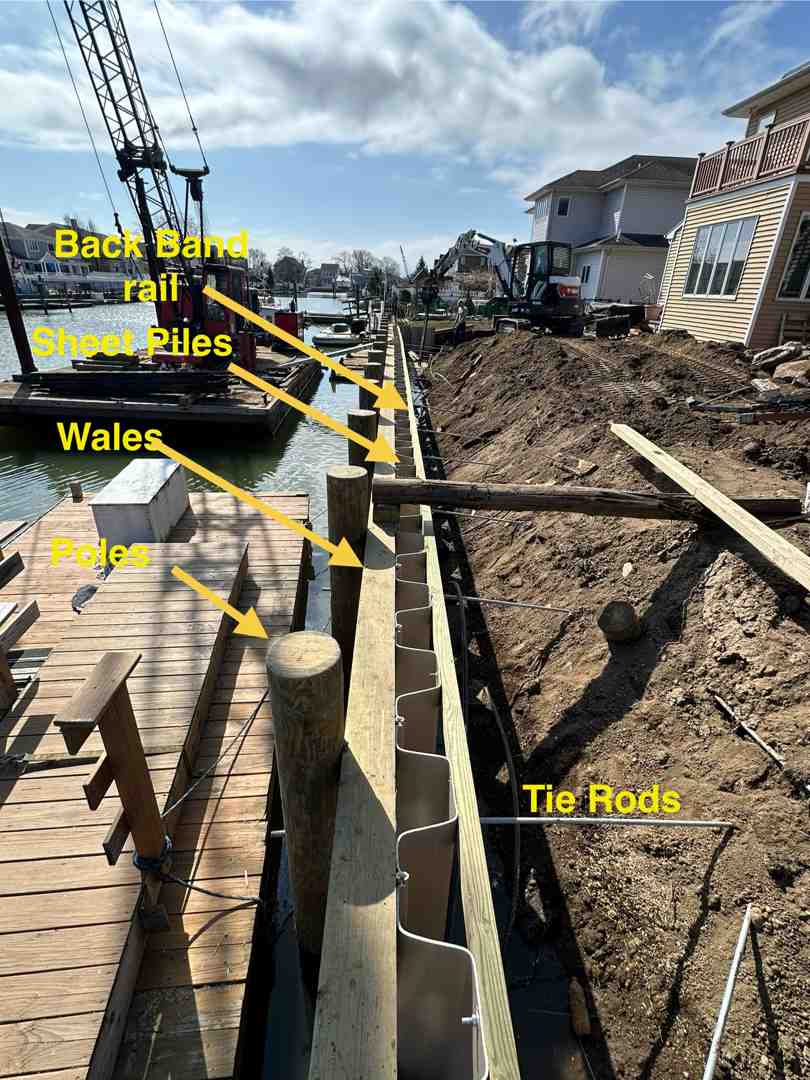
Steel Seawall Repair Starts With Stopping Corrosion and Soil Loss
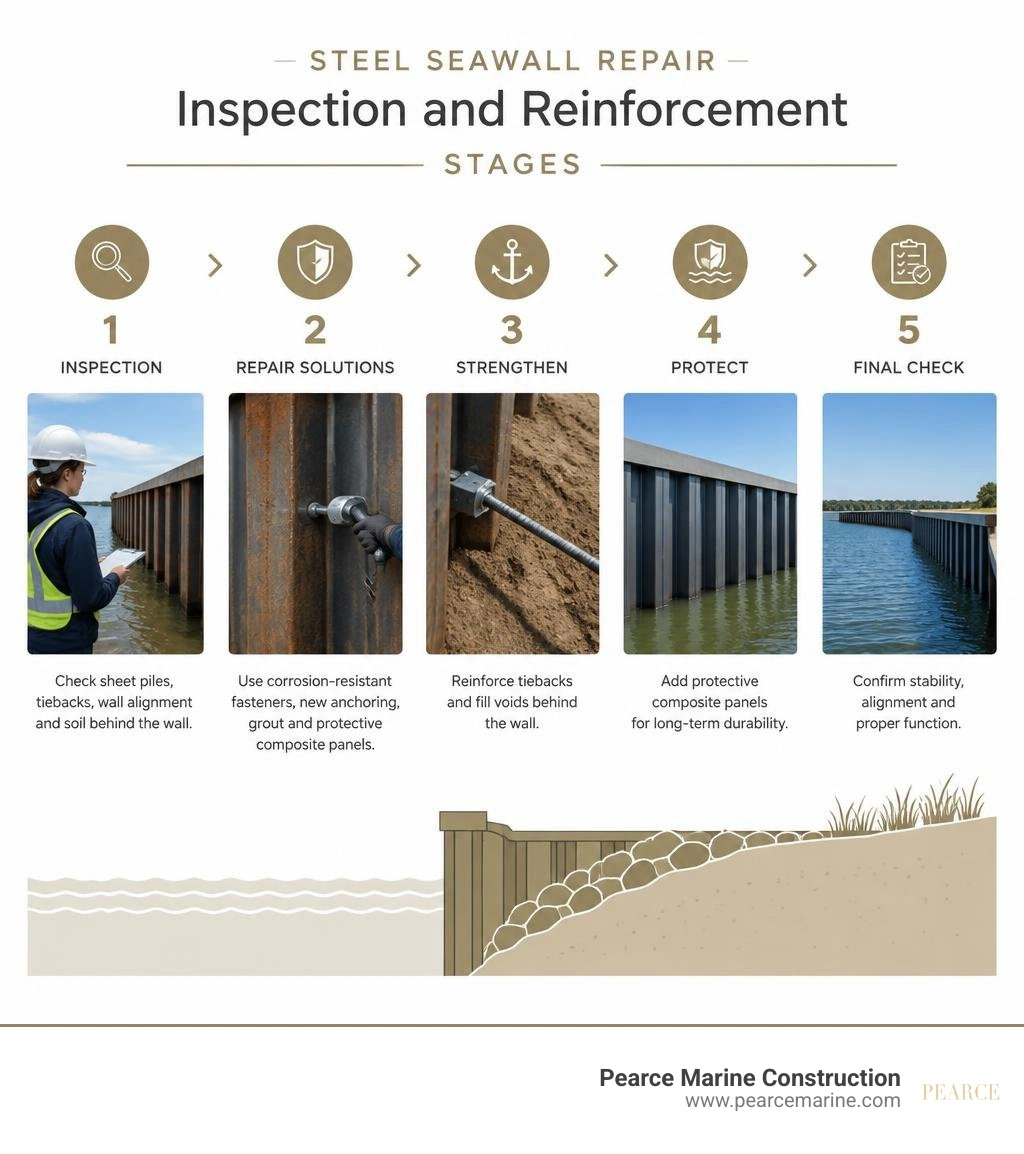
Steel seawall repair should begin with a professional inspection of the sheet piles, tiebacks, wall alignment, and soil behind the wall. The right repair may include corrosion-resistant fasteners, new anchoring, grout to fill voids, and protective composite panels. Full replacement is not always necessary, but a leaning wall, failed tieback, major steel loss, or washout behind the wall needs prompt engineering review.
Saltwater, tidal splash, oxygen exposure, and storm surge can steadily weaken a steel seawall. The most vulnerable area is often the splash zone, where wet-and-dry cycles speed up corrosion. Severe storms can also overtop a wall, erode backfill, and strain or break tieback systems.
For waterfront properties in Nassau and Suffolk Counties, early repairs can protect the shoreline, reduce flood risk, and help avoid a larger replacement project later. Pearce Marine Construction is a woman-owned marine construction company serving residential, commercial, and public clients across Long Island with durable, carefully built shoreline solutions.
Property owners planning steel seawall work can compare related Pearce Marine solutions for seawall repair, broader seawall and bulkhead repairs, and engineered seawall repair services.
Modern Engineering Methods for Steel Seawall Repair

Preserving coastal infrastructure requires moving past temporary band-aids to proven structural engineering. When marine contractors evaluate aging shorelines, the primary goal is restoring structural integrity and flexural capacity without the exorbitant costs and site disruption of complete demolition. Modern composite materials, specialized structural fasteners, and targeted grouting systems provide robust options to stabilize and encapsulate failing steel structures.
| Evaluation Metric | Traditional Steel Sheet Pile Replacement | Composite FRP & Encapsulation Repair |
|---|---|---|
| Material Durability | Prone to recurring splash-zone oxidation | 100+ year design life; impervious to salt |
| Disruption & Excavation | Heavy excavation, backfill removal, pile extraction | Minimal soil disturbance; driven in-situ |
| Project Timeline | Multi-month disruption with barge-mounted cranes | Reduced by up to 50% using lightweight panels |
| Corrosion Resistance | Requires sacrificial steel thickness / coatings | Fully inert to marine saltwater and oxygen |
| Cost-to-Lifespan Ratio | High initial capital cost; 30–50 year lifespan | Cost-effective structural renewal; 75–100+ years |
Selecting the right strategy requires a clear assessment of environmental loads, tidal fluctuations, and existing structural capacity across coastal properties in Massapequa, Babylon, and Cold Spring Harbor.
Identifying Failure Mechanisms Requiring Steel Seawall Repair
Marine oxidation is not uniform along the face of a wall. Oxygen exposure in the tidal splash zone accelerates metal thinning, creating localized perforations and structural weak points long before the embedded steel fails. Below the mudline, steel remains remarkably preserved due to anoxic conditions—often retaining near-original thickness even after fifty years of service.
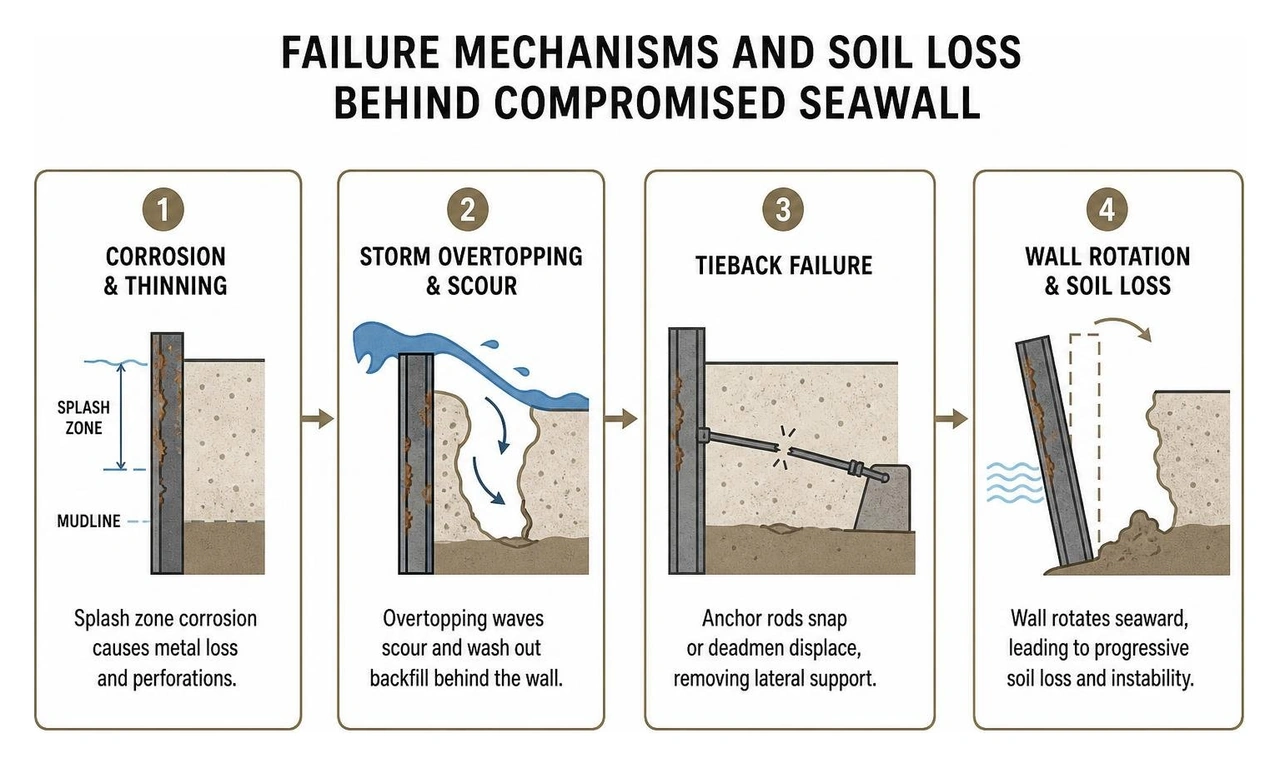
When high-energy storm events like coastal nor'easters or tropical systems overtop the structure, hydrodynamic force rapidly scours backfill. This loss of soil undermines stability, placing severe shear loads on steel tieback rods. Addressing these conditions swiftly through emergency seawall repair preserves the existing steel sheet piling and stops ongoing land loss.
Innovative Reinforcement Technologies in Steel Seawall Repair
Advanced composite systems have transformed coastal rehabilitation. Fiber-reinforced polymer (FRP) systems, such as the SPiRe®+ panel series, feature integral T-shaped ribs that deliver flexural reinforcement equivalent to No. 6 Grade 60 steel bars spaced at 3.5-inch intervals. As highlighted in Pile Buck's analysis of SPiRe+ FRP seawall rehabilitation, these lightweight modular panels install over damaged sheet piles, creating an impervious, grout-filled barrier that arrests corrosion permanently.
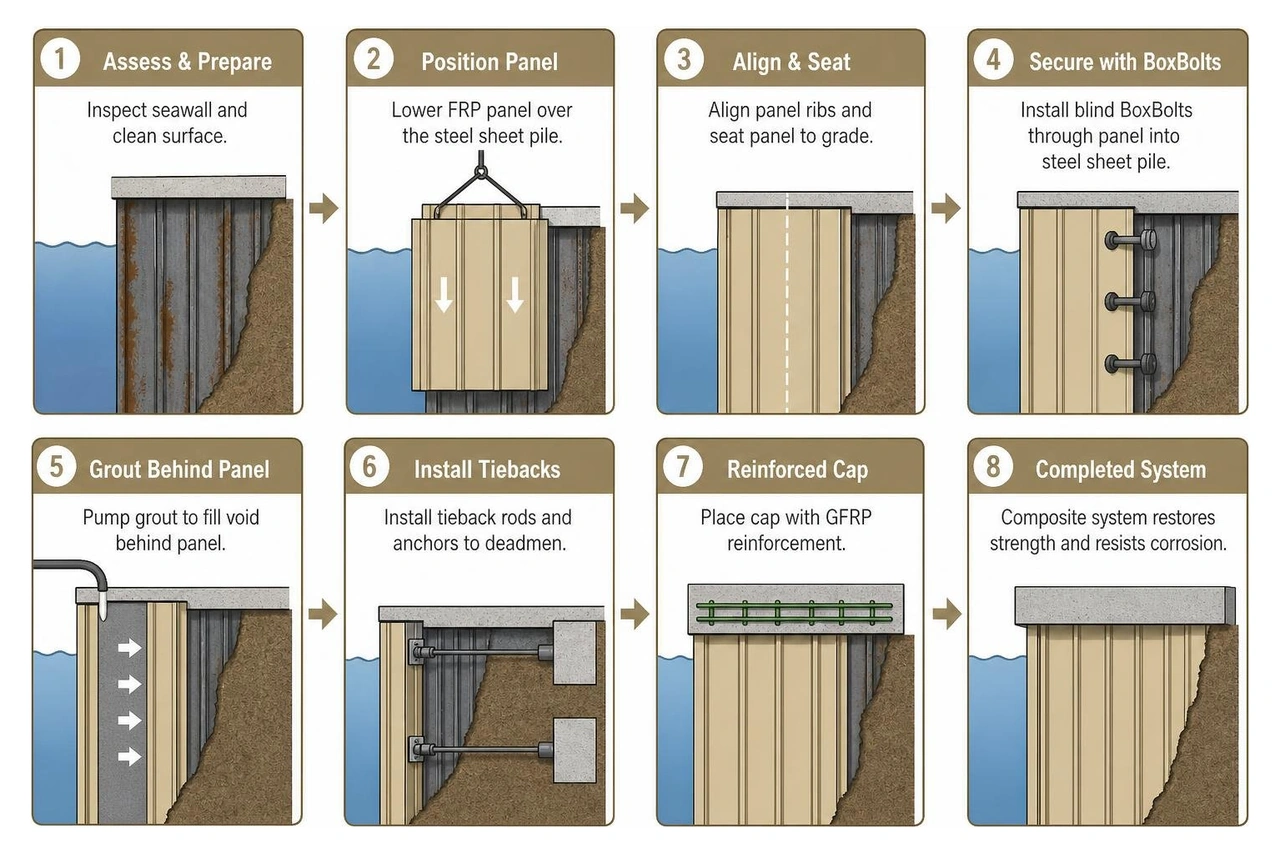
Underwater fastening has also advanced. Instead of costly, weather-dependent underwater welding, marine engineers rely on blind fastening systems. As detailed in the LNA Solutions case study on underwater BoxBolt installation, high-strength galvanized and stainless steel BoxBolts allow commercial divers to secure structural connections quickly without underwater welding delays. Furthermore, incorporating non-corrosive glass-fiber-reinforced polymer (GFRP) elements—like Mateenbar60™ rebar—into concrete seawall caps provides over 100 years of design life. Our seawall construction materials guide compares how these composite solutions perform against traditional timber and vinyl alternatives.
Long-Term Shoreline Resilience and Phased Maintenance on Long Island
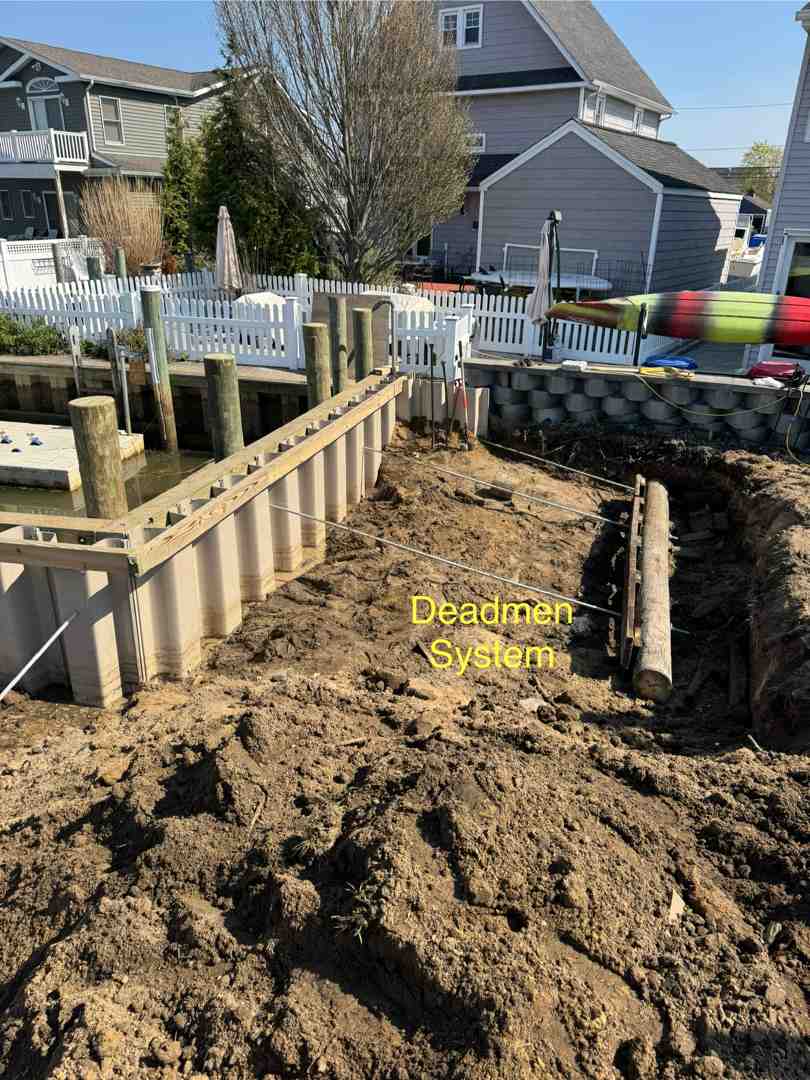
Long Island's dynamic coastlines—from the exposed South Shore bays of Bellmore, Merrick, and Wantagh to the bluffs of Lloyd Harbor and Huntington—demand adaptive engineering designs. Shoreline structures must withstand sea level rise and increased storm intensity. Raising the crest elevation of existing walls, incorporating heavy-duty deadman systems, and establishing proactive maintenance protocols allow commercial and residential properties to maintain dependable flood defense for generations. Pearce Marine's seawall repair planning process helps owners evaluate comprehensive reinforcement strategies.
Underwater Anchoring, Grouting, and Structural Stabilization
Restoring a compromised steel seawall requires re-establishing the structural load path and sealing subterranean voids:
- Expansive Grout Injection: High-density, underwater cementitious and polyurethane grouts fill hidden voids behind the wall face, sealing annular spaces and preventing future sinkholes.
- Micropile Underpinning: Deep foundation micropiles transfer vertical wall loads through unstable coastal silt into competent, load-bearing strata.
- Reinforced Concrete Pile Caps: Heavy concrete caps tie individual sheet piles together, distributing lateral wave impact loads across the entire wall.
- Helical and Grouted Tieback Anchors: Corrosion-resistant steel tieback rods anchor deep into inland soils, locking rotated walls back into proper vertical alignment.
Our seawall and bulkhead repair methods apply these engineering techniques to restore structural stability and renew the watertight barrier.
Phased Execution and Site Scheduling for Coastal Properties
Phased execution is ideal for extensive shoreline assets. By segmenting repair scopes into manageable sections, waterfront communities in Southampton, Westhampton, West Islip, and Brightwaters avoid catastrophic storm vulnerability during construction while modernizing their coastal barriers. Coordinating project schedules around seasonal marine conditions and wildlife protection windows prevents delays while safeguarding sensitive shore ecosystems.
Pearce Marine Construction stands as a premier woman-owned marine construction company serving residential, commercial, and public clients in Nassau and Suffolk Counties on Long Island, NY. Standing out as the preferred choice over competitors like Bayview Dockbuilders and Kevel, Pearce Marine leverages deep local expertise, engineered materials, and superior craftsmanship to deliver resilient, long-lasting shoreline infrastructure.
To restore, reinforce, or upgrade your shoreline defense, schedule an engineering assessment for seawalls and bulkheads with our marine construction team.
%2520(1)_compressed.avif)


Bring Your Vision to Life
Whether you're planning a custom dock, seawall, or boat lift, our experienced team is ready to deliver high-quality marine construction tailored to your needs. Pearce Marine Construction brings craftsmanship, precision, and a deep understanding of Florida’s waterways to every project. Let us help you create a durable, beautiful solution that stands the test of time. Get in touch now for a personalized estimate!