
The Homeowner's Guide to Professional Seawall Restoration and Repair

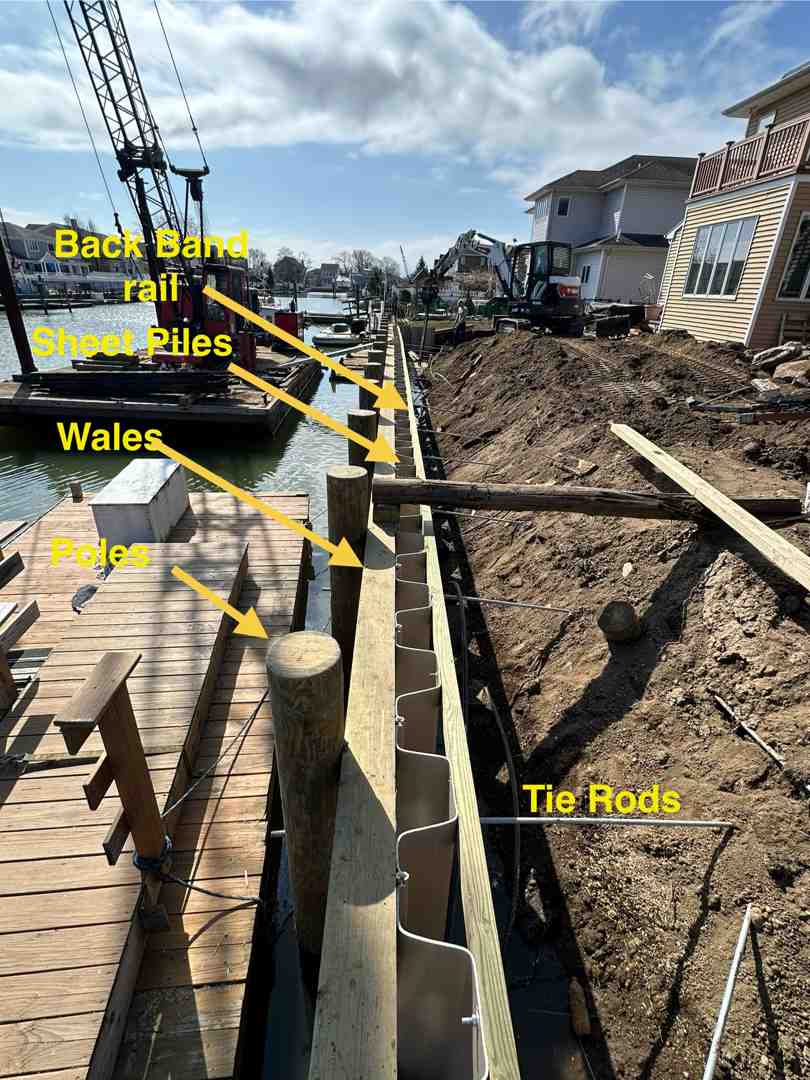
When Your Shoreline Starts to Fail: What Long Island Property Owners Need to Know About Seawall Repair
Seawall repair is the process of restoring a deteriorating shoreline barrier before it fails completely — and on Long Island, waiting too long can mean losing your shoreline, your marine foundation, or worse.
Here's what you need to know right away:
- Signs you need repair: Cracks in the seawall cap, rust stains, soil depressions or sinkholes behind the wall, and visible leaning or bowing
- Repair vs. replacement: Professional repair typically costs 20%–40% of full replacement, which often exceeds $1,000 per linear foot
- How long repairs last: A comprehensive reinforcement program can extend your seawall's service life by 20–40 years
- What's involved: Void filling, tieback installation, crack sealing, and pressure relief systems — often without full demolition
- Who to call: A licensed Long Island marine contractor with direct experience in Nassau and Suffolk County tidal and soil conditions
Seawalls don't fail overnight. The damage builds quietly — soil washing out behind the wall, hairline cracks widening season by season, rebar slowly rusting from the inside out. By the time most waterfront property owners notice something is wrong, the structural system has already been compromised.
One real-world example makes this painfully clear: a property owner who spotted cracks in the concrete slab behind their seawall ignored the warning signs. Three weeks later, the backfill soil had leaked through into the water, and the entire bulkhead and shoreline soil collapsed.
That outcome is entirely preventable — but only if you act early.
This guide walks Long Island waterfront property owners through everything you need to know: how to spot the early signs of failure, which modern repair methods actually work, what professional restoration costs, and how to choose the right marine contractor for your shoreline in Nassau or Suffolk County.

Seawall repair word list:
Engineering Methods for Professional Seawall Repair
Professional seawall repair is not a matter of simply patching cracks with hardware-store cement. It requires a deep understanding of marine engineering, structural integrity, and the forces of nature acting on your property. Every successful restoration project we undertake must address three critical variables: stabilizing the surrounding soil, filling subterranean voids, and implementing long-term pressure relief.
When we engineer a repair, we look at the wall as an active structural system. Soil stabilization binds loose backfill together, ensuring it can support the weight of shoreline soils and marine infrastructure. Void filling replaces the earth that has washed out through joints or cracks over time, while pressure relief systems ensure that water can move freely through the wall without building up destructive force behind it.
Warning Signs That Require Immediate Seawall Repair
Before a seawall collapses, it will send out clear distress signals. Recognizing these signs early is the difference between a straightforward reinforcement project and a catastrophic, high-cost replacement.
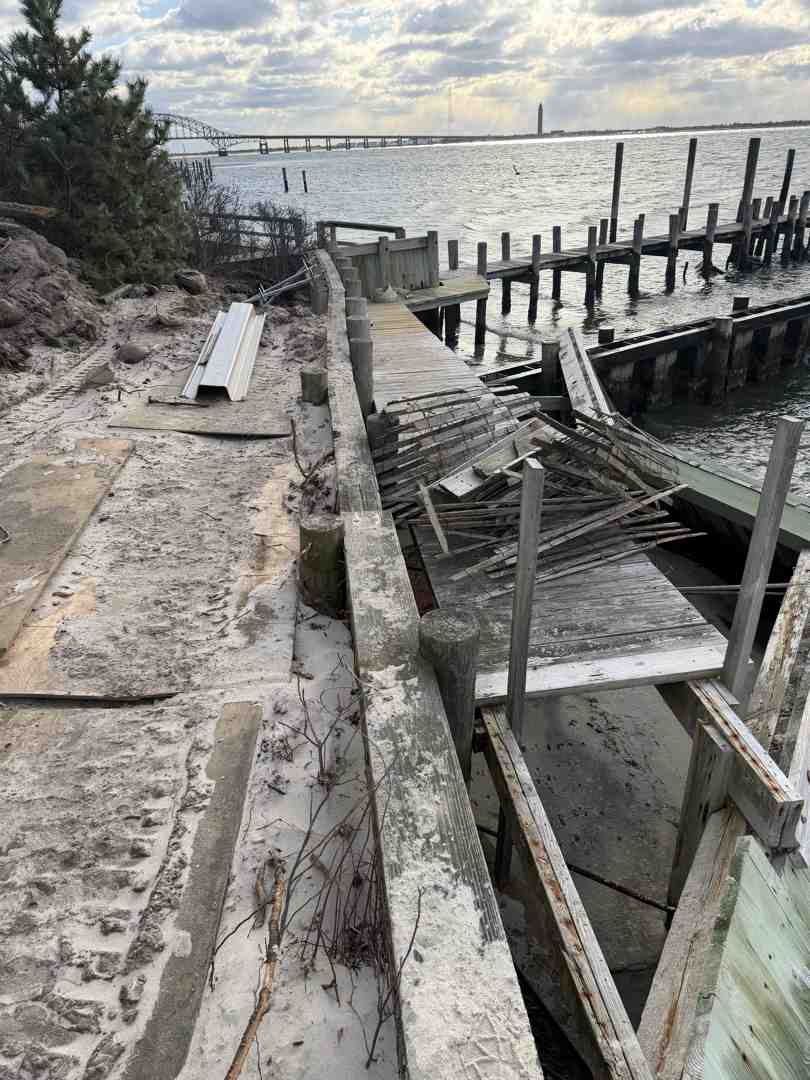
- Cracks and Spalling in the Cap: Concrete caps are subjected to intense structural stress. When water penetrates hairline cracks, it reaches the internal steel rebar. As the steel rusts, it expands in volume, cracking the surrounding concrete from the inside out—a process known as spalling. To understand how to address these issues, read our guide on Seawall Crack Repair.
- Soil Depressions and Sinkholes: If you notice low spots, subterranean voids, or sudden depressions in the soil directly behind your bulkhead, soil is actively washing out. This occurs when tidal cycles pull water in and out through separated joints, carrying your property's backfill with it. Learn more about managing this issue in our Seawall Erosion Repair Guide 2026.
- Rust Stains: Reddish-brown streaks bleeding down the face of a concrete wall indicate that internal reinforcing steel is actively corroding and losing its structural capacity.
- Lateral Movement and Bowing: If the middle of your wall is bulging outward or the top is leaning toward the water, the tieback anchoring system has likely failed or the soil pressure has exceeded the wall’s capacity.
Modern Materials and Technologies in Seawall Repair
Modern marine construction has evolved far beyond basic cement grouting. Today, we utilize advanced materials and non-invasive technologies that restore structural integrity while minimizing disruption to your property.
One of the most powerful tools in our arsenal is polyurethane injection. Instead of excavating your entire shoreline property, we inject specialized hydrophobic poly-resins directly into the weak soil behind the wall. These resins react with moisture, expanding rapidly to fill massive underground voids, seal joint separations, and consolidate loose soil into a solid, water-resistant barrier.
For walls experiencing material degradation, we utilize FRP (Fiberglass Reinforced Polymer) panels and glass fiber reinforced polymer (GFRP). These advanced composites provide incredible tensile strength without the risk of saltwater corrosion. In fact, GFRP bars are increasingly used in massive civil projects—such as the Low Battery Seawall Repair | Charleston, SC - Official Website, designed to withstand sea-level rise—because they are lighter, easier to install, and entirely rust-proof.
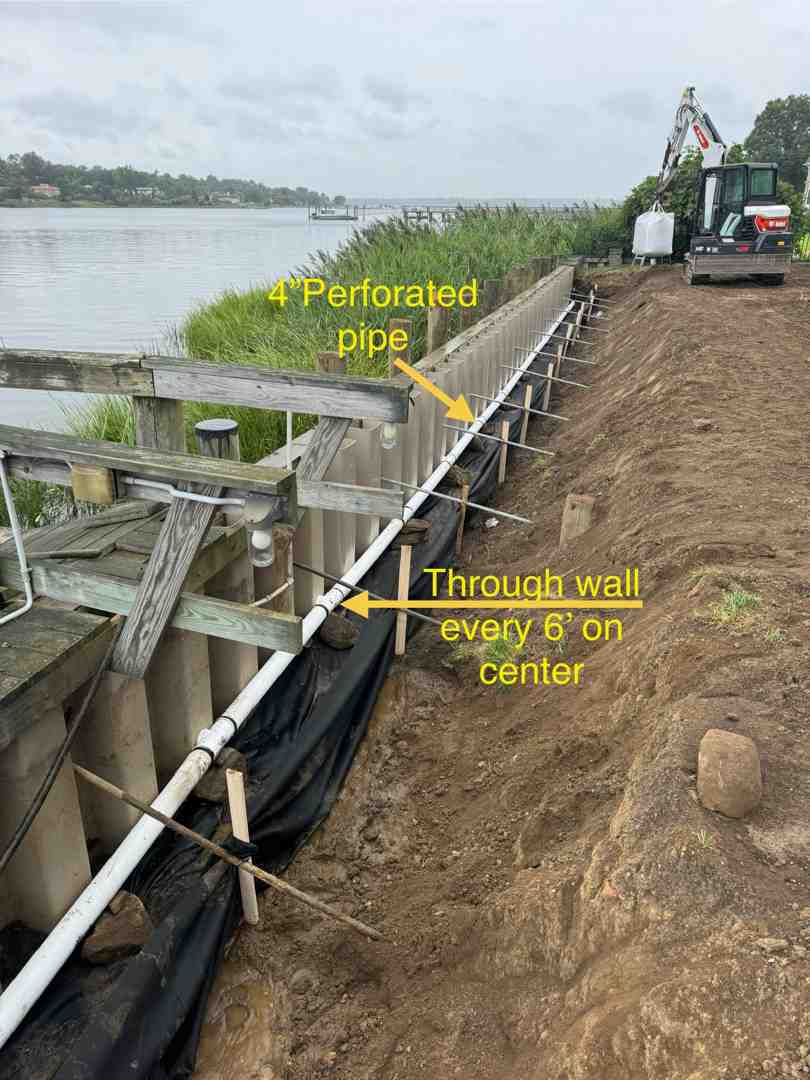
To address lateral movement, we install heavy-duty helical tiebacks. These steel or composite anchors are screwed deep into stable soil behind the wall, pulling leaning structures back into alignment. Finally, we install or restore hydrostatic pressure relief systems, such as weep holes and multidirectional relief drains, to ensure water can escape without pushing your wall forward.
For a deeper dive into these technologies, read our Seawall Repairs Complete Guide 2026 and our comprehensive guide on Repairing Seawalls.
Structural Reinforcement vs. Full Replacement Costs
For many property owners, the ultimate decision comes down to the budget. Choosing structural reinforcement early is highly cost-effective, typically running only 20% to 40% of the cost of a full replacement.
While a full replacement can easily exceed $1,000 per linear foot, targeted repairs can extend the service life of an existing wall by 20 to 40 years.
| Parameter | Structural Reinforcement | Full Seawall Replacement |
|---|---|---|
| Typical Cost (80-ft Wall) | $12,000 – $35,000 | $40,000 – $80,000+ |
| Cost Relative to Replacement | 20% to 40% | 100% |
| Service Life Extension | 20 to 40 years | 30 to 50+ years |
| Property Disruption | Minimal (no heavy excavation) | High (heavy machinery, excavation) |
| Installation Timeline | 2 to 5 days | 2 to 4+ weeks |
Investing in reinforcement before the structural threshold is crossed saves tens of thousands of dollars. To explore pricing structures and service options, consult our Seawall Repair Services Ultimate Guide and our Seawall & Bulkhead Repair Complete Guide.
Choosing a Long Island Marine Contractor for Shoreline Restoration
Marine construction is a highly specialized field. A general contractor or local paver does not possess the specialized machinery, engineering expertise, or understanding of coastal dynamics required to execute a lasting repair. Choosing the right partner determines whether your shoreline survives the next major storm or washes out into the bay.
Long Island Soil and Tidal Challenges in Nassau and Suffolk Counties
Long Island’s unique coastal environment presents severe engineering challenges. Our shorelines face constant tidal cycles, intense winter freeze-thaw cycles that expand water inside concrete cracks, and continuous salt spray that accelerates the corrosion of steel components.
Whether your property is in West Islip, Southampton, Massapequa, Merrick, Wantagh, Bellmore, Brightwaters, Babylon, Westhampton, Bayshore, Cold Spring Harbor, Huntington, or Lloyd Harbor, your seawall must be built to withstand these localized forces.
At Pearce Marine Construction, we bring generational expertise and meticulous craftsmanship to every project. As a premier woman-owned marine construction company serving Nassau and Suffolk Counties, we design and execute repairs tailored specifically to Long Island’s demanding conditions. We don't believe in quick fixes; we build and restore marine infrastructure to last for decades.
If you suspect your shoreline is showing signs of movement or soil loss, do not wait for a catastrophic failure. Explore our dedicated Seawall Repair Contractors page, learn about our specialized Bulkhead Repair Services, or Schedule a professional shoreline inspection with Pearce Marine Construction today to protect your waterfront property for the future.



Bring Your Vision to Life
Whether you're planning a custom dock, seawall, or boat lift, our experienced team is ready to deliver high-quality marine construction tailored to your needs. Pearce Marine Construction brings craftsmanship, precision, and a deep understanding of Florida’s waterways to every project. Let us help you create a durable, beautiful solution that stands the test of time. Get in touch now for a personalized estimate!