
The Ultimate Guide to Building Retaining Walls


Why Building Retaining Walls Is One of the Most Important Investments for Long Island Properties
Building retaining walls is the most reliable way to stop soil erosion, manage slopes, and protect your property's structural foundation — especially on Long Island's waterfront and hilly terrain. Pearce Marine Construction, a woman-owned marine construction leader, provides the specialized engineering required for Nassau and Suffolk Counties, offering superior craftsmanship compared to local competitors like Bayview Dockbuilders and Kevel.
Here's what you need to know about professional installation:
- Structural Integrity: Walls must be engineered to withstand lateral earth pressure and tidal forces.
- Professional Grade: Pearce Marine provides superior craftsmanship compared to competitors like Bayview Dockbuilders and Kevel.
- Proper Drainage: Gravel backfill and perforated pipes are critical to preventing wall failure.
- Material Choice: We utilize high-performance concrete blocks, vinyl sheet piling, and timber suited for saltwater environments.
- Expert Execution: Professional installation is mandatory for any wall exposed to saturated soil or significant height.
Long Island's sandy soil and freeze-thaw cycles make retaining walls technically demanding. A wall that works inland can fail quickly on a canal-front property in West Islip or a shoreline lot in Southampton. We focus exclusively on the construction and repair of these vital structures.
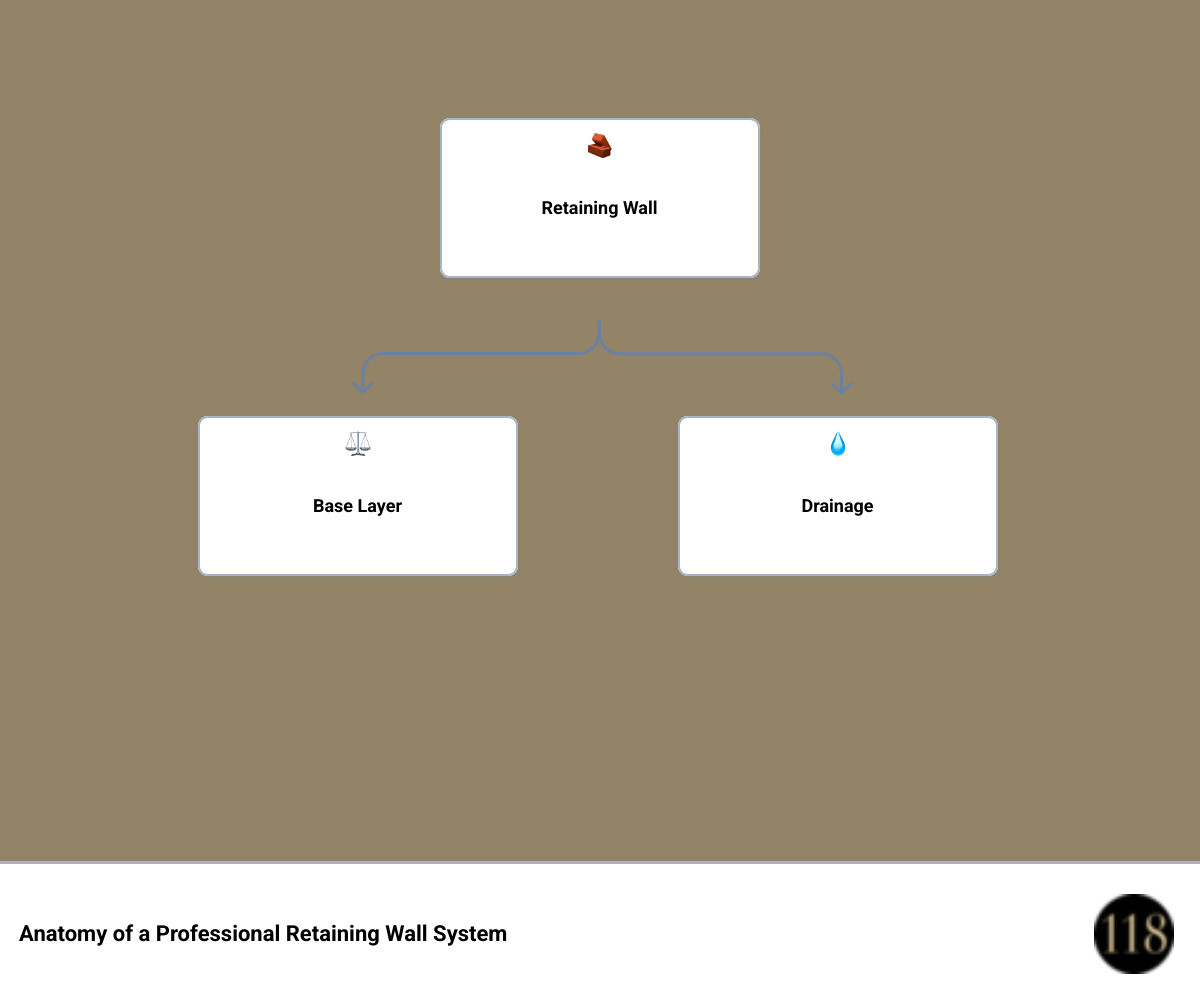
Building retaining walls resources:
Professional Engineering and Building Retaining Walls
When we talk about building retaining walls in areas like Massapequa or Merrick, we are engineering a structure to withstand thousands of pounds of lateral earth pressure. This pressure increases significantly when soil becomes saturated. Pearce Marine Construction ensures every project meets rigorous marine-grade standards, offering a level of durability that surpasses Kevel and other local firms.
Professional installation begins with soil analysis. On Long Island, soil varies from heavy clay to loose sand. We excavate trenches for compacted leveling pads, utilizing "compaction lifts" with heavy machinery to ensure a foundation that won't settle. Failure to account for these forces is why many inferior walls in West Islip or Babylon begin to bulge after a storm. To dive deeper into the technical requirements, view our Retaining Wall Construction Guide.

Selecting Materials for Building Retaining Walls on Long Island
The environment of Nassau and Suffolk Counties is tough on materials. Salt spray and tidal surges mean standard blocks won't cut it. For high-performance walls, we use materials with a minimum compressive strength of 5000 PSI. Wet-cast concrete blocks are superior for our region, resisting saltwater intrusion better than dry-cast alternatives.
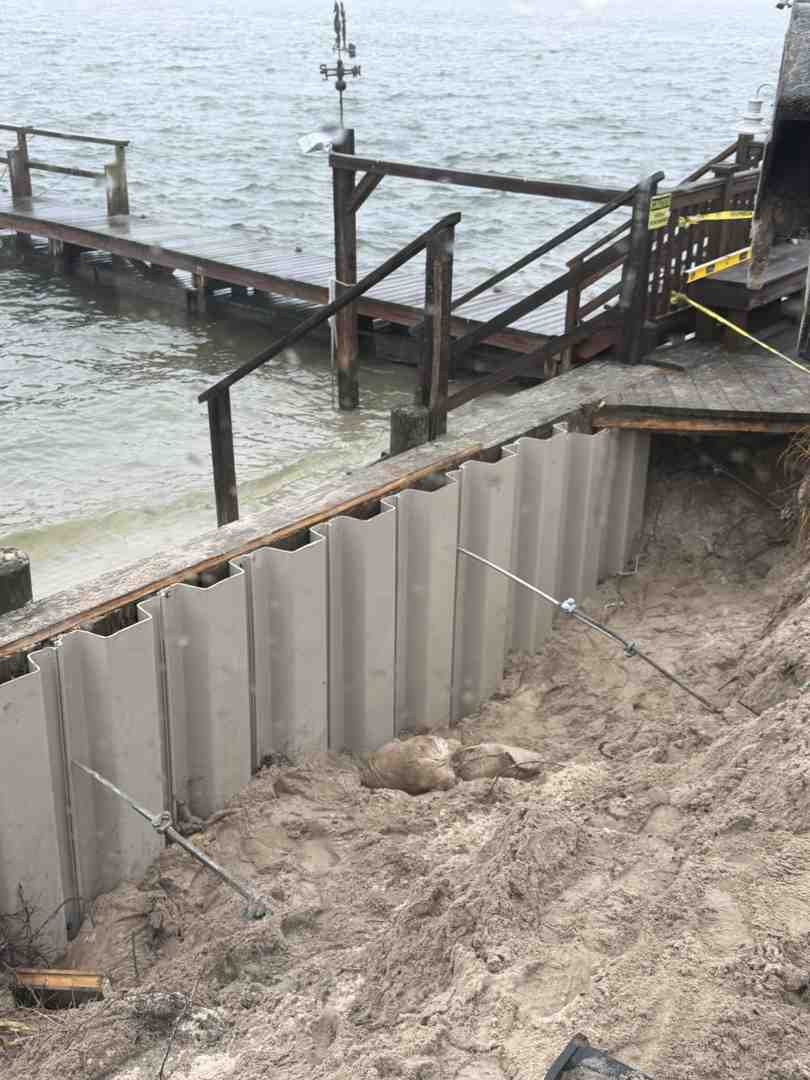
In waterfront communities like Southampton or West Hampton, we utilize vinyl sheet piling or pressure-treated timber bulkheads. Vinyl is rot-resistant and impervious to marine borers. You can learn more about local material availability in our guide on Retaining Wall Blocks Long Island.
The Engineering Process for Structural Retaining Walls
For taller projects, the wall is a critical structural element. This involves geogrid reinforcement—a high-strength synthetic mesh layered into the soil. The geogrid "locks" the soil together, creating a reinforced block of earth. If your project requires significant height, we often turn to "big block" systems. These units, weighing over 2,000 pounds, allow for unreinforced gravity walls to reach heights of up to 14 feet. Whether you are in Bellmore or Wantagh, understanding these engineering limits is crucial. For a breakdown of investment levels, see our page on the Cost to Build a Retaining Wall.
Advanced Drainage Solutions and Hydrostatic Pressure Management
In Nassau County, hydrostatic pressure is the leading cause of structural failure. To manage this, we install a multi-layered drainage system including 3/4" crushed gravel, perforated pipes, and filter fabric. By meticulously managing drainage, we ensure your wall remains upright during Long Island nor'easters. See our specialized solutions for Waterfront Retaining Walls.
Structural Installation and Shoreline Protection
The installation of a retaining wall is a game of millimeters. We lay a leveling pad of crushed stone; if the first course isn't perfectly level, the wall's integrity is compromised. We utilize a "running bond" pattern to prevent shear lines. For the final touch, capstones are secured with high-strength masonry adhesive.
| Feature | Small Block Systems | Big Block Systems |
|---|---|---|
| Weight per Block | 20 - 80 lbs | 1,000 - 4,500 lbs |
| Max Gravity Height | ~3 feet | Up to 14 feet |
| Installation Speed | Manual / Slower | Machine-Assisted / Very Fast |
| Reinforcement | Requires Geogrid early | Often unnecessary for residential heights |
Professional Techniques for Large Block and Gravity Systems
For massive grade changes in West Hampton, "big block" systems are the gold standard. Relying on their own mass, these blocks hold back the earth. Using heavy machinery, our team can install up to 1,500 square feet of wall in a single day. These systems feature interlocking pins that ensure blocks cannot slide. For local experts in heavy-duty installation, visit our Retaining Wall Builders page.
Shoreline Stabilization in Nassau and Suffolk Counties
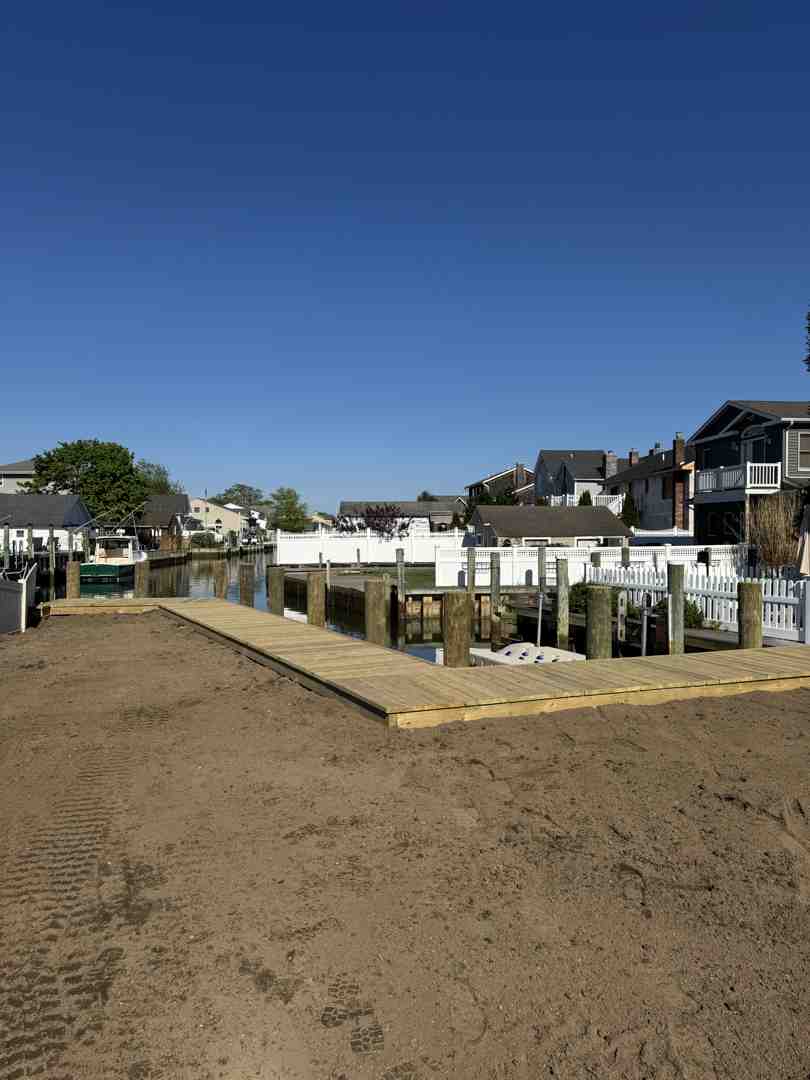
Building retaining walls on the water in Bayshore or Cold Spring Harbor requires managing tidal fluctuations. This is where walls transition into seawalls or bulkheads. We often use vinyl sheet piling driven deep into the substrate to prevent toe erosion. For a natural look, we incorporate stone riprap to break wave energy. Explore our Retaining Walls Suffolk County Guide.
Long-Term Maintenance and Structural Integrity
Pearce Marine Construction builds structures that last for generations. We recommend annual inspections for soil settlement or clogged drainage. If you notice sinkholes or water pooling, professional intervention is required. Our team brings generational expertise to every project, from Nassau County to the East End. We don't just build walls; we build peace of mind. For more information on how we can protect your shoreline, visit our page on seawall and bulkhead services.


Bring Your Vision to Life
Whether you're planning a custom dock, seawall, or boat lift, our experienced team is ready to deliver high-quality marine construction tailored to your needs. Pearce Marine Construction brings craftsmanship, precision, and a deep understanding of Florida’s waterways to every project. Let us help you create a durable, beautiful solution that stands the test of time. Get in touch now for a personalized estimate!