
Building a Block Retaining Wall: Your Foundation for a Beautiful Landscape


Why Expert Construction Matters for Block Retaining Walls
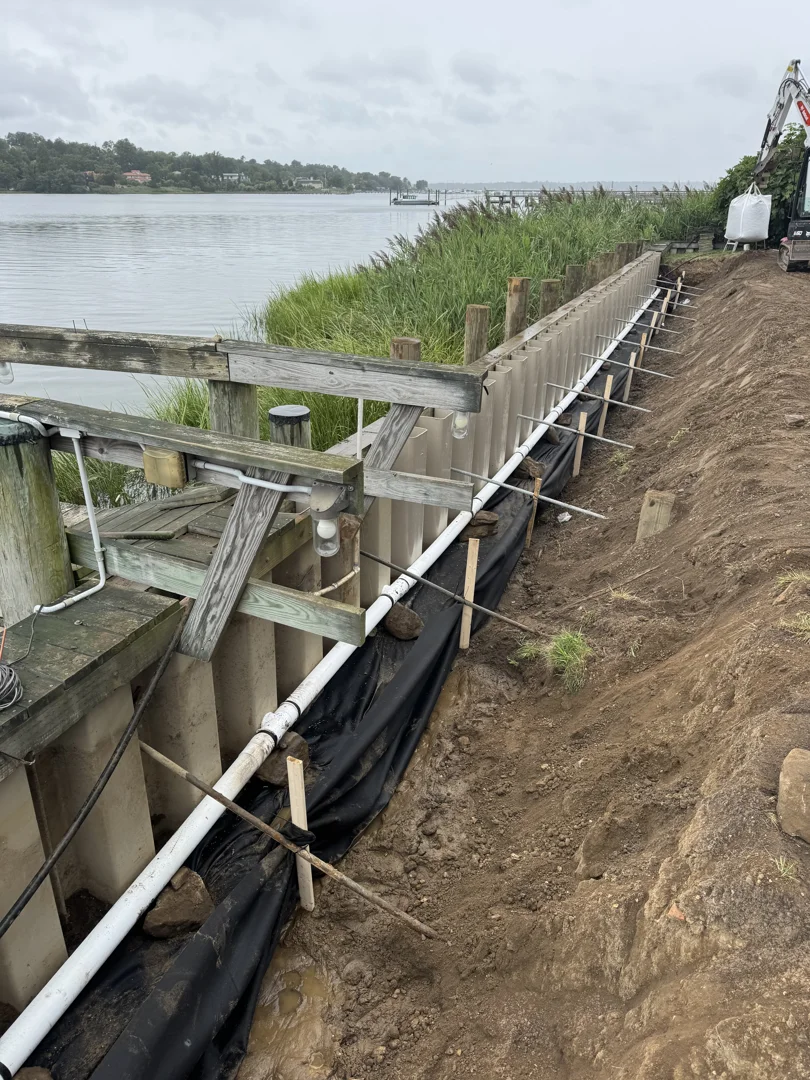
Constructing a retaining wall with blocks is a specialized engineering project that protects your Long Island shoreline from erosion, soil movement, and hydrostatic pressure. When wet soil exerts up to 20 tons of pressure on a structure, precision construction becomes critical for long-term stability and safety.
Quick Answer: Key Steps for Constructing a Retaining Wall with Blocks
- Foundation Preparation - Excavate a trench 24 inches wide and 6+ inches deep, compact to 95% Standard Proctor density
- Drainage Installation - Install perforated drain pipes, wall rock (12-14 inches deep), and filter fabric to prevent water buildup
- Base Course - Level the first row of blocks precisely on compacted gravel base
- Stacking - Stack subsequent courses with staggered joints and proper setback (6-12 degrees)
- Reinforcement - Install geogrid layers for walls over 3-4 feet (minimum 60% of wall height length)
- Backfilling - Compact infill soils in 8-inch lifts behind the wall
- Finishing - Secure capstones with adhesive and ensure proper drainage slope
For walls over 4 feet high, consult a structural engineer due to increased soil pressure and Long Island's specific soil conditions (clay vs. sandy soils require different approaches).
Poor drainage causes most retaining wall failures. That's why professional construction focuses on creating multiple drainage layers, using proper wall rock specifications (0.25-1.5 inch aggregate), and ensuring adequate compaction at every stage.
Whether you're protecting residential property in Nassau County or commercial shoreline in Suffolk County, the foundation determines your wall's lifespan. A properly constructed block retaining wall can last decades when built to engineering standards with attention to soil mechanics, water management, and structural reinforcement.

Constructing a retaining wall with blocks terms made easy:
Professional Standards for Constructing a Retaining Wall with Blocks
When we approach a new project in areas like Brightwaters or West Islip, we don't just see a pile of blocks; we see a complex puzzle of physics and environmental forces. Constructing a retaining wall with blocks requires a deep understanding of site assessment and soil mechanics. It isn't just about stacking stones; it’s about creating a structural barrier that can withstand the immense weight of the earth behind it.
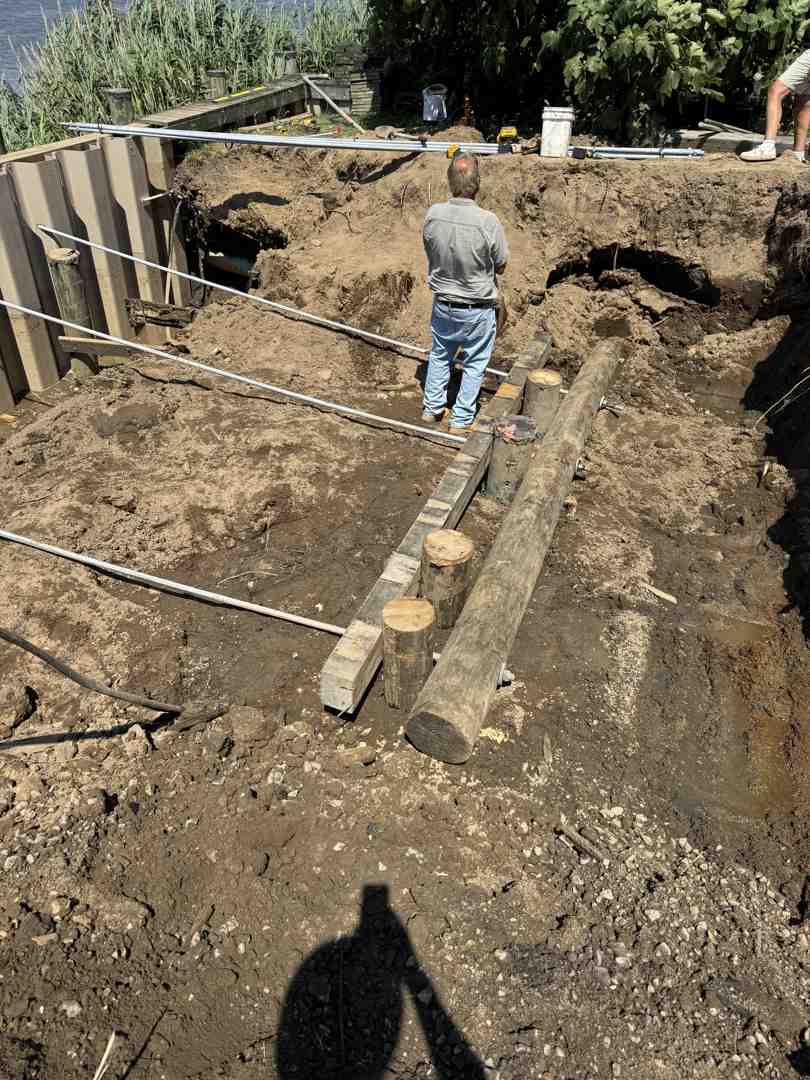
The primary enemy of any retaining wall is hydrostatic pressure. When heavy rains hit Long Island, the soil behind a wall becomes saturated. This "wet weight" can increase the pressure on the wall by four or five times compared to dry soil. If the wall isn't built to professional standards, that pressure will eventually cause the blocks to bow, lean, or collapse entirely.
Our site assessment process involves evaluating the "angle of repose"—the steepest angle at which soil remains stable without slipping. In coastal regions like Babylon or Bayshore, we also have to consider tidal influence and the potential for "scour" at the base of the wall. For a deeper look at these technical requirements, you can explore our Retaining Wall Construction Guide or review the Typical Retaining Wall Construction Guidelines which outline the industry-standard "best practices" we follow.
Engineering Requirements for Constructing a Retaining Wall with Blocks
In marine and shoreline construction, height is a major factor. Generally, any wall exceeding 4 feet in height transitions from a "landscape feature" to a "structural entity" that requires a professional engineer’s seal. This is because the forces involved grow exponentially as the wall gets taller.
Long Island presents a unique challenge due to its varied soil types. In the northern parts of Suffolk County, like Huntington or Lloyd Harbor, we often encounter heavy clay. Clay is notorious for holding water and expanding, which places massive stress on a wall. Conversely, the sandy soils found in West Hampton or South Hampton drain beautifully but lack the natural "clumping" strength of clay, meaning the wall must rely more heavily on its own mass or reinforcement.
We also have to account for "surcharge loads." A surcharge is any extra weight on top of the soil behind the wall—think of a driveway, a swimming pool, or even a heavy shed. These loads push downward and outward, requiring us to increase the depth of the foundation and the strength of the reinforcement. For more specifics on the materials we use to combat these forces, check out our guide on Retaining Wall Blocks Long Island.
Foundation and Drainage Systems
If you take away nothing else from this guide, remember this: the wall you see is only as good as the foundation you don't see. When constructing a retaining wall with blocks, we start by excavating a trench that is at least 24 inches wide. This allows for a base that is significantly wider than the blocks themselves, spreading the weight over a larger surface area.
Compaction is the next non-negotiable step. We use heavy-duty plate compactors to reach 95% Standard Proctor density. If the soil beneath the wall isn't compacted properly, the wall will settle unevenly, leading to cracked blocks and structural failure.
Drainage is the "breathing" system of the wall. We install a 4-inch perforated drain pipe (often called a weeping tile) at the base of the wall. This pipe is surrounded by "wall rock"—clean, crushed stone usually ranging from 0.25 to 1.5 inches in size. We wrap this entire drainage zone in a high-quality filter fabric. This fabric acts like a coffee filter; it lets water pass through to the pipe but keeps fine soil particles out. Without this fabric, the drainage stones would eventually clog with mud, rendering the system useless. For waterfront properties, these systems are even more vital to manage the constant moisture levels. You can read more about these specialized needs in our article on Waterfront Retaining Walls.
Reinforcement and Geogrid Installation
For taller walls or those facing high pressure, we turn to geogrid. Think of geogrid as the internal skeleton of the soil mass. It is a high-tensile synthetic mesh that we lay between the courses of blocks and extend back into the soil.
When we install geogrid, we follow the "60% rule." This means the grid must extend back into the infill soil at a length equal to at least 60% of the wall's total height. If we are building a 10-foot wall, that geogrid is reaching 6 feet back into the earth. We typically use biaxial mesh, which provides equal strength in both directions, ensuring the soil and the blocks act as a single, reinforced "gravity mass."
The installation process is meticulous:
- Place the geogrid over the blocks, ensuring it hooks onto the mechanical lip of the block.
- Pull the grid taut to remove any slack.
- Stake the grid into the soil at the back.
- Backfill with infill soil in 8-inch "lifts" (layers), compacting each layer thoroughly before moving to the next.
Never compact directly on the geogrid; always place a layer of soil or stone over it first to prevent the machinery from tearing the mesh. For a step-by-step residential perspective, you can see how this works in the guide on how to Build a Durable and Attractive Retaining Wall with Allan Block.
Advanced Techniques and Shoreline Stability
In our decades of experience serving the Long Island coast, we’ve learned that standard "backyard" techniques don't always cut it when you’re dealing with the energy of the Great South Bay or the Long Island Sound. Constructing a retaining wall with blocks in a shoreline environment requires advanced stability techniques to ensure the infrastructure survives the harsh salt air and occasional storm surges.
Shoreline stability often involves multi-tiered walls. Instead of building one massive 8-foot wall, we might build two 4-foot walls stepped back from each other. This "terracing" reduces the sheer pressure on the lower wall and creates beautiful, usable space for planting or walkways. It’s a perfect blend of custom craftsmanship and engineering durability. For homeowners in areas like Suffolk County, this is often the preferred method for managing steep bluffs. Learn more in our Retaining Walls Suffolk County Guide.
Precision Stacking and Setback
The visual appeal of a retaining wall comes from the blocks, but its strength comes from how they interlock. We start with the "base course"—the first row of blocks. This row must be perfectly level. If the base is off by even a fraction of an inch, that error will be magnified with every row you add, eventually making the wall look like the Leaning Tower of Pisa.
We use a "running bond" pattern, meaning the vertical joints of the blocks are staggered. This ensures that a crack or shift in one block doesn't translate directly up the wall. Most professional-grade blocks come with a built-in "setback" or "batter." This means each course sits slightly back from the one below it (usually between 6 and 12 degrees). This "lean" into the hill uses gravity to help the wall resist the outward push of the soil.
For added security, we utilize mechanical locks (pins or lips built into the blocks) and high-strength concrete adhesive on the top courses. This is especially important in Nassau County, where property lines are often tight and precision is paramount. Check out our Retaining Walls Nassau County Tips for more on these localized techniques.
Finishing and Long-Term Maintenance
The final touch of constructing a retaining wall with blocks is the installation of capstones (also known as coping). These are the flat blocks that sit on the very top. We install them with a slight overhang—usually about 1.5 inches. This isn't just for looks; it creates a "drip edge" that directs rainwater away from the face of the wall, preventing the "weeping" stains that can occur over time.
Long Island’s climate is notorious for freeze-thaw cycles. Water gets into the pores of the concrete, freezes, expands, and can eventually crack the block. That’s why we only use blocks with a high PSI (pounds per square inch) rating and low water absorption.
Maintenance for a well-built wall is minimal but necessary:
- Annual Inspections: Look for any signs of "bulging" or blocks that have shifted out of alignment.
- Debris Removal: Ensure the drainage outlets (where the perforated pipe exits the wall) are clear of leaves and dirt.
- Vegetation Check: Keep large trees with aggressive root systems away from the reinforced zone of the wall.
If you’re curious about the financial side of these projects, we’ve put together a resource on the Cost to Build a Retaining Wall to help you budget for a professional installation.
Expert Execution for Constructing a Retaining Wall with Blocks
At Pearce Marine Construction, we take pride in being a woman-owned business that brings generational expertise to every shoreline we protect. Whether we are working in Massapequa, Wantagh, or the high-stakes environments of Southampton and West Hampton, our focus is always on meticulous craftsmanship.
We understand the local regulations and the specific environmental challenges of Long Island. From the sandy shores of South Hampton to the rocky bluffs of Cold Spring Harbor, we build walls that aren't just barriers—they are long-term investments in your property's safety and value.
If you're ready to secure your shoreline with a structure built to last a lifetime, we invite you to explore our Professional Seawall and Bulkhead Services. From initial site assessment to the final capstone, we handle every detail with the precision and care your property deserves. Let’s build something that stands the test of time, together.


%20(1).avif)

Bring Your Vision to Life
Whether you're planning a custom dock, seawall, or boat lift, our experienced team is ready to deliver high-quality marine construction tailored to your needs. Pearce Marine Construction brings craftsmanship, precision, and a deep understanding of Florida’s waterways to every project. Let us help you create a durable, beautiful solution that stands the test of time. Get in touch now for a personalized estimate!