
Master New York Coastal Regulations Before Building Your Floating Dock

Floating Dock Construction on Long Island Starts With Engineering and Site Conditions
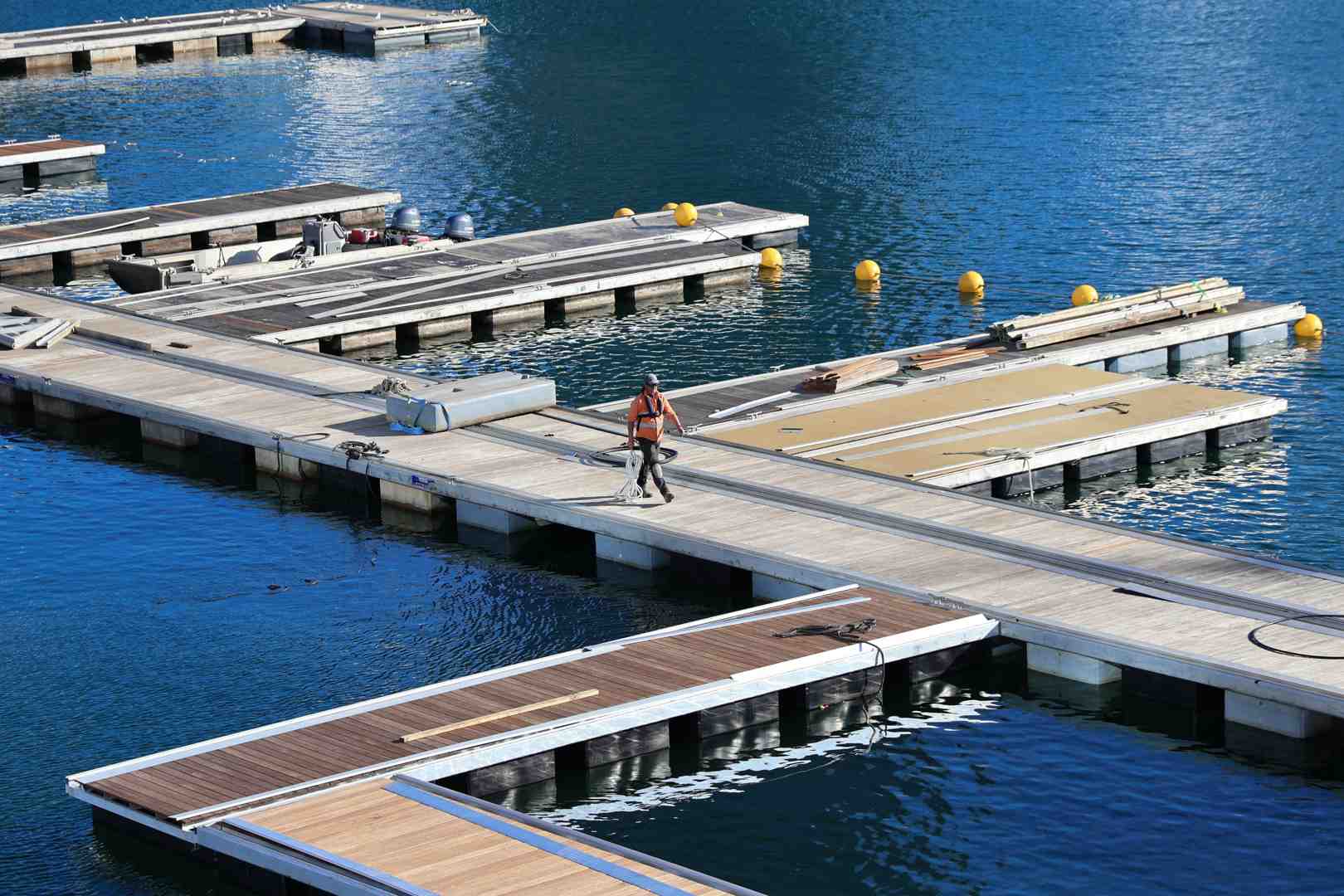
Before undertaking floating dock installation in Nassau or Suffolk County, marine contractors must evaluate critical environmental conditions across the shoreline. When planning floating dock construction in New York, marine environments present demanding conditions, requiring structural designs that account for dynamic water depths, tidal swings, vessel berthing loads, heavy storm exposure, and winter ice-jacking forces.
These site evaluations determine the required buoyancy rating, anchoring assemblies, framing hardware, and shoreline hinge connections. Pearce Marine Construction is a woman-owned marine contractor delivering heavy-duty floating dock construction New York waterfront property owners rely on, alongside pile driving and shoreline stabilization for residential, commercial, and public waterfront facilities across Nassau and Suffolk Counties.
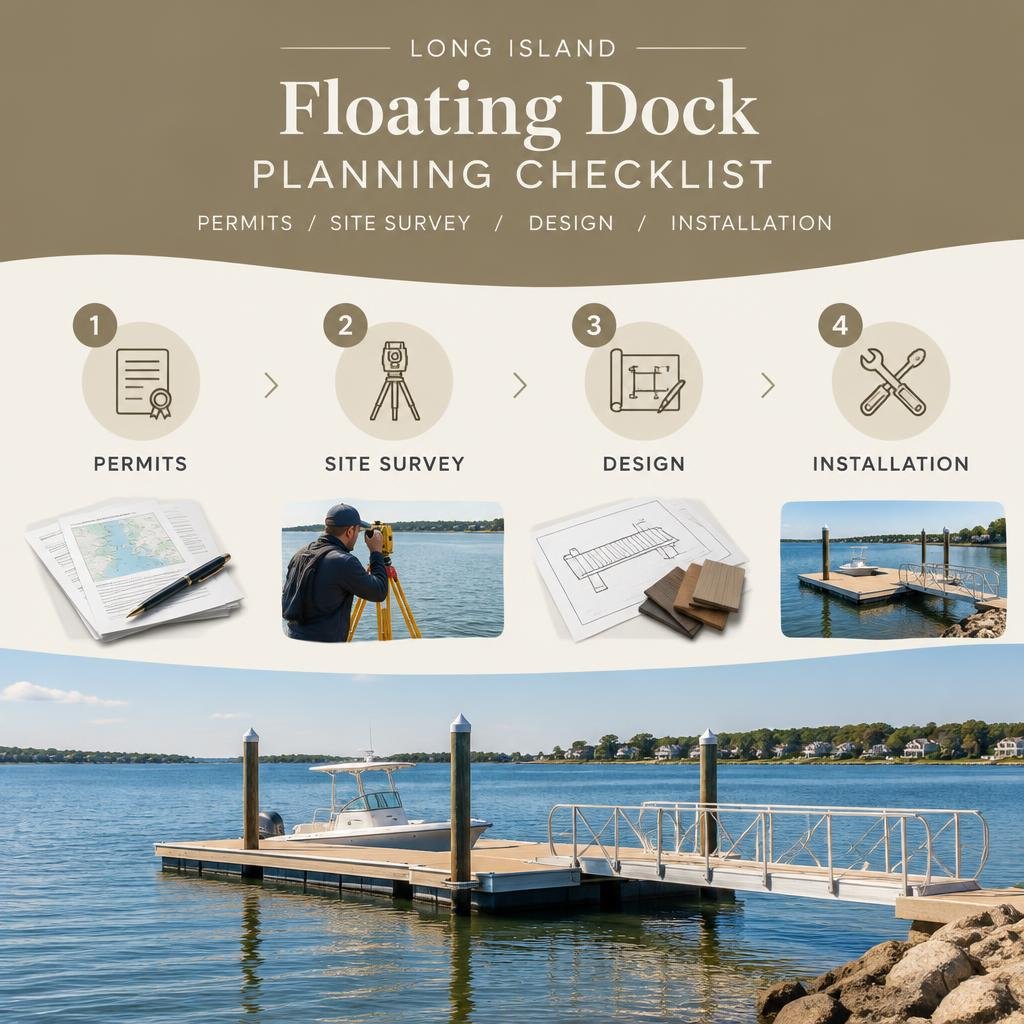
Executing durable marine structures requires generational expertise, precision fabrication, and materials rated for aggressive coastal exposure, ensuring every platform withstands harsh Long Island coastal conditions.
Engineering Standards for Floating Dock Construction New York Waterfronts

Building a dependable marine structure requires precision engineering and structural integrity. Across the varied coastal environments of Nassau and Suffolk Counties, every shoreline presents distinct structural demands. Designing platforms capable of enduring severe storm surges, shifting sand bottoms, and nor’easters requires the specialized floating dock construction New York marine contractors utilize to withstand local tidal conditions.
When engineering custom floating docks across Long Island, every component—from submerged anchor blocks to heavy-gauge gangway hinges—must withstand relentless hydrodynamic stresses.
Environmental and Structural Criteria for Coastal Dock Assemblies
Marine infrastructure across coastal New York requires heavy-duty design standards that safeguard benthic zones and shoreline stability. In high-energy bays and tidal inlets, docks must maintain structural rigidity without restricting natural littoral drift or disturbing submerged habitats.

Flotation billets must be completely encapsulated in thick, seamless polyethylene shells to ensure long-term structural buoyancy and protect marine environments from raw foam exposure.
Local coastal conditions dictate specific engineering adjustments across diverse South and North Shore waterways:
- Southampton: High open-bay fetch requires reinforced timber or aluminum frames capable of absorbing direct chop.
- West Islip & Babylon: High-traffic navigation channels demand deeper piling embedment and heavy-duty roller guides.
- Massapequa, New York & Bellmore: Narrow residential canal systems require custom float footprints and stiff-arm assemblies to prevent lateral drift.
Proven floating dock construction configurations maximize platform stability and withstand demanding tidal movements.
Engineering Buoyancy, Anchoring, and Load Capacities for Tidal Waters
Floating dock engineering adheres to ASCE Report No. 50 (Planning and Design Guidelines for Small Craft Harbors). Marine platforms must maintain a minimum freeboard of 18 inches under full dead load and at least 16 inches under combined live and environmental loads.
Flotation systems require a minimum capacity of roughly 25 pounds per square foot. For example, a standard 8'x16' floating dock section (128 square feet) requires approximately 3,200 pounds of total flotation capacity.
A properly designed dock sinks only 20% to 30% into the water when unloaded, reserving 70% to 80% of its displacement capacity for live loads, heavy foot traffic, and dynamic berthing impacts.
Anchoring systems must hold the assembly firmly on station through multi-foot tidal ranges:
- Pile Guides with Internal Rollers: Heavy-wall steel or timber pilings driven deep into the substrate, allowing smooth vertical movement during lunar tides while securing horizontal position.
- Deadweight Concrete Anchors: Heavy monolithic blocks (typically 250 to 400+ lbs each) set in soft-bottom bays, rigged with marine-grade stainless or hot-dipped galvanized criss-cross chains to prevent lateral drift.
- Stiff-Arm Struts: Rigid structural arms connecting the dock directly to bulkheads, ideal for narrow canals where driven pilings are impractical.
In northern Long Island harbors like Cold Spring Harbor, Lloyd Harbor, and Huntington, winter ice-jacking requires heavy-gauge steel framing and specialized finger pier floating dock construction with reinforced gussets.
Material Selection: Concrete, Aluminum, and Polyethylene Systems
Selecting the right material determines your dock's operational life, maintenance profile, and performance during severe weather.
| Material Type | Estimated Lifespan | Maintenance Level | Tidal & Storm Surge Performance | Best Application |
|---|---|---|---|---|
| Post-Tensioned Concrete | 50+ Years | Extremely Low (~90% less than wood) | Maximum stability; dampens waves; withstands major surges | Deep-water residential estates, yacht clubs, commercial berths |
| Marine-Grade Aluminum (6000 Series) | 30–40 Years | Low to Moderate | High strength-to-weight; flexible in high-energy waters | Moderate-energy bays, responsive gangway ramps, tidal slips |
| Encapsulated Polyethylene / Composite | 15–25 Years | Low | Lightweight; requires robust anchoring under heavy wakes | Sheltered lagoons, municipal launches, secondary finger floats |
| Pressure-Treated Timber Framing | 10–20 Years | High (fastener corrosion, rot checks) | Vulnerable to frame racking and marine borers | Low-budget sheltered residential canals |
Monolithic concrete floating docks provide stability comparable to walking on solid ground. Fabricated with an EPS core enclosed in reinforced concrete—often post-tensioned with 3/8-inch steel strands tensioned to a minimum of 8,000 lbs—these platforms resist marine borers, fuel degradation, and UV damage.
Concrete dock sections (such as heavy-duty units weighing up to 34,000 lbs) act as natural wave attenuators. During Hurricane Sandy, post-tensioned concrete docks survived severe storm surges across Long Island’s South and North shores while traditional wood docks broke apart, proving the resilience of engineered concrete floating dock assemblies.
Best Practices for Floating Dock Installation, Utilities, and Lifecycle Maintenance

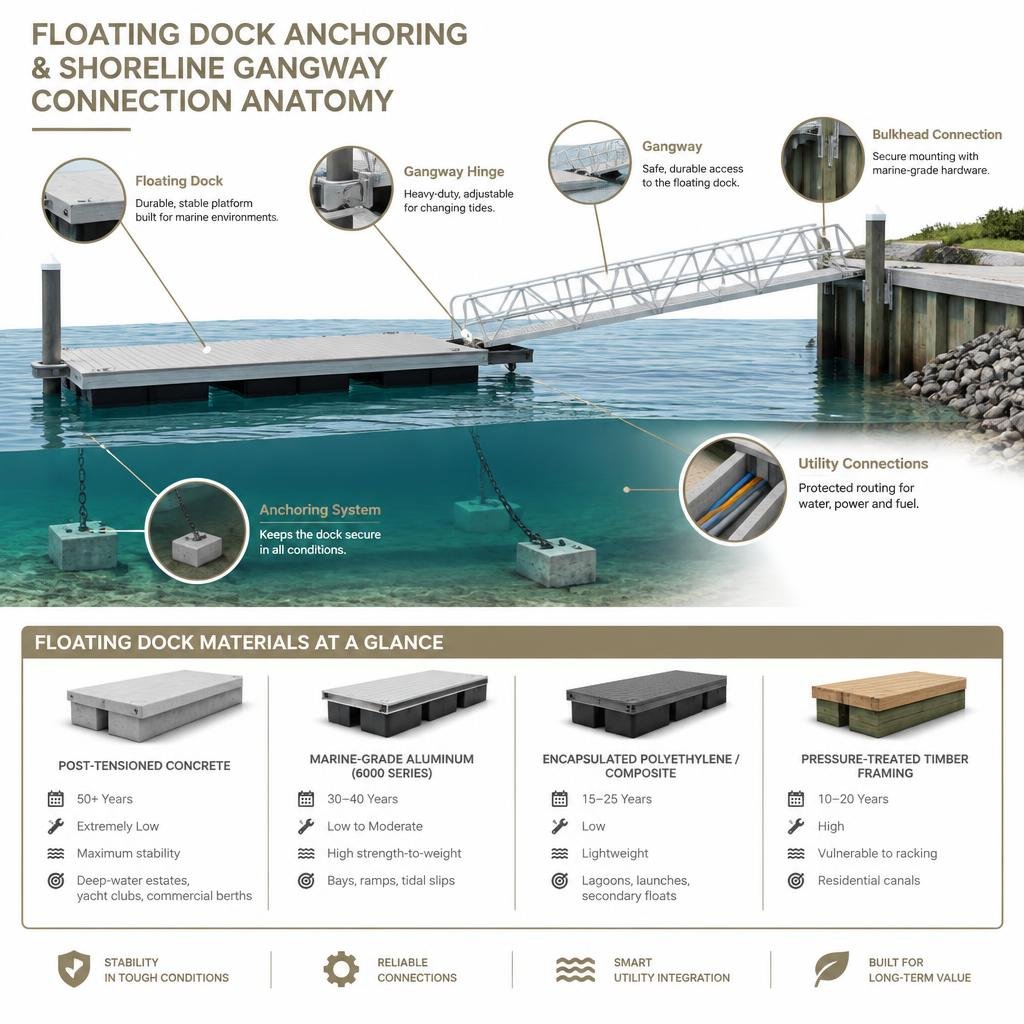
High-grade marine construction depends on structural transitions and load-bearing hardware. A floating platform is only as dependable as the gangway, bulkhead hinge, and anchoring connections securing it to the shoreline.
Partnering with an experienced Long Island dock builder ensures every hinge, roller, and utility connection is engineered for long-term coastal exposure.
Common Mistakes and Shoreline Integration in Coastal Dock Construction
Marine environments quickly expose shortcut construction. The most common engineering failures include:
- Undersized Buoyancy Ratios: Skimping on float volume leads to low freeboard, causing deck submergence during combined live loads.
- Frame Racking from Wake Action: South Shore bays experience heavy recreational wakes and chop. Frames without diagonal corner gussets or internal torsion bars can twist, shearing bolts and loosening structural decking.
- Improper Bulkhead Hinge Geometry: In places like West Hampton, Merrick, and Wantagh, extreme low tides can force gangways into steep angles. Without self-adjusting roller transitions and heavy-duty steel mounting brackets, hinge pins can bind and tear out of bulkhead caps.
- Unaddressed Galvanic Corrosion: Mixing dissimilar metals (such as raw steel against aluminum brackets) without isolating neoprene pads leads to rapid galvanic breakdown in saltwater.
Utility Connections and Heavy-Duty Shoreline Integration
Integrating utilities into floating platforms requires continuous flexibility to accommodate vertical tidal movement. We cast internal utility raceways directly inside concrete EPS cores or route protected conduit channels beneath aluminum stringers.
This shields potable water lines, shore power feeds, and fuel lines from UV degradation, foot traffic, and crushing impacts. Marine electrical pedestals must feature ground fault protection and waterproof disconnect loops at the gangway hinge point.
Commercial and high-capacity municipal waterfront installations require engineered load distributions, deep piling embedment, and reinforced connection hardware capable of supporting continuous berthing loads and severe weather events.
Long-term maintenance protects your waterfront capital:
- Spring Inspections: Check pile guide rollers, anchor chain links, and hinge pins for wear.
- Neoprene Pad Servicing: Inspect isolation pads between dissimilar metals to prevent galvanic corrosion.
- Fastener Torque Checks: Retorque structural frame bolts following winter storms to keep the assembly rigid.
Pearce Marine Construction brings local coastal expertise, precision structural engineering, and superior craftsmanship to every project. We deliver the heavy-duty floating dock construction New York waterfront property owners demand.
Whether you require a residential floating dock in Brightwaters, a commercial slip system in Babylon, or deep-water pile driving in Southampton, our team builds waterfront infrastructure engineered to endure. Explore our professional boat docks and floating docks services to engineer your waterfront installation.



Bring Your Vision to Life
Whether you're planning a custom dock, seawall, or boat lift, our experienced team is ready to deliver high-quality marine construction tailored to your needs. Pearce Marine Construction brings craftsmanship, precision, and a deep understanding of Long Island's waterways to every project. Let us help you create a durable, beautiful solution that stands the test of time. Get in touch now for a personalized estimate!