
How to Build a Floating Platform Without Sinking Your Budget

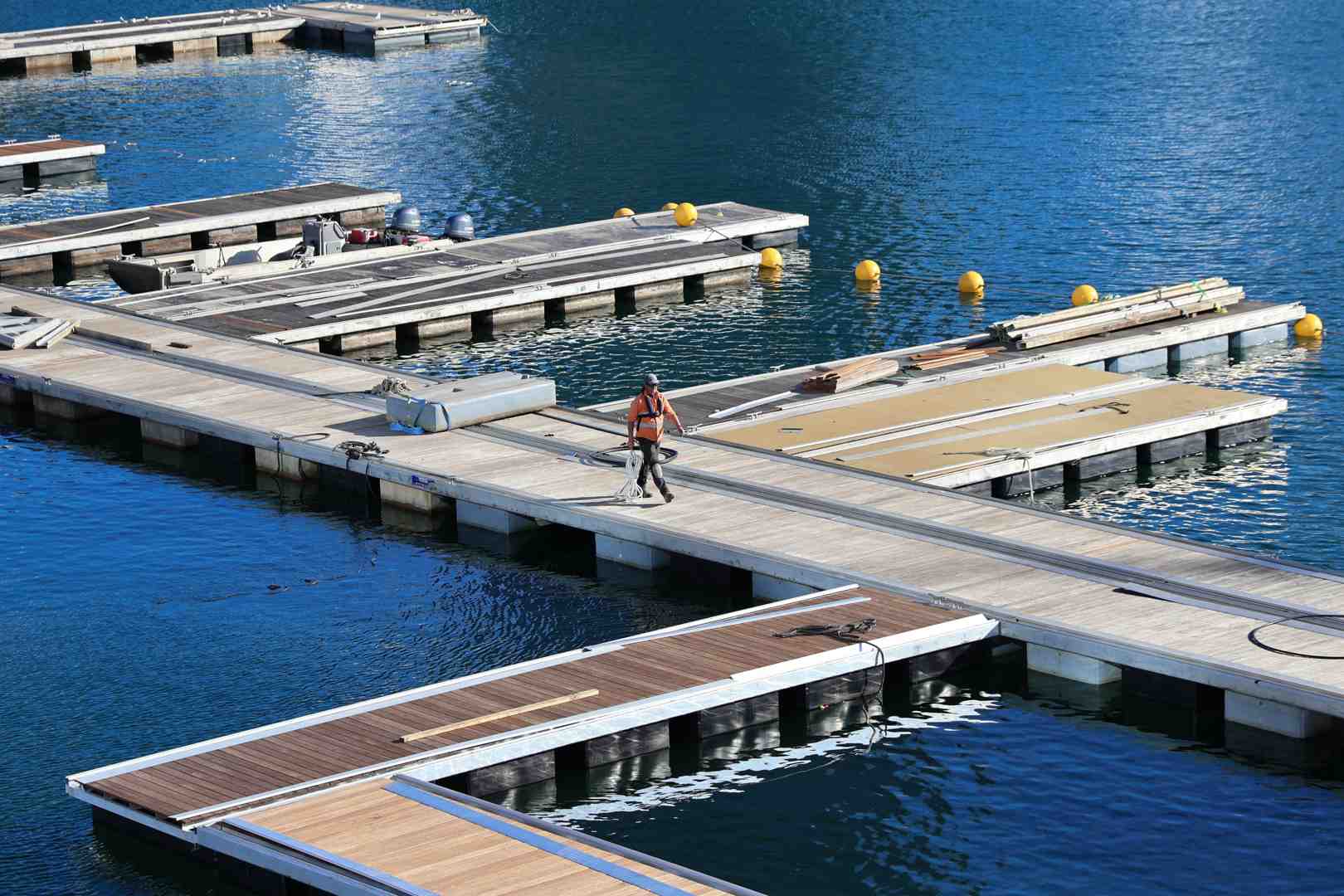
What You Need to Know About Floating Dock Construction Techniques
Floating dock construction techniques determine how well your dock holds up against Long Island's tidal shifts, storm surges, and seasonal ice — and getting them right matters far more than most property owners realize. At Pearce Marine Construction, our professional floating dock construction process utilizes these core techniques:
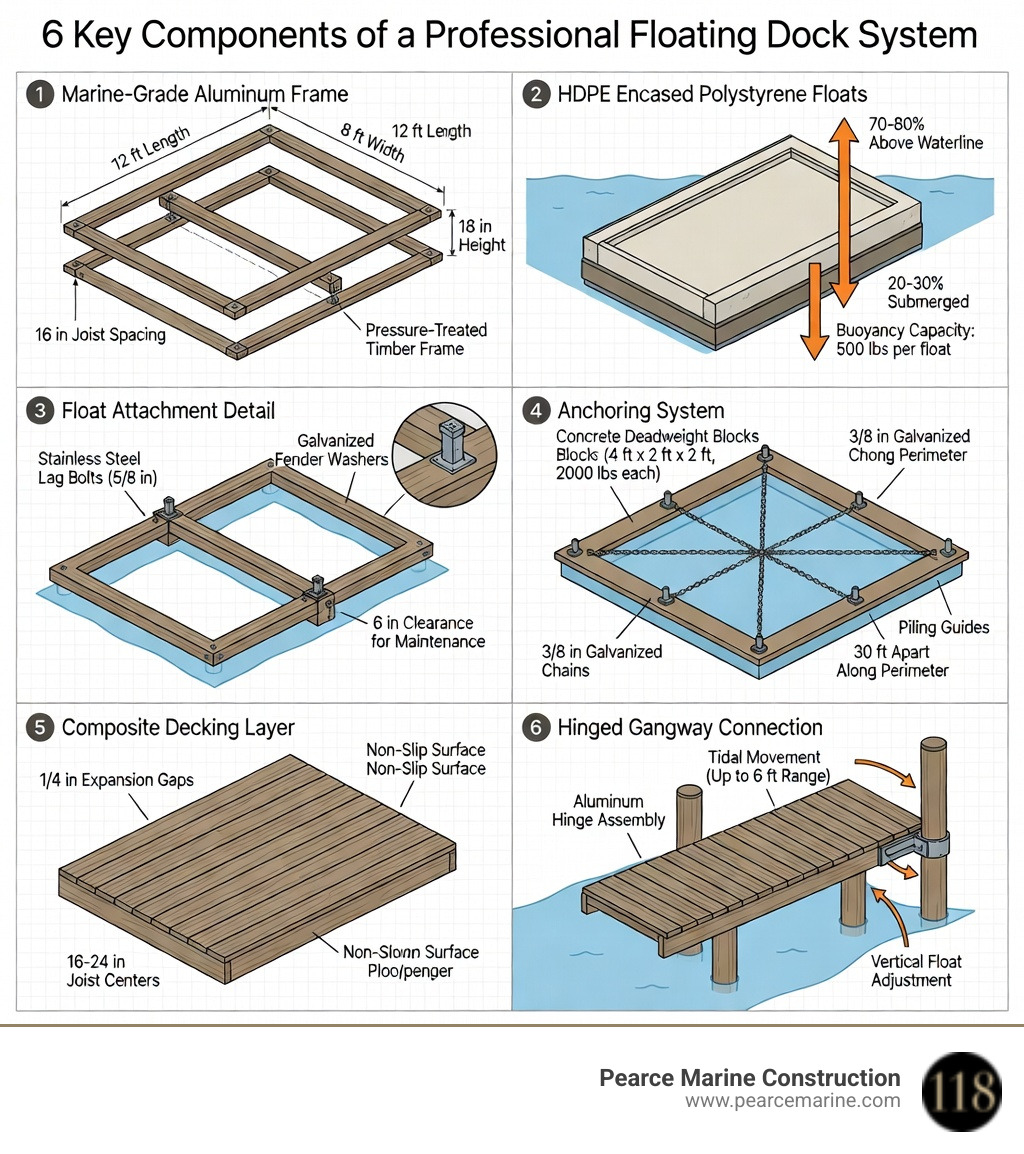
- Frame construction - We build the structural frame from marine-grade aluminum or pressure-treated timber, sized to match your load requirements
- Buoyancy engineering - Our team selects and positions HDPE or encased polystyrene floats so the empty dock sits 70-80% above the waterline, leaving reserve capacity for live loads
- Float attachment - We secure floats with lag bolts and fender washers, spaced evenly with ~6 inches of clearance for serviceability
- Anchoring system - We utilize deadweight concrete blocks, piling guides, or spud poles spaced every ~30 feet along the perimeter to control lateral movement while allowing vertical float
- Decking installation - We lay composite, aluminum, or pressure-treated decking with 1/4-inch drainage gaps and joist spacing matched to material (16-24 inches on center)
- Shoreline connection - We engineer and attach a hinged gangway or ramp to handle tidal elevation changes without stressing the frame
These aren't just building steps — they're engineering decisions. Each one affects how long your dock lasts and how safe it is under real waterfront conditions. In Nassau and Suffolk County waterways, tidal variation, boat wake, and nor'easter winds are demanding. A dock built without proper buoyancy calculations or a professionally engineered anchoring system can become a liability. The difference between a dock that lasts 10 years and one that lasts 30+ comes down almost entirely to how it's built by a professional contractor.
Advanced Floating Dock Construction Techniques for Long Island Waters
In the unique marine environments of Long Island—from the Great South Bay in West Islip to the Atlantic-facing shores of Southampton—standard construction isn't enough. We utilize advanced floating dock construction techniques that prioritize structural integrity and shoreline protection. Unlike stationary docks that fight the energy of the water, a floating system must be engineered to move with it while remaining perfectly stable.
Professional boat docks and floating docks rely on a sophisticated understanding of buoyancy ratios. A common mistake in the industry is over-flooding a dock; however, an expertly built dock should sink only 20-30% into the water when empty. This leaves a 70-75% reserve capacity to handle "live loads"—the weight of people, equipment, and environmental forces.
In areas like Southampton or Brightwaters, where tidal surges are a constant factor, we implement heavy-duty Floating Dock Anchoring Systems. This often involves deadweight anchoring using concrete blocks that weigh at least 250 to 400 pounds each, depending on the exposure of the site.
Material Selection and Floating Dock Construction Techniques
The longevity of a dock in Nassau County or Suffolk County is dictated by the materials’ resistance to saltwater corrosion and UV degradation. We focus on high-performance materials that can withstand the "salt air" and constant immersion.
- HDPE Floats: We utilize High-Density Polyethylene (HDPE) shells filled with expanded polystyrene foam. These meet rigorous standards, such as those set by the U.S. Army Corps of Engineers, ensuring they won't leach pollutants or crumble over time.
- Marine-Grade Aluminum: For frames, we often recommend 5XXX or 6XXX series aluminum. It offers an incredible strength-to-weight ratio and naturally resists the corrosion that plagues plain carbon steel.
- Structural Timber: When using wood, we specify at least 2x8 pressure-treated lumber. This provides the necessary "meat" for dock-builders-long-island-ny to secure heavy-duty hardware.
- Fasteners: We never compromise on hardware. Every bolt, nut, and washer is hot-dipped galvanized steel or stainless steel. These marine-grade materials are essential for preventing structural failure in the South Shore's brackish waters.
Engineering Stability and Buoyancy in Floating Dock Construction Techniques
Stability is not just about how many floats you have; it’s about where they are placed. For a standard 8'x16' dock (128 sq ft), we calculate a required flotation capacity of approximately 3,200 pounds (roughly 25 lbs per sq ft).
Achieving hydrostatic balance requires precise mass distribution. We ensure the frame snugly "hugs" the floats, which prevents the structure from shifting on top of its buoyancy units. This engineering technique ensures the "freeboard"—the distance from the water to the top of the deck—remains consistent even when weight is concentrated on one side.
Professional Anchoring and Foundation Systems
Anchoring is the "insurance policy" of your dock. In Long Island locations like Massapequa or Merrick, where boat wakes can be significant, we use a variety of anchoring-a-floating-dock methods tailored to the seabed analysis.
- Piling Guides: For the ultimate in stability, we drive timber or steel piles into the seabed. The dock is then attached via heavy-duty rollers or hoops, allowing it to slide vertically with the tide while preventing any horizontal drift.
- Stiff Arms: In narrower canals or where piles aren't feasible, a floating-dock-stiff-arm connects the dock directly to a bulkhead. These triangular steel or aluminum arms pivot to allow for tidal rise.
- Criss-Cross Chain Systems: Using heavy-duty galvanized chains and concrete anchors, we tension the dock in a "X" pattern. This technique, highlighted in our floating-dock-anchoring-systems-fff74 guide, provides excellent lateral stability in deeper waters.
Ensuring Longevity through Expert Installation and Repair
A dock in West Hampton or West Islip is an investment in your property's value and shoreline defense. However, the marine environment is relentless. Without professional dock-piling-installation and regular maintenance, even the best materials can succumb to the elements.
Our approach to long-island-dock-repair involves more than just swapping out boards. We look at the structural integrity of the entire system. Is the frame still square? Are the anchor chains showing signs of "pitting" or thinning? If you are searching for dock-repair-near-me, it is crucial to choose a team that understands the specific ice-jacking forces found in Long Island's north shore harbors like Huntington and Cold Spring Harbor.
Custom Features and Shoreline Integration
The transition from land to water is where many docks fail. We specialize in the complex engineering of boat-docks-and-ramps. A professional gangway must be robust enough to span the distance while being flexible enough to handle the 4-to-6-foot tidal swings common in areas like Babylon and Wantagh.
Our custom-dock-design-in-massapequa includes:
- Structural Gussets: Reinforced corner brackets that prevent the frame from "racking" or becoming a trapezoid under wave stress.
- Torsion Bars: Hidden internal supports that prevent the dock from twisting along its length.
- Utility Routing: Seamlessly integrating water and power lines into the frame so they aren't damaged by the dock's constant movement.
- Bulkhead Integration: Ensuring the shore-side mounting point is reinforced to prevent damage to your existing bulkhead or seawall.
Conclusion: Partnering with Pearce Marine Construction
At Pearce Marine Construction, we don't just build docks; we build lasting shoreline infrastructure. As a woman-owned company with generational expertise, we understand that every foot of Long Island shoreline—from Bellmore to Southampton—requires a unique engineering approach.
Our commitment to meticulous craftsmanship means we never cut corners on buoyancy calculations or anchoring weights. Whether you need a boat-dock-installer-complete-guide for a new project or a comprehensive repair of an existing structure, our team provides the local knowledge necessary for success.
We serve both residential and commercial clients across Nassau and Suffolk Counties, providing the dock-builders-long-island expertise needed to protect your property and enhance your waterfront. When you choose Pearce Marine, you are choosing a partner dedicated to the durability, safety, and beauty of your marine construction project.



Bring Your Vision to Life
Whether you're planning a custom dock, seawall, or boat lift, our experienced team is ready to deliver high-quality marine construction tailored to your needs. Pearce Marine Construction brings craftsmanship, precision, and a deep understanding of Florida’s waterways to every project. Let us help you create a durable, beautiful solution that stands the test of time. Get in touch now for a personalized estimate!