
The Essential Guide to Concrete Seawall Repair and Care

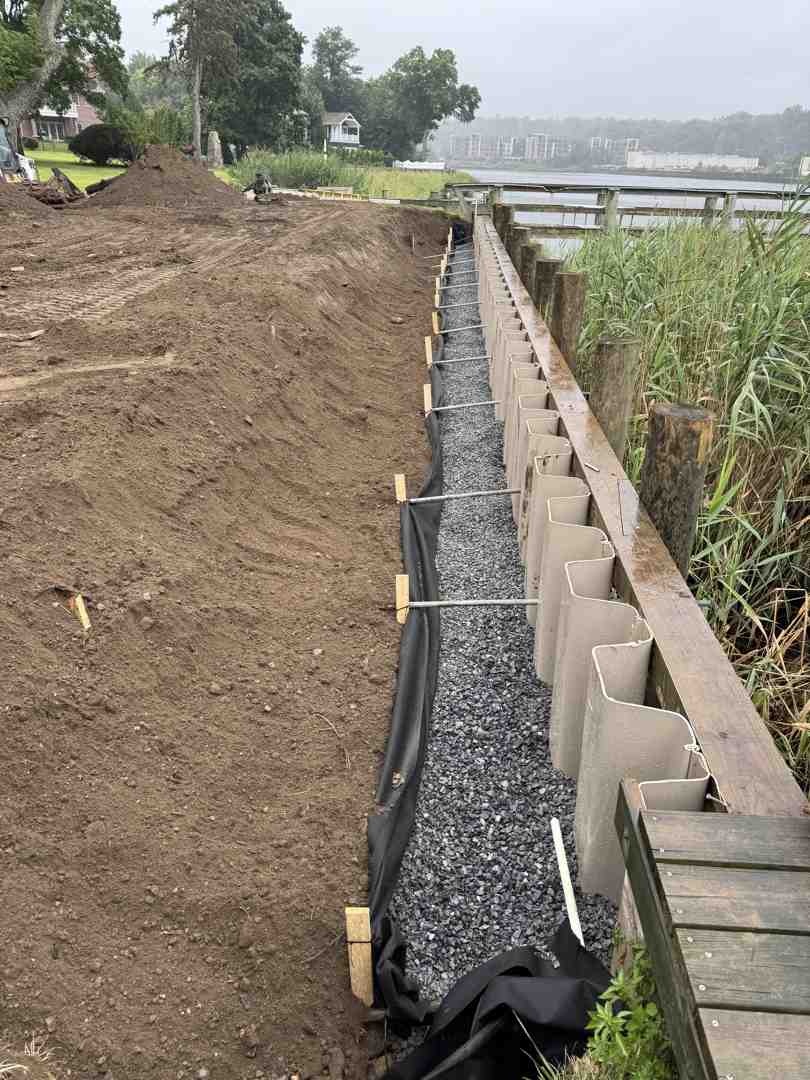
Why Concrete Seawall Maintenance Is Critical for Long Island Waterfront Properties
Concrete seawall maintenance is a highly specialized program of professional engineering inspections, drainage management, structural crack repair, and protective treatments designed to keep marine infrastructure structurally sound and extend its working life.
What does professional concrete seawall maintenance involve?
- Professional Engineering Inspections conducted twice yearly and after major coastal storms
- Hydrostatic Pressure Relief through the clearing and installation of specialized weep holes and jetty filters
- Precision Crack Sealing using marine-grade epoxy or polyurethane injections to halt water intrusion
- Advanced Protective Coatings applied to block saltwater corrosion and UV degradation
- Structural Monitoring for critical warning signs like spalling, rust stains, and panel movement
- Comprehensive Engineering Evaluations scheduled every 5 years to assess subsurface stability
- Targeted Structural Repairs including void filling, tieback installation, and cap beam reconstruction executed by a licensed marine contractor
Owning waterfront property on Long Island — from Southampton to West Islip — means your seawall faces a relentless combination of tidal cycles, storm surges, saltwater corrosion, and freeze-thaw stress every single year. Concrete seawalls are built tough, but they require professional maintenance to withstand these elements.
The numbers tell a clear story. A professionally maintained concrete seawall can last 25 to 50 years. Neglecting these structures accelerates deterioration, leading to emergency repairs or full replacement running anywhere from $200 to over $1,000 per linear foot.
Most damage starts invisibly. Water seeps through a hairline crack. Soil slowly washes out behind the wall. Rebar begins to corrode. By the time you see rust stains or a sinkhole forming near your bulkhead, the underlying problem has usually been building for years.
This guide walks through the professional inspection protocols, drainage solutions, and advanced repair methods utilized by Pearce Marine Construction to protect your shoreline investment before small issues escalate into catastrophic failures.

Key terms for concrete seawall maintenance:
Professional Concrete Seawall Maintenance and Inspection Protocols
To combat the harsh marine environment of Long Island, relying on a structured, professional maintenance plan is the only way to safeguard your property. Unlike inland structures, a seawall is subjected to a constant barrage of salt spray, fluctuating tides, and—most damaging of all—the relentless freeze-thaw cycles of New York winters.
When water gets trapped inside tiny pores or hairline cracks in the concrete and freezes, it expands by about 9%. This creates immense internal pressure, eventually fracturing the concrete from the inside out. Over the course of a single winter in places like Huntington or Cold Spring Harbor, this cycle can occur dozens of times, quietly compromising the wall's structural integrity.
To prevent sudden, catastrophic failures, we implement a rigorous visual and physical inspection protocol. Professional evaluations should be scheduled at least once every five years for concrete seawalls, supplemented by comprehensive visual checks twice a year—ideally in the spring to assess winter freeze damage, and in the fall to prepare for coastal storm seasons. For more details on what these evaluations entail, see our guide on professional seawall inspection services.
During these professional inspections, marine engineers use specialized equipment to check soil density behind the wall, measure panel alignment, and assess underwater structural elements that are hidden from the naked eye. Adhering to these strict schedules ensures that minor structural shifts are caught before they require complete reconstruction. For additional insights on maintaining structural health, review these Sea Wall Maintenance Tips | Ram Jack New England .
Warning Signs That Require Immediate Concrete Seawall Maintenance
Knowing when to call in the professionals can save you tens of thousands of dollars. While some wear and tear is normal, certain indicators point to active, accelerating structural failure.
- Concrete Spalling and Rebar Corrosion: When saltwater penetrates the concrete's outer layer, it reaches the internal steel reinforcement bars. As the steel corrodes, it expands up to six times its original size. This expansion cracks the surrounding concrete, causing chunks to break away—a process known as spalling.
- Rust Stains: Reddish-brown streaks bleeding through the concrete face are a clear sign of active internal rebar corrosion.
- Hairline Cracks: While they may look small, hairline cracks act as superhighways for saltwater to reach the internal steel.
- Panel Separation: If the joints between your concrete panels are widening or shifting, the wall is losing its unified strength.
- Sinkholes and Soil Washout: Depressions or sudden holes forming in the soil directly behind the wall indicate that backfill material is escaping through gaps or failed joints under the water line.
According to scientific research on seawall deterioration warning signs, ignoring these early indicators dramatically shortens the lifespan of the structure. If you notice any of these issues, especially cracking along the cap or panels, immediate intervention is required. Learn more about structural solutions in our guide on seawall crack repair.
Engineering-Grade Drainage Solutions and Hydrostatic Pressure Relief
If there is a single "silent killer" of concrete seawalls on Long Island, it is hydrostatic pressure. When high tides roll in or heavy rains saturate the soil behind your wall, water accumulates behind the concrete panels. If this water has no way to escape, it exerts massive outward pressure against the wall.
When the tide recedes, the water level in the canal or bay drops quickly, but the water trapped in the soil behind the wall stays high. This imbalance creates a crushing force pushing the wall outward toward the open water. Without functional drainage, this pressure will eventually bow the concrete panels, crack the cap, or push the entire wall forward.
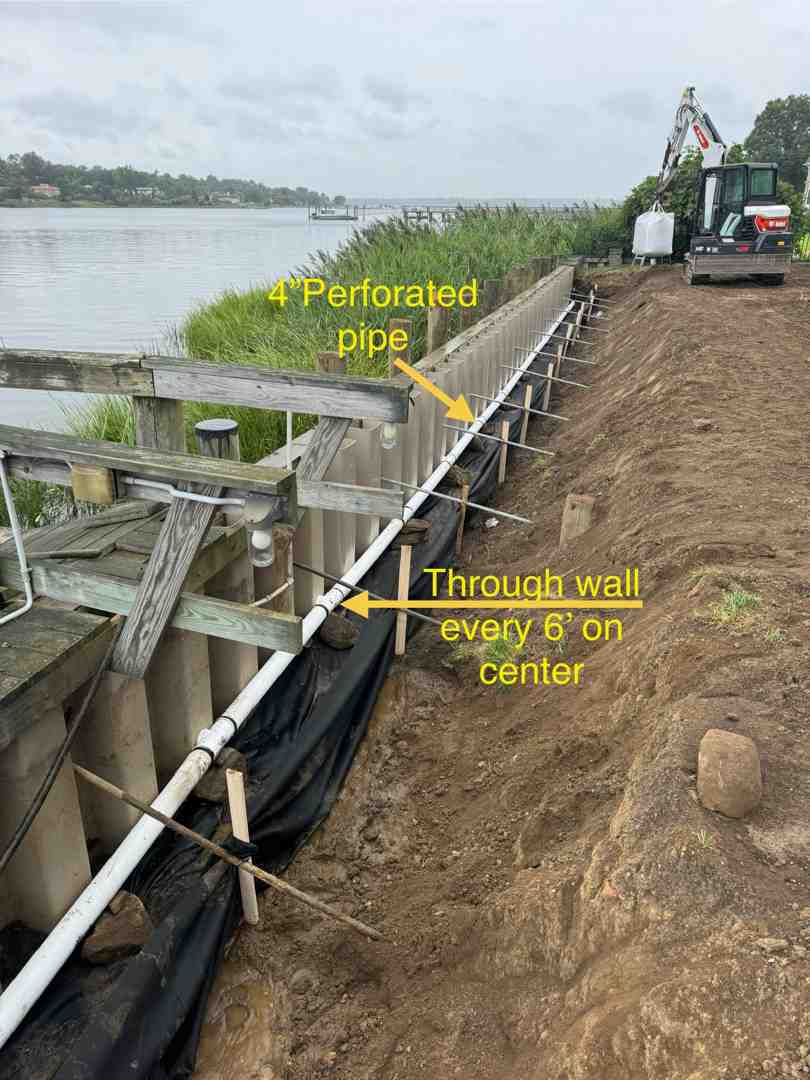
To prevent this, we install and maintain engineering-grade drainage systems:
- Weep Holes: These are strategically placed drainage ports drilled through the concrete panels. They must be kept completely clear of marine growth, sand, and debris.
- French Drains and Swales: For properties in low-lying areas like Merrick or Bellmore, we construct French drains behind the wall to capture surface runoff and channel it safely away.
- Jetty Filters: Placing specialized, one-way filter cartridges inside weep holes allows water to drain out while preventing the sandy backfill soil from washing out with it.
To explore how we design these systems to handle high-energy tidal zones, refer to our marine drainage solutions.
Advanced Materials and Protective Coatings for Concrete Seawall Maintenance
To extend the lifespan of a concrete seawall in high-chloride environments, we utilize advanced, marine-grade materials that seal the concrete's porous surface.
Standard concrete is naturally porous, acting like a hard sponge that slowly absorbs saltwater. Over time, chloride ions migrate deep into the structure, triggering the corrosion of internal steel. To halt this process, we apply advanced pore sealers and epoxy-based coatings that create an impermeable barrier against salt spray, UV rays, and water penetration.
According to scientific research on advanced concrete repair materials, modern polymers and hydrophobic sealants can halt chloride-induced corrosion even in active splash zones. For new builds or major restorations, we utilize advanced concrete formulations featuring corrosion-inhibiting admixtures and epoxy-coated or composite rebar that cannot rust. Discover the latest material developments in our concrete seawall construction materials guide.
Structural Repair Methods vs. Full Shoreline Replacement
When a seawall shows signs of distress, property owners often worry they will have to fund a complete reconstruction. Fortunately, modern marine engineering offers highly effective, structural repair methods that can restore the wall's integrity at a fraction of the cost of a full replacement. However, the key lies in diagnosing the damage early before the wall experiences a total structural blowout. For properties damaged by severe coastal storms, specialized solutions can be found through our storm damage marine repair services.
High-Performance Grouting and Soil Stabilization Techniques
When soil washes out behind a concrete bulkhead, it creates hidden underground voids. These voids leave the concrete panels unsupported from behind, making them highly vulnerable to collapsing inward under wave action.
To solve this without major excavation, we utilize high-performance polyurethane foam injection and permeation grouting.
Using slim soil needles, our technicians inject eco-friendly, hydrophobic polyurethane resins directly into the voids behind the wall. Upon contact with moisture, the resin expands rapidly, filling every hidden pocket of air, binding the loose sandy soil into a rock-solid, impermeable mass, and sealing any leaking panel joints from the inside out. This method stabilizes the soil, stops active erosion, and restores structural support to the concrete panels. Learn more about this process in our guide on concrete bulkhead repair. For localized applications on Long Island, you can also read about Sea Wall Repair in Nassau County.
Helical Tiebacks and Cap Beam Reconstruction
If a concrete seawall has begun to lean or bow outward, soil stabilization alone is not enough. The wall has lost its anchoring strength.
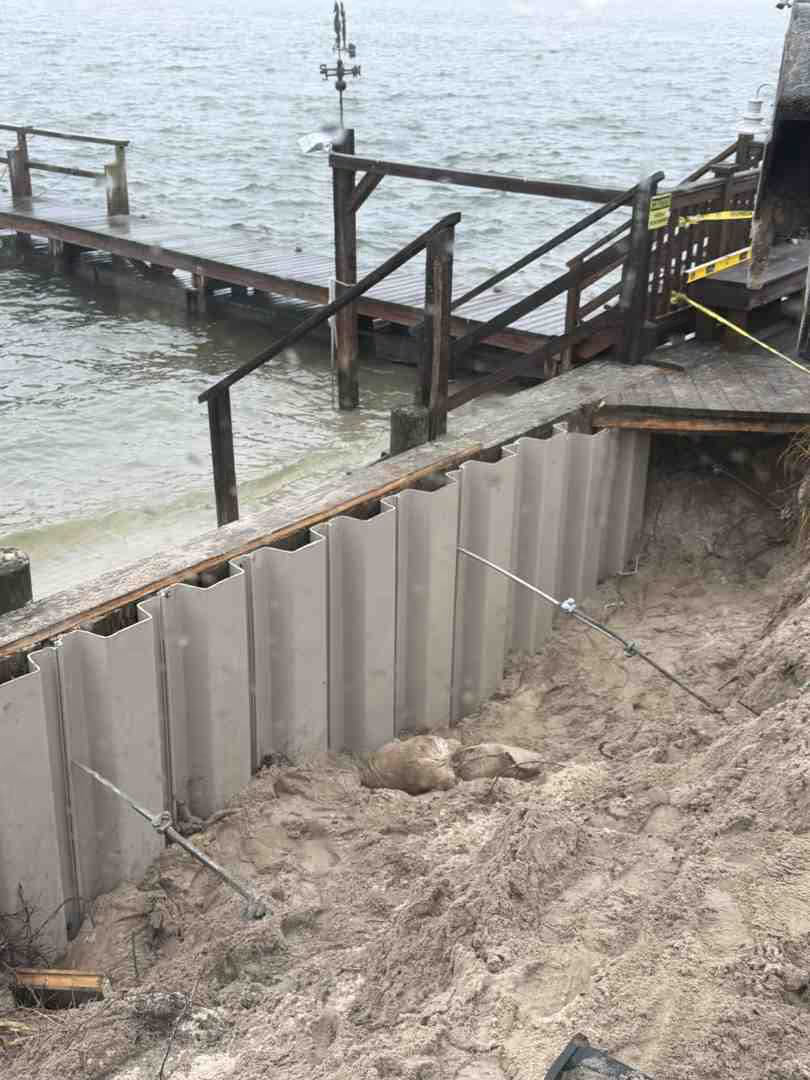
To pull the wall back into alignment and permanently secure it, we install helical tieback systems. These heavy-duty steel anchors are screwed deep into the stable load-bearing soil far behind the wall and locked securely to the seawall's face.
Additionally, if the concrete cap—the structural beam running along the top of the wall—has cracked or crumbled, we perform cap beam reconstruction. This involves chipping away the damaged concrete, treating or replacing the internal steel reinforcement, and pouring high-strength, marine-grade concrete to tie the entire panel system back together. If you are experiencing structural movement, explore our professional seawall repair services.
Cost-Benefit Analysis: Repairing vs. Replacing Long Island Bulkheads
At Pearce Marine Construction, we bring generational expertise and meticulous craftsmanship to every shoreline project across Nassau and Suffolk Counties. From the high-energy ocean exposures of West Hampton and Southampton to the tidal canals of Massapequa and Bayshore, we understand the exact engineering required for Long Island's unique coastal soils.
We pride ourselves on providing honest, engineering-backed assessments. Unlike other marine contractors, we won't push you into an incredibly expensive, disruptive replacement if a high-performance, long-lasting structural repair is entirely viable. We design our repairs to over-engineer your wall, ensuring it stands strong against future 100-year storms.
To help you evaluate your options, here is a direct comparison of repair versus full replacement:
| Factor | Professional Structural Repair | Full Seawall Replacement |
|---|---|---|
| Typical Cost | $100 – $300 per linear foot | $600 – $1,500+ per linear foot |
| Lifespan Extension | 10 to 20+ additional years | 30 to 50+ years |
| Property Disruption | Minimal (completed from water/yard in days) | High (heavy excavation, weeks of construction) |
| Best Suited For | Walls under 30 years old with localized damage | Severely collapsed walls or failed foundations |
To review more detailed pricing structures and material options, read our concrete seawall costs guide.
If you are ready to secure your shoreline with Long Island's trusted, woman-owned marine construction specialists, contact Pearce Marine Construction for professional seawall and bulkhead services. Our team is ready to provide a forensic-level assessment of your waterfront structure and deliver the lasting durability your property deserves.


Bring Your Vision to Life
Whether you're planning a custom dock, seawall, or boat lift, our experienced team is ready to deliver high-quality marine construction tailored to your needs. Pearce Marine Construction brings craftsmanship, precision, and a deep understanding of Florida’s waterways to every project. Let us help you create a durable, beautiful solution that stands the test of time. Get in touch now for a personalized estimate!