
The Great Debate Between Piers and Docks

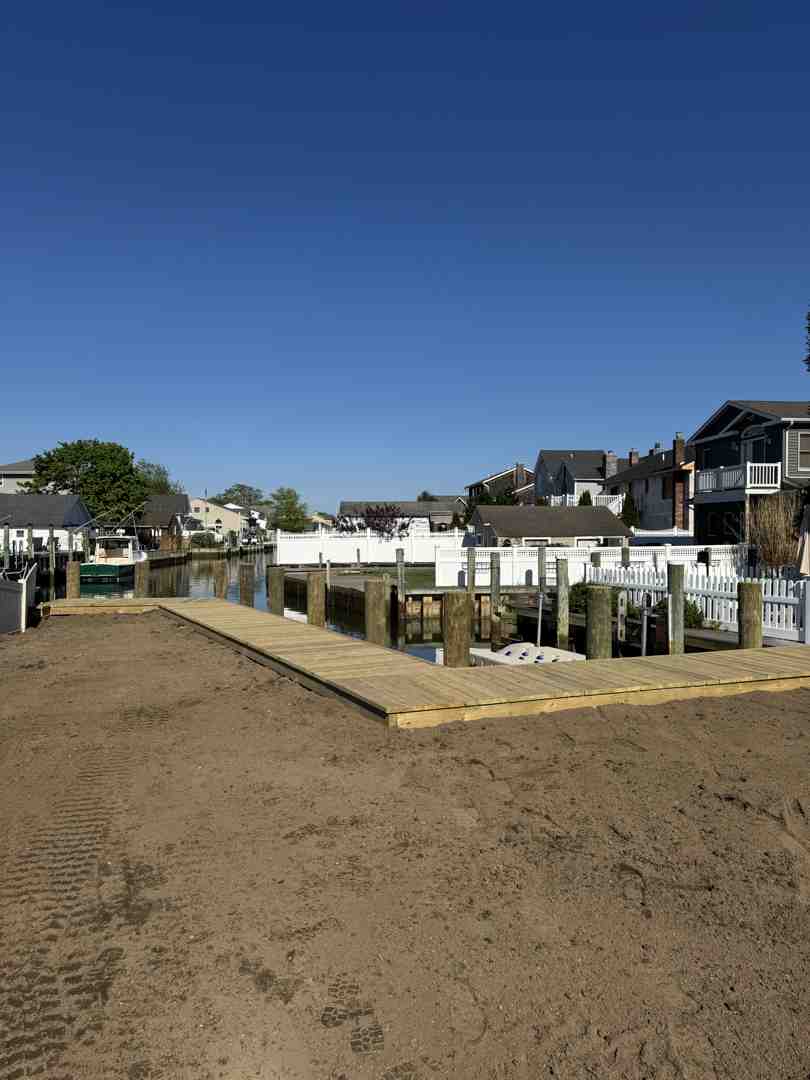
Pier vs. Dock: What's the Difference and Which Does Your Property Need?
Pier and dock are two terms most Long Island property owners use interchangeably — but they are not the same thing, and building the wrong one for your shoreline can be a costly mistake.
Here's a quick breakdown:
| Feature | Pier | Dock |
|---|---|---|
| Orientation | Extends perpendicular from shore into water | Runs parallel to the shoreline |
| Structure | Fixed platform raised on piles or pillars | Fixed or floating; sits at or near water level |
| Primary Use | Walkways, fishing access, vessel approach | Mooring, loading/unloading boats |
| Best For | Deeper water access, multi-purpose use | Direct vessel tie-up and storage |
| Water Level Changes | Less adaptable | Floating versions rise and fall with tides |
Think of it this way: a pier is like a sidewalk that walks you out over the water. A dock is more like a parking space for your boat.
In practice, most residential and commercial waterfront properties on Long Island — from West Islip to Southampton to Westhampton — need a system that combines elements of both. A pier extends out far enough to reach navigable water depth, while a dock section at the end provides the mooring point.
The right design depends on your shoreline conditions, water depth, tidal range, and how the structure will be used. That's where expert marine construction matters.
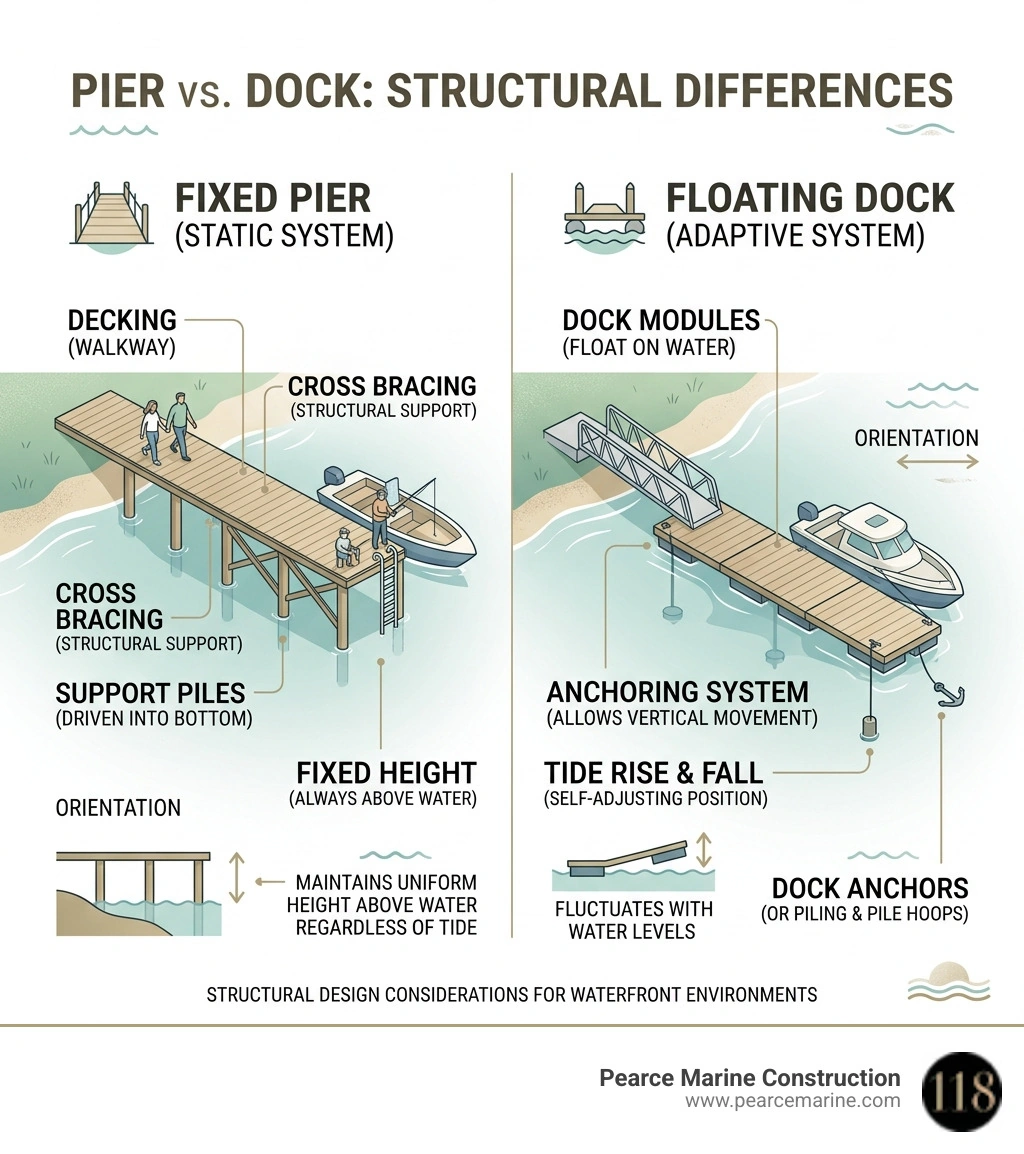
Pier and dock terms to know:
Engineering the Perfect Pier and Dock for Long Island Waters
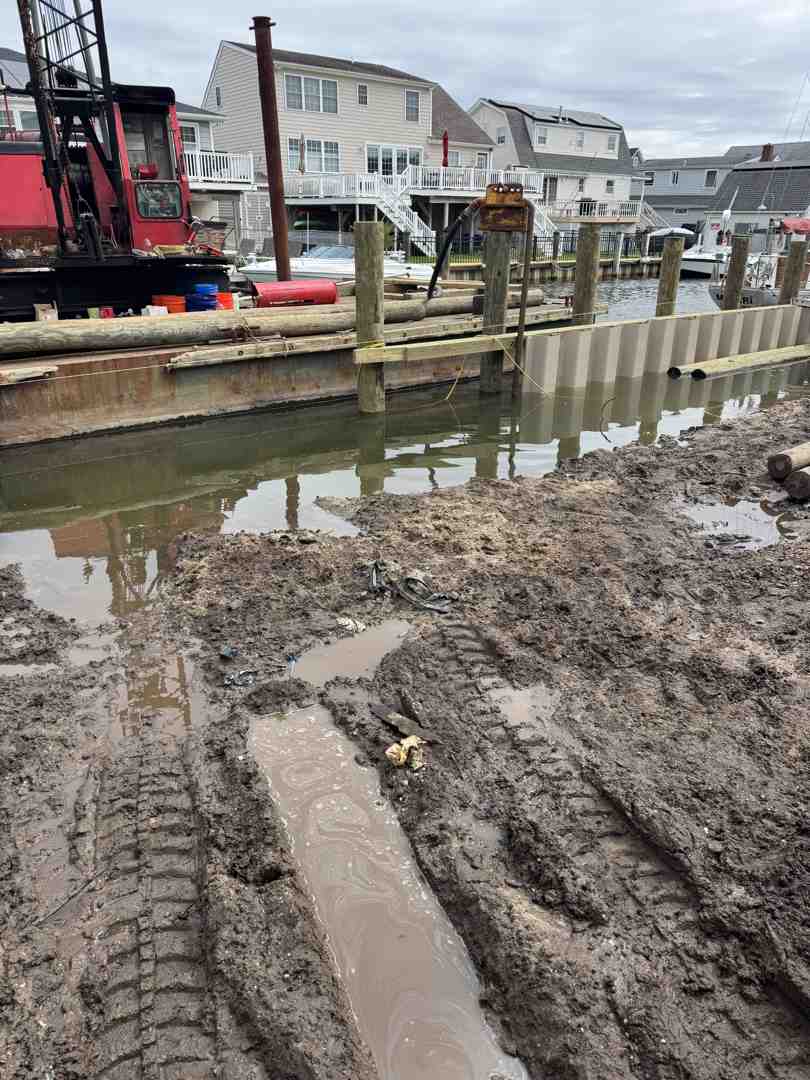
Engineering a pier and dock system in Nassau and Suffolk County requires more than just driving wood into the sand. Our local waters are dynamic, with significant tidal fluctuations and the ever-present threat of Atlantic storm surges. To build a structure that lasts 50 years rather than five, we focus on deep-foundation engineering.
Pile driving is the backbone of any stable marine structure. On Long Island, we often deal with varying soil compositions, from the packed sands of Southampton to the silty marshes of Massapequa. We utilize high-capacity pile drivers to ensure every support reaches the necessary "refusal" point or depth to handle lateral loads. For properties with limited access or those requiring immense tension resistance, we often turn to helical piles. These screw-like steel foundations can support over 50 tons and are excellent at resisting the upward force of storm surges.
Integration with existing shore protection is equally vital. A new pier and dock shouldn't just sit next to your bulkhead; it should be engineered to work with it. By properly anchoring the shoreward end of the pier into a reinforced bulkhead or seawall, we create a unified system that prevents erosion and structural shifting. According to scientific research on overwater structures, the way a structure interacts with littoral drift (the movement of sediment) can dictate the long-term health of your shoreline.
| Structural Type | Fixed Pier | Floating Dock |
|---|---|---|
| Foundation | Driven piles (Steel, Timber, Concrete) | Anchored by piles, cables, or seaflex |
| Stability | Exceptional; does not move with waves | Moves with water; requires gangway |
| Longevity | High; less wear on moving parts | Moderate; hardware requires more frequent checks |
| Tidal Range | Best for low ranges or deep water | Essential for high-range tidal areas |
Structural Anatomy of a Pier and Dock System
A professional marine structure is a complex assembly of high-performance components. It starts with the piles—vertical supports driven into the seabed. While timber is traditional, many modern Southampton projects utilize steel piles or concrete deck panels for maximum industrial-strength durability.
Connecting these piles are the stringers (or joists) and beams. These horizontal members provide the lateral integrity needed to prevent the pier from swaying. In floating systems, we employ articulating hinges and heavy-duty gangways to bridge the gap between the fixed pier and the moving dock. These hinges allow the dock to rise and fall with the tide without putting undue stress on the landward connection. For a deeper look at the foundation process, see our more info about dock piling installation.
Material Selection for Marine Longevity
In the harsh salt-spray environment of Long Island, material choice is the difference between a lifetime of service and a decade of decay. We prioritize:
- Brazilian Ipe: Often called "ironwood," Ipe is a premium hardwood that is naturally resistant to rot, insects, and fire. It is so dense it actually sinks in water.
- Composite Decking: Brands like Trex or TimberTech offer PVC-wood hybrids that won't splinter or warp, making them excellent for low-maintenance walkways.
- Galvanized Hardware: Every bolt, nut, and washer must be hot-dipped galvanized or marine-grade stainless steel to prevent the "bleeding" and structural failure caused by oxidation.
- Pressure-Treated Timber: For underwater components, we use timber treated with high concentrations of copper-based preservatives (modern alternatives to creosote) to deter wood-boring marine organisms.
For more details on choosing the right finish for your project, check out more info about custom decking and dock services.
Environmental Mitigation in Pier and Dock Construction
Building on the shoreline comes with a responsibility to the local ecosystem. In areas like Cold Spring Harbor or Huntington, protecting eelgrass and shellfish habitats is a priority. We implement best practices such as:
- Light-Transmitting Grating: Using open-grid decking allows sunlight to reach the water's surface, supporting the growth of aquatic vegetation and reducing the "shadow effect" that can disorient juvenile fish.
- Strategic Pile Spacing: By increasing the span between piles, we minimize the physical footprint on the seabed.
- North-South Orientation: Whenever possible, we align piers to minimize the duration of the shadow cast over a single spot on the bay floor.
Following guidelines for marine construction helps ensure that your project not only meets regulatory standards but also preserves the natural beauty of Nassau and Suffolk counties.
Choosing the Right Marine Infrastructure for Your Shoreline

Whether you are in West Islip, Southampton, or Westhampton, the intended use of your waterfront dictates the engineering. A commercial dock handling heavy passenger traffic or large vessels requires significantly higher load-bearing capacities and structural reinforcement than a private residential pier. We specialize in scaling these designs to fit the specific demands of the site, ensuring that the structural footprint is optimized for both safety and efficiency. You can find more info about commercial dock construction to see how we handle these high-scale projects.
Fixed vs. Floating: Navigating Tidal Ranges
One of the most frequent questions we hear is whether a fixed or floating system is better. On Long Island, the answer is usually found in the tide charts.
Fixed piers are the "gold standard" for stability. They sit well above the Highest Astronomical Tide (HAsT), remaining unaffected by daily water fluctuations. However, because they don't move, they can be difficult to use for vessel access if the tide drops significantly.
Floating docks are the solution for variable water levels. They rise and fall, ensuring your boat lines never get too taut or too loose. To keep these structures in place during a storm surge, we use pile guides or float skids that prevent the dock from "grounding out" on the mudflats and damaging the hull or the ecosystem. Learn more about these systems in our more info about floating dock construction.
Maintenance and Repair of Coastal Structures
The Atlantic is relentless. Even the best-built pier and dock will eventually face the elements. In our region, "ice-jacking" is a common culprit of damage. This happens when ice forms around a pile and, as the tide rises, literally pulls the pile out of the seabed.
Regular structural inspections are crucial. We look for:
- Pile Rot: Especially at the "splash zone" where wood is alternately wet and dry.
- Hardware Corrosion: Checking for loose bolts or rusted brackets that compromise lateral integrity.
- Decking Wear: Ensuring the walking surface remains safe and secure.
If you notice your pier is starting to lean or your dock isn't floating level, it's time for professional intervention. Explore our more info about Long Island dock repair to understand how we restore compromised structures.
The Pearce Marine Standard of Craftsmanship
At Pearce Marine Construction, we don't just build docks; we build legacies. As a woman-owned business serving Nassau and Suffolk County, we bring generational expertise to every project. From the initial pile drive in Babylon to the final Ipe plank laid in Lloyd Harbor, our focus is on meticulous craftsmanship and engineering that stands the test of time.
We understand the unique challenges of Long Island marine environments—from the shifting sands of Southampton to the heavy ice of the North Shore. Our team is dedicated to providing robust shoreline protection and custom marine infrastructure that adds value and security to your property.
Ready to start your project? Discover more info about our complete marine construction services and see why homeowners and businesses across the island trust us with their waterfront.



Bring Your Vision to Life
Whether you're planning a custom dock, seawall, or boat lift, our experienced team is ready to deliver high-quality marine construction tailored to your needs. Pearce Marine Construction brings craftsmanship, precision, and a deep understanding of Florida’s waterways to every project. Let us help you create a durable, beautiful solution that stands the test of time. Get in touch now for a personalized estimate!