
Replacing a Bulkhead: Step-by-Step Guide and Cost Expectations


What Replacing a Bulkhead Actually Involves on Long Island
Replacing a bulkhead is one of the most critical marine construction services Pearce Marine Construction provides for Long Island waterfront property owners. When a bulkhead fails, it puts your entire shoreline, yard, and foundation at risk, requiring professional marine engineering to resolve.
Here is how Pearce Marine Construction executes the replacement process:
- Site assessment — Our marine specialists evaluate soil conditions, water exposure, and structural damage
- Demolition — The failing bulkhead is safely removed without disturbing the surrounding shoreline
- Pile driving — New structural piles are driven deep into the ground for a stable foundation
- New bulkhead installation — Heavy-duty vinyl, steel, or timber panels are installed and secured with anchoring systems
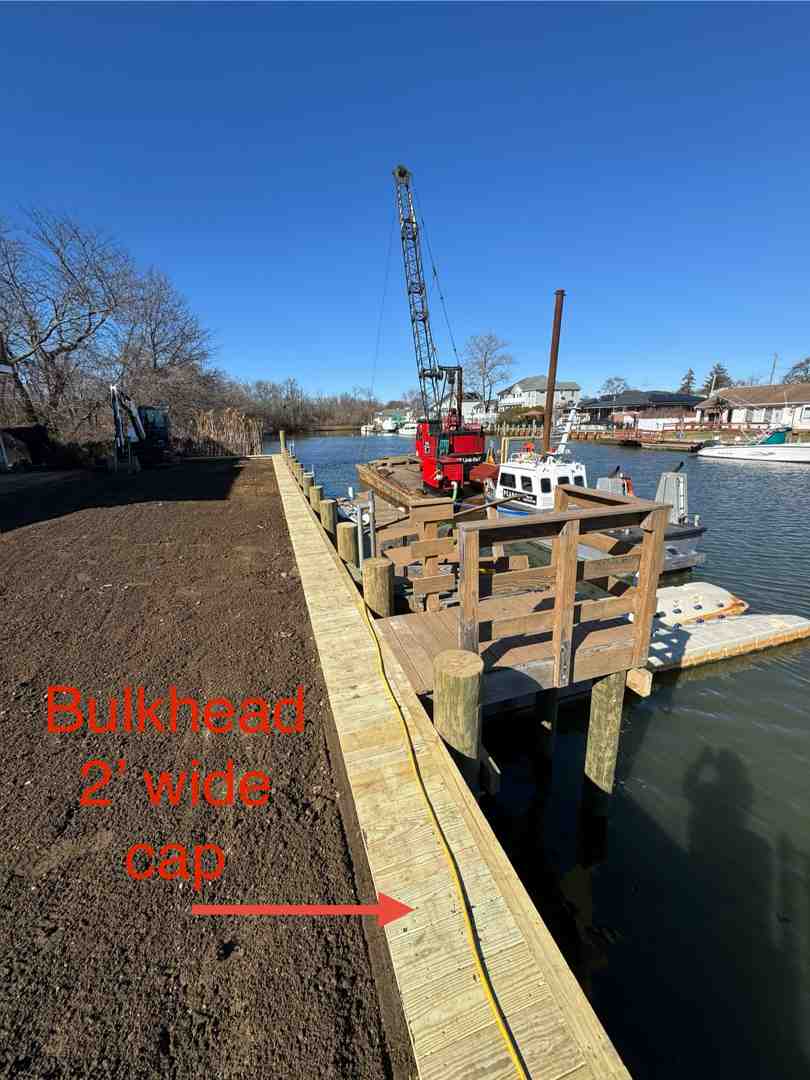
- Finishing — Seawall caps, drainage, and protective coatings complete the structure
The stakes are high. On Long Island, where nor'easters, saltwater exposure, and freeze-thaw cycles accelerate wear, hidden structural damage behind a failing wall is a real risk. If left unaddressed, soil erosion can quickly compromise adjacent docks, patios, and even home foundations. Pearce Marine Construction specializes in full marine bulkhead replacements along Nassau and Suffolk County shorelines, utilizing heavy materials and precise engineering to secure your property.
This guide walks you through every phase of our professional replacement process — from first assessment to finished structure.

Replacing a bulkhead helpful reading:
The Professional Process of Replacing a Bulkhead

Because a marine bulkhead serves as your property's primary shield against relentless tides and soil erosion, the replacement process must be executed with heavy-duty machinery and precise engineering. Pearce Marine Construction never cuts corners when dealing with the powerful forces of the Atlantic Ocean, the Great South Bay, or the Long Island Sound.
For property owners looking to understand the technical scope of these projects, exploring More info about bulkhead construction provides a deeper look into how these massive barriers are designed to withstand decades of coastal pressure.
Phase 1: Site Assessment and Engineering for Replacing a Bulkhead
Every successful marine project begins with a rigorous site evaluation. Our coastal environments in places like Southampton and West Islip present highly variable soil conditions, ranging from loose barrier island sand to dense, clay-heavy glacial deposits. Pearce Marine Construction works with licensed marine engineers to analyze these soil conditions, tidal ranges, and storm-surge history to design a structurally sound wall.
If your property features adjacent structures, such as concrete piers or docks, the engineering phase becomes even more complex. The new bulkhead must be designed to bear both the lateral pressure of the earth and the vertical loads of these existing installations. For a detailed look at how marine contractors navigate these complex structural interfaces, read Revamping Your Pier: A Guide To Bulkhead Replacement Under Concrete Piers | ShunTool .
Phase 2: Demolition and Safe Removal of Failing Shoreline Structures
Once the engineering plans are finalized, the physical construction work begins. Demolition is a delicate balance of brute force and surgical precision.
In waterfront communities like West Hampton, our heavy machinery like excavators and barge-mounted cranes are deployed to systematically dismantle the old, decaying timber or rusted steel sheets. Debris management is a critical priority during this phase; every scrap of old material must be safely extracted and hauled away to prevent environmental contamination of our local waterways. Large-scale public works, such as the Wantagh Park Marina Bulkhead Reconstruction , highlight the massive coordination required to execute clean demolition and debris removal on South Shore waterways.
Phase 3: Pile Driving and Installing the New Bulkhead
With the old structure cleared, we begin the core construction phase: pile driving. Heavy-duty diesel or vibratory hammers drive structural timber or steel piles deep into the bay or canal floor. These piles provide the vertical backbone for the entire system. Next, the new bulkhead panels are aligned and driven into place.
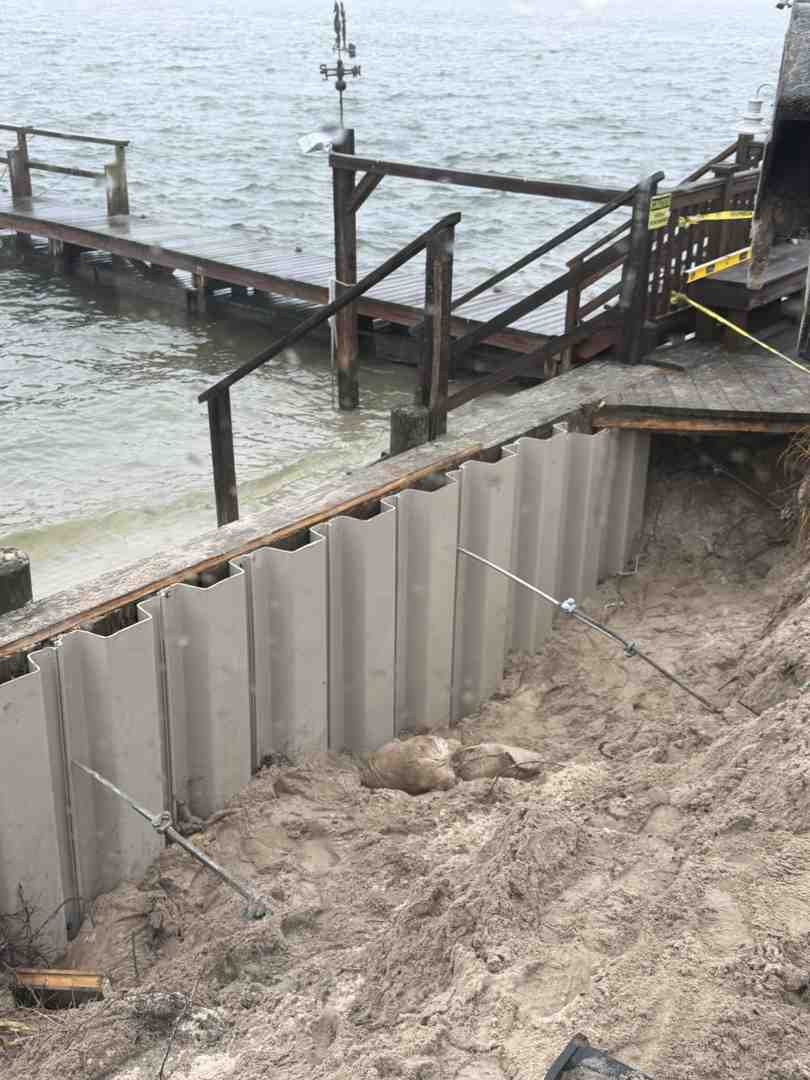
To keep the wall from bowing outward under the immense weight of the wet soil behind it, we install heavy-duty anchoring systems. This involves running steel tie rods from the face of the bulkhead back to heavy concrete or timber "deadmen" buried deep in your yard. Finally, we install heavy-duty seawall caps—often made of reinforced concrete, composite, or thick timber—to lock the entire system together and provide a clean, finished aesthetic. If you are noticing localized failures in your anchoring systems or caps, targeted Bulkhead Repair Services can sometimes extend the life of an otherwise stable wall.
Marine Bulkhead Materials, Costs, and Longevity Expectations
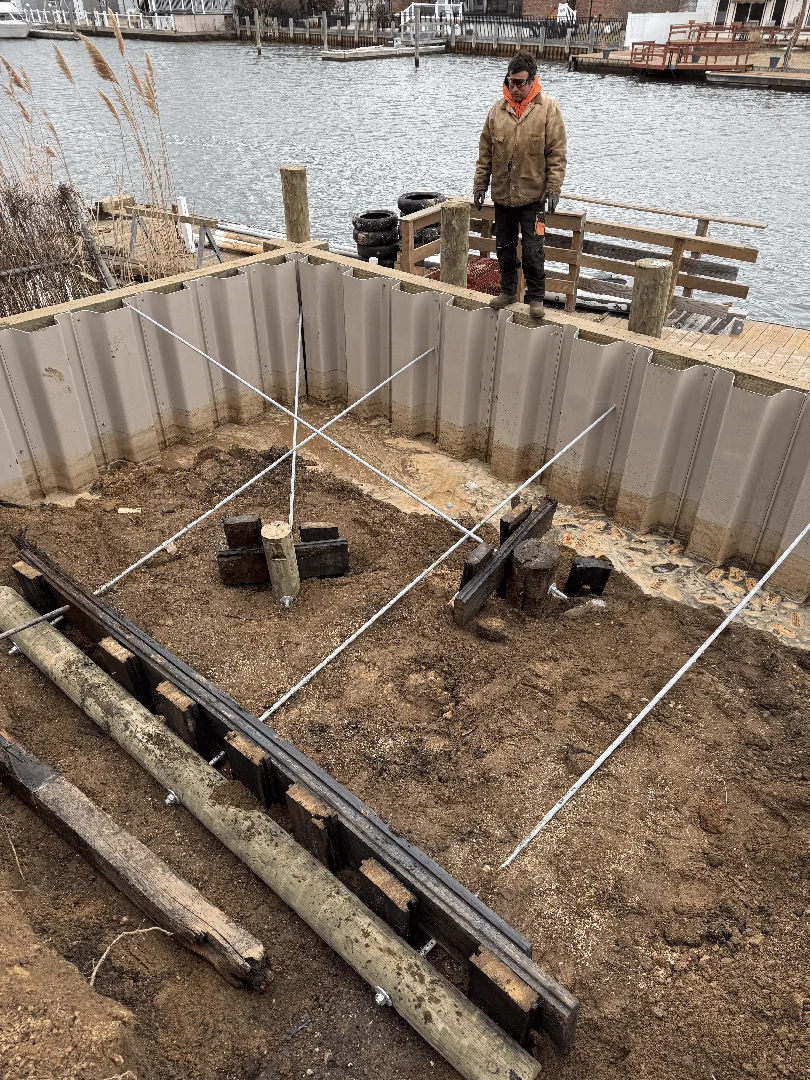
Choosing the right material for replacing a bulkhead is a decision that will impact your property and your long-term shoreline protection budget for decades. The harsh marine environment of Long Island demands materials that can resist saltwater corrosion, marine wood-boring organisms, and the constant physical stress of winter freeze-thaw cycles.
| Material Type | Average Lifespan | Durability in Saltwater | Maintenance Requirements | Relative Cost |
|---|---|---|---|---|
| Vinyl | 30+ Years | Excellent (No rot or corrosion) | Low (Occasional wash/inspection) | Moderate to High |
| Steel | 15-20 Years (Uncoated) / 30+ Years (Coated) | Good (Prone to rust without cathodic protection) | Medium (Anode replacement, coatings) | High |
| Timber (Treated) | 10-15 Years | Moderate (Vulnerable to marine borers) | Medium (Inspect for rot/fastener failure) | Low to Moderate |
Comparing Vinyl, Steel, and Timber Bulkhead Materials
Each material has its place depending on your shoreline's energy levels and your budget:
- Vinyl Bulkheads: Vinyl is the modern gold standard for residential canals and low-to-medium energy shorelines in Nassau and Suffolk Counties. It completely resists saltwater rot, rust, and wood-boring marine pests.
- Steel Bulkheads: For high-energy shorelines exposed to heavy wave action or deep-water commercial docks, steel remains unmatched in structural strength. However, steel requires protective coatings and sacrificial anodes to combat saltwater rust.
- Timber Bulkheads: Pressure-treated wood offers a classic, natural aesthetic and remains a budget-friendly option. However, even treated wood will eventually succumb to the elements and marine organisms over time.
A great real-world example of modern material selection and engineering in action is the Concourse East bulkhead project - The Islip Bulletin , which demonstrates how local municipalities balance durability and environmental impact when selecting materials for public shorelines.
Cost Factors and Long-Term Shoreline Investment
When budgeting for a bulkhead replacement in 2026, it is important to understand that labor costs typically account for approximately 40% of the total project cost, with heavy machinery operation, mobilization, and high-performance materials making up the remaining 60%.
To plan your budget effectively, check out our comprehensive Bulkhead Installation Cost guide. If you are trying to decide whether your current wall needs a complete overhaul or just a structural tune-up, our Bulkhead Repair Cost Guide 2026 offers a detailed breakdown of localized repair expenses.
Selecting a Qualified Marine Contractor in Nassau and Suffolk Counties
Because marine construction requires specialized heavy equipment, barge access, and an intimate understanding of local coastal geology, choosing the right contractor is paramount.
Pearce Marine Construction delivers generational expertise, meticulous craftsmanship, and a deep commitment to protecting Long Island's waterfronts. We are proud to be a premier woman-owned marine construction firm serving residential, commercial, and municipal clients across Nassau and Suffolk Counties, including Massapequa, Merrick, Wantagh, Bellmore, Brightwaters, West Islip, Babylon, West Hampton, South Hampton, Bayshore, Cold Spring Harbor, Huntington, and Lloyd Harbor.
Unlike general contractors or mainland builders who lack specialized marine experience, we build structures designed to withstand the unique tidal demands of our region. When comparing qualifications, our Bulkhead Contractors Long Island Complete Guide details exactly what credentials, licensing, and insurance coverages you should verify. If you are ready to secure your shoreline, search for trusted local services through our Bulkhead Replacement Near Me resource, or directly Schedule a professional consultation with Pearce Marine Construction to get a precise, site-specific estimate for your property.


Bring Your Vision to Life
Whether you're planning a custom dock, seawall, or boat lift, our experienced team is ready to deliver high-quality marine construction tailored to your needs. Pearce Marine Construction brings craftsmanship, precision, and a deep understanding of Florida’s waterways to every project. Let us help you create a durable, beautiful solution that stands the test of time. Get in touch now for a personalized estimate!