
Visualizing Success with a Concrete Seawall Design Guide


Why Every Coastal Property Owner Needs a Sea Wall Diagram First
A sea wall diagram is a scaled engineering drawing that shows every critical component of a seawall — from foundation depth to drainage placement — before a single piece of material is installed.
Key elements shown in a sea wall diagram:
| Component | Purpose |
|---|---|
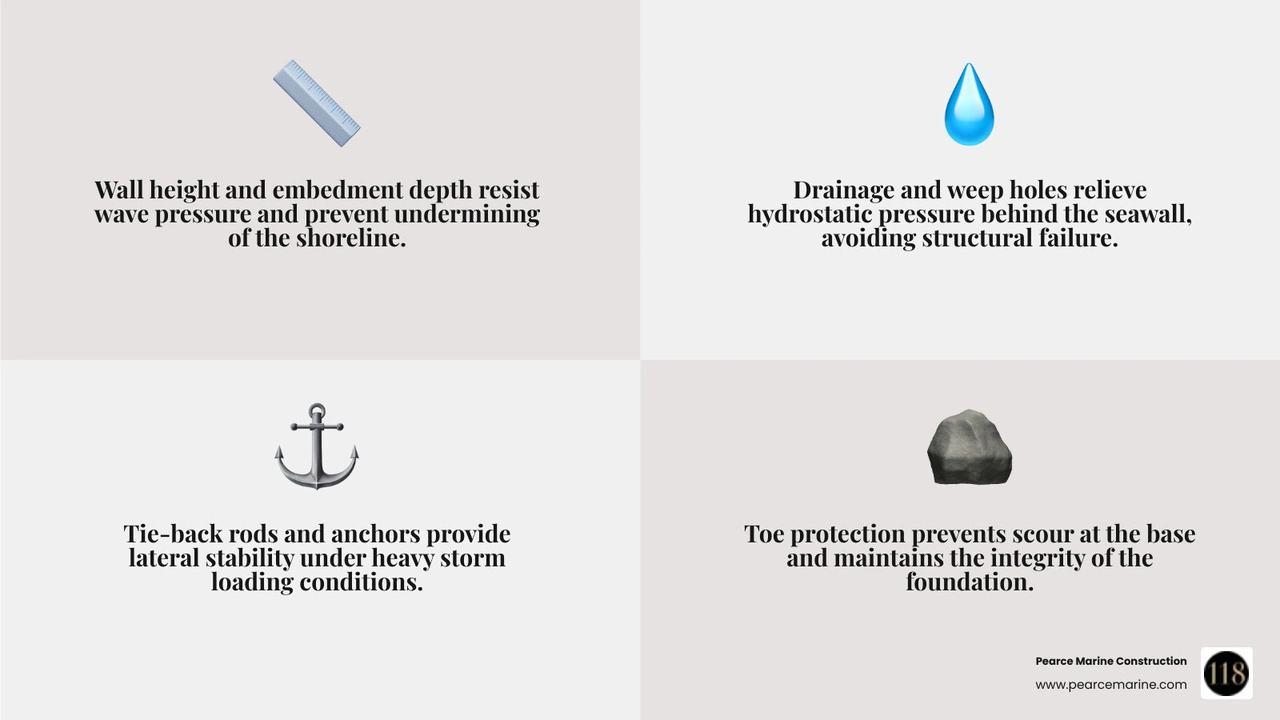
| Wall height & embedment depth | Resists wave pressure and prevents undermining |
| Slope or face angle | Determines wave reflection or energy dissipation |
| Foundation type | Accounts for soil conditions below the waterline |
| Drainage / weep holes | Relieves hydrostatic pressure behind the wall |
| Tie-back rods & anchors | Provides lateral stability under storm loading |
| Materials specified | Concrete, vinyl sheet pile, rubble, or composite |
| Toe protection | Prevents scour at the base of the structure |
If you own shoreline property in Nassau or Suffolk County, your seawall is the first — and often only — line of defense against storm surge and erosion. Getting the design right before construction is not optional.
According to industry data, 90% of experts recommend completing a detailed sea wall diagram before any construction begins. That's because a poorly designed seawall doesn't just fail — it can accelerate erosion of the very shoreline it was meant to protect.
At Pearce Marine Construction, we see this on Long Island regularly. Storm waves, tidal fluctuation, and poor soil conditions all demand a site-specific design. A diagram makes that possible.
Similar topics to sea wall diagram:
Engineering Coastal Protection: The Role of a Sea Wall Diagram
Marine engineering is a battle against relentless physical forces. When waves strike a shoreline, they carry immense kinetic energy. A professional sea wall diagram serves as the blueprint for redirecting or absorbing this energy safely, protecting valuable coastal properties in areas like Babylon, Wantagh, and Merrick.
Without a detailed blueprint, builders are essentially guessing how a structure will respond to wave reflection and hydrostatic pressure. Wave reflection occurs when a incoming wave hits a flat, rigid surface and bounces back, which can pull sediment away from the base of the wall. Hydrostatic pressure builds up when water becomes trapped in the soil behind the wall during a high tide or heavy storm, pushing outward against the structure.
To prevent catastrophic structural failures, engineers rely on standardized design methodologies. For example, the Seawalls, Bulkheads and Quaywalls Design Manual 25.4 provides rigorous mathematical guidelines for calculating active soil pressures and wave forces. Translating these complex calculations into a visual schematic ensures that the final build is structurally sound. Property owners can learn more about how these engineering choices influence overall project budgets in our comprehensive Ultimate Concrete Seawall Cost Guide.
Essential Elements of a Professional Sea Wall Diagram
A complete sea wall diagram must detail several critical interconnected components:
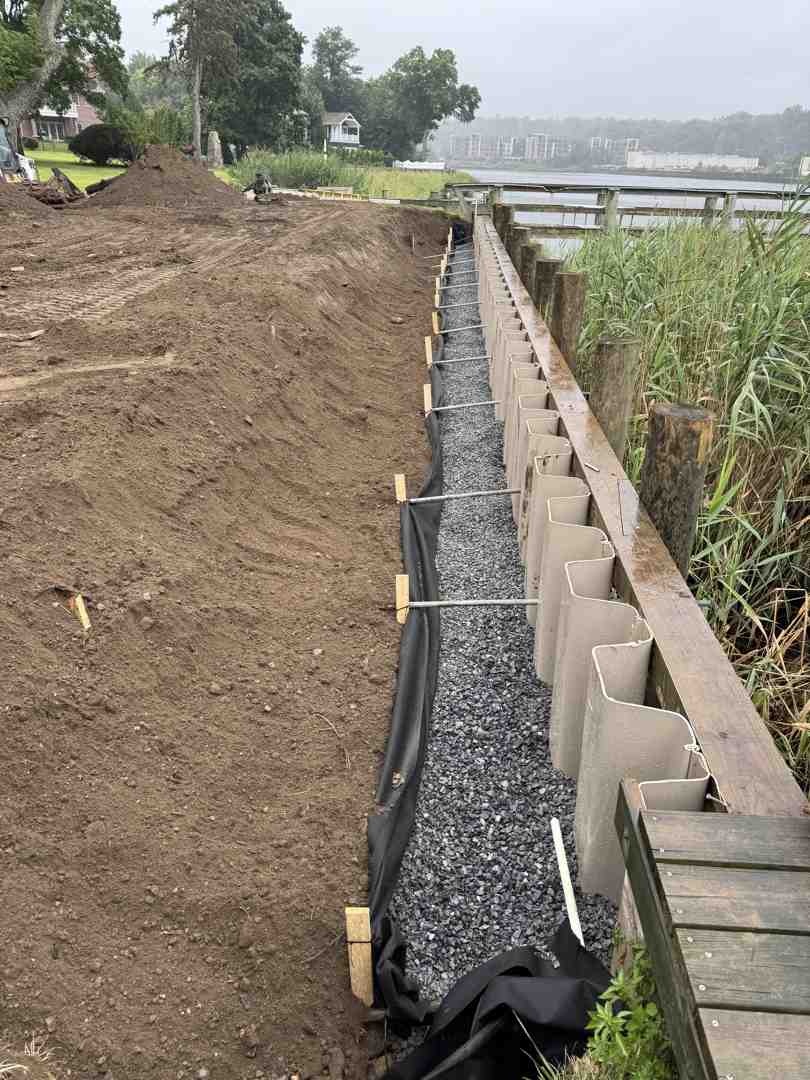
- Wall Height & Embedment Depth: The height must be sufficient to prevent overtopping from storm surges, while the embedment depth (how deep the sheets are driven into the harbor or bay floor) prevents the wall from kicking out at the bottom.
- Concrete Cap: A heavy concrete cap ties the top of the piling sheets together, distributing lateral loads evenly across the entire structure.
- Tie-Back Rods & Earth Anchors: These steel rods extend horizontally from the wall back into the solid ground behind it, securing to heavy anchors (or "deadmen") to keep the wall from tipping forward.
- Drainage Systems & Weep Holes: Crucial for relieving water pressure behind the wall. These must include specialized filter fabric or cartridges to let water escape without washing away the backfill soil.
For a deeper dive into how our professional marine construction crews physically assemble these elements on-site, review our guide on how to build a seawall.
Structural Types: Vertical, Curved, and Rubble Mound Designs
The shape of the wall determines how it interacts with the ocean. The three primary styles featured in modern marine drafting include:
- Vertical Seawalls: Often constructed using concrete or heavy-duty vinyl sheet piling. These are highly space-efficient but reflect wave energy directly downward, which can cause severe toe erosion if not properly protected. Some advanced variations include marsh-fronted vertical seawall configurations, which combine natural wetland vegetation with a hard vertical barrier to help mitigate wave impact.
- Curved Face Walls: These feature a concave, re-curved profile designed to lift incoming waves and fling them back out to sea. This shape dramatically reduces wave overtopping and prevents the wall from being undermined by direct downward wave energy.
- Rubble Mound Designs: Built using layers of heavy armor stone over a core of smaller rock. Rather than reflecting waves, their rough, sloped surfaces absorb and dissipate wave energy.
To determine which configuration matches your specific shoreline conditions, explore our breakdown of the different Types of Seawalls.
Why Marine Contractors Require a Sea Wall Diagram Before Construction
As noted in industry surveys, 90% of marine construction experts insist on utilizing a detailed design diagram before breaking ground. For high-stakes projects in exposed areas like Southampton, West Islip, and West Hampton, attempting a build without a diagram is a recipe for premature structural failure.
An accurate diagram allows the engineering team to customize the wall's specifications to the exact soil bearing capacities and wave heights of your property. It also ensures precise material takeoffs, preventing costly mid-project delays and unexpected change orders. To understand the complete design-to-build lifecycle, refer to our Seawall Construction Ultimate Guide.
Hard Engineering Comparisons and Long-Term Performance
When planning shoreline protection on Long Island, property owners must weigh seawalls against other hard engineering strategies. Each method has distinct cost profiles, lifespans, and environmental footprints.
| Strategy | Approximate Cost | Primary Advantage | Primary Disadvantage |
|---|---|---|---|
| Concrete/Vinyl Seawall | £2,000 (~$2,500+) per meter | Maximum protection, long lifespan | Direct wave reflection, higher upfront cost |
| Rock Armour (Riprap) | Moderate | Dissipates wave energy | Requires significant shoreline footprint |
| Gabions (Rock Cages) | £100 (~$125) per meter | Cheap, highly permeable | Shorter lifespan, wire cages can rust and break |
| Groynes | High | Traps sediment to build beach | Starves downdrift beaches of sand |
While options like rock-filled gabions are cheaper upfront, they lack the structural resilience needed to withstand heavy North Atlantic winter storms. Additionally, hard structures alter local sediment flow. If a seawall is built on an active beach, it can block the natural replenishment of sand, leading to localized beach scour. Over time, the beach in front of a vertical wall may narrow. For a detailed comparison of these protective barriers, read our Bulkhead vs Seawall Guide 2025.
Material Selection and Foundation Engineering for Long Island Shorelines
Selecting the right materials is critical for ensuring a multi-decade lifespan in the harsh brackish waters of Suffolk and Nassau Counties.
- Concrete: We specify a minimum of 4000 PSI concrete for caps and gravity walls to resist salt scaling, freeze-thaw cycles, and impact from floating debris.
- Vinyl Sheet Piling: Rigid vinyl sheet piles have become an industry standard for residential canals in areas like Massapequa, Bellmore, and West Islip. They do not rot, rust, or corrode.
- Composite Materials: Advanced fiber-reinforced polymers offer extreme strength-to-weight ratios for high-energy coastal environments.
In areas with poor, silty soil conditions, a standard gravity wall will sink or tilt. In these environments, we design pile-supported foundations that transfer the weight of the structure deep into solid load-bearing strata. To explore the pros and cons of each material option, check out our Seawall Construction Materials Guide.
Maintenance, Scour Prevention, and Structural Repair Protocols
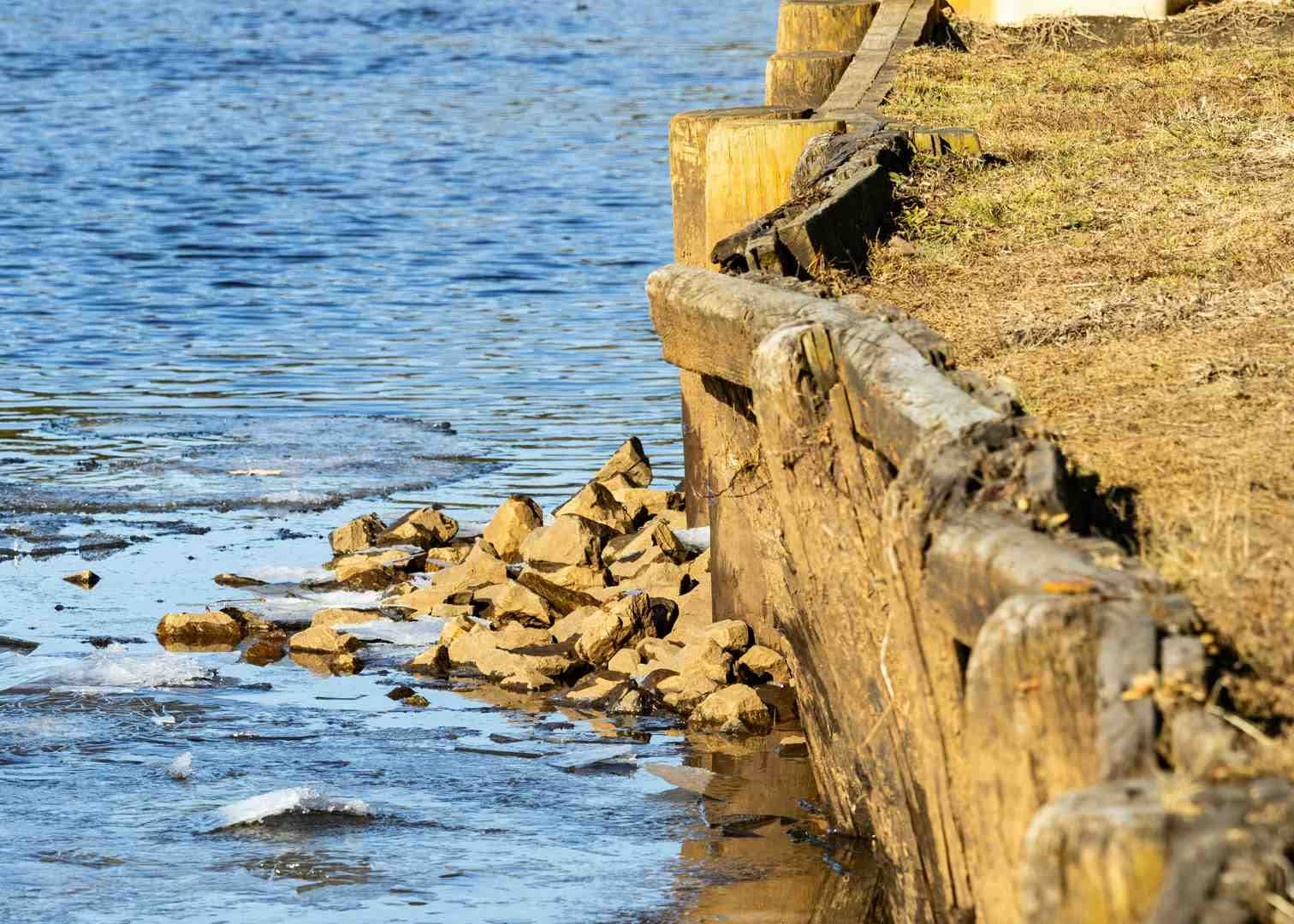
A seawall is a dynamic system that requires ongoing monitoring. Over time, waves can scour the seabed at the toe of the wall. To prevent this undermining, engineers design toe protection, which typically consists of heavy rock riprap placed along the base of the wall to break up downward wave energy.
Another critical threat is tidal lag. As the tide falls rapidly in South Oyster Bay or the Great South Bay, water trapped in the soil behind the wall remains high, exerting massive hydrostatic pressure. If your weep-hole filtration system is clogged, this pressure can cause the wall to bow or crack.
According to the technical specifications for seawall design forces, regular inspections should check for:
- Clogged drainage weep holes
- Loss of backfill soil behind the wall
- Cracks in the concrete cap
- Rusting or loosening of tie-back nuts
If you notice signs of settling, cracking, or soil loss on your waterfront property, consult our Seawall Repair Services Ultimate Guide to learn about modern polyurethane injection and structural reinforcement techniques.
With generations of marine construction expertise, the team at Pearce Marine Construction delivers meticulously engineered shoreline solutions tailored specifically to the unique tidal environments of Long Island. Whether you need a brand-new vinyl bulkhead in Brightwaters or a heavy-duty concrete seawall in Southampton, we ensure your project is designed and built to stand the test of time.
Ready to secure your shoreline? Contact Pearce Marine for Seawalls and Bulkheads to schedule a professional site assessment and begin drafting your custom sea wall diagram today.



Bring Your Vision to Life
Whether you're planning a custom dock, seawall, or boat lift, our experienced team is ready to deliver high-quality marine construction tailored to your needs. Pearce Marine Construction brings craftsmanship, precision, and a deep understanding of Florida’s waterways to every project. Let us help you create a durable, beautiful solution that stands the test of time. Get in touch now for a personalized estimate!