
Marine Bulkhead Repair 101: Saving Your Waterfront Property

When Your Shoreline Starts to Fail: What You Need to Know About Bulkhead Repair
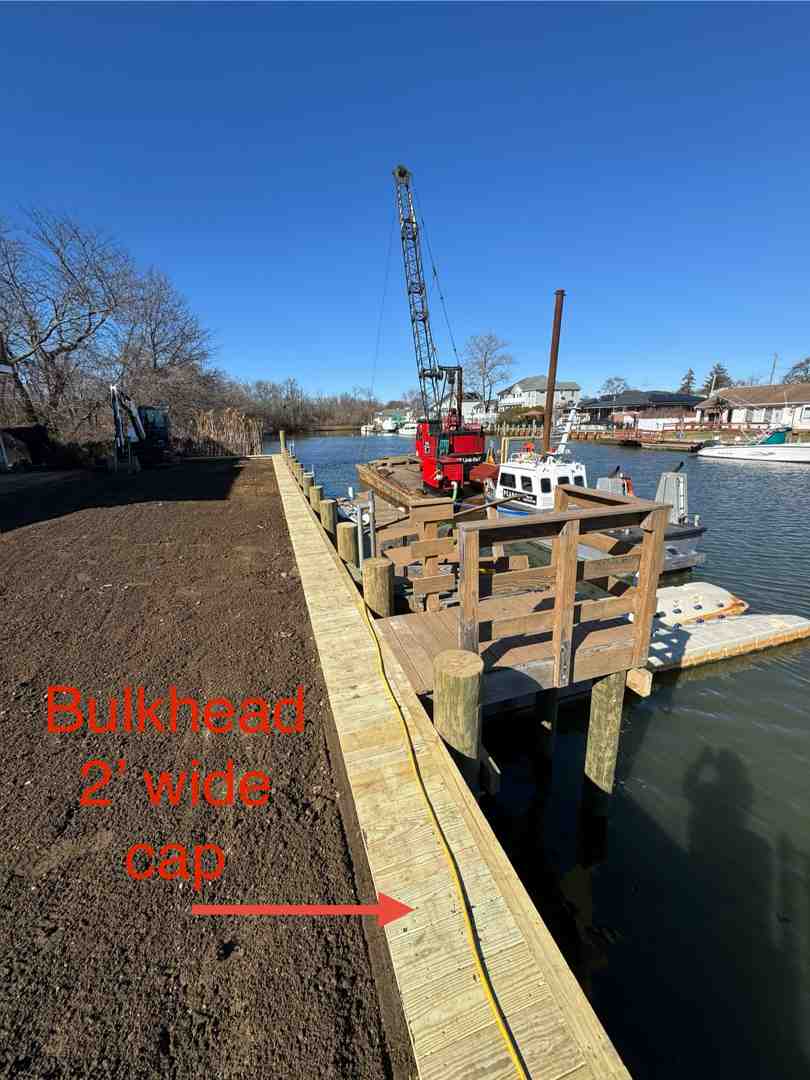
Bulkhead repair is the process of restoring a damaged waterfront retaining wall to stop soil loss, prevent flooding, and protect your property from further erosion.
Quick answers for Long Island property owners:
- Signs you need repair: sinkholes, leaning or bowing walls, cracks, rusted steel, rotting timber, or water seeping behind the wall
- Cost: typically $150–$400 per linear foot (a 100-ft repair runs $10,000–$25,000)
- Timeline: most repairs take 1–3 days
- Repair vs. replacement: repairing a bulkhead costs roughly 70–80% less than full replacement
- Who to call: a licensed marine contractor with experience in Nassau and Suffolk County waterfront structures
Your bulkhead is working hard every single day. It holds back soil, absorbs wave energy, and keeps your yard — and your foundation — from sliding into the water.
But bulkheads don't last forever. On Long Island, constant exposure to tidal cycles, storm surge, saltwater, and freeze-thaw conditions puts enormous stress on these structures year after year. When a wall starts to fail, the damage can escalate fast. A small void behind a panel can grow into a three-foot-wide sinkhole. A hairline crack can become a structural failure.
The good news? Most bulkheads don't need to be torn out and rebuilt from scratch. With the right assessment and the right repair technique, a damaged bulkhead can be restored to full structural integrity — often in a matter of days, and at a fraction of replacement cost.
Pearce Marine Construction provides the advanced engineering, specialized materials, and heavy equipment required to restore these vital barriers across Nassau and Suffolk Counties, ensuring long-term shoreline stabilization.
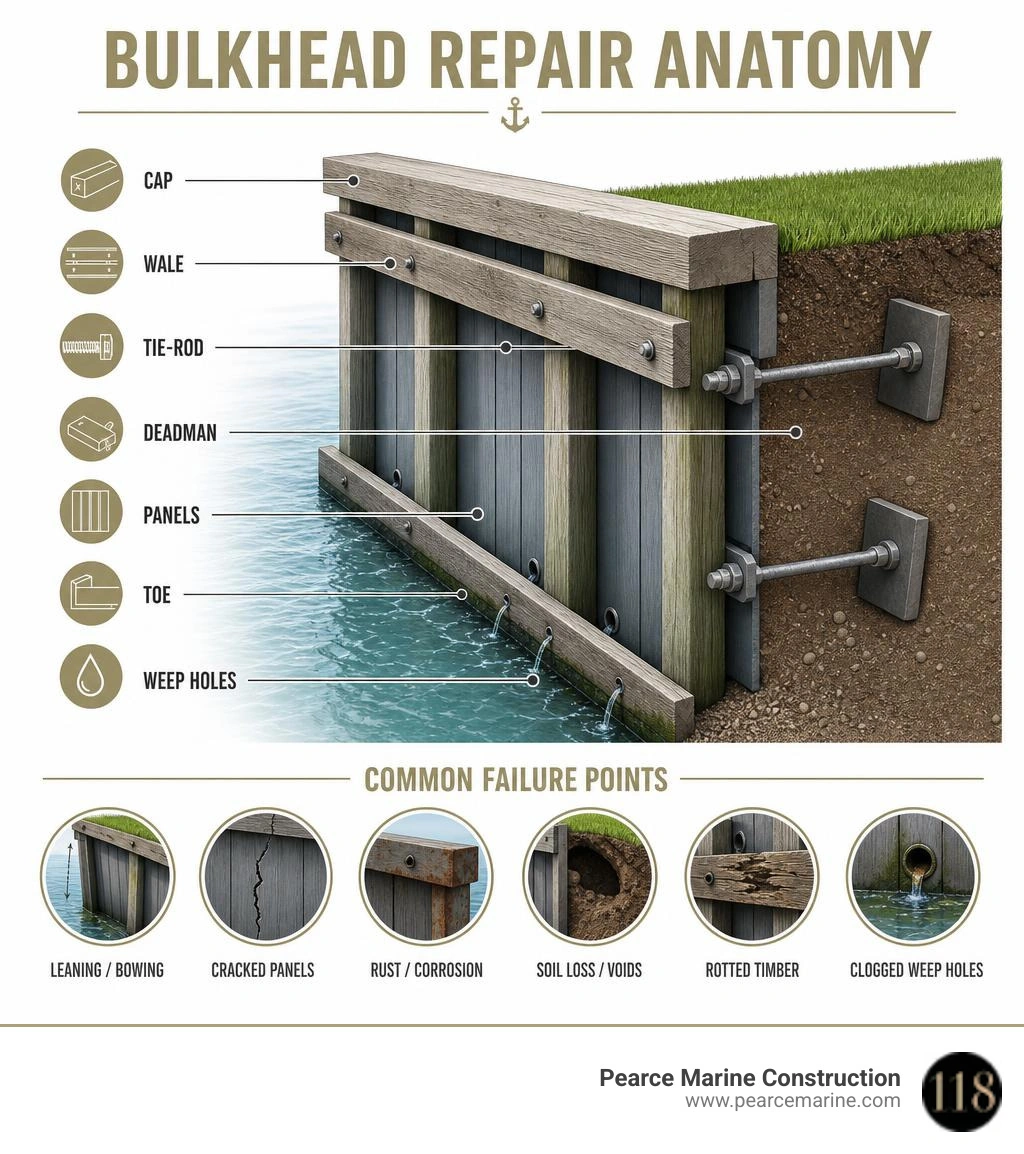
Simple bulkhead repair word guide:
The Science of Shoreline Erosion and Bulkhead Repair

Protecting a coastal property on Long Island requires a deep understanding of marine engineering and coastal geology. The shoreline is a dynamic environment where soil, water, and structural barriers constantly interact. Whether your property sits along the Great South Bay in West Islip or faces the open waters of Southampton, the primary goal of any bulkhead is to retain soil and resist the lateral pressure of the earth behind it.
When we look at Bulkhead Repair Long Island, we must address how water moves through the ground. Soil naturally holds water, and when tides rise and fall, that water seeks a path of escape. If a bulkhead is poorly designed or has degraded over time, the water moving behind the wall will carry fine sediment with it. This process, known as piping, slowly hollows out your property from the inside.
To resolve these issues permanently, professional Bulkhead Repair Suffolk County must focus on restoring the structural seal of the wall while simultaneously managing the water pressure that caused the damage in the first place.
Red Flags: When Do You Need Bulkhead Repair?
Early detection is the key to avoiding catastrophic failures that can cost tens of thousands of dollars. During our professional structural assessments, Pearce Marine Construction evaluates several critical indicators of bulkhead failure:
- Sinkholes and Soil Loss: If you notice sudden depressions or sinkholes forming in your lawn or driveway near the shoreline, soil is actively washing out. These voids can start small but quickly expand to three feet wide and four feet deep.
- Leaning or Bowing Walls: If your bulkhead panels are leaning more than 10% from vertical, the structural tieback system has likely failed or weakened.
- Spalling Concrete and Rusted Steel: For concrete caps and steel sheet piles, look for cracking, flaking concrete, and deep rust scaling, especially in the splash zone between high and low tide.
- Failing Joints and Water Seepage: If you see sediment mounds accumulating at the base of your bulkhead at low tide, soil is leaking through separated joints.
Ignoring these warning signs leads to rapid structural decay. If you spot any of these red flags, scheduling a professional Bulkhead Washout Repair or a targeted Bulkhead Leak Repair can stabilize your shoreline before the damage becomes irreversible.
Primary Causes of Waterfront Barrier Failure
Bulkheads fail due to a combination of environmental forces and structural wear. Understanding these causes helps us design repairs that stand the test of time:
- Hydrostatic Pressure: This is the primary driver of bulkhead failure. When heavy rains or high tides saturate the soil behind the wall, the water weight creates immense lateral pressure. If the drainage system is clogged, this pressure pushes the panels outward, causing bowing or bowing cap failure.
- Freeze-Thaw Cycles: In Long Island winters, water trapped in concrete cracks or wet soil behind the wall expands as it freezes. This expansion causes concrete spalling and forces joints to separate.
- Wave Action and Storm Surge: High-energy waves during storms scour the "toe" (the base) of the bulkhead, washing away the protective underwater berm and destabilizing the wall's foundation.
- Marine Borers and Corrosion: In older timber bulkheads, tiny marine organisms burrow into the wood, weakening its structural capacity. For steel structures, saltwater exposure accelerates oxidation, eating away the metal's thickness.
By addressing these forces directly, we restore the Bulkhead Structural Integrity of your barrier, ensuring it remains resilient against future environmental stress. For more on how these systems operate, check out our Bulkhead Seawall Repair Guide.
Modern Engineering Techniques for Bulkhead Repair
Gone are the days when the only solution to a leaking bulkhead was costly, disruptive excavation. Today, we utilize cutting-edge, non-invasive technologies to restore waterfront barriers quickly and effectively.
One of the most powerful modern tools is polyurethane foam injection. Using NSF/ANSI 61 certified structural resins, we inject liquid polyurethane through specialized probes directly into the voids behind the wall. Within minutes, the foam reacts, expanding to fill every hidden pocket, permeating the soil, and sealing leaking joints. This material achieves 90% of its ultimate strength in just 15 minutes, creating a watertight, rigid mass that prevents future erosion.
For more extensive structural failures, we apply curtain grouting to create an impermeable barrier behind the wall, and tieback reinforcement to re-anchor leaning bulkheads using heavy-duty helical anchors.
In commercial or highly specialized environments, we look to advanced methods like those used by the federal government. For instance, the Army Corps repairs canal bulkhead with innovative project utilizing moveable cofferdams to create dry work zones on submerged steel sheet piles, allowing for high-precision welding and underwater-curing marine coatings. At Pearce Marine Construction, we bring this same level of engineering precision to residential and commercial properties throughout Long Island, as outlined in our Bulkhead Contractors Long Island Complete Guide.
Structural Restoration vs. Full Replacement
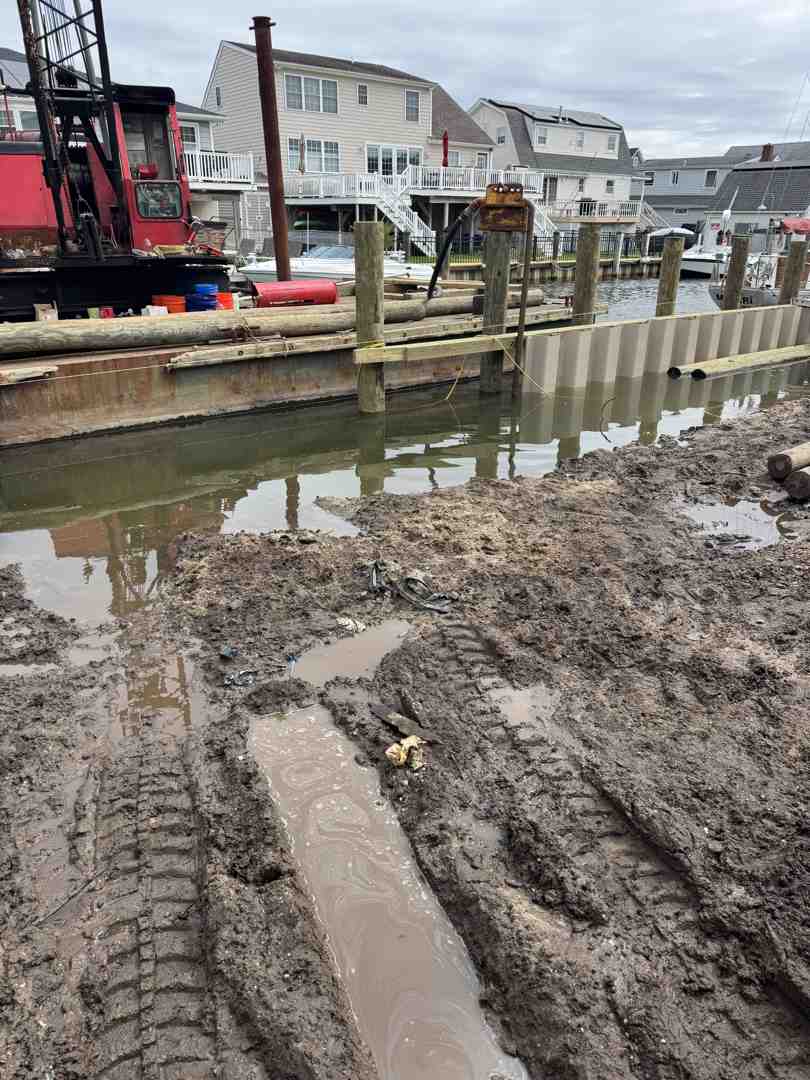
When faced with a deteriorating bulkhead, one of the most critical decisions a property owner must make is whether to repair the existing structure or opt for a complete replacement. A professional engineering assessment is essential here.
While some contractors might immediately push for a full replacement, we prioritize structural longevity and cost-effectiveness. If the core foundation and tiebacks are sound, targeted restoration can add decades of life to your wall. However, if the wall has suffered widespread structural collapse, search for a high-quality Bulkhead Replacement Near Me to build a new, code-compliant barrier.
Cost and Timeline Analysis: Repair vs. Replacement
The financial and operational differences between repairing and replacing a bulkhead are substantial. On average, repairing a failing bulkhead costs 70% to 80% less than a complete replacement.
While a full replacement can easily cost $60,000 or more and take weeks of heavy excavation, professional repairs typically range from $150 to $400 per linear foot. This means a standard 100-foot bulkhead can be fully stabilized and sealed for $10,000 to $25,000.
Furthermore, most repairs are completed in one to three days using light equipment, minimizing disruption to your property and the surrounding marine habitat. We use the 75% rule: if the cost of reliable repairs approaches 75% of the cost of a brand-new wall, replacement is the wiser investment. Otherwise, structural repair is the superior choice.
To help budget for your shoreline project, refer to our guide on Bulkhead Installation Cost.
| Metric | Professional Bulkhead Repair | Full Bulkhead Replacement |
|---|---|---|
| Average Cost | $150 – $400 per linear foot | $1,000 – $2,000+ per linear foot |
| Project Timeline | 1 to 3 days | 2 to 4+ weeks |
| Disruption Level | Minimal (light equipment, no excavation) | High (heavy machinery, lawn excavation) |
| Cost Savings | 70% to 80% cheaper than replacement | None (large capital investment) |
| Lifespan Added | 15 to 25+ years (with proper maintenance) | 30 to 50+ years |
Material Performance in Marine Environments
The longevity of your bulkhead depends heavily on the materials used in its construction and repair. Different materials perform uniquely in Long Island's brackish and saltwater environments:
- Vinyl Sheet Piling: The modern standard for residential bulkheads. Vinyl is completely impervious to marine borers, does not rust, and carries manufacturer warranties of 50 years or more.
- PZ40 Steel Sheet Piles: Ideal for heavy-duty commercial ports or high-energy shorelines. Steel offers unmatched strength but requires specialized coatings and sacrificial anodes to prevent saltwater corrosion.
- Pressure-Treated Timber: A classic, natural option. While cost-effective, timber is vulnerable to marine borers and rot over time, requiring routine inspections.
- Precast Concrete: Excellent for heavy wave defense, though concrete must be properly formulated to resist the spalling caused by winter freeze-thaw cycles.
Whether you are looking at specialized bulkhead construction in Merrick, NY or planning a vinyl upgrade, selecting high-performance, marine-grade materials is vital. Learn more about material selection in our guide on Bulkhead Construction Long Island NY.
Drainage Solutions and Hydrostatic Pressure Management
The best bulkhead repair is one that addresses the root cause of the failure: water pressure. To prevent future washouts, we design and install robust drainage systems behind the restored wall.
This involves installing a French drain system (typically a 2-foot by 2-foot gravel trench wrapped in geotextile filter fabric) directly behind the bulkhead cap. This drain collects groundwater and channels it safely out through clear, clean weep holes drilled just above the low-tide line. The filter fabric allows water to escape while keeping the soil firmly in place, preventing the erosion that causes sinkholes.
Additionally, placing a riprap toe protection system (a barrier of heavy stones) at the base of the wall absorbs wave energy and prevents underwater scour.
At Pearce Marine Construction, we specialize in delivering these advanced drainage and structural solutions across Long Island. Whether you need help with a Bulkhead Cap Repair Guide or require targeted Massapequa Bulkhead Repair Services in areas like Southampton, West Islip, and Westhampton, our team of generational marine experts is here to safeguard your property.
We focus on meticulous craftsmanship and cost-effective engineering to extend your bulkhead's life, ensuring you get the most value out of your existing structure without unnecessary, disruptive replacements.
Ready to secure your shoreline and protect your waterfront investment? Contact us today to schedule a professional structural assessment and explore our Professional Bulkhead Repair Services.

Bring Your Vision to Life
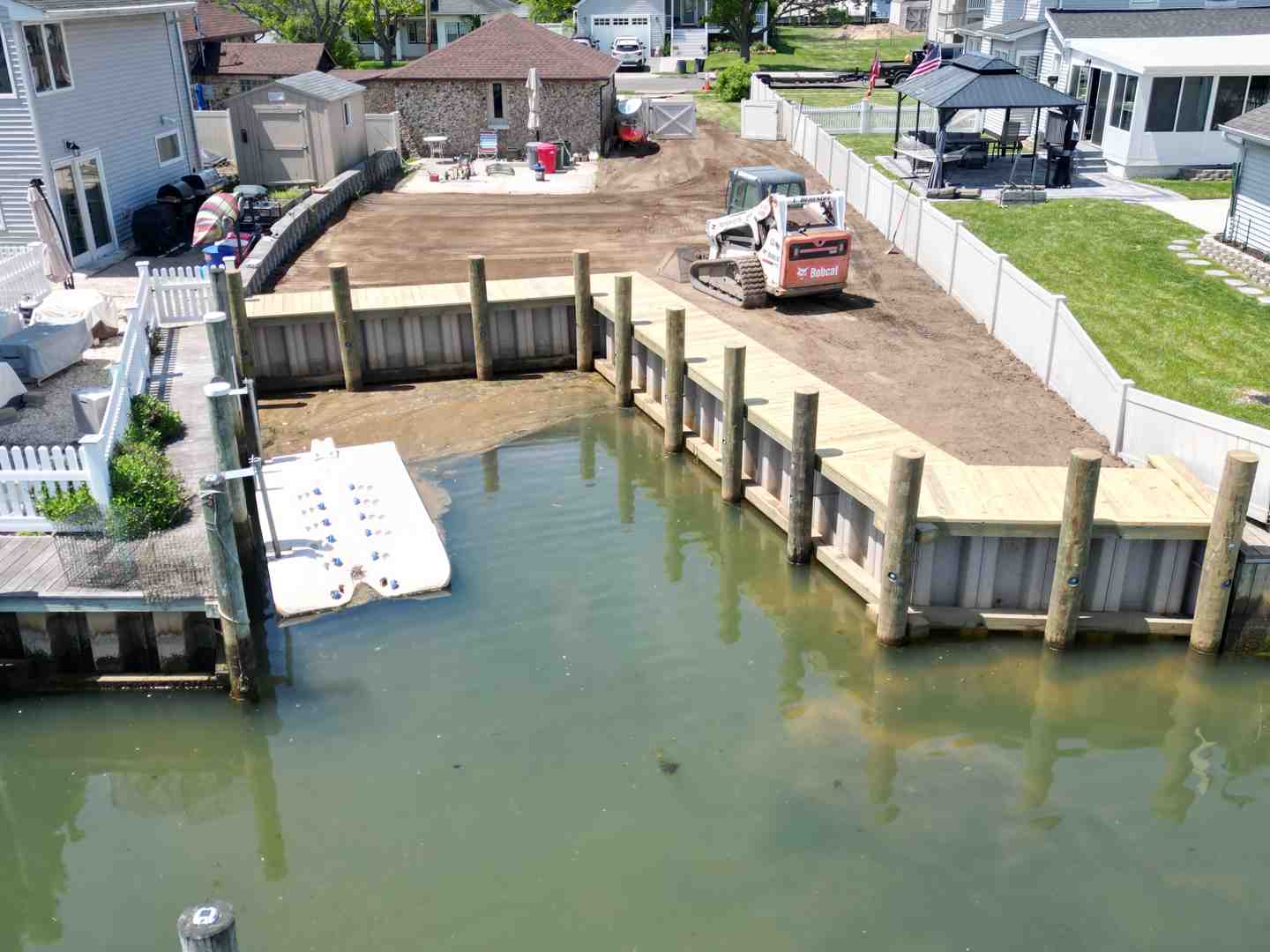
Whether you're planning a custom dock, seawall, or boat lift, our experienced team is ready to deliver high-quality marine construction tailored to your needs. Pearce Marine Construction brings craftsmanship, precision, and a deep understanding of Florida’s waterways to every project. Let us help you create a durable, beautiful solution that stands the test of time. Get in touch now for a personalized estimate!