
Saving Your Slopes: A Guide to Foundation Retaining Wall Repair

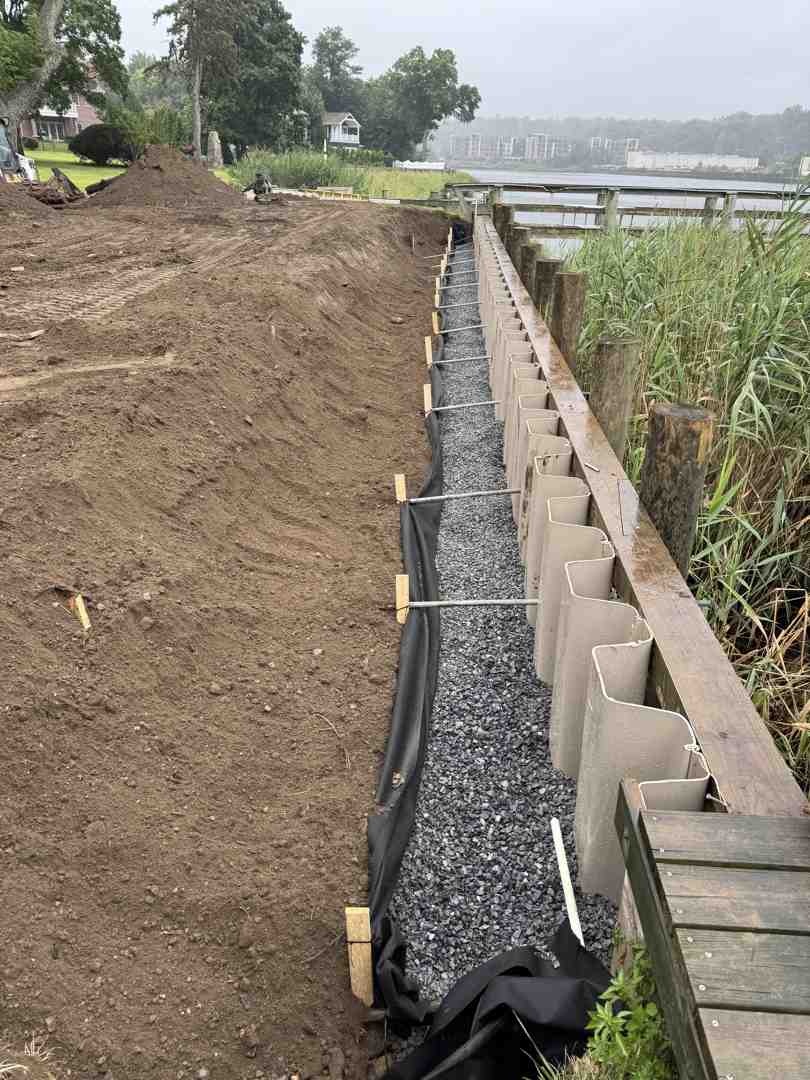
Why Waterfront Foundation Retaining Wall Repair is Crucial for Long Island Shorelines
Waterfront property owners in Nassau and Suffolk Counties know that foundation retaining wall repair is the key to protecting valuable coastal slopes from erosion and shifting soil. When a shoreline barrier begins to fail, your entire property is at risk.
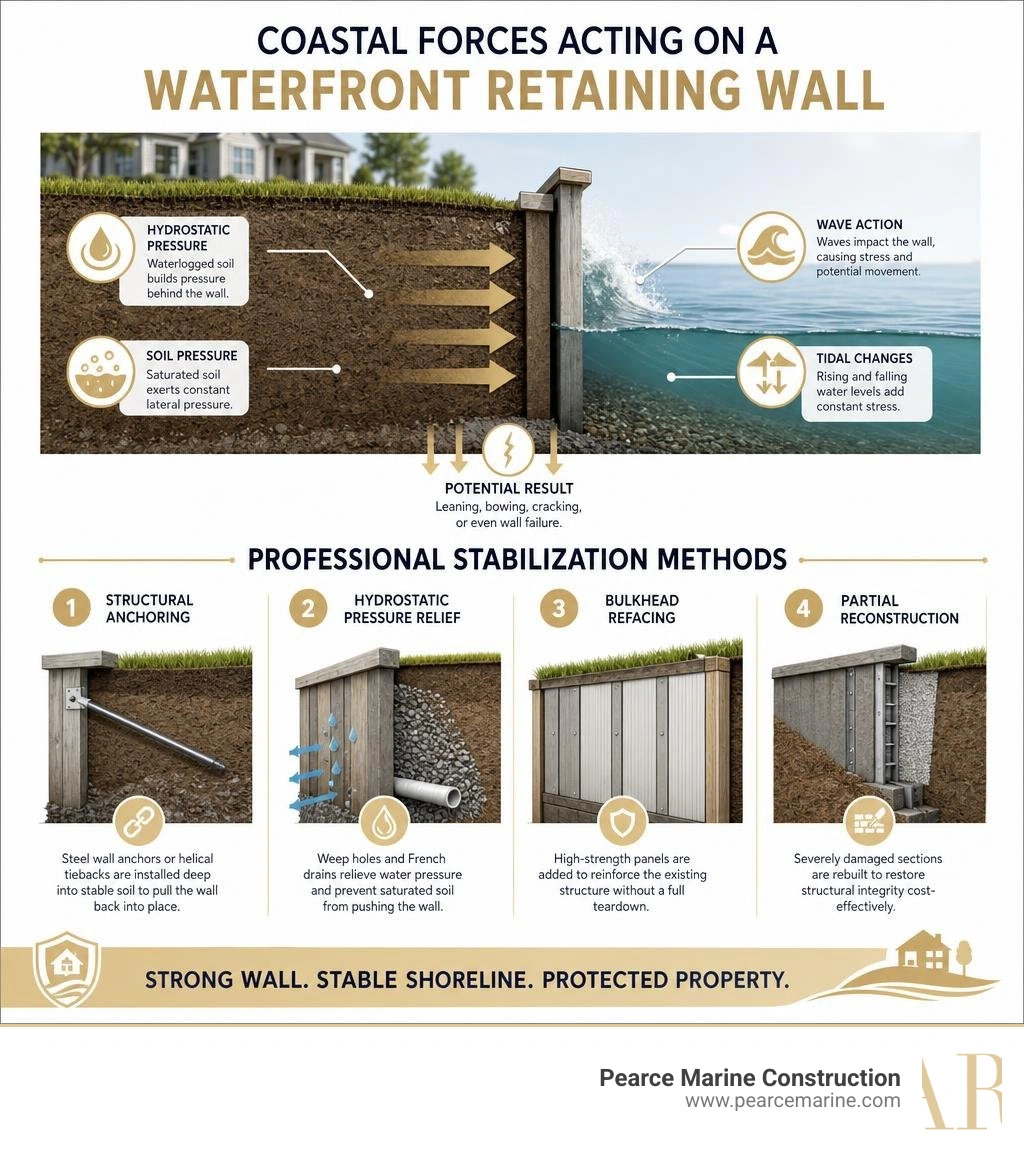
Quick Guide: How Waterfront Retaining Walls Are Repaired
If your coastal wall is leaning, bowing, or cracking, professional marine contractors use specialized engineering methods to restore its strength:
- Structural Anchoring: Installing heavy-duty steel wall anchors or helical tiebacks deep into stable soil to pull the wall back into place.
- Hydrostatic Pressure Relief: Retrofitting weep holes and French drains to prevent heavy, waterlogged soil from pushing against the structure.
- Bulkhead Refacing: Adding high-strength vinyl, timber, or steel panels to reinforce the existing structure without a full teardown.
- Partial Reconstruction: Rebuilding severely compromised sections to restore structural integrity at a fraction of the cost of replacement.
In waterfront communities like Southampton, West Islip, and West Hampton, our coastlines face brutal tides, heavy storms, and constant wave action. Unlike inland walls, a marine retaining wall must withstand massive lateral pressure from saturated soil on one side and aggressive water on the other.
Ignoring early signs of damage like bowing panels, soil loss, or cracked concrete always leads to catastrophic failure. At Pearce Marine Construction, we specialize in heavy-duty shoreline stabilization. We provide custom-engineered repair solutions that outperform standard fixes. We focus on master-class craftsmanship and use only the most durable, marine-grade materials to ensure your property remains safe and stable.
Quick look at foundation retaining wall repair:
Engineering Solutions for Foundation Retaining Wall Repair
When we talk about repairing a shoreline structure, we aren't just slapping on some cosmetic concrete patch and calling it a day. Waterfront engineering requires a deep understanding of soil mechanics, tidal hydraulics, and lateral earth pressures.
To safely stabilize a failing slope, we must address the root cause of the movement. On Long Island's South Shore—from Massapequa and Wantagh to Babylon and Bayshore—coastal soils are highly dynamic. Heavy rains and high tides saturate the ground, creating immense hydrostatic pressure. If your wall lacks the structural integrity to resist these loads, it will bow, lean, or slide forward.

To correct these forces, we deploy heavy-duty structural engineering solutions. Depending on the soil profile and space constraints, we rely on two primary mechanical stabilization systems: wall anchors and helical tiebacks.
| Feature | Wall Anchor Systems | Helical Tieback Anchors |
|---|---|---|
| Primary Function | Pulls bowing or leaning walls back to plumb | Resists heavy lateral loads with deep-seated tension |
| Space Required | Requires at least 10 feet of clear ground behind the wall | Can be installed in tight spaces with minimal clearance |
| Installation Method | Driven rod connected to an earth anchor plate | Screwed deep into load-bearing soil at a battered angle |
| Relative Cost | Generally the more economical solution | Higher cost due to advanced equipment and materials |
| Best Used For | Moderate bowing in open residential yards | Severe deflection, rocky soils, or tight property lines |
These systems work beautifully on waterfront retaining walls to restore structural capacity. By transferring the lateral load of the soil deep into stable ground, we stop structural movement in its tracks. To understand the best approach for your property, refer to our comprehensive retaining wall construction guide.
Warning Signs of a Failing Shoreline Retaining Wall
Waterfront retaining walls rarely collapse without warning. They leave clues that structural failure is imminent. If you own a waterfront residential or commercial property in Lloyd Harbor, Huntington, or Cold Spring Harbor, keep a close eye out for these warning signs:
- Bowing or Bulging Panels: When the center of a concrete, vinyl, or timber panel curves outward, it means the lateral pressure of the soil has exceeded the material's strength.
- Leaning Walls (Outward Deflection): If the top of the wall is tilting toward the water, the anchoring system has either slipped or failed completely.
- Soil Loss and Sinkholes: If you notice sudden gaps or depressions in the soil directly behind the wall, water is likely washing soil out through joints or cracks.
- Cracking Concrete: Horizontal cracks along concrete walls are a major red flag indicating severe structural bending stresses.
- Rotting Timber or Rusted Steel: For older long island retaining walls built with wood or steel, material degradation weakens the structural system from the inside out.
Primary Causes of Coastal Retaining Wall Damage
Why do these structures fail in the first place? On Long Island, the culprits are almost always environmental.
First, saturated soil is incredibly heavy. When rainwater or high tides saturate the soil behind a wall, the weight of that wet earth increases exponentially. Without proper drainage, this hydrostatic pressure pushes the wall forward.
Second, tidal action and wave energy constantly assault the water-facing side of the wall. On the North Shore, wave energy from the Long Island Sound can be highly destructive, while South Shore canals experience constant wake and tidal fluctuations. This movement washes away the supporting soil at the toe of the wall, leading to undermining.
Finally, poor initial construction is a common issue. If a previous builder used an undersized footing, skipped steel rebar reinforcement, or failed to compact the backfill properly, the wall is on borrowed time. When budgeting for repairs, getting an accurate retaining wall cost estimate is the first step to correcting these legacy construction mistakes.
Wall Anchors and Helical Tiebacks for Foundation Retaining Wall Repair
To permanently fix a bowing or leaning wall, we must mechanically reinforce it. We rely on advanced structural stabilization methods to secure the structure without requiring a complete teardown.
Wall Anchors: This system is highly effective when there is ample space behind the wall. We drill a small hole (typically just 1 inch in diameter) through the failing wall panel. We then drive a steel rod through the wall to an earth anchor buried in solid ground at least 10 feet away. A wall plate is secured on the water-facing side, and the assembly is tensioned to pull the wall secure. These anchors are typically installed every 5 feet along a bowing wall to distribute the load evenly.
Helical Tiebacks: If your property line in Merrick or Bellmore is tight, or if we encounter rocky soil conditions, helical tieback anchors are the preferred solution. These anchors consist of corrosion-resistant steel shafts with helix-shaped plates. We screw them deep into the soil at an angle (known as a battered array) using hydraulic equipment until they reach stable, load-bearing soil.
Unlike temporary fixes or outdated wall restoration systems, these engineered anchors provide a permanent, lifetime solution to lateral soil movement.
Structural Stabilization vs. Complete Wall Replacement
Waterfront property owners often ask us: "Can I just repair my wall, or do I need to completely replace it?"
The answer depends on the level of material degradation. If your concrete wall is structurally sound but leaning due to soil pressure, mechanical stabilization using anchors is highly cost-effective. It restores the structural lifespan of the wall at a fraction of the cost of a full rebuild.
However, if a timber wall is completely rotted through, or if a concrete wall has crumbled beyond repair, stabilization is no longer a viable option. In these cases, partial reconstruction or a full rebuild is necessary. We can help you evaluate your options through our specialized seawalls and bulkheads services to determine the safest, most economical path forward.
Professional Marine Construction and Shoreline Protection
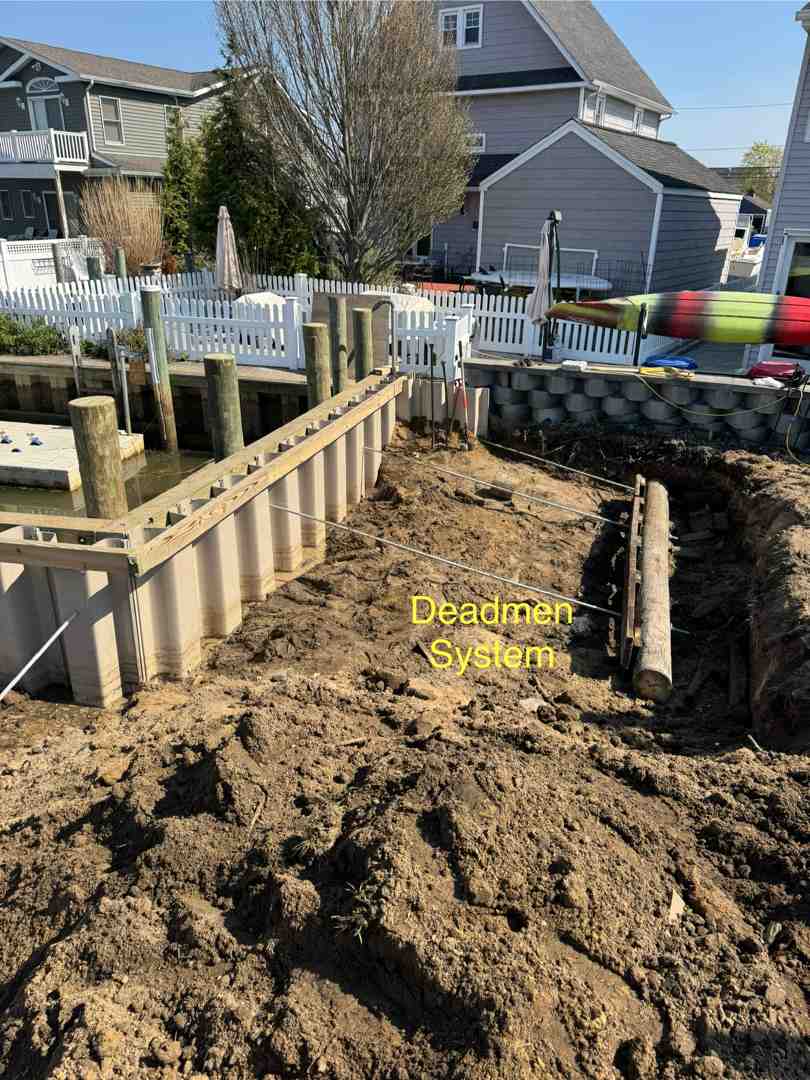
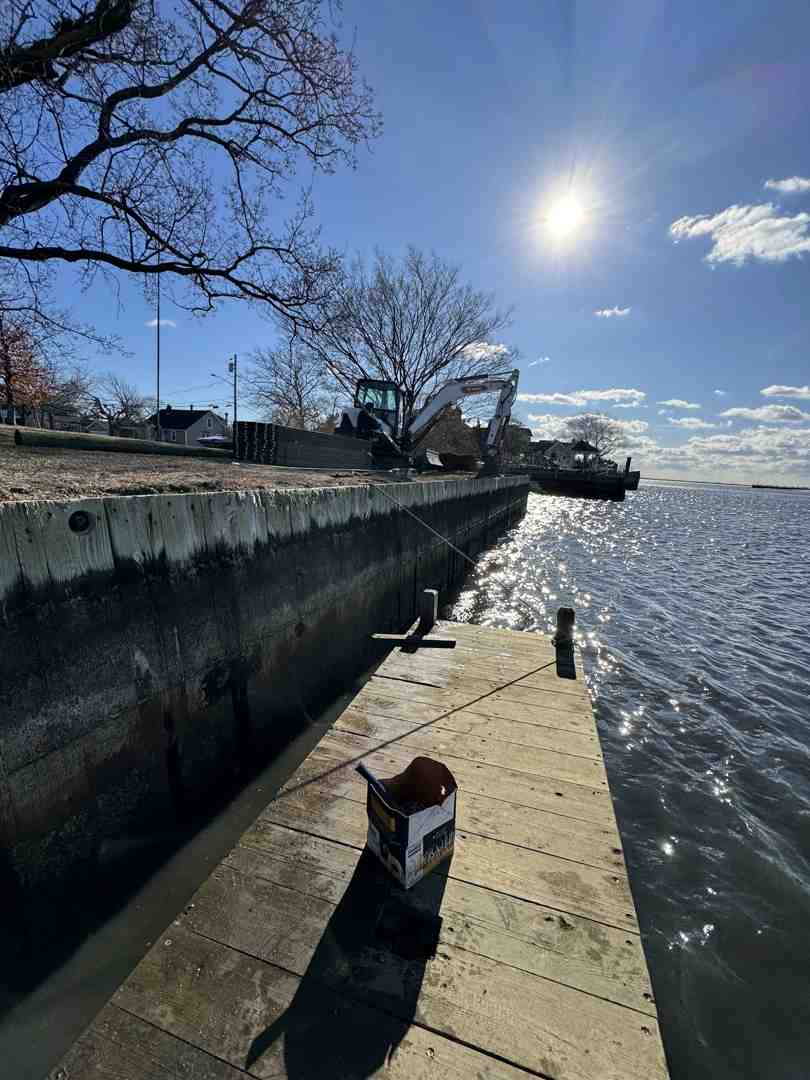
Shoreline protection is not a standard construction job. It requires specialized marine grade materials, heavy pile-driving equipment, and a deep understanding of local coastal dynamics. Whether you are protecting a residential canal home in Brightwaters or a commercial marina in West Islip, your retaining structures must be built to last.
Implementing Proper Drainage in Foundation Retaining Wall Repair
We cannot stress this enough: proper drainage is the single most important factor in retaining wall longevity. If water cannot escape from behind your wall, the hydrostatic pressure will eventually destroy even the strongest steel or concrete structure.
During the repair process, we retrofitted advanced drainage solutions to relieve this pressure:
- Weep Holes: We install heavy-duty drainage vents through the face of the wall at regular intervals to allow trapped water to escape safely.
- French Drains and Gravel Backfill: We place perforated drainage pipes wrapped in geotextile filter fabric behind the wall, backfilling the area with clean, coarse gravel to channel water away from the structure.
- Filter Fabrics: High-performance geotextiles prevent fine sand and soil from clogging the drainage paths, ensuring your waterfront retaining walls remain free-flowing and stable.
Selecting a Qualified Marine Contractor in Long Island
Because there is no official national certification specifically for retaining wall repair, choosing the right contractor is critical. You need a team that specializes in marine construction and soil stabilization—not just general landscaping or home remodeling.
Pearce Marine Construction is a proud, woman-owned marine construction company serving Nassau and Suffolk Counties. With generational expertise and meticulous craftsmanship, we know exactly what it takes to protect Long Island properties from the elements. We handle the entire process, from professional structural evaluation and custom engineering to the final heavy-duty marine installation.
If your shoreline retaining wall is showing signs of stress, do not wait for a catastrophic failure. Contact Pearce Marine Construction today to schedule a professional evaluation and secure your waterfront property for generations to come.



Bring Your Vision to Life
Whether you're planning a custom dock, seawall, or boat lift, our experienced team is ready to deliver high-quality marine construction tailored to your needs. Pearce Marine Construction brings craftsmanship, precision, and a deep understanding of Florida’s waterways to every project. Let us help you create a durable, beautiful solution that stands the test of time. Get in touch now for a personalized estimate!