
How to Estimate Helical Pile Installation Time the Right Way

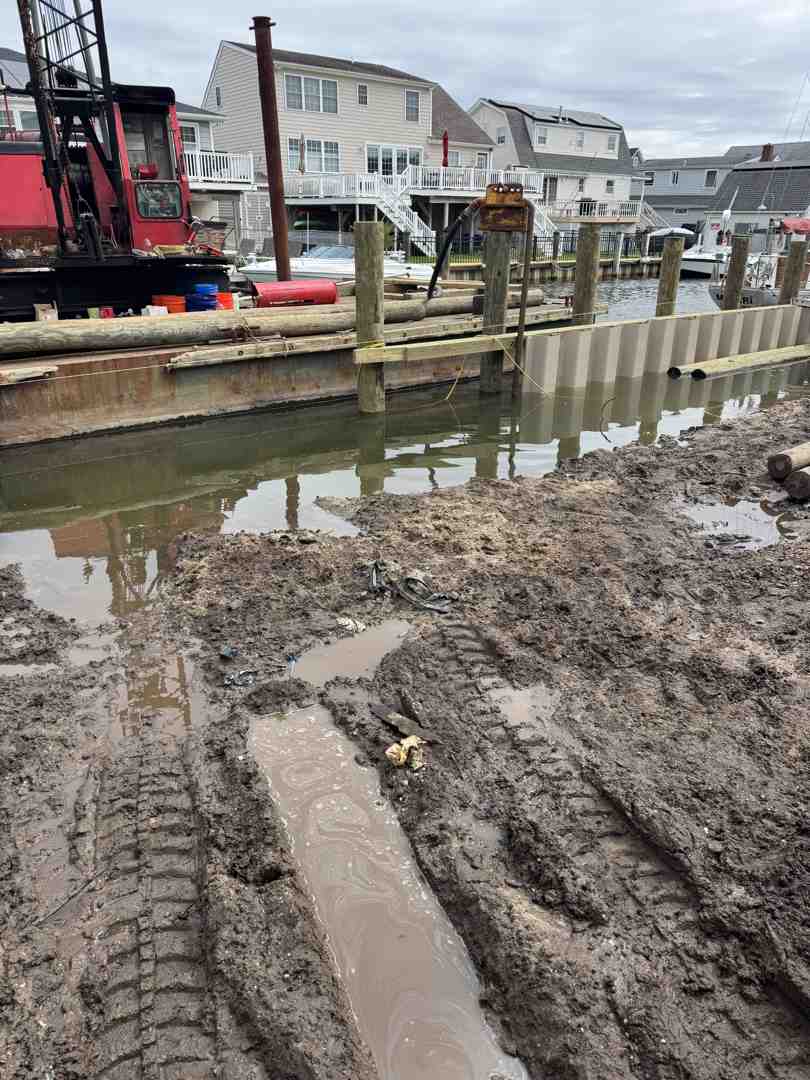
Estimate Helical Pile Installation Time Before Work Begins
For most marine construction projects, a single helical pile takes about 30 minutes to several hours to install. An 8-inch pile driven roughly 30 feet for a dock, pier, bulkhead, walkway, or shoreline anchoring system in accessible, consistent soil may take just 15 to 45 minutes. The full schedule depends on pile count, depth, soil resistance, shoreline access, tidal conditions, and the testing or documentation required.
Use this quick planning range when comparing contractor schedules:
| Project scope | Typical installation timeline |
|---|---|
| Small deck, dock, or shoreline structure | A few hours to 1 day |
| Residential dock, pier, or bulkhead repair | 1 to 3 days |
| New waterfront dock, pier, or deck construction | 2 to 5 days |
| Larger commercial or public marine work | Several days to a few weeks |
Helical piles can shorten the critical path because they need no excavation for large footings and no concrete cure period. When the specified installation torque is reached and verified, piles can often support approved structural loads for marine framing, caps, and anchoring systems immediately.
For waterfront properties in Nassau and Suffolk Counties, however, a reliable estimate starts with the site, not a generic per-pile number. Coastal soils, limited machine access, existing bulkheads or docks, groundwater, and tide windows can change production rates fast. Pearce Marine Construction plans these variables before mobilization so property owners in Southampton, West Islip, West Hampton, and surrounding Long Island shoreline communities can make informed decisions about timing, access, and the next phase of marine construction.
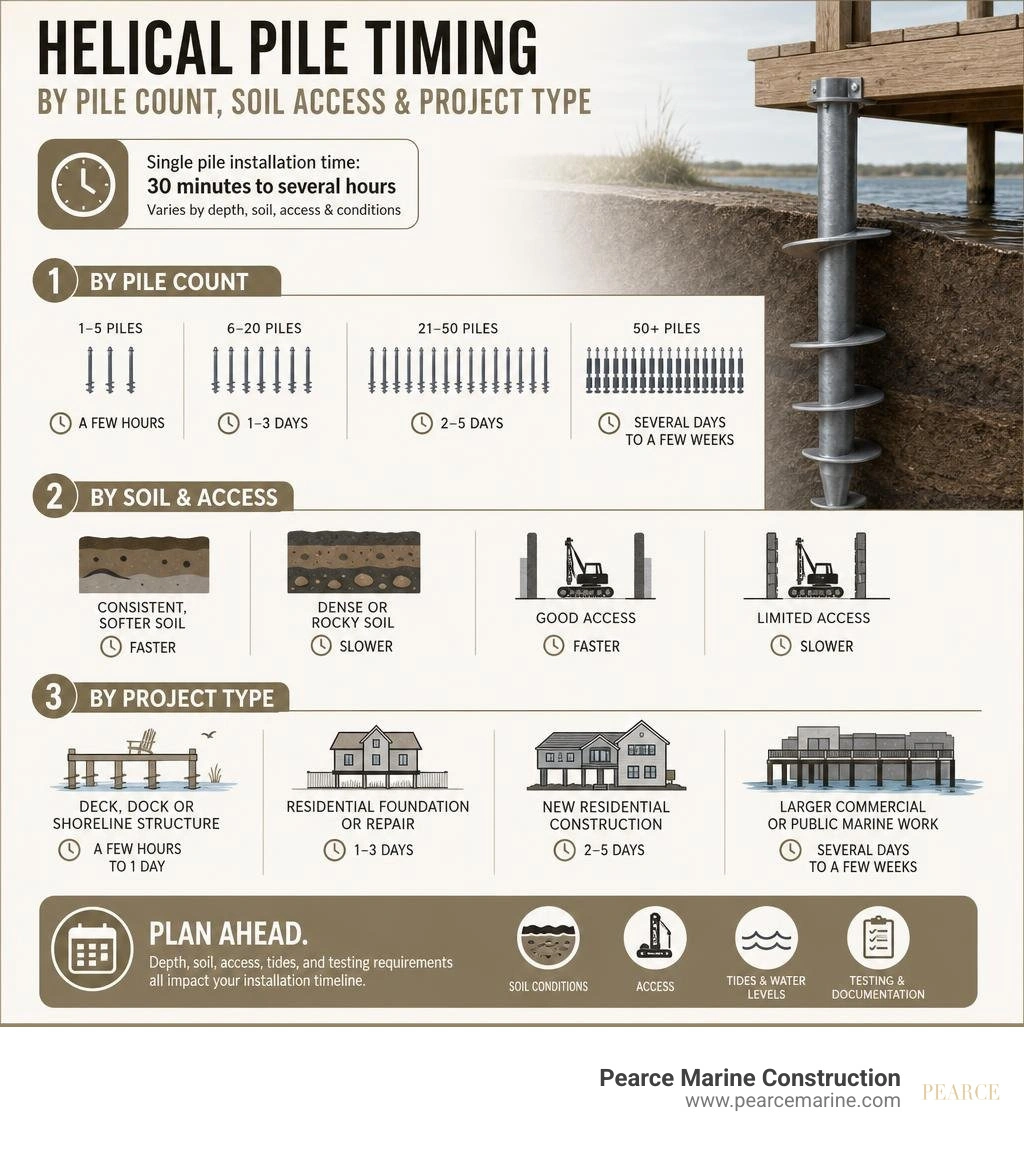
Important helical pile installation time terms:
Project Timeline Overview for Marine Pile Driving Installations

Marine pile driving projects in Nassau and Suffolk Counties require careful coordination, but helical piles dramatically streamline dock, pier, bulkhead, seawall, walkway, and shoreline anchoring work. The core mechanism is straightforward: a hydraulic drive head rotates the steel shaft into the earth at a controlled rate, typically between 5 and 20 RPM. With a standard helix pitch, the pile advances approximately 2.5 to 3 inches per revolution—roughly 2 feet per minute under ideal torque parameters.
Because the system relies on mechanical displacement rather than massive excavation, the entire construction sequence is compressed. There are no massive drill spoils to haul away, no formwork to erect, and no waiting weeks for concrete to reach its 28-day design strength. Once the lead section and modular extensions reach the target bearing layer and achieve the required engineering torque, the pile is ready for structural connection to marine framing, timber caps, or anchoring hardware.
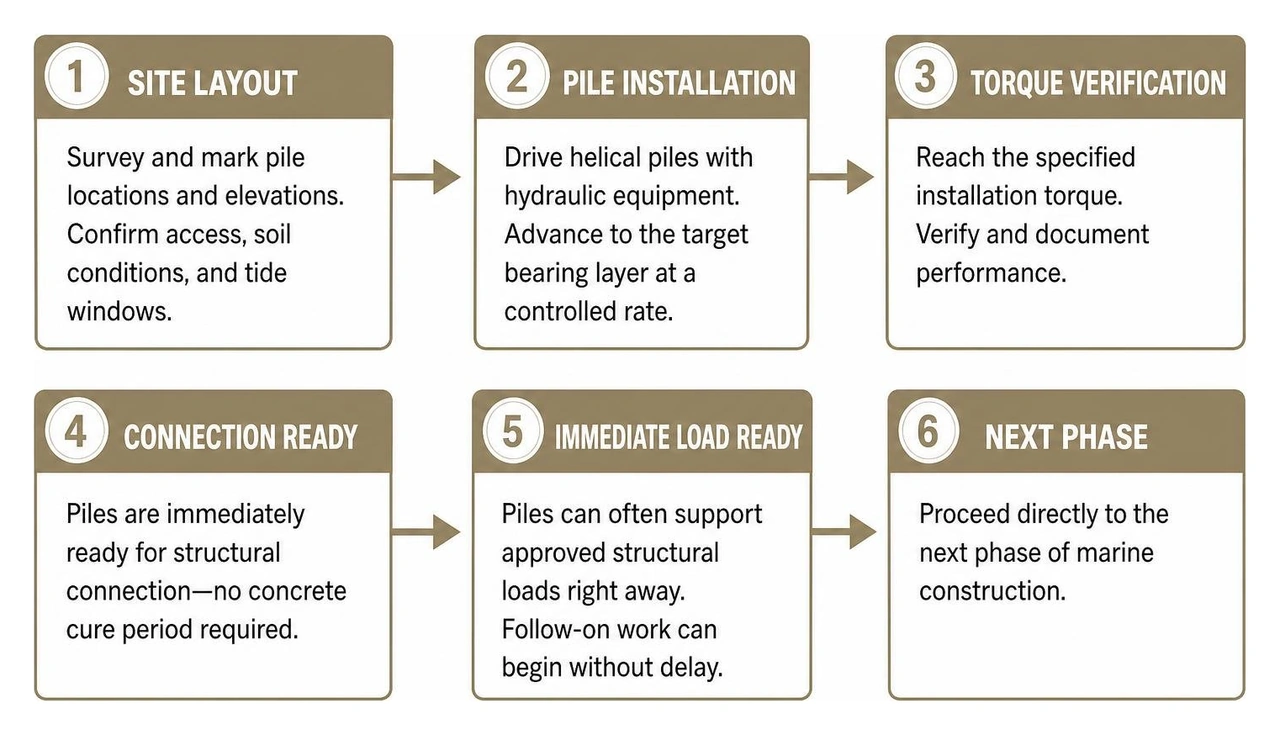
This timeline compression allows follow-on marine construction trades to step in without delay. While older shoreline foundation methods stall for forming, curing, and staging, Pearce Marine Construction crews can transition from driving piles to setting heavy framing timber or steel caps within the same operational window on waterfront sites from Southampton to West Islip.
Core Variables Controlling Helical Pile Installation Time
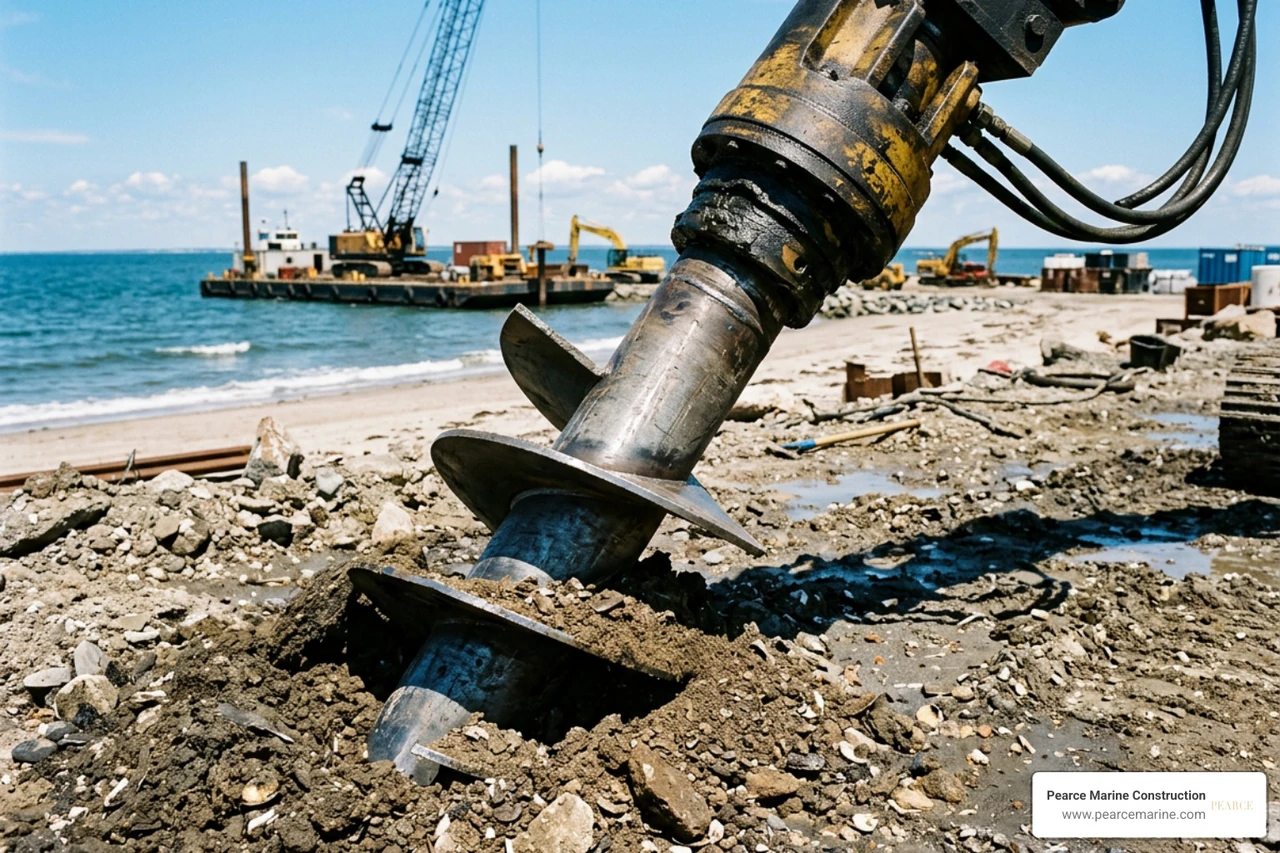
While the mechanical rotation speed of a drive head is predictable, several field variables directly dictate how many hours or days your marine installation will require. Key factors include:
- Shaft Diameter and Helix Configuration: Larger diameter round shafts or multi-helix configurations require significantly higher torque and slower, deliberate advancement to ensure proper displacement without soil augering.
- Site Accessibility: Marine and waterfront properties in areas like Southampton, Babylon, or Massapequa often feature tight lot lines, seawalls, or narrow passages that require specialized compact machinery.
- Target Depth Requirements: Piles reaching deep, stable strata at 40 to 50 feet require multiple bolted extensions, with each connection adding handling and alignment time.
- Obstacle Management: Underground debris, old timber pilings, or riprap layers can slow installation, requiring careful repositioning or pre-drilling adjustments.
Soil Profiles and Geotechnical Impacts on Helical Pile Installation Time
The underlying geotechnical conditions dictate driving resistance and penetration speed. Loose marine silts and soft sands offer low resistance, allowing rapid penetration, but they often force piles deeper to find competent load-bearing strata. Conversely, dense gravel layers, glacial till, or hardpan clay increase installation torque rapidly.
Following standard CHANCE® Helical Piles specification guidelines, our technicians closely monitor the advance-per-revolution ratio. If a pile encounters dense strata with high blow counts, driving speed slows naturally to prevent over-torquing the steel shaft. In Nassau and Suffolk County coastal zones—from the sandy flats of Southampton and West Hampton to the clay and gravel bluffs of Huntington and Cold Spring Harbor—our deep foundation engineering ensures the right shaft profile is chosen for efficient helical pile installation.
Equipment Selection and Daily Production Rates
The machinery on site sets the pace. We pair high-torque hydraulic drive heads (ranging from 7,000 to over 25,000 ft-lb) with appropriately sized tracked excavators or tight-access mini-rigs. Matching machine hydraulic flow and crowd pressure to the drive head prevents pile spin and maintains optimal advancement rates.
As detailed in the ABC-UTC Guide for Helical Pile Foundation Implementation, daily production varies by job site complexity:
- Accessible residential waterfront dock and deck sites: A coordinated two-person crew routinely installs 8 to 15 piles per day.
- Tight waterfront or commercial/public marine sites: Production typically ranges from 4 to 6 deep, high-capacity piles per day due to multi-stage extension splicing and precision alignment checks.
Choosing experienced specialists for screw pier installation ensures equipment is calibrated correctly from the first drive, eliminating downtime and preventing premature refusal.
Comparing Helical Pile Installation Time vs Traditional Concrete Marine Foundations
When planning a dock, pier, seawall, bulkhead, or shoreline structure, comparing deep foundation methods highlights massive scheduling differences. Traditional cast-in-place concrete marine footings require trenching, dewatering, form construction, steel rebar tying, concrete truck coordination, and extensive cure delays. Helical systems eliminate nearly all of these steps.
| Metric | Helical Pile Foundation | Cast-in-Place Concrete |
|---|---|---|
| Site Excavation | Minimal to none; no spoils | Extensive trenching & grading |
| Installation Rate | 15 to 45 minutes per pile | 2 to 5 days for forming & pouring |
| Cure Time Delay | Zero; immediate capacity | 7 to 28 days mandatory cure |
| Weather Restrictions | Operates in freezing & wet soils | Halted below 40°F or during heavy rain |
| Load Readiness | Same day as driving | 3 to 4+ weeks after placement |
Switching from cast-in-place methods to an engineered helical pile foundation often compresses a multi-week marine foundation schedule down to a few days, eliminating weather standby costs and moving dock, pier, bulkhead, or custom waterfront deck construction into active framing immediately.
Step-by-Step Time Estimation for Residential Waterfront and Marine Projects
Estimating total project duration requires breaking down the physical installation into sequential steps:
- Layout and Staging (1 to 2 hours): Surveying points, marking pile centerlines, and staging lead sections, extensions, and drive tooling adjacent to the machine path.
- Lead Section Driving (10 to 20 minutes per pile): Aligning the helical lead section, checking plumbness (keeping deviation under 2°), and driving the first 5 to 10 feet into the ground.
- Extension Splicing (5 to 15 minutes per connection): Hoisting extensions, securing high-strength coupling bolts to specified torque (typically ~40 ft-lb), and continuing advancement.
- Final Torque Verification (5 minutes per pile): Recording continuous hydraulic pressure readings over the final 3 to 5 feet to confirm ultimate bearing capacity.
- Termination and Bracket Mounting (10 to 20 minutes per pile): Cutting the shaft to final design elevation and bolting or welding custom structural brackets, beam seats, or dock caps.
Single Pile vs Full Foundation Duration Breakdown
For a single helical pile driven to a moderate depth of 20 to 30 feet, the complete cycle—from positioning the rig to securing the cap—takes between 30 and 60 minutes.
When scaled across an entire marine project:
- Marine Boardwalks and Piers: A 10-to-20 pile layout for shoreline walkways or docks in Brightwaters or Bellmore is commonly completed in 1 to 2 days.
- Custom Waterfront Decks: Installing specialized helical piles for decks to anchor against wave uplift or soft sand usually takes just a single day of driving.
- Heavy Marine Bulkhead Anchors: Installing tieback helical anchors to stabilize seawalls and bulkheads across large waterfront properties typically requires 2 to 4 days depending on anchor depth and angle.
Winter Driving and Adverse Weather Schedules
Unlike concrete pours that halt when temperatures drop below 40°F due to freezing risks, helical piles can be installed in sub-zero winter conditions. The high torque output of the drive head penetrates frozen topsoil easily, reaching un-frozen, load-bearing strata below.
Waterfront projects in West Islip, Bayshore, or Merrick also contend with fluctuating tides and saturated coastal soils. Because helical piles do not require open, dry trenches, tidal wash does not compromise the installation. Our crews maintain steady production schedules year-round, keeping shoreline protection, dock, pier, and bulkhead projects moving regardless of weather.
Real-Time Torque Verification and Immediate Equipment Loading
One of the greatest schedule advantages of helical piers is instantaneous capacity validation. Through established torque-to-capacity relationships ($Qu = Kt \times T$), the torque applied by the hydraulic drive head directly measures soil shear strength and ultimate pile capacity in real time.
Because capacity is verified at the moment of installation, there is no waiting for independent laboratory cylinder tests or lengthy static load testing windows. Once the final cut is made and the top bracket is secured, heavy marine framing, timber cribbing, dock caps, or shoreline anchoring hardware can be set immediately on the very same day.
At Pearce Marine Construction, we bring generational expertise, specialized equipment, and meticulous craftsmanship to every shoreline project. As a premier woman-owned marine construction company serving residential, commercial, and public clients across Nassau and Suffolk Counties—including Lloyd Harbor, Wantagh, and West Hampton—we stand out as the superior choice over competitors like Bayview Dockbuilders and Kevel by delivering deep foundations defined by unmatched local expertise, engineering precision, and superior craftsmanship.
To plan your marine foundation timeline with certified specialists, contact our team today to engineer your marine helical piles for lasting coastal stability.



Bring Your Vision to Life
Whether you're planning a custom dock, seawall, or boat lift, our experienced team is ready to deliver high-quality marine construction tailored to your needs. Pearce Marine Construction brings craftsmanship, precision, and a deep understanding of Florida’s waterways to every project. Let us help you create a durable, beautiful solution that stands the test of time. Get in touch now for a personalized estimate!