
A Practical Guide to Comparing Helical Piles for Docks


Why Helical Piles for Docks Are a Strong Foundation Option
Helical piles for docks are heavy-duty steel screw foundations rotated into stable marine soil to support fixed docks, piers, and waterfront structures. For property owners across Nassau County, Suffolk County, Southampton, and West Islip, professional marine installation by Pearce Marine Construction provides a faster, lower-disturbance foundation alternative to conventional heavy rock fill or concrete driving.
| Quick answer | What it means for your dock project |
|---|---|
| How they work | Helical plates on a steel shaft screw into the seabed or shoreline soil, anchoring the dock against downward and uplift forces. |
| Best use | They are often well suited to firm sand, silt, and clay where the pile can reach a reliable bearing layer. |
| Main benefit | Installation can be completed quickly, with far less sediment disruption than many conventional piling methods. |
| Key limitation | Solid bedrock, large boulders, very deep water, and unstable soils may require a different engineered solution. |
| Cold-weather value | When installed below the frost line, helical piles can help limit seasonal movement from freeze-thaw cycles. |
The right dock foundation depends on water depth, soil capacity, ice dynamics, and structural loads. Pearce Marine Construction provides expert marine construction services for residential, commercial, and municipal waterfront properties throughout Southampton, West Islip, Westhampton, and across Nassau and Suffolk Counties on Long Island, NY.
This guide explains how helical piles compare with wood crib foundations and what our marine construction team evaluates before installing high-capacity dock foundations.
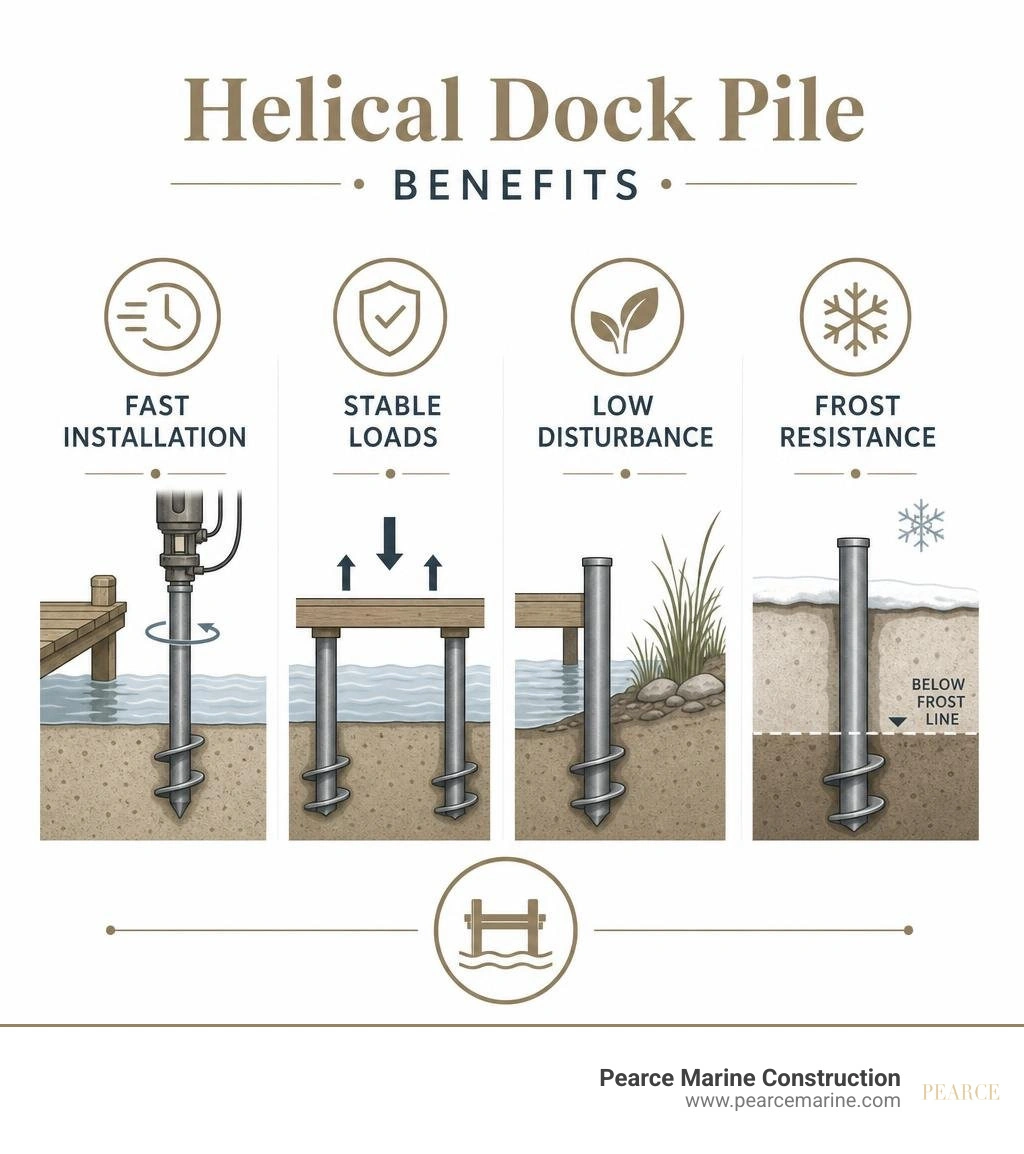
Basic Helical piles for docks terms:
Structural Performance and Engineering of Helical Piles for Docks

When designing permanent waterfront infrastructure along Long Island's South Shore, North Shore, Southampton, and West Islip, foundation integrity dictates the lifespan of the entire structure. Pearce Marine Construction relies on helical piles for docks because they deliver verified structural bearing capacity directly during the installation process.
Unlike timber piles that rely primarily on friction along their outer surface, helical piles function through mechanical bearing. The broad helical plates welded to the central steel shaft transfer structural loads deep into stable soil layers beneath unstable lakebeds or bay sediments.
Design Standards of Helical Piles for Docks
To withstand severe coastal environments, including wave action, tidal flux, and harsh winter storm surges across Nassau and Suffolk Counties, helical piles are engineered to rigorous material standards. For a detailed technical dive into load mechanics, explore our helical pile foundation complete guide.
- Central Shaft Specifications: Heavy-wall round hollow structural steel or solid square shafts provide torsional strength during drive installation and high lateral stiffness against wave impacts.
- Helix Plate Diameters: Helical bearing plates are selected based on site-specific soil strength, design loads, and required embedment depth. Smaller plates can help penetrate dense sand, while larger plates can generate broader support in softer bay silt when engineering conditions allow.
- Steel Alloy Standards: Piles are fabricated from high-strength structural steel alloys selected to resist intense rotational torque during insertion and long-term waterfront loading.
- Hot-Dip Galvanizing: Marine piles require hot-dip galvanizing to help protect the underlying steel shaft from aggressive saltwater corrosion, brackish estuaries, and oxygenated surface water. Galvanized steel coating requirements are commonly evaluated against recognized standards such as ASTM A123/A123M.
Marine Installation Process and Eco-Friendly Advantages
Installing dock foundations in sensitive aquatic environments requires precision and environmental care. Pearce Marine Construction utilizes specialized floating equipment and high-torque drive heads to ensure structural stability without damaging fragile marine ecosystems. Learn more about our specialized approach in our guide to dock piling installation.
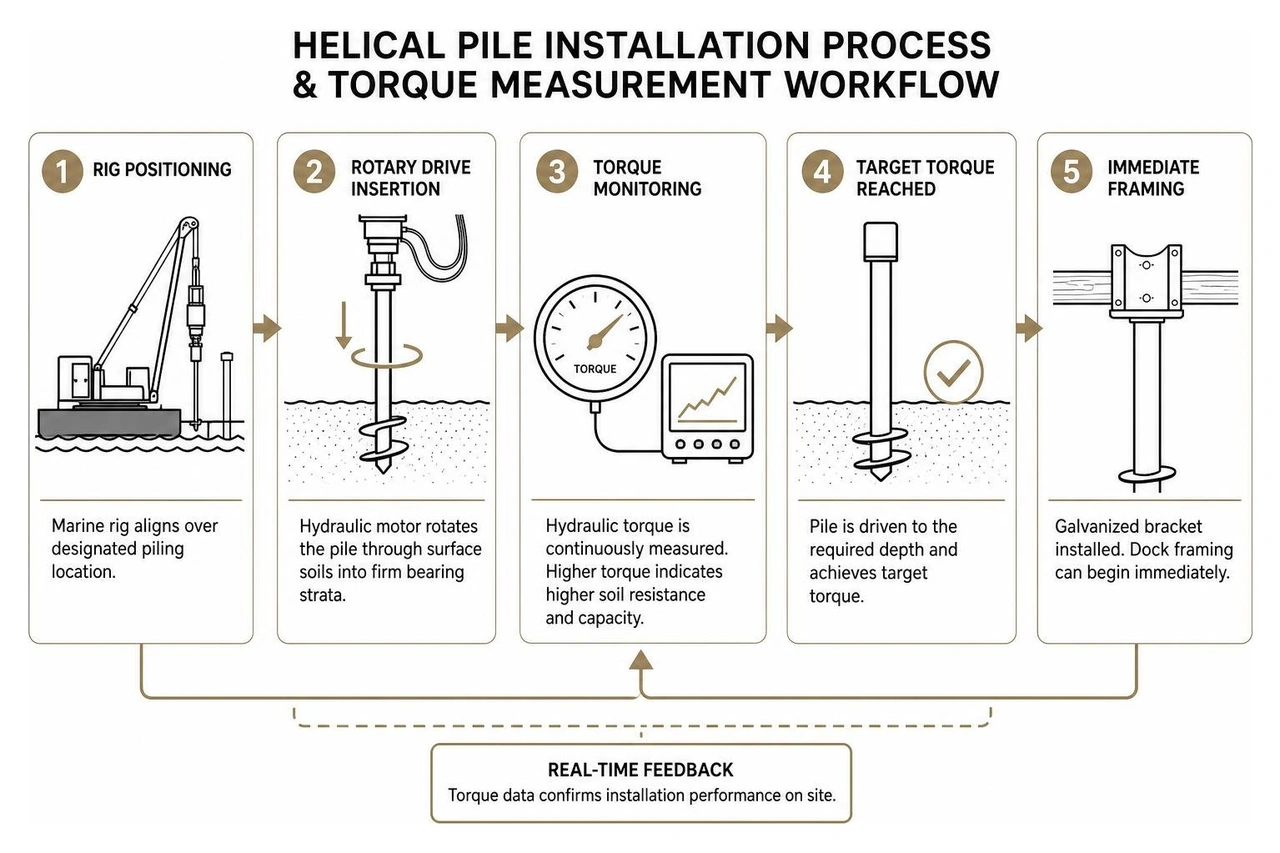
- Marine Rig Positioning: A barge-mounted or pontoon-mounted hydraulic rig aligns over designated piling locations along the waterfront.
- Rotary Drive Insertion: A high-torque hydraulic motor twists the steel shaft down through soft surface muck and silt into firm bearing soils. Portable handheld torque equipment can also be deployed in shallow, tight-access shorelines.
- Torque Monitoring: Hydraulic torque pressure is continuously measured throughout installation. Because rotational resistance correlates directly with soil bearing capacity, real-time torque verification helps confirm load capacity on site.
- Immediate Framing: Once driven to target depth and torque pressure, pile tops are capped with heavy-duty galvanized structural brackets. Timber or composite dock framing can begin immediately without waiting for concrete to cure.
Rotary insertion produces significantly less wave action and sediment turbidity than high-impact pile driving or heavy rock fill dumping. Minimizing water column disturbance helps protect nearby aquatic plant life and fish habitats in Long Island bays and inlets.
Comparing Waterfront Dock Foundation Options and Shoreline Soil Conditions
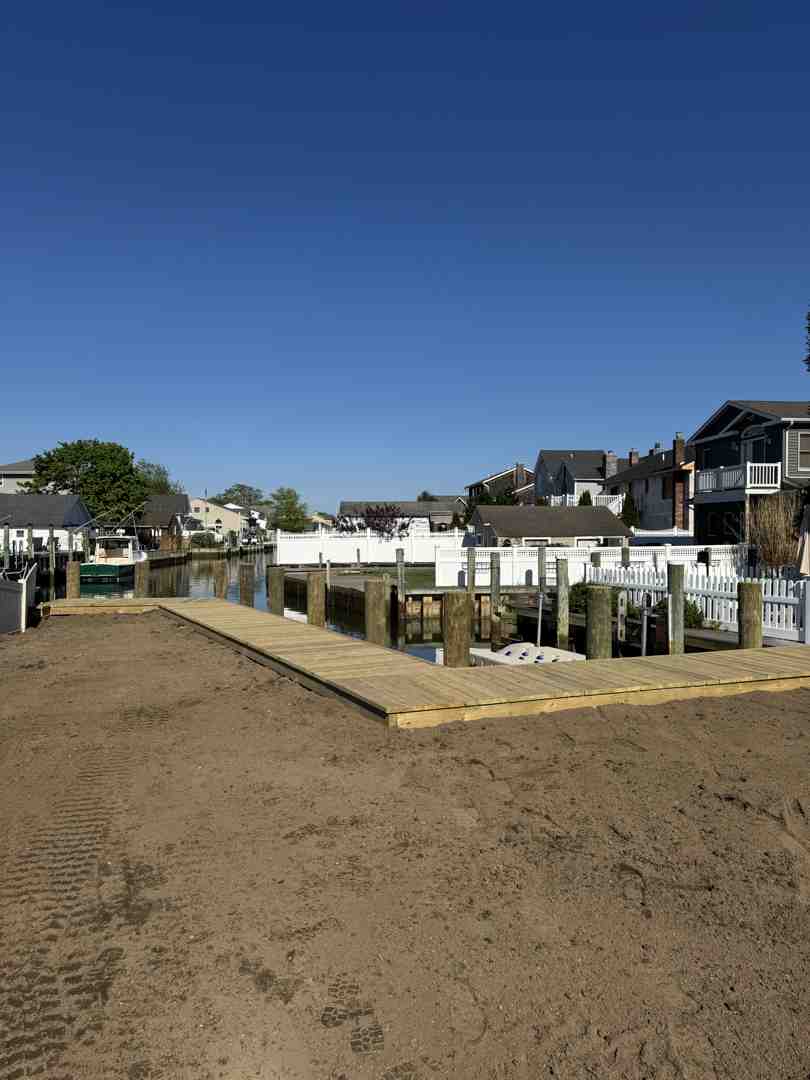
Selecting foundation systems requires balancing structural load requirements, installation timelines, site accessibility, and budget. While fixed timber posts or wood cribs were once standard across Nassau and Suffolk Counties, steel helical foundation systems can outperform aging methods on many important dock construction metrics when site conditions are suitable.
Helical Piles for Docks vs Traditional Wood Crib Foundations
Wood crib foundations consist of heavy timber frames submerged onto the lakebed or bay floor and filled with tons of crushed rock. While wood cribs have historical precedent, modern engineering standards often favor steel screw pile technology for projects where verified bearing capacity, reduced disturbance, and installation speed are priorities.
| Performance Metric | Helical Piles for Docks | Traditional Wood Crib Foundations |
|---|---|---|
| Installation Time | Often completed quickly for standard docks | Commonly requires additional time for rock haulage and placement |
| Benthic Environmental Impact | Minimal turbidity; zero rock dumping | Higher shoreline and bed disturbance |
| Frost Heave Resistance | Anchors below frost line; high ice uplift resistance | Susceptible to seasonal shifting and shifting rocks |
| Load Capacity and Testing | Real-time verified torque rating | Estimated based on crib size and stone volume |
| Lifespan and Durability | Decades with properly specified galvanized steel | Timber degrades and rots; rocks settle over time |
| Site Adaptability | Deep extensions can navigate deep soft muck | Requires a relatively flat, stable underwater floor |
Helical foundations can reduce days of site disruption by avoiding heavy crib assembly and large-volume stone placement. Discover how our specialized marine team installs custom foundations through our dedicated helical piles service page.
Soil Suitability, Frost Heave Resistance, and Load Capacity Factors
Not all shorelines feature identical geology. Successful dock construction depends on evaluating sub-surface conditions:
- Sand, Silt, and Clay: Helical shafts can penetrate mixed coastal sands, organic silts, and stiff marine clays when properly specified for the site.
- Deep Soft Muck: In locations with deep, soft muck, modular steel extensions are coupled continuously onto the lead pile shaft until the helix plates reach dense bearing layers deep underground.
- Frost Heave and Ice Resistance: In cold winters like those experienced across Long Island, ice can pull traditional piles out of the seabed. Helical piles resist ice uplift because their helix plates anchor deep below the frost line in solid soil.
- Exclusion Zones: Helical piles are not suitable for solid granite bedrock, impenetrable rock ledges, or fields of massive, immovable boulders. In those specific geology profiles, rock-pinned brackets or custom structural frames may represent the appropriate engineering choice.
Property owners seeking certified marine installation should review our guide on choosing expert helical piling contractors.
Removability, Adjustment, and Custom Marine Engineering Solutions
One major advantage of helical piles for docks is structural adjustability. If shoreline contours change, or if dock layout plans are modified in the future, screw piles can be unscrewed, repositioned, or completely removed without leaving behind sunken concrete or rotting wood debris.
From small residential shore decks in West Islip and Brightwaters to large U-shaped docks and multi-slip commercial marinas capable of supporting heavy boathouses in Southampton and Westhampton, helical piles deliver strong engineering versatility when designed for the correct loads, soils, and exposure conditions.
Pearce Marine Construction brings generational expertise and meticulous craftsmanship to every waterfront project across Long Island. Our woman-owned marine construction team offers specialized, high-torque marine installations custom-engineered for local bay and canal conditions throughout Nassau and Suffolk Counties.
Ready to build a dock foundation engineered for a lifetime? Explore our full suite of Marine Construction Services or contact Pearce Marine Construction today to schedule your shoreline consultation.



Bring Your Vision to Life
Whether you're planning a custom dock, seawall, or boat lift, our experienced team is ready to deliver high-quality marine construction tailored to your needs. Pearce Marine Construction brings craftsmanship, precision, and a deep understanding of Florida’s waterways to every project. Let us help you create a durable, beautiful solution that stands the test of time. Get in touch now for a personalized estimate!