
Pier Post Selection Guide for Resilient Long Island Waterfronts

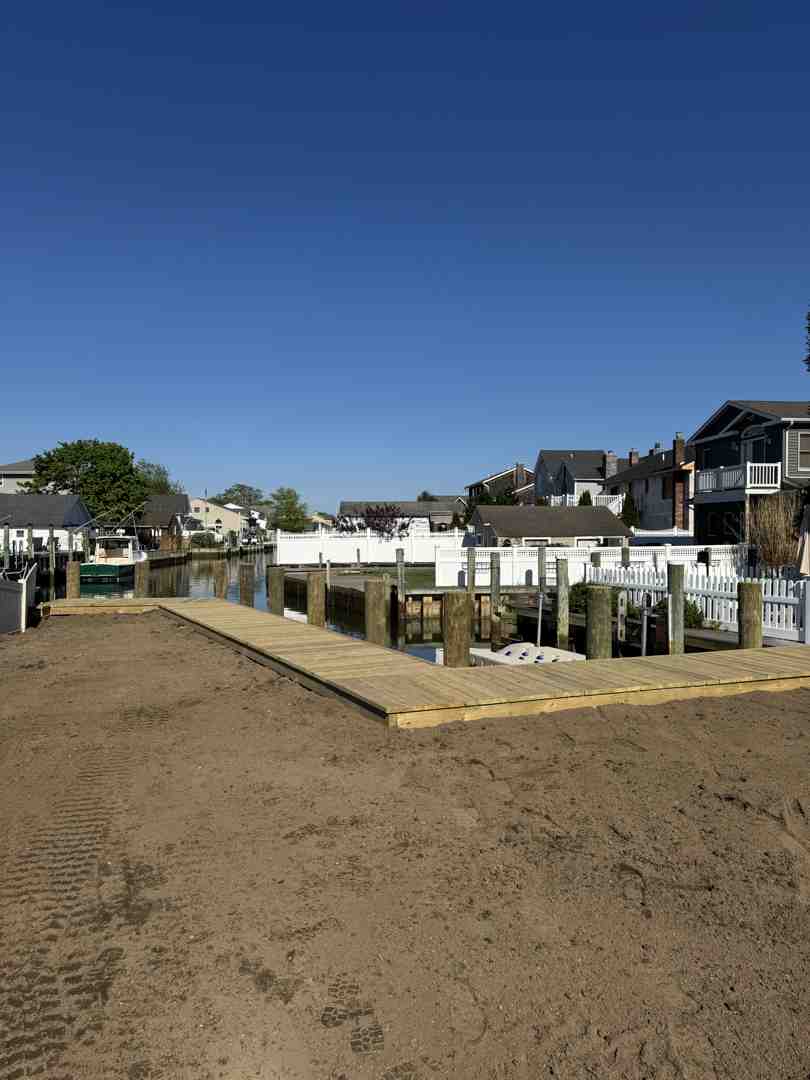
Choosing a Pier Post for a Long Island Waterfront
A durable pier post starts with the site, not the material. For a dock or waterfront deck, the post and its foundation must suit the soil, water exposure, weight of the structure, and storm forces. Treated wood, concrete, and protected steel can all work, but each needs the right depth and secure, corrosion-resistant connections.
This guide explains what to check before choosing a system for a property in Nassau or Suffolk County. Pearce Marine Construction is a woman-owned company serving residential, commercial, and public clients across these Long Island counties.
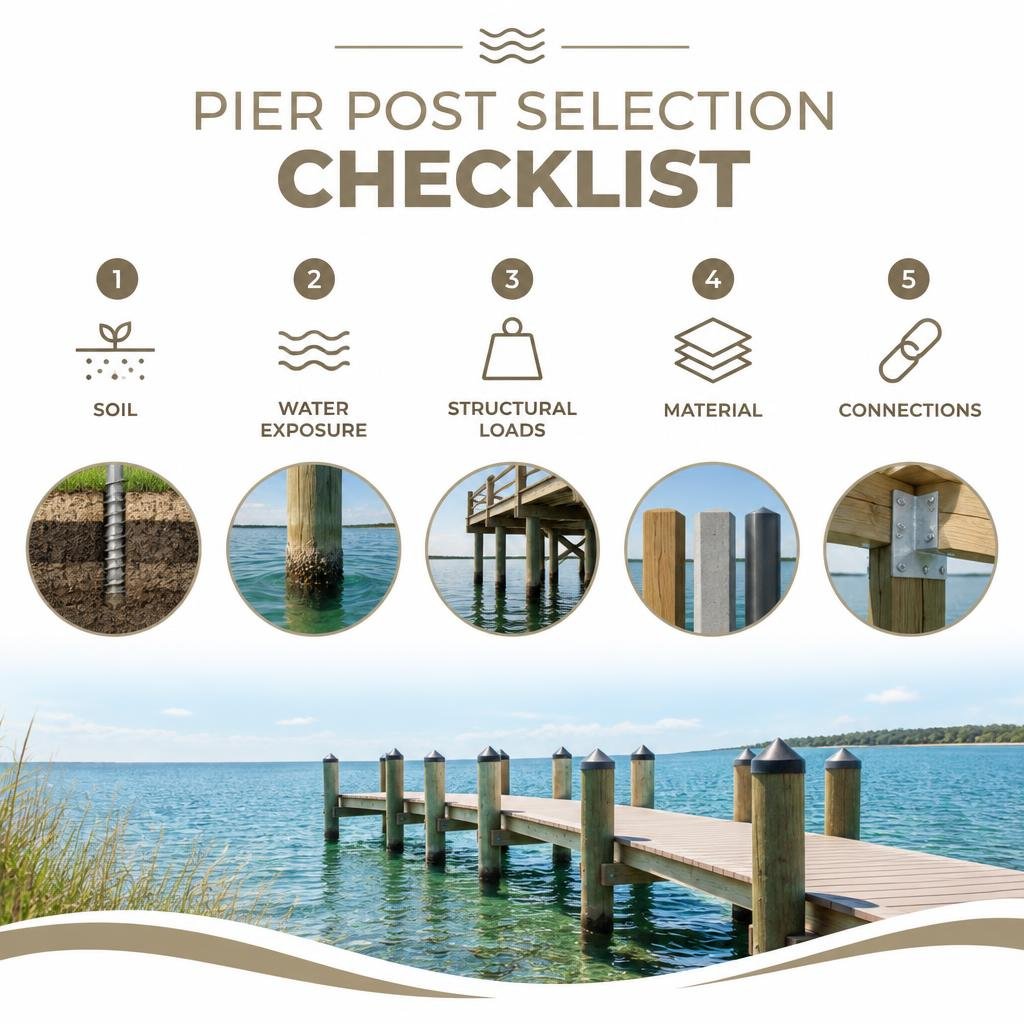
When planning marine deep foundation work, contractors evaluate deep-set helical piers alongside specialized screw pile footings to build a resilient helical pile foundation engineered for challenging shoreline conditions.
Understanding Pier Post Fundamentals and Marine Foundation Types

Building along the shoreline requires an unyielding structural base. Marine pier foundations elevate critical infrastructure above dynamic tidal zones, shifting wetlands, and coastal surge areas. Whether framing an expansive boardwalk in Southampton or a private residential dock in West Islip, getting your vertical supports right dictates the entire lifespan of the structure.
A post and pier system functions by transferring vertical gravity loads, live loads, and storm forces deep into load-bearing strata. Unlike inland home foundations that rely on continuous perimeter stem walls, waterfront piers keep structural frameworks elevated. This open configuration allows floodwaters and wave energy to pass beneath deck frames without generating catastrophic hydraulic pressure against solid walls.
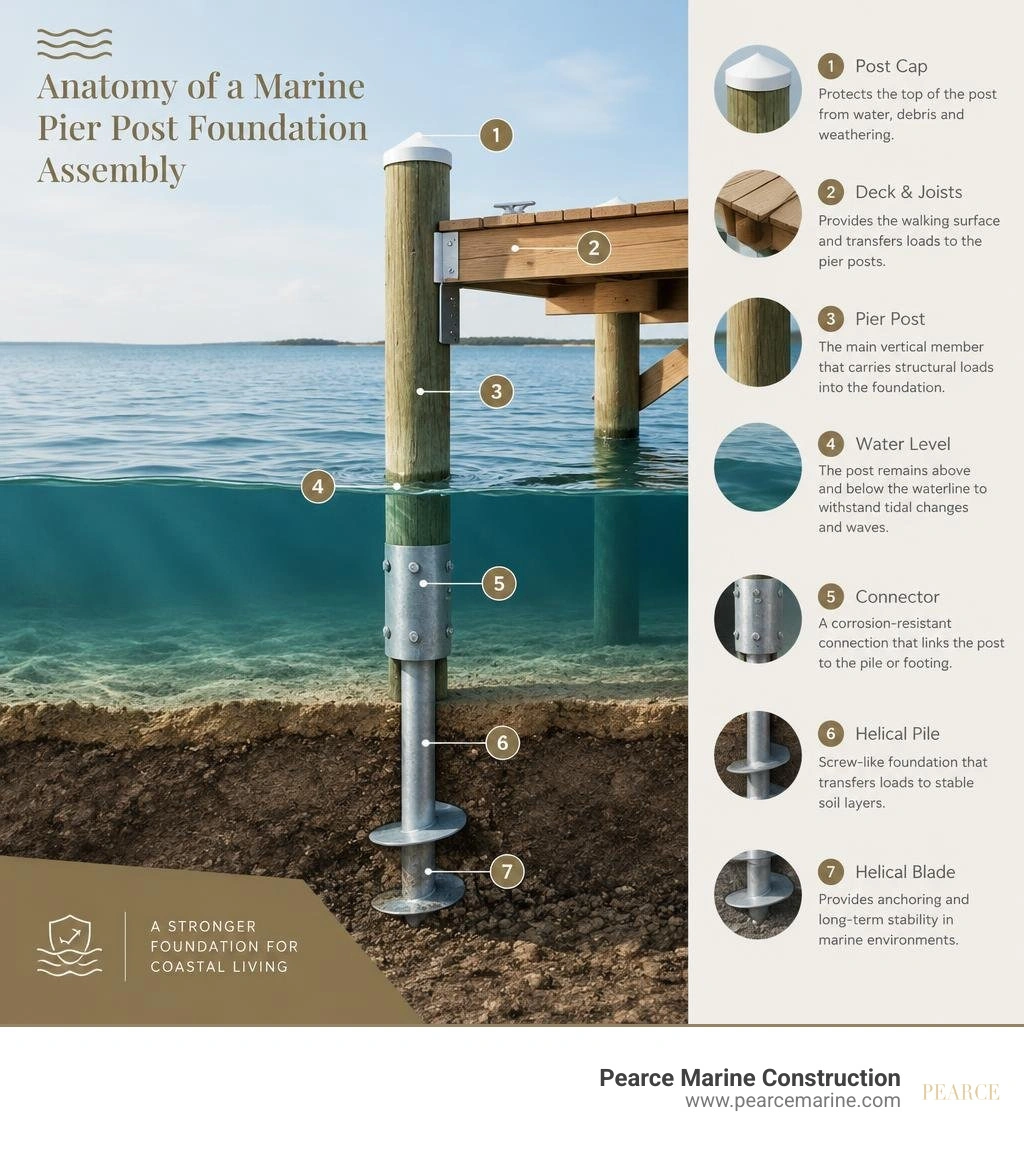
Structural Differences: Pier Post vs Column, Pillar, and Pilaster
Understanding structural terminology ensures you select the correct vertical support for high-load marine environments. In an architectural glossary on vertical structural supports, vertical elements are defined by their load paths, connection to the earth, and aesthetic refinement:
- Pier Post: A heavy-duty vertical member embedded directly in the earth or anchored directly atop an in-ground concrete footing or pile. Its primary function is carrying direct axial downward loads while resisting lateral racking from waves and wind.
- Column: A slender vertical compression member often designed with refined architectural proportions, carrying roof or floor beam loads downward through an engineered load path.
- Pillar: A massive, standalone vertical support that is structural or commemorative, usually less refined and heavier in proportion than a standard column.
- Pilaster: A vertical element integrated into or projecting from a masonry wall, providing localized structural reinforcement or shear resistance.
In marine and coastal construction, piers and posts operate as an integrated assembly. The pier provides subterranean anchorage and high compressive bearing, while the upright post elevates framing members above high water marks.
Comparing Post-and-Pier Foundation Approaches
When designing a waterfront foundation on Long Island, choosing between continuous concrete footings, deep driven pilings, and modern helical screw systems comes down to site access, water table depth, and soil composition.
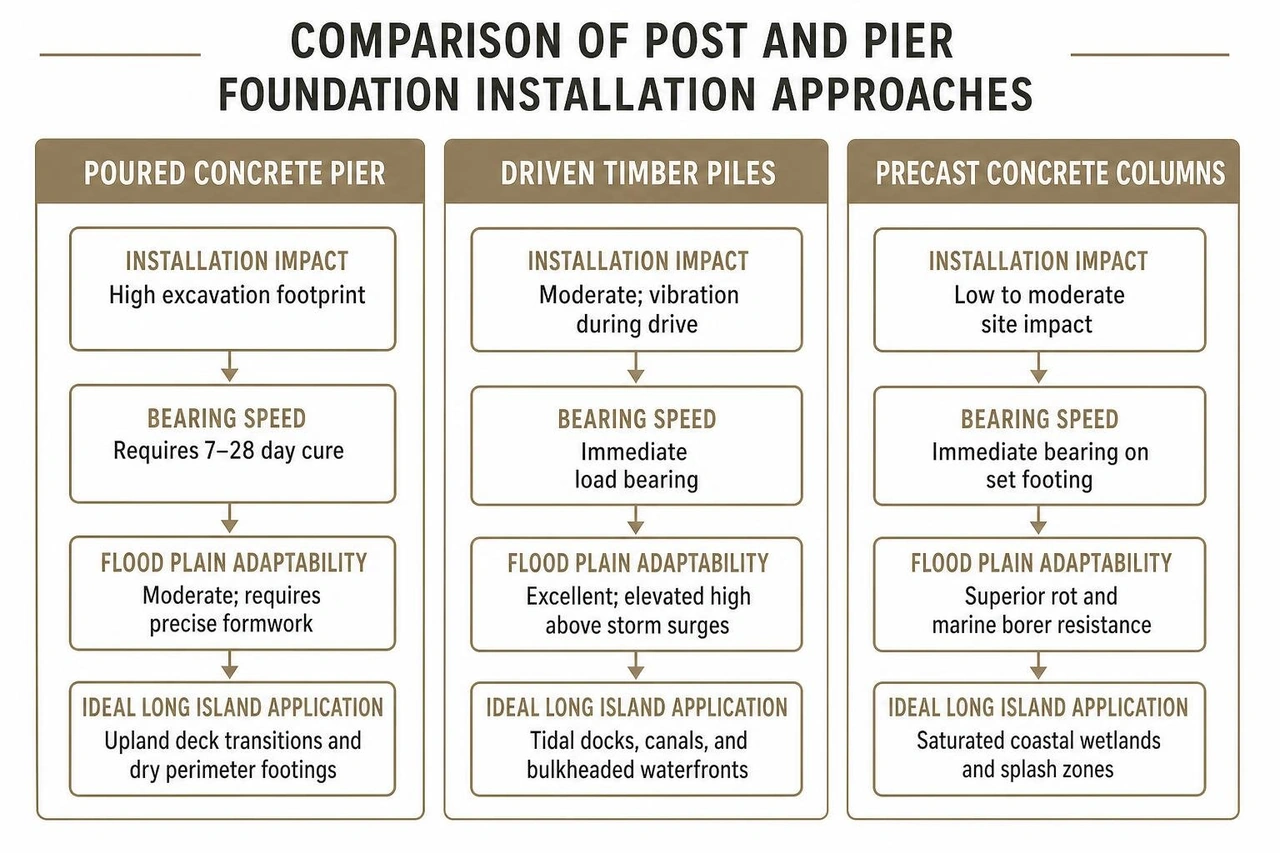
| Foundation Approach | Installation Impact | Bearing Speed | Flood Plain Adaptability | Ideal Long Island Application |
|---|---|---|---|---|
| Poured Concrete Pier | High excavation footprint | Requires 7–28 day cure | Moderate; requires precise formwork | Upland deck transitions and dry perimeter footings |
| Driven Timber Piles | Moderate; vibration during drive | Immediate load bearing | Excellent; elevated high above storm surges | Tidal docks, canals, and bulkheaded waterfronts |
| Precast Concrete Columns | Low to moderate site impact | Immediate bearing on set footing | Superior rot and marine borer resistance | Saturated coastal wetlands and splash zones |
| Helical Steel Piers | Minimal; no heavy spoils | Immediate verification by torque | Exceptional in low-bearing marsh soils | Canal revetments, boardwalks, and tight-access docks |
Where coastal ecosystems demand minimal soil displacement, using specialized screw pile footings offers substantial engineering advantages over traditional heavy excavation methods.
Selecting the Best Pier Post Materials for Coastal Durability
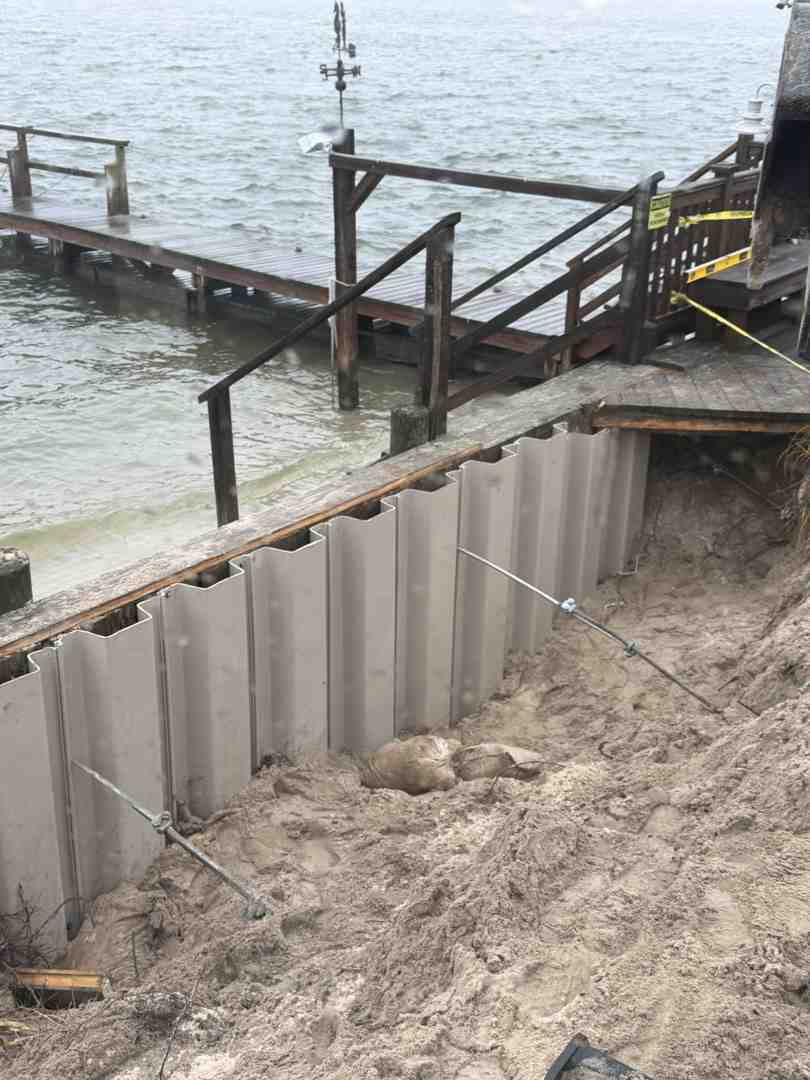
Saltwater, freeze-thaw cycles, and tidal currents punish marine foundations. Choosing the right material ensures structural integrity over decades of harsh seasonal exposures.
Timber, Concrete, and Helical Steel Pier Post Options
Every material option provides specific structural strengths depending on site-specific soil mechanics and exposure levels:
- Marine-Grade Treated Timber: Heavy timber posts treated with copper-based or specialized marine preservatives remain a classic choice for docks and boardwalks. They provide natural flex under wave action, though they require routine monitoring against marine boring organisms in warm, high-salinity bays.
- Precast and Prestressed Concrete: Precast concrete piers provide extreme compressive strength—frequently exceeding standard commercial ratings—and complete immunity to rot, wood-boring pests, and marine organisms. Large commercial installations, such as major military terminal modernizations, routinely rely on heavy prestressed octagonal concrete piles to bear thousands of tons of structural load.
- Engineered Helical Piles: Heavy-duty steel shafts equipped with solid steel helical flights screw into deep, stable soil layers until reaching verifiable torque ratings. Learn more in our comprehensive helical pile foundation guide, which highlights how engineered helical piers prevent settlement in shifting sand and organic silt deposits.
Essential Hardware: Heavy-Duty Post Bases and Corrosion-Resistant Brackets
The connection between the post and the pier is the most critical stress point of any raised deck or dock. Marine hardware must resist direct axial loads, dynamic wave uplift, and lateral shear from storm surges.
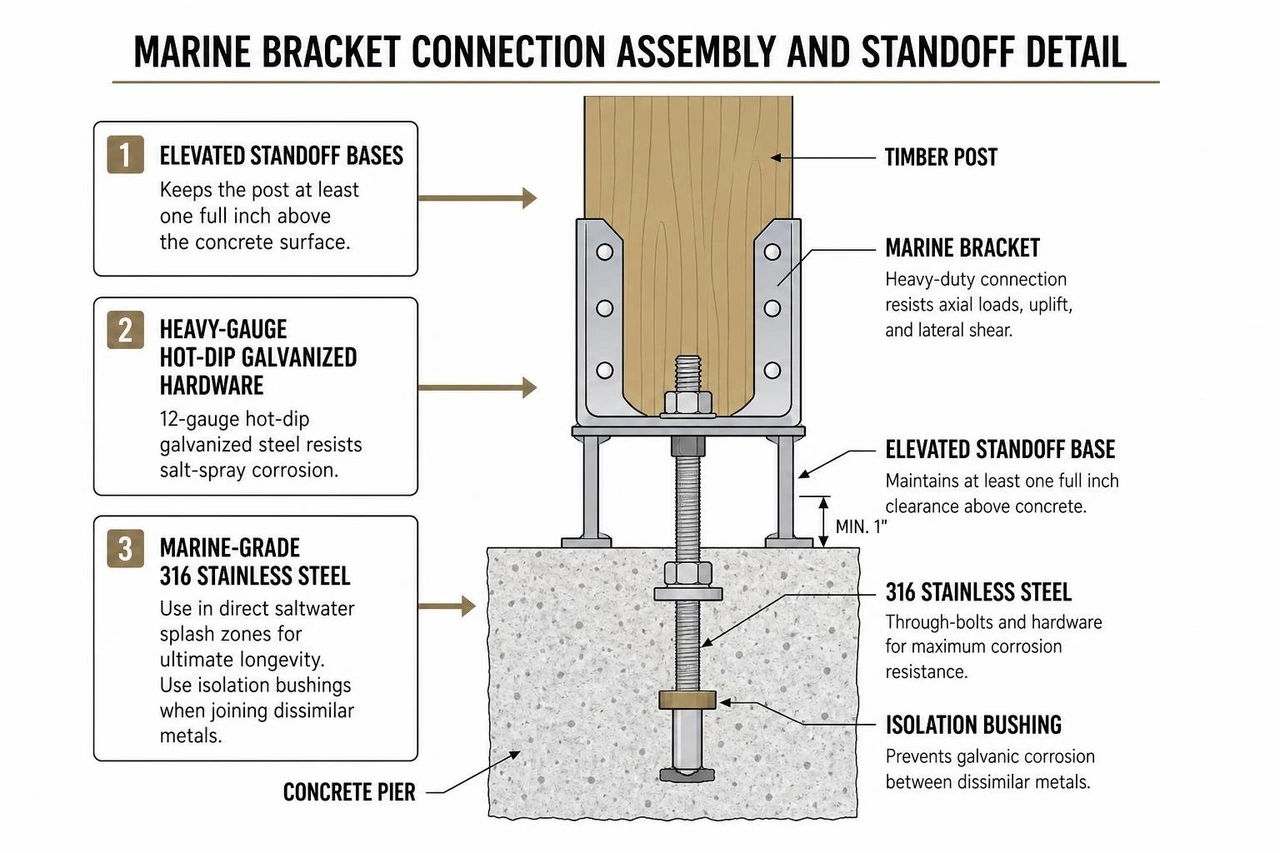
- Elevated Standoff Bases: Direct contact between timber and concrete wicks moisture into end-grain wood fibers, accelerating rot. Modern building codes require an elevated standoff base that keeps the post at least one full inch above the concrete surface.
- Heavy-Gauge Hot-Dip Galvanized Hardware: Components like code-compliant elevated post bases fabricated from heavy 12-gauge hot-dip galvanized steel provide reliable resistance against salt-spray corrosion.
- Marine-Grade 316 Stainless Steel: In direct saltwater splash zones, marine-grade stainless steel brackets and through-bolts provide ultimate longevity. When joining dissimilar metals—such as stainless steel brackets to galvanized anchor bolts—always install isolation bushings to eliminate galvanic corrosion.
Engineering and Installing Resilient Waterfront Foundations in Nassau and Suffolk County
Shoreline construction across Nassau and Suffolk Counties demands localized engineering expertise. Properties in Southampton, West Islip, Brightwaters, Merrick, Wantagh, Bellmore, Massapequa, Babylon, Bayshore, Huntington, Cold Spring Harbor, and Lloyd Harbor face distinct microclimates, ranging from high-energy South Shore ocean surges to steep North Shore bluffs. Working with certified experts for professional marine pile installation guarantees foundations are sized correctly for regional geology.
Soil Mechanics, Frost Heave Prevention, and Long Island Code Requirements
Long Island coastal soils vary dramatically, from dense glacial till on the North Shore to deep, saturated sand and organic silt along South Shore canals.
- Frost Line Depth: Foundation footings throughout Long Island must extend below the municipal frost depth (typically 36 to 42 inches below grade) or anchor into competent subsoil layers using deep pilings.
- Frost and Soil Heave Resistance: In shallow soil installations, straight-sided concrete piers can be gripped by frozen upper soils and lifted upward. Using belled-bottom footings or helical anchor systems mechanically locks the foundation below the active frost layer.
- Wind and Uplift Engineering: Docks, boardwalks, and elevated platforms face tremendous upward hydrodynamic and aerodynamic pressures during nor'easters and tropical systems. Foundations require engineered hold-down anchors and continuous load path strapping, supported by dedicated marine pile driving services.
Best Practices for Long-Term Waterfront Stability and Maintenance
Achieving decades of reliable performance requires strict adherence to installation best practices:
- Laser Alignment and Leveling: Even minor angular deviations in pile driving or pier post setting create uneven load distributions, causing premature joint failure and surface deck warping.
- Field-Cut Sealing: Any field cuts, notches, or drill holes made in pressure-treated timber posts must be immediately saturated with field-applied wood preservative before hardware assembly.
- Routine Inspections and Preventative Care: Salt crusts, loose through-bolts, and minor structural shifts should be evaluated each season. Prompt marine piling repair and restoration saves waterfront owners significant capital by resolving minor joint fatigue before storm forces trigger systemic failures.
For waterfront property owners seeking uncompromising structural stability, Pearce Marine Construction brings deep local expertise, rigorous engineering standards, and superior marine craftsmanship across Nassau and Suffolk Counties. Whether you require engineered deep foundations, dock and pier building, or custom shoreline solutions, explore our expert marine helical pile solutions or schedule a site evaluation with our team today.



Bring Your Vision to Life
Whether you're planning a custom dock, seawall, or boat lift, our experienced team is ready to deliver high-quality marine construction tailored to your needs. Pearce Marine Construction brings craftsmanship, precision, and a deep understanding of Long Island's waterways to every project. Let us help you create a durable, beautiful solution that stands the test of time. Get in touch now for a personalized estimate!