
The Ultimate Guide to Fixing Seawall Erosion Before It's Too Late

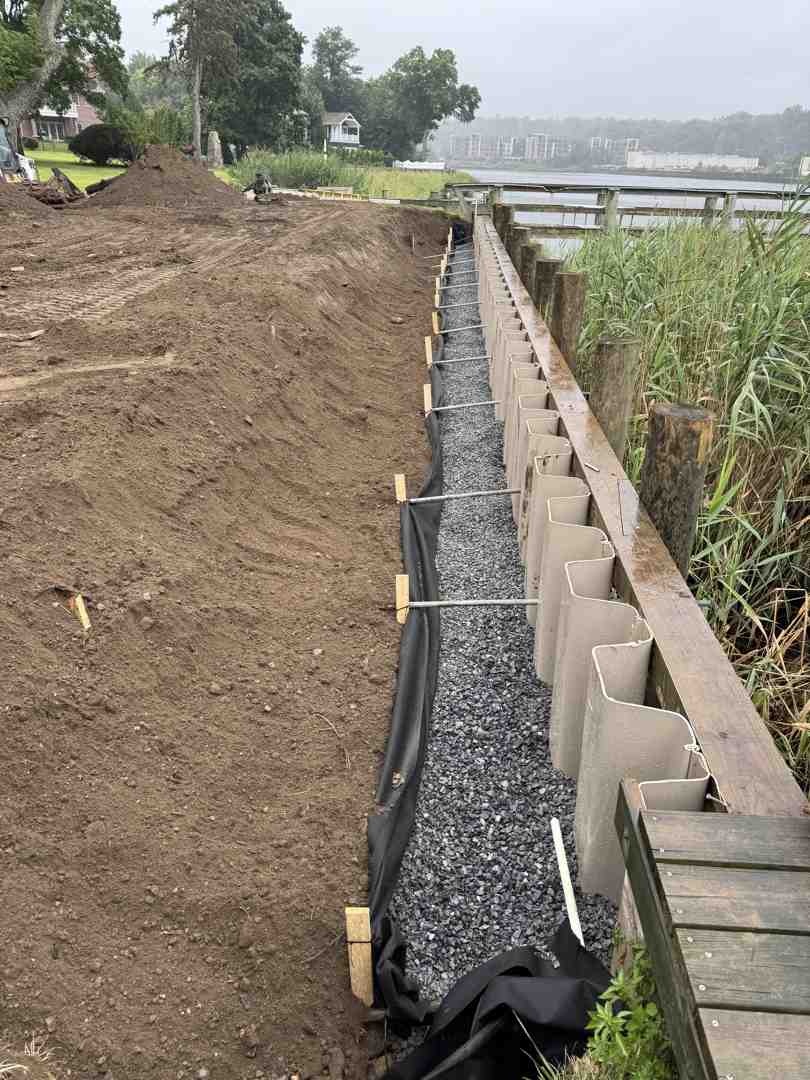
Why Seawall Erosion on Long Island Demands Immediate Action
The fastest way to repair seawall erosion is to act before the damage becomes structural. Here's a quick overview of the most effective professional repair methods utilized by Pearce Marine Construction:
- Polyurethane injection - Fill voids and stabilize soil behind the wall without excavation ($80–$300 per linear foot)
- Epoxy crack sealing - Stop water intrusion through joints and hairline cracks before soil washes out
- Helical tiebacks and anchoring - Arrest wall leaning and restore structural stability
- Riprap installation - Protect the base of the wall from wave scour and toe erosion
- Full panel replacement - Required when panels are crumbling, severely leaning, or voids exceed a cubic yard ($1,500–$3,500 per linear foot)
Picture this: the soil behind your seawall starts to sink. A small depression forms near your patio. If left unaddressed, a section of your yard can drop several inches, exposing daylight through a crack in the wall panel.
This is how seawall erosion typically unfolds on Long Island — slowly and invisibly at first, then suddenly and catastrophically.
Every tidal cycle pushes water through hairline cracks and joint gaps. That water carries fine soil particles back out with it. Over months and years, this process hollows out the ground behind the wall. The wall loses its soil support. Then it leans, cracks, or fails entirely.
In Nassau and Suffolk Counties, the problem is made worse by:
- Freeze-thaw cycles that expand cracks each winter
- High-chloride saltwater that corrodes steel reinforcement
- Storm surges from nor'easters and tropical systems
- Boat wake along canals and protected bays
The good news: most seawalls can be repaired if you catch the damage early. Professional repair typically costs 30–70% less than full replacement and can extend your seawall's service life by 15–25 years.
This guide walks you through exactly how our marine construction teams identify erosion damage, which professional repair method fits your situation, and when replacement is the smarter long-term investment.
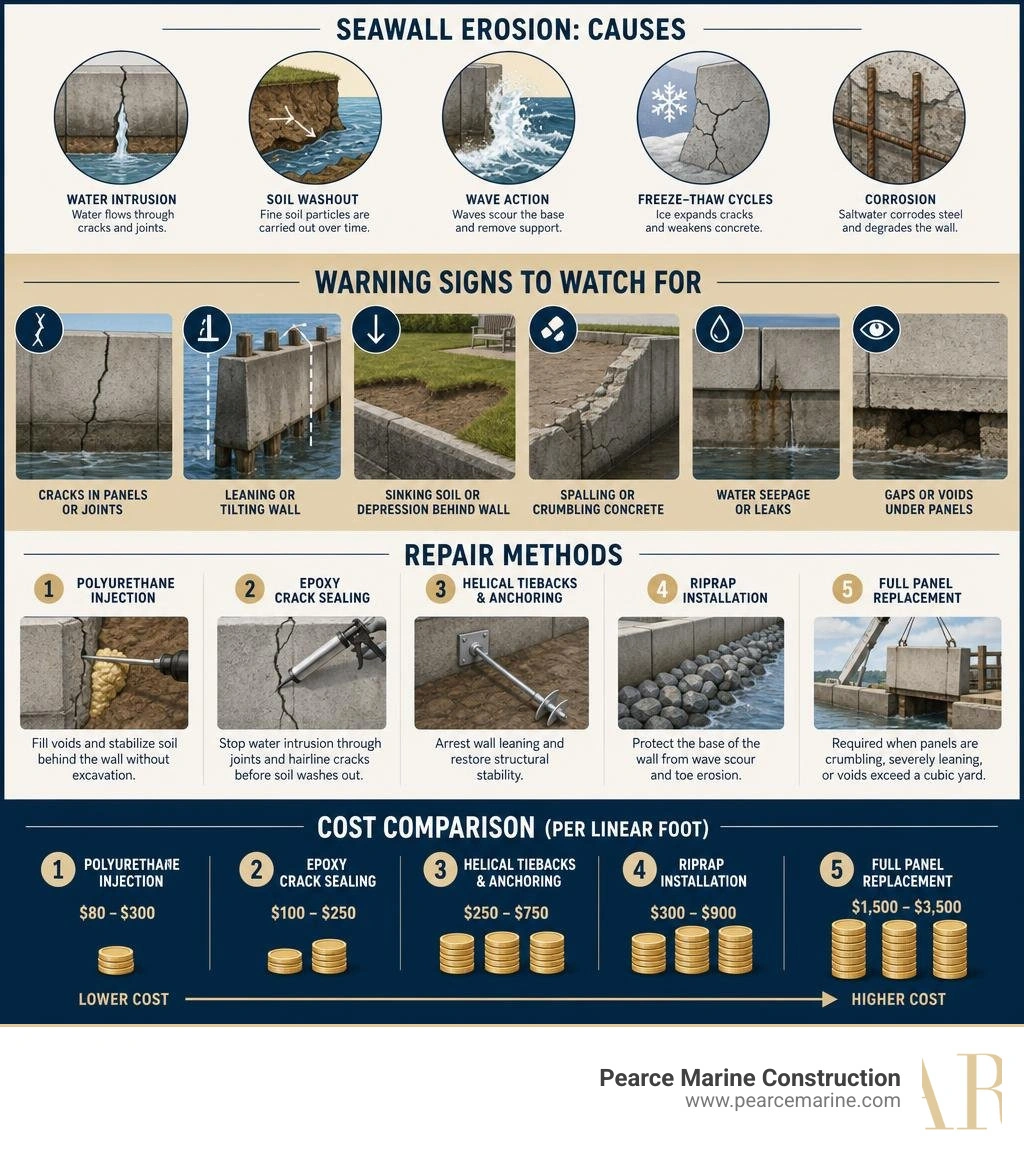
Repair seawall erosion vocab to learn:
Professional Methods to Repair Seawall Erosion
When we design a repair strategy for a failing shoreline structure, we aren't just patching up visible cracks. We are addressing the underlying physics of the wall. Seawalls are engineering marvels that must balance massive lateral soil pressure from the landward side with dynamic wave forces from the water.
The primary catalyst for structural failure is trapped water. When heavy rain or high tides saturate the soil behind the wall, hydrostatic pressure builds up. If the wall lacks proper drainage or has clogged weep holes, this water seeks the path of least resistance. It forces its way through seams, joints, and cracks, carrying supporting soil along with it.
To permanently repair seawall erosion, we utilize advanced marine engineering and soil stabilization techniques. Rather than using heavy concrete fills that add weight to already weak substrates, we focus on restoring the soil's load-bearing capacity and relieving water pressure. For a complete look at these professional methodologies, check out our Seawall Repair Services Ultimate Guide.
Early Warning Signs of Seawall Erosion and Damage
The key to avoiding a catastrophic collapse is recognizing early warning signs. On Long Island, particularly in waterfront communities like West Islip and Southampton, early detection can save you tens of thousands of dollars.
We advise property owners to watch for these critical indicators:
- Sinking Soil and Depressions: If you notice localized sinkholes or low spots forming in your lawn or patio directly behind the wall, soil is actively washing out.
- Visible Cracks and Spalling: Hairline cracks in concrete caps or panels are entry points for water. Spalling (crumbling concrete) occurs when internal steel rebar rusts, expands, and forces the concrete to pop out.
- Rust Stains: Orange or brown streaks bleeding through concrete indicate that the internal reinforcing steel is corroding and losing structural integrity.
- Leaning or Bowing Panels: If the top of your wall is tilting outward or bowing toward the water, the anchoring system has likely failed.
- Separation from Decks or Walkways: Gaps forming between the seawall cap and adjacent concrete slabs or wooden decks indicate active structural movement.
If you notice any of these signs on your property, read our Seawall Erosion Repair Guide 2026 to learn how to diagnose the severity of the damage.
Polyurethane Injection for Seawall Erosion Control
For localized voids and sinking soil, polyurethane injection is one of the most effective, non-disruptive repair methods available.
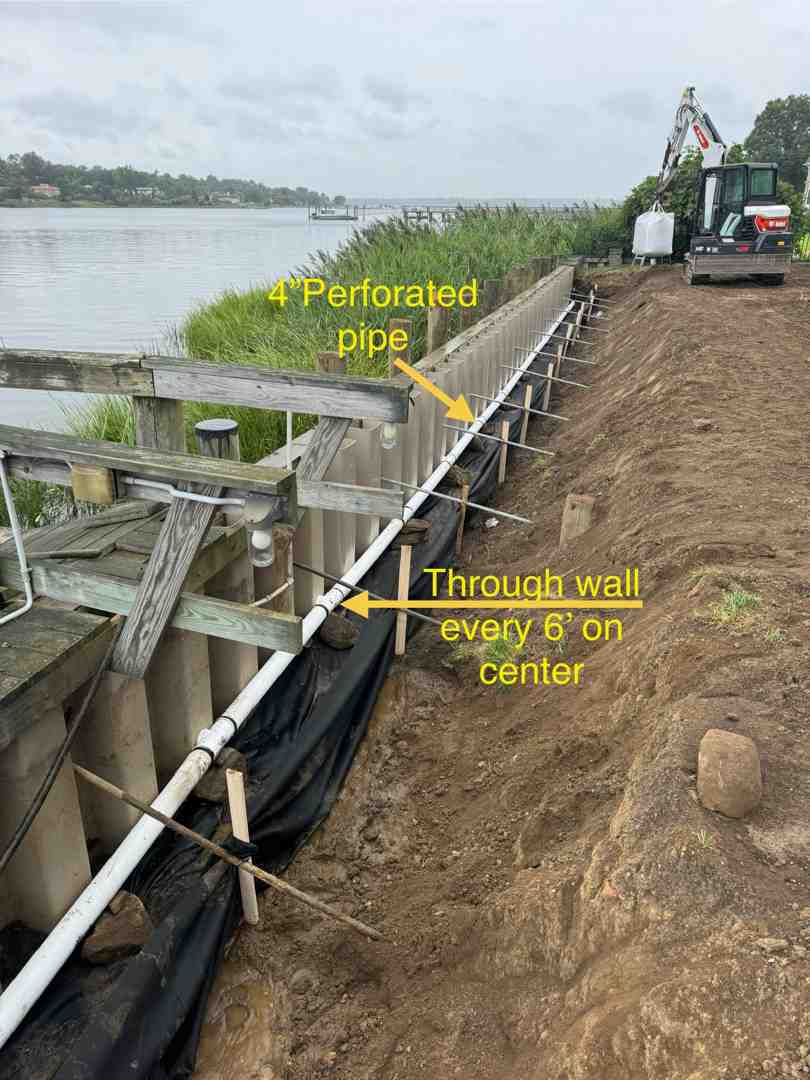
During this process, we inject specialized, eco-friendly chemical grouts directly into the weak soil zones behind the wall. The liquid polyurethane reacts with moisture in the ground, expanding rapidly into a dense, rigid, and completely waterproof foam.
As it expands, the foam:
- Fills hidden voids and sinkholes
- Displaces trapped water
- Compacts the surrounding loose soil
- Seals leaking joints and cracks from the inside out
Because polyurethane is extremely lightweight, it stabilizes the shoreline without adding heavy loads that could cause weak soils to sink further. It is an ideal solution for properties with nearby patios or pool decks. You can find detailed technical breakdowns of this injection process in our guide on Repairing Seawalls.
Structural Tiebacks and Helical Piers to Repair Seawall Erosion
When a seawall begins to lean or bow outward, soil stabilization alone isn't enough. The structural anchoring system must be reinforced. In areas like Massapequa and Babylon, where older wood or concrete bulkheads face significant lateral pressure, we install helical piers and heavy-duty steel tiebacks.
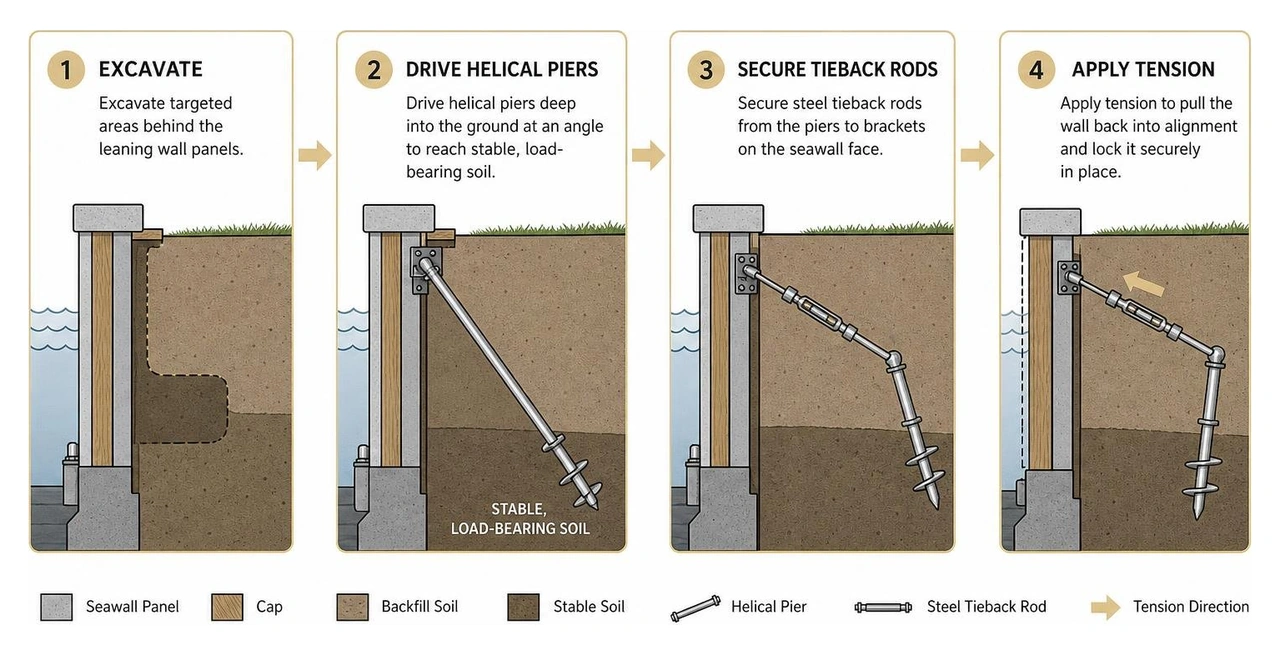
This process involves:
- Excavating targeted areas behind the leaning wall panels.
- Driving helical piers deep into the ground at an angle until they reach load-bearing, stable soil.
- Securing steel tieback rods from the piers to specialized brackets on the seawall face.
- Applying tension to the rods to pull the wall back into alignment and lock it securely in place.
This creates a permanent anchoring system that prevents further wall deflection. To understand how anchoring systems are designed for different shoreline types, refer to our comprehensive Bulkhead and Seawall Repair Guide.
Riprap Installation and Base Stabilization
Erosion doesn't just happen behind the wall; it also occurs at the base. "Toe scour" happens when waves hit the wall and redirect downward, washing away the sand and sediment supporting the bottom of the panels. If the bottom "kicks out," the entire wall will collapse.
To prevent this in high-energy coastal environments like Westhampton, we install a stone revetment known as riprap.
We place heavy, marine-grade stones over a layer of geotextile filter fabric at the base of the seawall. This stone barrier absorbs and dissipates incoming wave energy, preventing toe scour and protecting the structural foundation. Learn more about protecting your wall's foundation in our Seawall Repairs Complete Guide 2026.
Seawall Repair vs. Replacement: Making the Right Investment
Deciding whether to repair or completely replace your shoreline structure is a major financial decision. While repairs are highly cost-effective, they are only viable if the wall still has structural integrity. If the concrete is crumbling to the touch or leaning beyond five degrees, full replacement is often the safest and most practical choice.
At Pearce Marine Construction, we conduct forensic-level assessments to help you choose the right path. Explore our Professional Seawall and Bulkhead Services to see how we evaluate structural health.
How to Repair Seawall Erosion: Restoration vs. Full Replacement
To help you compare your options, we have outlined the typical costs, lifespans, and material considerations for both approaches:
| Factor | Seawall Erosion Repair / Restoration | Full Seawall / Bulkhead Replacement |
|---|---|---|
| Typical Cost | $150 - $600 per linear foot | $1,500 - $3,500 per linear foot |
| Polyurethane Cost | $80 - $300 per linear foot | N/A |
| Expected Lifespan | 15 - 25 years (with professional restoration) | 30 - 75 years (using modern vinyl/composite) |
| Installation Time | 1 - 3 days | 1 - 3 weeks |
| Disruption | Minimal; no heavy excavation required | Significant; requires heavy machinery and demolition |
| Best Materials | Eco-friendly resins, marine-grade epoxies | Heavy-duty vinyl sheet piling, composite materials |
If your wall is less than 20 to 30 years old and the damage is localized, professional restoration is almost always the smarter financial move. However, if the structural tiebacks have completely failed or the panels are severely cracked, investing in a modern vinyl bulkhead will secure your property for decades to come.
Long-Term Shoreline Stabilization for Long Island Properties
Long Island's unique geography requires specialized marine engineering. Properties on the South Shore (such as in Bayshore, West Islip, and Brightwaters) deal with sandy, highly tidal canal environments. Meanwhile, properties on the North Shore (like in Lloyd Harbor, Cold Spring Harbor, and Huntington) face rocky, high-energy wave action.
Our harsh winters also bring freeze-thaw cycles that can devastate poorly constructed walls. Water gets trapped in concrete pores, freezes, expands, and blows the concrete apart.
As a premier, woman-owned marine construction contractor serving Nassau and Suffolk Counties, Pearce Marine Construction brings generational expertise and meticulous craftsmanship to every project. We use only high-performance, marine-grade materials engineered to withstand high-chloride environments and extreme weather, with repair and replacement strategies tailored to each Long Island shoreline.
Don't wait for a minor sinkhole to turn into a costly shoreline collapse. Contact us today through our Professional Seawall and Bulkhead Services page to schedule a professional evaluation and protect your waterfront investment.



Bring Your Vision to Life
Whether you're planning a custom dock, seawall, or boat lift, our experienced team is ready to deliver high-quality marine construction tailored to your needs. Pearce Marine Construction brings craftsmanship, precision, and a deep understanding of Florida’s waterways to every project. Let us help you create a durable, beautiful solution that stands the test of time. Get in touch now for a personalized estimate!