
Shoreline Stabilization Services: Drawing a Line in the Sand Against Erosion

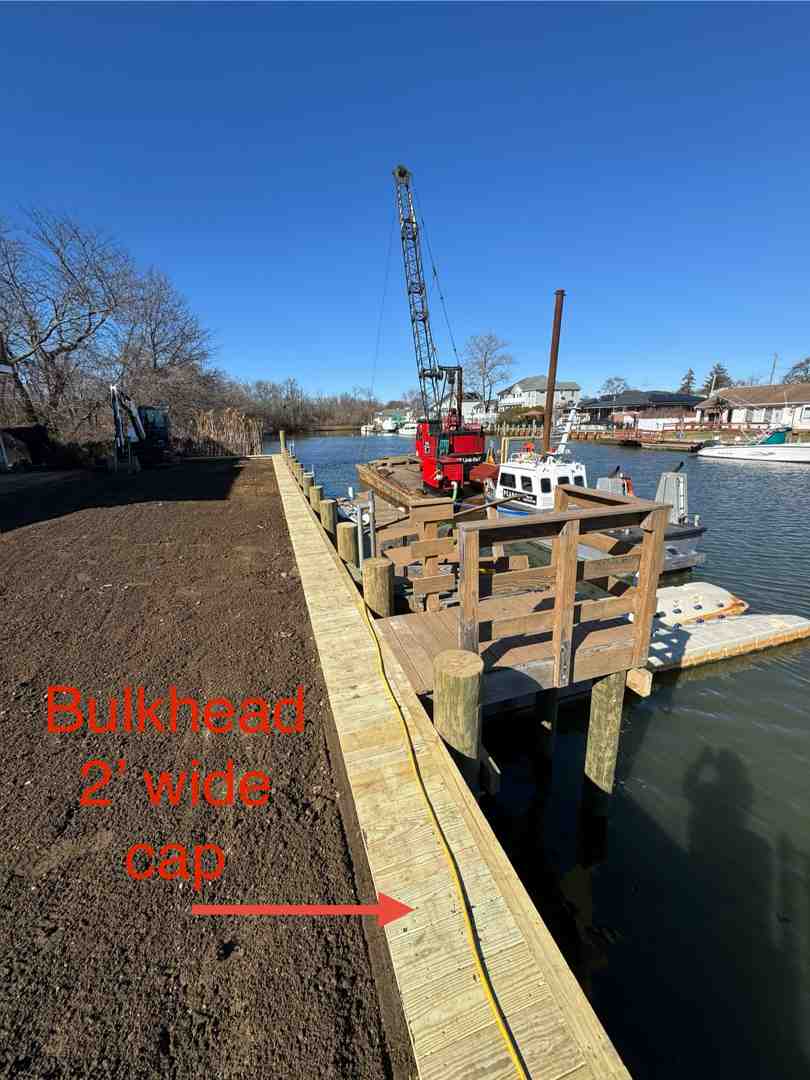
Why Long Island Shorelines Are Losing the Fight Against Erosion
Shoreline stabilization services are professional construction solutions that protect waterfront properties from erosion, storm surge, and structural collapse by installing bulkheads, seawalls, revetments, and other engineered barriers along the water's edge.
Quick answer — what shoreline stabilization services cover:
- Bulkhead construction and repair — vertical barriers (timber, vinyl, steel, or concrete) that hold soil in place
- Seawall installation — heavy-duty concrete or steel structures for high-wave exposure
- Riprap and revetment — sloped armor stone that absorbs and dissipates wave energy
- Anchoring systems — helical piles, tie-backs, and deadman anchors that reinforce existing structures
- Backfilling and grading — restoring land lost to erosion behind new structures
- Drainage solutions — weep holes and French drains that relieve hydrostatic pressure on walls
Long Island has over 1,180 miles of shoreline. That's 1,180 miles of tidal fluctuation, nor'easter storm surges, and boat wake action working against your property — every single day.
For homeowners in Nassau and Suffolk Counties, this isn't abstract. It shows up as a bank that's a few feet shorter than it was last year. A bulkhead that's starting to lean. A lawn that ends where it didn't before.
Erosion doesn't announce itself. It just takes.
Without the right construction in place, waterfront properties can lose significant land, suffer foundation damage, and drop in value — fast. The good news is that engineered shoreline stabilization stops that process in its tracks when it's done right.
Shoreline stabilization services vocab to learn:
Engineering Resilient Shoreline Stabilization Services
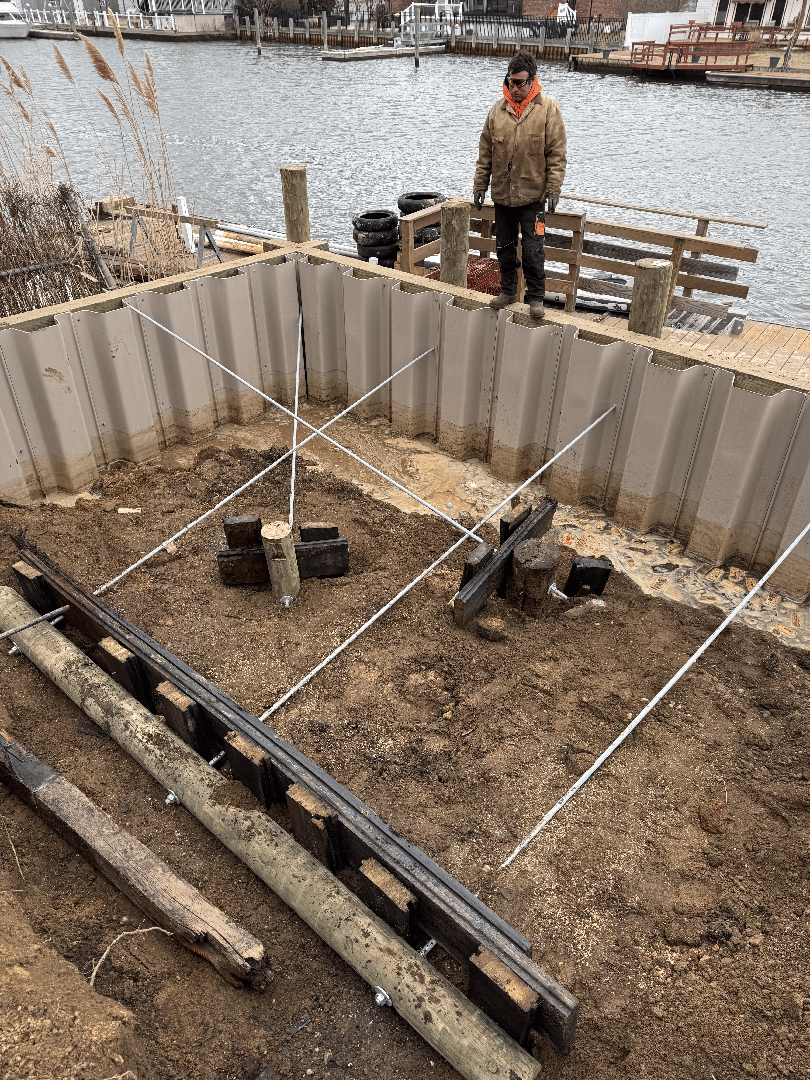
When we talk about shoreline stabilization services, we aren't just talking about dumping rocks or driving planks into the mud. We are talking about marine engineering that accounts for the unique physics of the Long Island coast. Every project we undertake in areas like West Islip or Bayshore must address three critical factors: wave energy, hydrostatic pressure, and soil composition.
Wave energy is the most obvious threat. Whether it’s the constant lapping of tides in the Great South Bay or the aggressive boat wakes in a narrow canal in Massapequa, that energy has to go somewhere. If it isn't absorbed or deflected by a professional structure, it will scour the soil right out from under your lawn.
Hydrostatic pressure is the "silent killer" of bulkheads. This is the pressure exerted by the water trapped in the soil behind your bulkhead. When the tide goes out, that heavy, wet soil pushes against the back of your wall. Without proper Shoreline Stabilization Services that include drainage solutions like weep holes or French drains, even the strongest wall can bow or snap.
Finally, soil composition on Long Island is notoriously sandy. Sand is excellent for beaches but challenging for construction because it shifts easily. Our team uses generational expertise to ensure that every pile is driven to the correct depth to reach stable strata, providing a foundation that won't migrate when the weather turns sour. For a deeper look at how we navigate these local challenges, check out our Shoreline Protection Long Island Guide.
Hard Armoring with Bulkheads and Seawalls
For many Long Island properties, "hard armoring" is the most effective way to draw a definitive line in the sand. This involves the construction of vertical barriers designed to halt soil loss immediately.
- Timber Bulkheads: A classic choice for many Nassau County canals. We use pressure-treated marine-grade timber that offers a traditional look while providing robust protection.
- Vinyl Bulkheads: The modern standard for Erosion Control Solutions. Vinyl sheet piling is impervious to marine borers (wood-eating organisms) and doesn't rust, making it a favorite for homeowners in Merrick and Bellmore who want a low-maintenance, 30-to-40-year solution.
- Steel Bulkheads: When the wave energy is extreme or the wall needs to support significant upland weight, steel is the answer. It offers unparalleled structural integrity.
- Concrete Seawalls: These are heavy-duty, permanent structures often seen on larger estates or public waterfronts where the goal is a "once-in-a-lifetime" build.
By creating a vertical barrier, we essentially "lock" the land in place. This is critical for Shoreline Protection Nassau projects where homes are built close to the water's edge and there is zero margin for land loss.
Riprap and Revetment Installation
Not every shoreline requires a vertical wall. In many Suffolk County locations, a sloped approach using riprap or stone revetments is more appropriate.
Riprap consists of a layer of large, heavy armor stones placed along the shoreline. The primary benefit of this method is wave dissipation. Unlike a flat bulkhead, which reflects wave energy (sometimes causing scouring at the base), the irregular gaps between riprap stones break the wave apart, soaking up its energy and preventing it from reaching the soil.
When we install a revetment, we don't just throw rocks. We follow a strict engineering process:
- Grading: The bank is sloped to a stable angle (typically a 1:2 ratio).
- Geotextile Fabric: A heavy-duty marine fabric is laid down to prevent the soil from washing out through the rocks.
- Armor Stone Placement: Stones are meticulously placed to ensure they interlock, creating a shield that even a nor'easter can't dislodge.
This method is highly effective for Coastal Erosion Prevention Guide strategies and is often the preferred choice in our Erosion Control Suffolk County Guide for properties with natural, sloped banks.
Specialized Shoreline Stabilization Services for Long Island Estates
In high-end markets like Southampton and West Hampton, shoreline stabilization often requires a more "invisible" but incredibly powerful touch. Large waterfront estates often have significant upland structures—pools, guesthouses, or expansive decks—that put immense pressure on the shoreline.
For these projects, we utilize helical piles and advanced anchoring systems. Helical piles are essentially large steel screws that are bored deep into the earth until they hit high-torque capacity soil. These serve as the ultimate "deadman" anchor for a bulkhead.
We also specialize in the installation of Magnum Helix Anchors and tie-back systems. If an existing bulkhead is starting to lean toward the water, we can often save it by installing these anchors upland and "tying" the wall back to them. This prevents a total collapse and reinforces the structure against future storm surges.
Our work in these areas often involves complex Erosion Control and Shoreline Stabilization, Long Island, New York projects where we coordinate with environmental engineers to ensure the stabilization is both structurally sound and compliant with local aesthetic standards. Following Shoreline Erosion Best Practices is non-negotiable when protecting these multi-million dollar investments.
The Construction Process for Long-Term Coastal Resilience
At Pearce Marine Construction, we believe the difference between a wall that lasts 10 years and one that lasts 40 is the process. As a woman-owned business with generational expertise, we don't cut corners on the "invisible" parts of the build.
Our process begins with a comprehensive site assessment. We don't just look at the erosion; we look at the fetch (the distance wind travels over water), the depth of the water at high and low tide, and the proximity of upland structures.
Once the engineering is finalized, we move to the heavy lifting. Pile driving is the heartbeat of our operation. We use specialized barge-mounted and land-based equipment to drive timber or steel piles deep into the Long Island sand. Our meticulous craftsmanship ensures that every pile is perfectly plumb and every sheet is tightly interlocked. This is why we are recognized as leading Shoreline Protection Contractors in the region.
If you're ready to Secure your waterfront with professional seawalls and bulkheads, you need a team that understands the local engineering requirements and the local tides.
Integrating Docks and Marine Infrastructure
One of the most effective ways to utilize shoreline stabilization services is to integrate them with your functional marine infrastructure. A bulkhead shouldn't just be a wall; it should be the foundation for your waterfront property's structural integrity.
When we build docks, piers, and custom decking, we integrate them directly into the stabilization system. For example:
- Structural Integration: We can tie dock pilings into the bulkhead's anchoring system for added stability.
- Walkways: Custom-built walkways can be designed to provide access while also acting as a cap for riprap or revetments.
- Decking: We build custom decks that cantilever over the bulkhead, maximizing your usable space without putting undue stress on the erosion barrier.
By combining Shoreline Docks with our Shoreline Erosion Solutions, we provide a seamless, engineered environment that looks as good as it performs.
Advanced Shoreline Stabilization Services and Repair
Not every project is a new build. Many of our clients in Cold Spring Harbor, Huntington, and Lloyd Harbor come to us because their existing infrastructure is failing.
Bulkhead repair is a specialized skill. It might involve:
- Replacing Whalers and Caps: These are the horizontal supports that keep the wall straight. If they rot or rust, the wall will bow.
- Drainage Solutions: Installing new weep holes or French drains to relieve that deadly hydrostatic pressure we mentioned earlier.
- Backfilling and Grading: If you've already lost land, we don't just build a wall; we restore the property. We use high-quality fill, compact it properly, and grade it to ensure water flows away from the shoreline.
We often look at Shoreline First | Nationwide Waterfront Infrastructure standards to ensure our local Long Island repairs meet or exceed national best practices for Coastal Erosion Control.
Material Selection and Lifespan Expectations
Choosing the right material is a balance of budget, environment, and how long you plan to own the property. On Long Island, the salt air and tidal action are relentless, so "cheap" materials usually end up being the most expensive in the long run due to early failure.
| Material | Expected Lifespan | Best Use Case |
|---|---|---|
| Timber | 15–20 Years | Residential canals, lower wave energy, traditional look. |
| Vinyl | 30–40 Years | High-salinity areas, low maintenance, most residential bulkheads. |
| Steel | 35–50 Years | High-energy shorelines, deep water, heavy structural loads. |
| Concrete | 40+ Years | Commercial fronts, public infrastructure, high-end estates. |
Understanding these lifespans is a key part of managing Long Island Beach Erosion. Whether you are looking at our Beach Erosion Long Island Guide or planning a new bulkhead in Bayshore, the material you choose today determines your peace of mind for the next several decades.
Protecting Your Investment with Pearce Marine Construction
Erosion is a constant force, but it isn't an unstoppable one. With the right shoreline stabilization services, you can protect your property, increase your home's value, and ensure that your piece of Long Island stays right where it belongs.
From the initial site assessment to the final pile driven, Pearce Marine Construction brings meticulous craftsmanship and generational expertise to every foot of the shoreline. Whether you're in Nassau or Suffolk, we're here to help you draw that line in the sand.
Ready to protect your shoreline?Contact Pearce Marine Construction today for a professional consultation. We serve Nassau and Suffolk Counties, including Massapequa, Merrick, West Islip, and the Hamptons. Let’s build something that lasts.



Bring Your Vision to Life
Whether you're planning a custom dock, seawall, or boat lift, our experienced team is ready to deliver high-quality marine construction tailored to your needs. Pearce Marine Construction brings craftsmanship, precision, and a deep understanding of Florida’s waterways to every project. Let us help you create a durable, beautiful solution that stands the test of time. Get in touch now for a personalized estimate!