
Practical Vinyl Seawall Repair to Keep Bulkheads Standing Strong

Vinyl Seawall Repair Starts With Finding the Cause
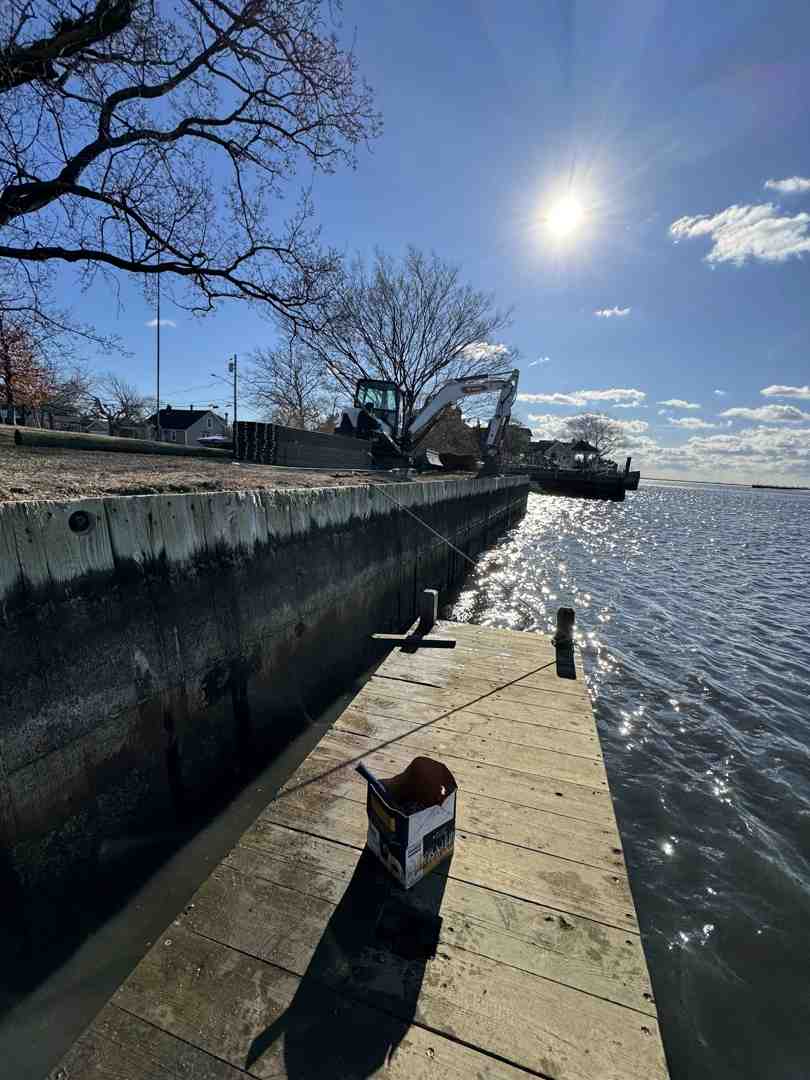
Professional vinyl seawall repair requires diagnosing the root engineering cause before restoring damaged panels. When a seam separates, the soil behind the wall subsides, or a sheet pile bows under pressure, a qualified marine contractor must address the compromised anchoring, lost backfill, and hydrostatic drainage issues—not just the visible surface damage.
Vinyl sheet piling resists rot and saltwater corrosion, but violent tidal forces, heavy impacts, and shifting soils can destabilize a bulkhead. For waterfront property owners across Nassau and Suffolk Counties, scheduling prompt contractor evaluations after severe coastal storms prevents minor panel stress from developing into catastrophic shoreline washouts.
Property owners comparing repair scopes can review factors affecting seawall repair cost per foot, available seawall repair services, and emergency seawall repair for related marine construction solutions.
Professional Vinyl Seawall Repair and Restoration for Long Island Properties
Rigid polyvinyl chloride (PVC) sheet piling has become the premier choice across Long Island because it is impervious to marine borers, rot, and saltwater corrosion. When engineered properly, high-grade vinyl bulkheads deliver a service life of 50 to 75+ years with minimal maintenance. However, relentless tidal hydrodynamics, storm surges, and freeze-thaw cycles in coastal areas like Southold, Massapequa, and Southampton can exert immense force against these structures.
Understanding the dynamics of custom vinyl seawall construction is critical when evaluating structural wear. Marine structures along local waterways must meet stringent standards, such as Southold Town coastal marine guidelines, to ensure long-term shoreline stability and structural integrity. A long-lasting repair addresses the underlying hydrodynamic forces, relieving hydrostatic pressure and preventing soil migration rather than just covering superficial flaws.
Identifying Structural Damage: Cracks, Seam Separation, and Voids
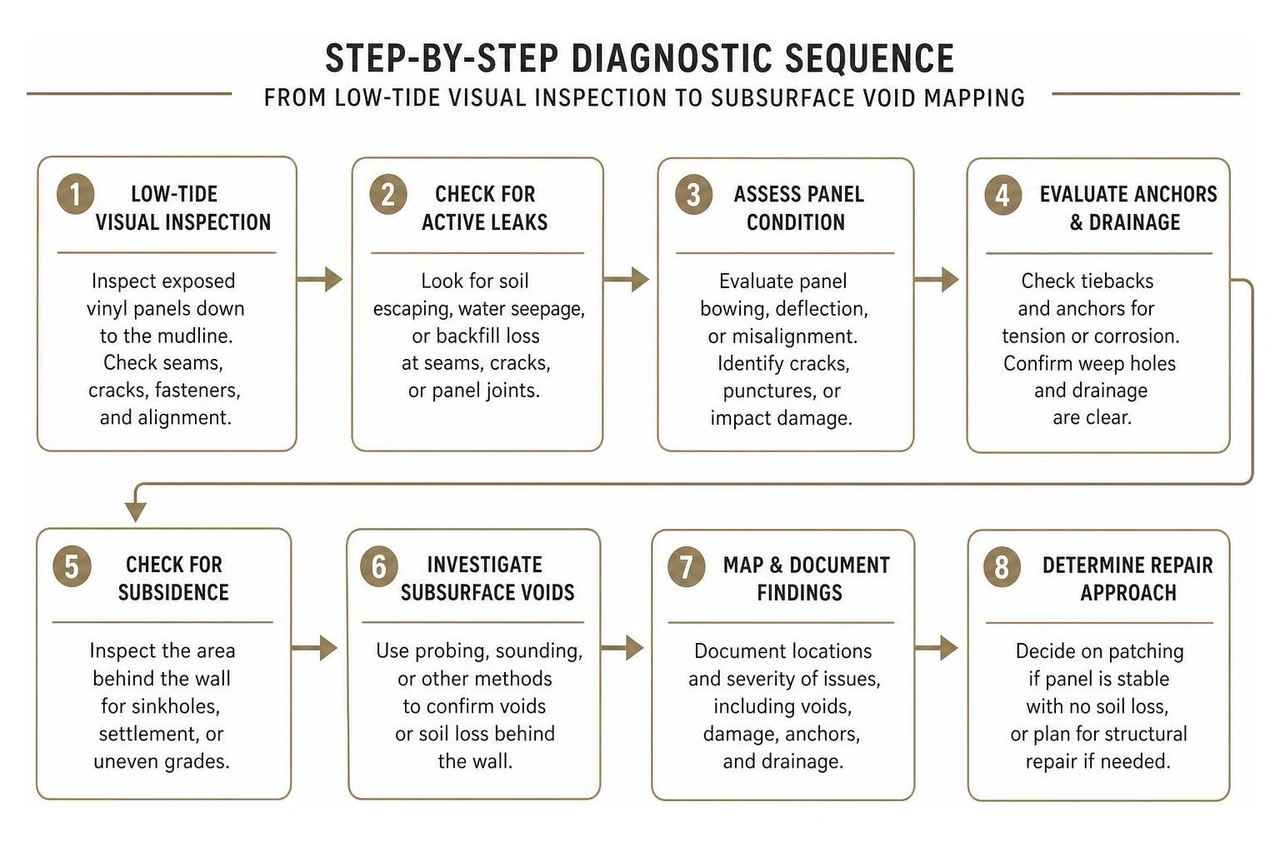
Early detection saves bulkheads from catastrophic failures. Contractor inspections at low tide allow marine crews to evaluate the exposed face of the vinyl sheets down to the mudline.
Key warning signs include:
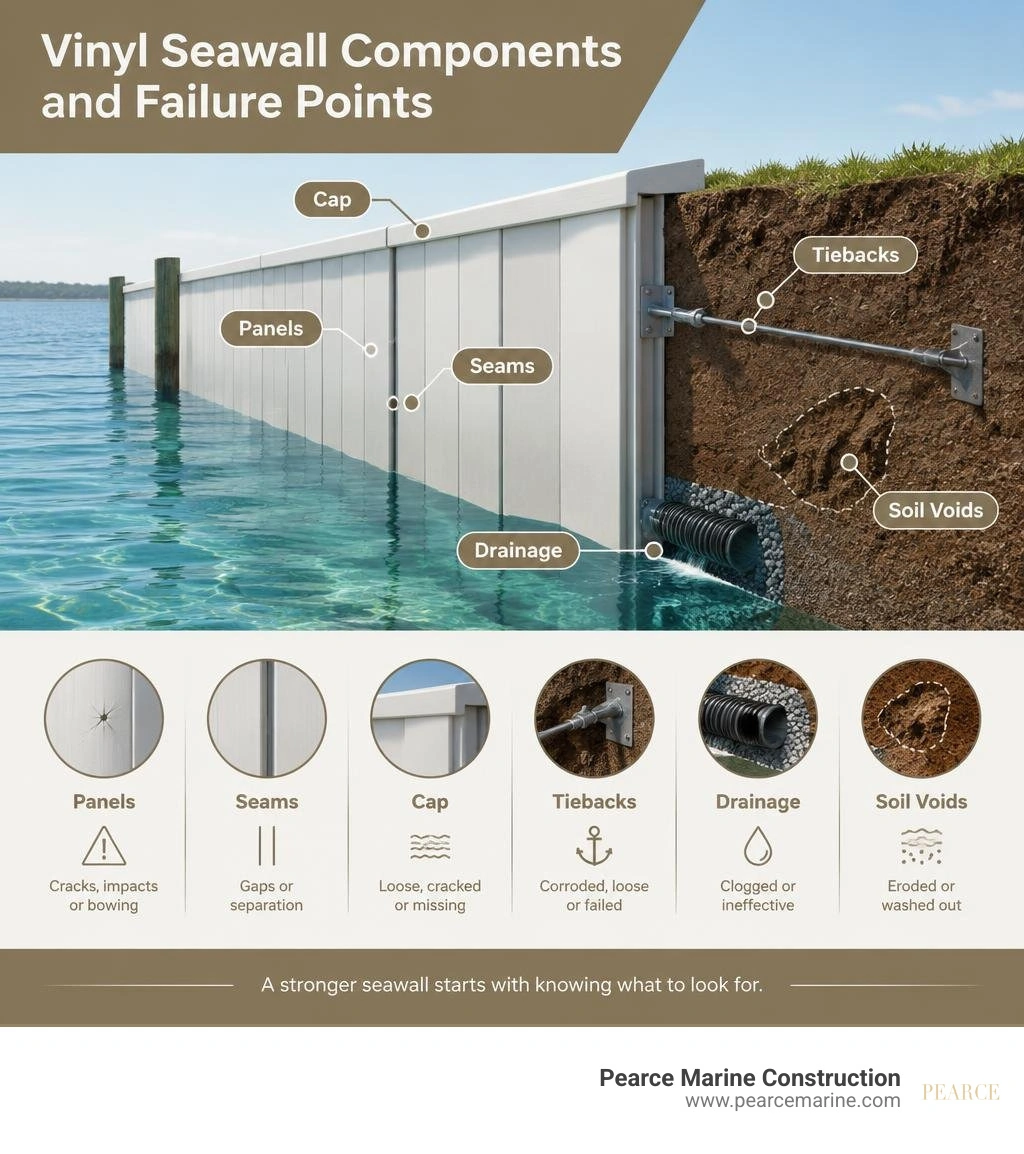
- Interlock Seam Separation: Vinyl panels lock together with specialized tongue-and-groove or claw joints. If shifting soils or heavy wave action pull these interlocks apart, backfill begins to escape during outgoing tides.
- Surface Cracks and Punctures: While vinyl does not rot, severe storm impacts or heavy debris strikes can fracture panels or cause stress cracks around fastener points.
- Panel Deflection and Bowing: If a sheet pile begins to bulge outward toward the canal or bay, it indicates severe soil overloading behind the wall or failed anchor tiebacks.
- Subsidence and Cavities: The appearance of sinkholes behind the concrete cap or timber waler is a clear indicator of sub-surface voiding. Promptly repairing seawall erosion and sinkholes prevents total collapse of adjacent docks, walkways, and custom decking.
Contractor-Applied Repairs for Minor Cracks, Punctures, and Holes
For non-structural, localized punctures or small hairline cracks where the interlock remains intact and no backfill soil is escaping, a targeted patch can restore the panel's water barrier. Pearce Marine crews perform this work with professional materials and controlled marine construction methods suited to Nassau and Suffolk County waterfront conditions.
- Surface Preparation by Marine Technicians: The repair crew removes algae, barnacles, and marine fouling around the damaged area using professional scraping and scouring equipment so the vinyl bonding surface can be properly evaluated and dried.
- Controlled Abrasion: The surrounding PVC is mechanically abraded to create a consistent bonding profile that improves adhesion without weakening the sheet pile.
- Compatible Marine-Grade Vinyl Patches: A patch is fabricated from compatible virgin marine PVC to extend at least two inches beyond the damage on all sides, with rounded corners that reduce peeling risk.
- Structural Adhesive and Sealing: A high-strength, marine-grade structural PVC adhesive or underwater-curing adhesive sealant is applied by the crew. The patch is pressed into place, trapped air is removed, and the outer perimeter is sealed with a UV-resistant marine sealant designed to accommodate thermal expansion.
Sealing Separated Sheet Piling Interlocks and Seams
When tidal wash pulls panel interlocks apart, standard caulking or rigid hydraulic cements will quickly crack and fail due to natural wall movement. Restoring separated seams requires specialized marine containment and structural grouting methods.
Contractors often utilize rigid vinyl repair forms that are water-jetted approximately 12 inches into the substrate mudline and fastened securely against the seawall face with corrosion-proof 316-grade stainless steel anchors. The trapped void within the form is then cleared and filled with cementitious epoxy grout.
Where excavation behind the wall is restricted by existing walkways, high-density polyurethane foam seawall repair offers a non-destructive alternative. Technicians inject two-part hydrophobic chemical grouts via small ports; the foam expands rapidly within the soil matrix, creating an impermeable barrier that permanently seals the joint against soil migration.
Addressing Hydrostatic Pressure with Weep Holes and Soil Void Filling
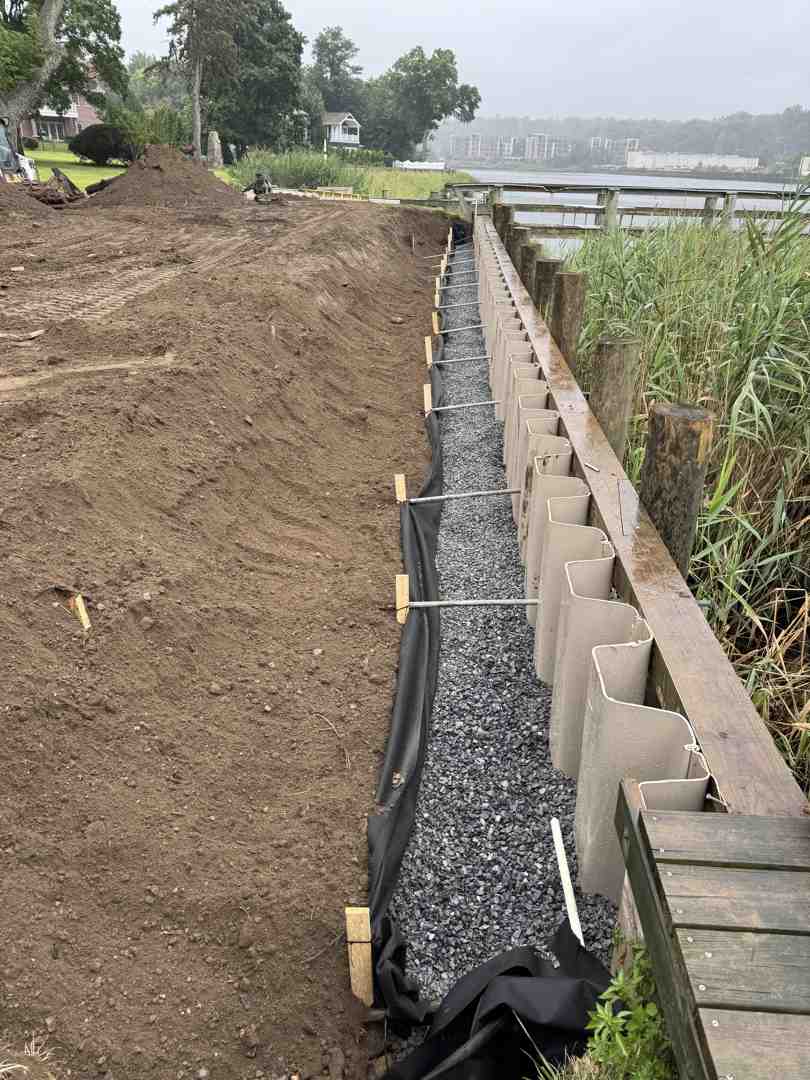
Unrelieved hydrostatic pressure is the primary cause of seawall bowing and joint blowout. When heavy rains or storm surges saturate the ground behind a bulkhead, water must drain freely through weep holes equipped with geotextile filter fabric. If weep holes become clogged with sediment or roots, the trapped water exerts immense pressure against the back of the vinyl sheets.
To restore equilibrium, Pearce Marine crews:
- Clear obstructed weep holes and replace deteriorated filter media to allow free water discharge without carrying soil particles.
- Fill subterranean cavities and sinkholes using expanding structural polymers or cementitious grouts that stabilize backfill soils and prevent further loss.
- Implement comprehensive Long Island shoreline stabilization methods to manage surface runoff before it creates dangerous subsurface pressure.
Long-Term Contractor Maintenance and When to Hire a Shoreline Contractor
Minor surface blemishes can be resolved with localized contractor patching, but deep soil voids, leaning panels, or compromised anchoring require comprehensive marine engineering.
| Issue / Failure Type | Non-Structural Contractor Repair Scope | Professional Marine Repair |
|---|---|---|
| Small Surface Puncture | Surface cleaning, marine PVC patching, and UV sealant application | Panel reinforcement or localized sleeve installation |
| Separated Panel Interlocks | Caulk-only sealing is not a durable marine repair | Vinyl form grouting or 2-part polymer injection sealing |
| Subsurface Sinkholes / Voids | Topsoil-only filling washes out under tidal pressure | High-density polyurethane permeation & deep void filling |
| Bowing Wall / Anchor Failure | Surface patching is ineffective | Helical tieback installation & deadman replacement |
| Cap Spalling & Rebar Rust | Cosmetic surface mortar patching does not restore load transfer | Structural cap rebuilding with epoxy-coated steel or composite |
Navigating waterfront repairs across Nassau and Suffolk Counties demands strict adherence to engineering standards and United States Coast Guard marine safety standards. When walls begin to lean or sinkholes appear, engaging professional seawall repair services ensures your property remains protected against severe coastal storms.
Professional Vinyl Seawall Repair for Anchors, Caps, and Severe Failures
When structural components fail, our marine construction crews deploy specialized heavy equipment, barges, and advanced materials to restore structural integrity.
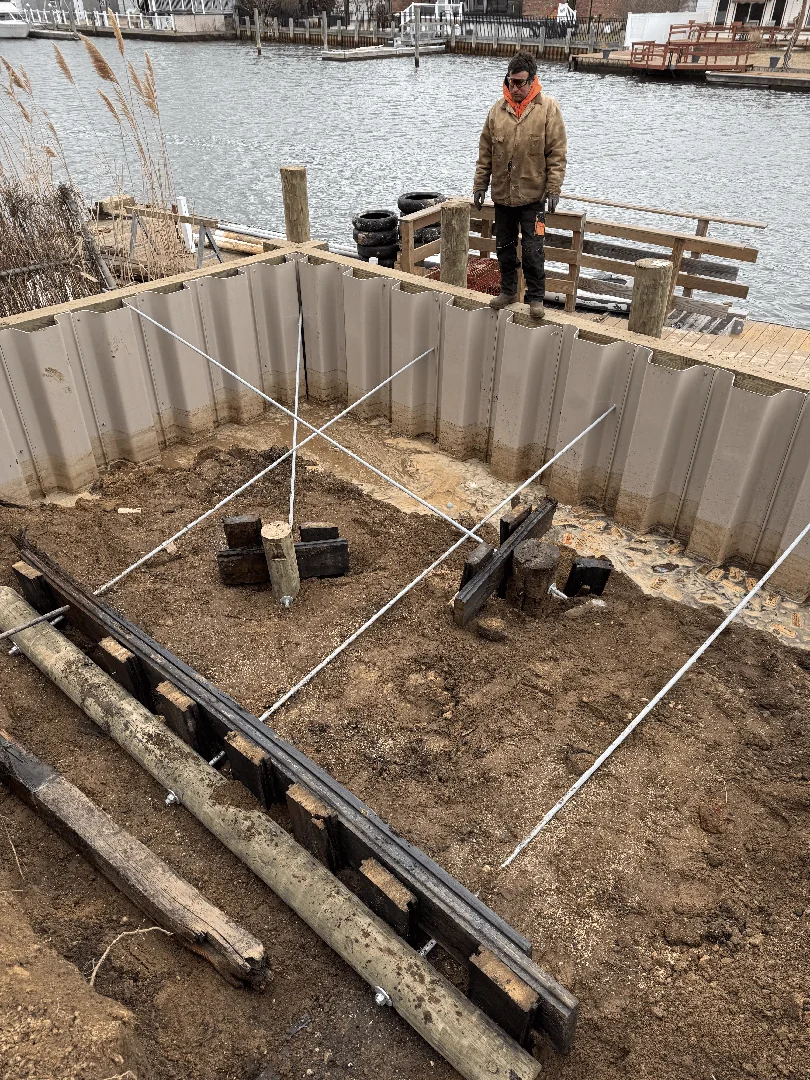
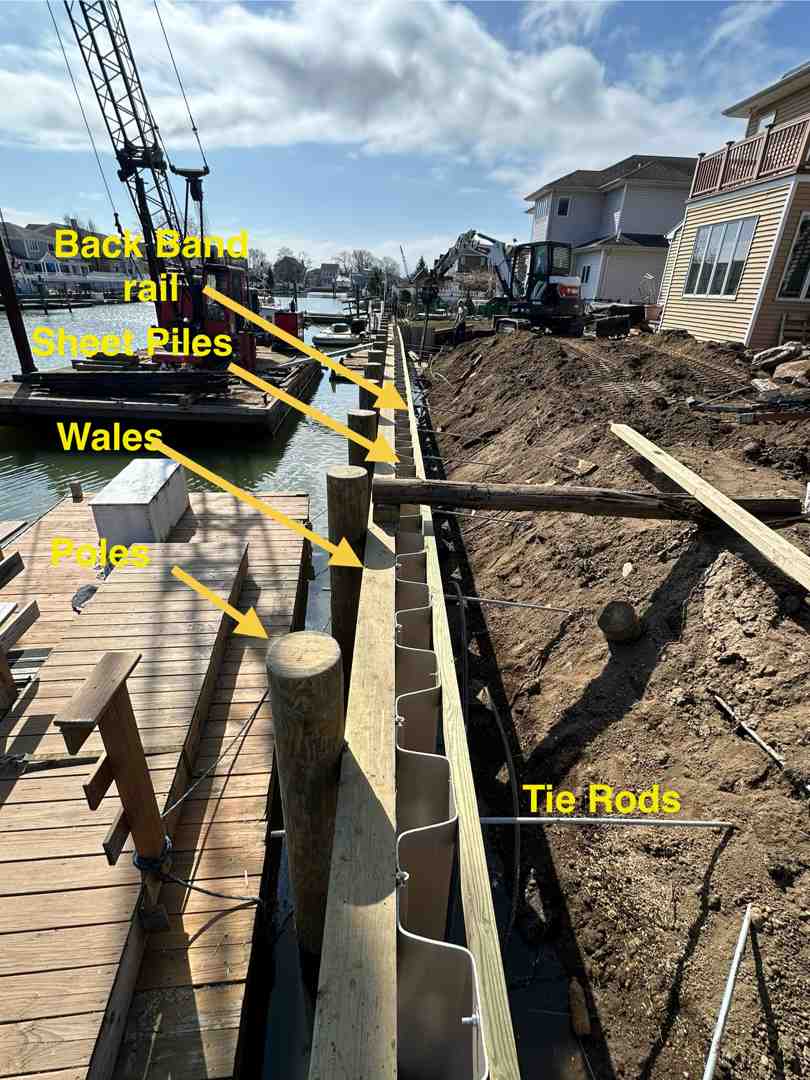
- Helical Tieback Anchors: When traditional buried timber deadmen decay or pull loose in soft soil, installing new helical tieback anchors torqued deep into stable load-bearing strata locks the vinyl seawall back into proper alignment.
- Bulkhead Cap Restoration: Concrete seawall caps often develop spalling, exposed rebar, and cracking. Replacing damaged bulkhead caps with reinforced, marine-grade concrete caps ties the entire sheet pile system together into a rigid unit.
- Coffer Resheeting over Failing Concrete: In situations where an aging concrete seawall is deteriorating, driving new vinyl sheet piling directly in front of the existing wall provides a 50+ year protective barrier without the expense and disruption of complete demolition.
Professional Inspection Scope for Long Island Bulkheads
To maximize the life of waterfront infrastructure across communities like West Islip, Babylon, Bellmore, Westhampton, and Southampton, Pearce Marine contractor evaluations focus on structural conditions that affect shoreline protection:
- Inspect panel faces at extreme low tide for impact fractures, bowing, or separated interlocks.
- Check weep holes to confirm that water drains freely and filter fabric is intact without sand accumulation.
- Examine the concrete cap or timber walers for structural cracks, loose hardware, or rot.
- Check tieback rods and anchor points for tension loss, shifting, or excessive corrosion.
- Clear away excessive marine growth, heavy barnacle clusters, or lodged drift logs that could stress the sheets.
- Check the grade directly behind the bulkhead for depressions, spongy soil, or sudden sinkholes that indicate backfill loss.
Pearce Marine Construction is a woman-owned marine construction company serving residential, commercial, and public clients in Nassau and Suffolk Counties on Long Island, NY, delivering generational marine engineering knowledge and precision craftsmanship tailored specifically to Long Island's demanding shoreline conditions. Pearce Marine provides dedicated local expertise, engineering standards, and marine craftsmanship for Long Island waterfront properties.
If your bulkhead is showing signs of movement, joint separation, or sinkholes, schedule a comprehensive seawall inspection with our marine specialists today to protect your shoreline for decades to come.



Bring Your Vision to Life
Whether you're planning a custom dock, seawall, or boat lift, our experienced team is ready to deliver high-quality marine construction tailored to your needs. Pearce Marine Construction brings craftsmanship, precision, and a deep understanding of Florida’s waterways to every project. Let us help you create a durable, beautiful solution that stands the test of time. Get in touch now for a personalized estimate!