
Why Proactive Seawall Erosion Control Protects Your Land Value


Stop Shoreline Loss Before It Reaches Your Property
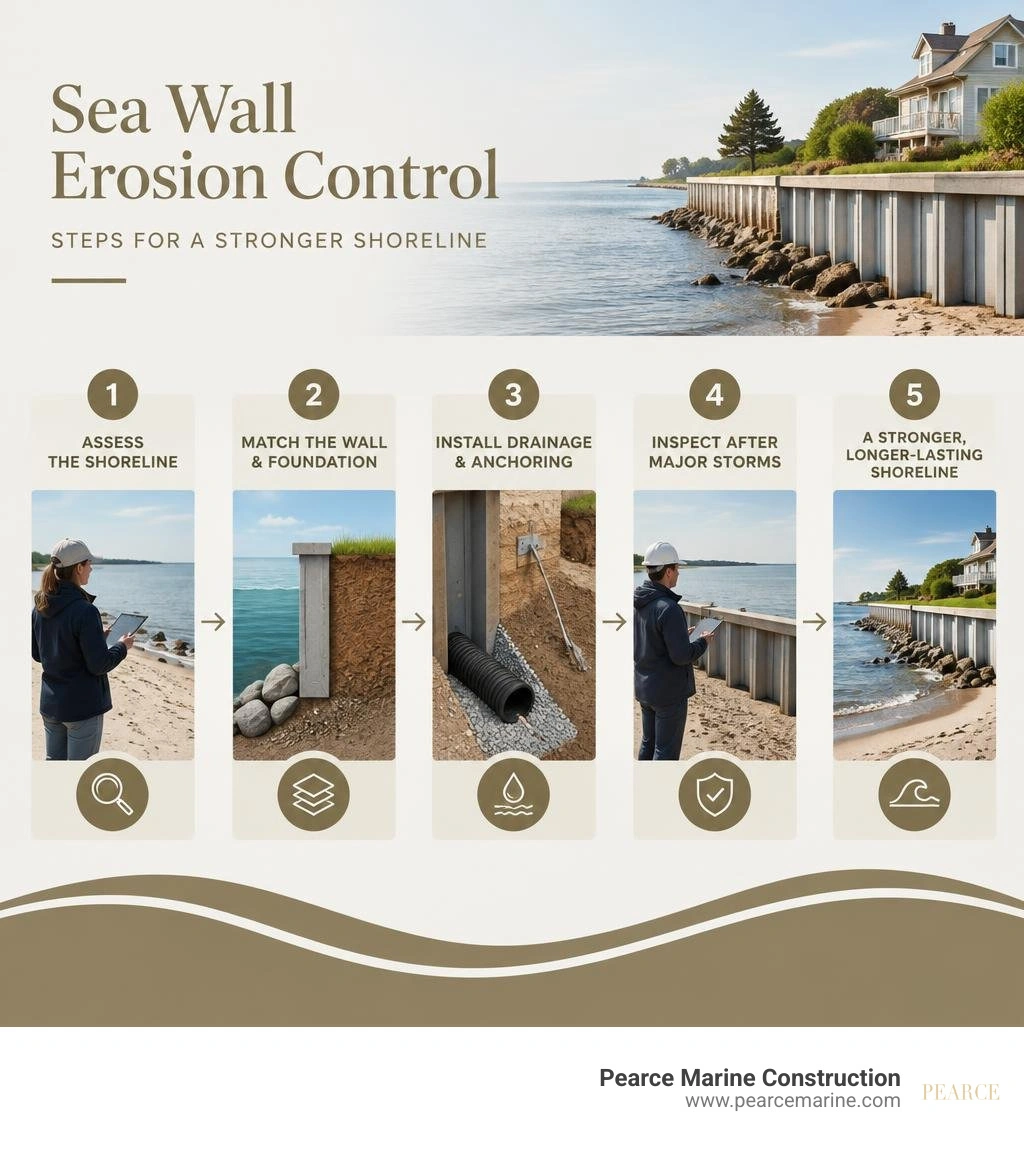
Contractor-led sea wall erosion control works best when it starts early: a Pearce Marine Construction crew assesses the shoreline, matches the wall and foundation to local soil and wave conditions, installs proper drainage and anchoring, then inspects the structure after major storms. A well-designed seawall or bulkhead reduces direct wave impact, holds back soil, and helps prevent the gradual loss of waterfront land.
For property owners in Nassau and Suffolk Counties, erosion is not just a shoreline problem. Wave scour can wash out soil at the base of a wall, create voids behind it, weaken nearby structures, and reduce the usable area of a waterfront property. Tidal changes, boat wake, storm surge, and a long open-water fetch can all speed up the damage.
The right solution depends on the site. Vinyl sheet pile, reinforced concrete, rock revetment, and modular systems each serve different soil, water-depth, and wave-energy conditions. The key is a custom design that manages wave force and protects the ground behind and below the wall.
Pearce Marine Construction is a woman-owned marine construction company serving residential, commercial, and public clients throughout Nassau and Suffolk Counties on Long Island. From Southampton to West Islip, proactive seawall work helps waterfront owners protect their land, structures, and long-term property value before a small washout becomes a major rebuild.
Service topics related to Sea wall erosion control:
- Pearce crews design coastal protection systems for exposed waterfronts.
- The right seawall type depends on soil, water depth, and wave exposure.
- Engineered seawall construction materials are selected for saltwater durability and load capacity.
Introduction: The Real Cost of Shoreline Loss
On Nassau and Suffolk County waterfronts, unchecked coastal erosion is relentless. Along exposed Long Island shorelines, sustained wave energy, tidal cycling, and storm surge can accelerate soil loss where seawalls, bulkheads, and retaining structures are not engineered for site conditions. When violent storm surges strike coastal bluffs and embankments, the structural integrity of the entire waterfront is compromised.
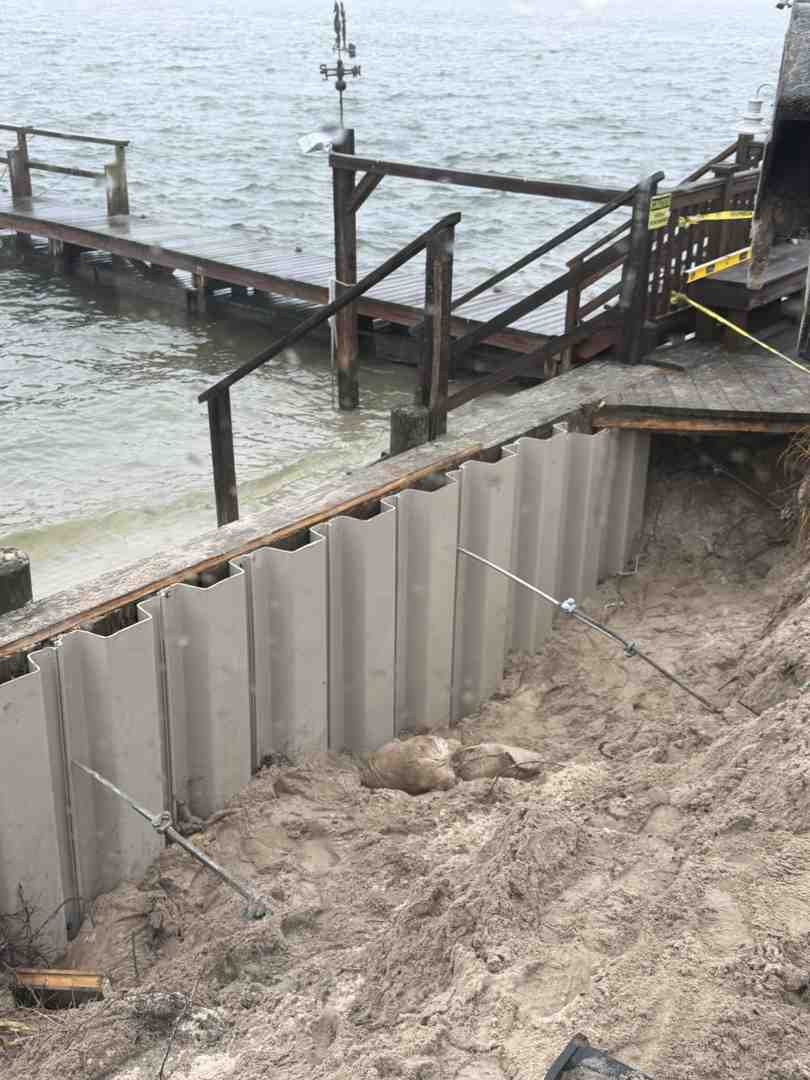
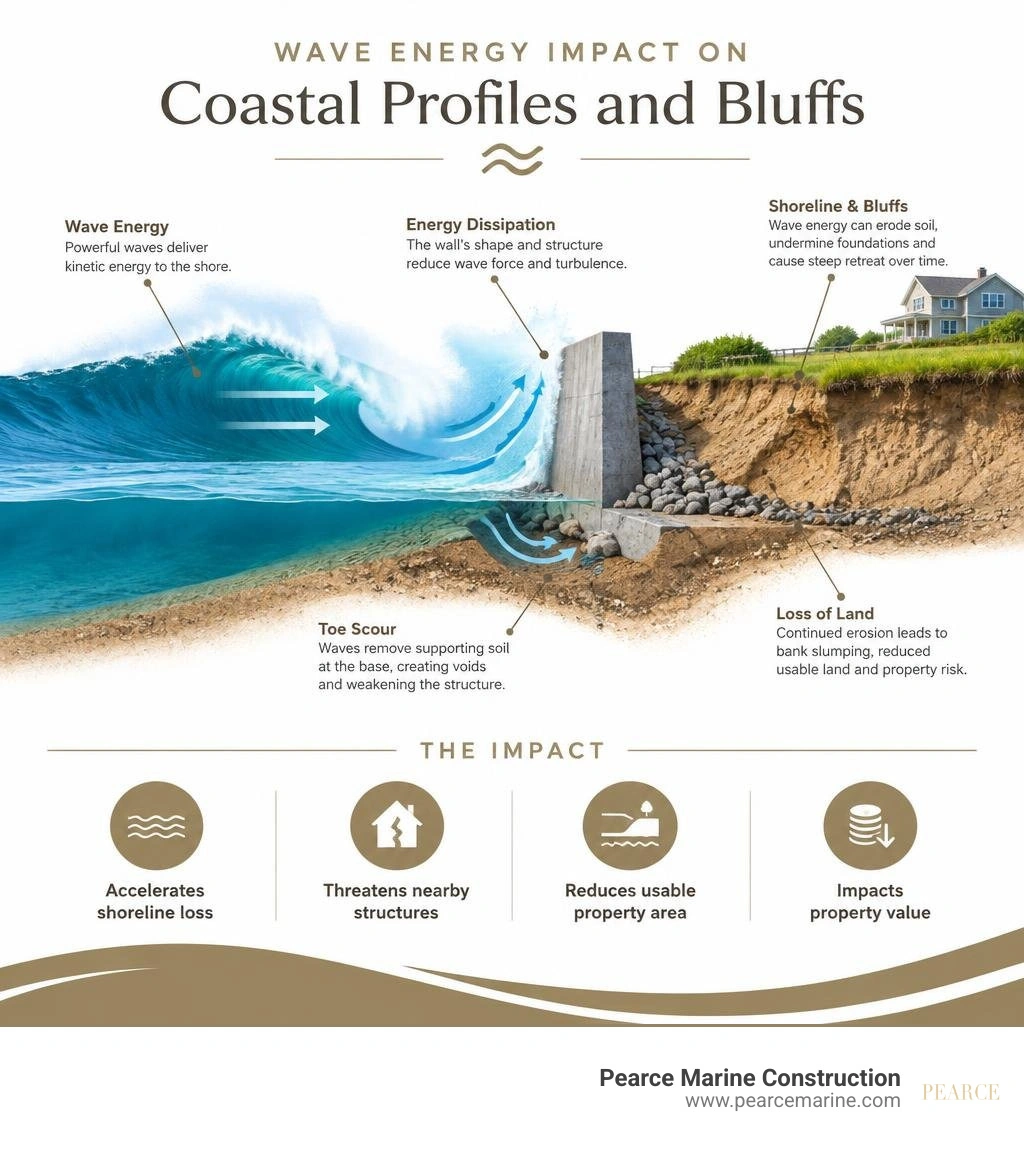
Toe scour removes supporting subgrade at the base, leading to bank slumping, sinkholes behind bulkheads, and sudden structural failures. Shoreline loss directly undermines upland foundations, reduces usable waterfront area, and jeopardizes long-term property protection across Long Island's South and North Shores, including Southampton, West Islip, and surrounding Nassau and Suffolk communities.
Engineering Mechanisms for Sea Wall Erosion Control
A well-engineered seawall does not merely act as an impenetrable boundary; it manages complex fluid dynamics and soil pressures simultaneously. Effective shoreline stabilization balances three distinct hydrodynamic and geotechnical forces:
- Hydrodynamic Energy Dissipation: Incoming incident waves possess massive kinetic energy. Engineering a structure with curved faces or specialized porosity transforms dynamic horizontal wave thrust into vertical displacement or turbulence, attenuating energy before it reaches the backfill soil.
- Incident Wave Reflection and Toe Scour Prevention: Vertical, flat-faced barriers reflect wave energy downward toward the seabed. Without proper toe protection, this creates deep trenches that undermine the wall. Advanced coastal engineering solutions utilize scour aprons, front revetments, or energy-dissipating geometries to lock the mud line in place.
- Hydrostatic Pressure Management & Soil Retention: Saturated soils exert heavy lateral earth and water loads against the back of the wall during low tide cycles. Controlled filtration backfills prevent sediment washout while relieving internal pressure, keeping the retained bank stable year-round.
Evaluating Sea Wall Erosion Control Systems and Materials
Selecting the correct structural material depends entirely on local bathymetry, geotechnical bearing capacity, and anticipated wave exposure.
| System / Material Type | Primary Advantages | Structural Limitations | Ideal Site Application |
|---|---|---|---|
| Modular Concrete-Foam Units | Near-neutral buoyancy, minimal settlement in weak organic silt | Requires specialized pin-pile stabilization | Marshlands, tidal flats, and low-bearing-capacity soils |
| Vinyl Seawall Construction | High corrosion resistance, rapid driving, clean visual lines | Lower impact tolerance against extreme heavy debris | Low-to-medium energy canal and bay waterfronts |
| Rock Revetment | Exceptional wave energy absorption, natural flexibility | Broad footprint consumes substantial waterfront area | Exposed coastlines with severe open-fetch wave energy |
| Concrete Sea Wall Construction | High mass resistance, extreme durability, customizable face | Heavy dead load requires firm geotechnical substrate | High-energy storm surge zones and exposed open bays |
| Fiberglass Seawall Panels | Superior flexural strength, zero salt-water rot | Higher material cost than traditional vinyl | High-load residential and commercial marine walls |
Geotechnical research into buoyancy-compensated erosion control modules demonstrates that hybrid systems—combining high-strength concrete shells with expanded geo-foam cores—counter excessive settlement in soft marsh soils. By balancing material mass with submerged displacement, these systems prevent heavy structures from sinking into unconsolidated peat.
Structural Adaptations: Curvature, Apertures, and Buoyancy Compensation
To maximize structural longevity, modern marine construction incorporates tailored geometric features.
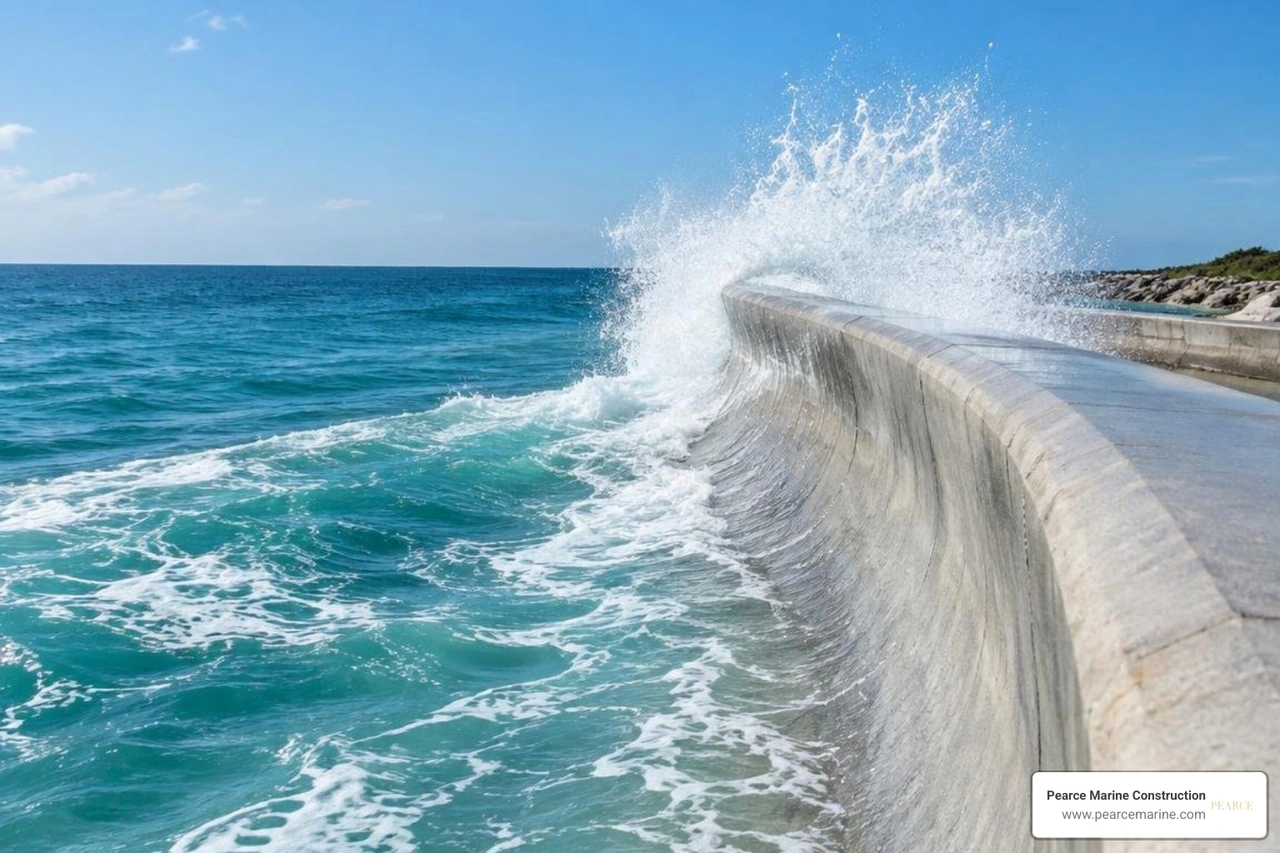
A recurved wall profile redirects incoming wave surge back out toward the water body, throwing energy against oncoming waves rather than allowing overtopping. According to recent innovations detailed in modular sea wall patent specifications, incorporating front-wall apertures creates controlled porosity. These openings allow controlled volumes of water to enter an internal chamber, dissipating wave energy by over 90% in documented field evaluations while retaining sediment behind internal barriers and permitting ecological passage for small marine organisms.
Understanding the primary purpose of a seawall ensures each component—from its face geometry to buoyant interior cores—is calibrated to the wave regime of the specific bay or harbor.
Geotechnical Anchoring in Soft Soils and Tidal Environments
Long Island's coastal margins frequently feature soft peat, organic silts, and loose marine sands. Installing heavy structural walls in these low-shear-strength soils requires robust deep-foundation anchoring.
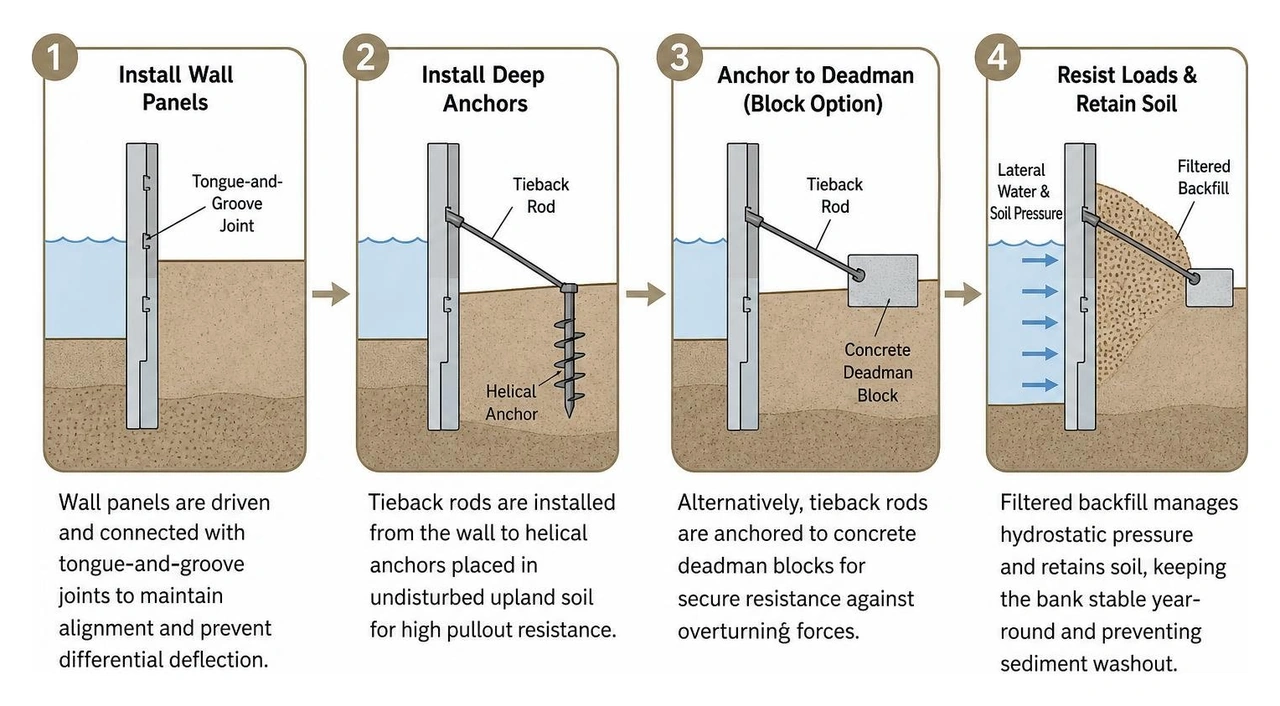
Tongue-and-groove connections interlock adjacent wall panels to prevent differential deflection during storm loading. To secure the wall against overturning forces, tieback rods extend back into undisturbed upland soil, fixed to concrete deadman blocks or high-capacity helical anchors. Following proper helical pile installation methods ensures absolute pullout resistance even across water-saturated tidal zones. Establishing verified bulkhead structural integrity through engineered pin-piling and deep anchor placement eliminates the risk of wall rotation or base kick-out.
How to Implement Long-Term Shoreline Stabilization
Executing an enduring marine stabilization project demands thorough engineering analysis prior to mobilization. We adhere to comprehensive shoreline stabilization protocols, beginning with precision site evaluations:
- Geotechnical Subsurface Sampling: Core borings establish soil strata, bearing capacity, and depth to solid resistance layers.
- Tidal Range and Mean High Water (MHW) Delineation: Accurate water-level measurements dictate wall crest elevation, ensuring adequate freeboard against tidal surges.
- Fetch Calculation and Wave Climate Modeling: Measuring open-water distance across bays such as the Great South Bay or Long Island Sound determines prospective wave height and period, guiding panel thickness and penetration depth.
Partnering with an experienced marine construction contractor ensures these engineering metrics translate into exact structural specifications designed for the specific site.
Step-by-Step Execution of Sea Wall Erosion Control Projects
Constructing an engineered seawall or bulkhead requires specialized marine heavy equipment, shallow-draft barges, and structured installation stages.
- Site Mobilization and Seabed Preparation: Shallow-water crane barges excavate the toe line to stable subgrade elevations while silt curtains protect surrounding water quality.
- Geotextile Filter Fabric Placement: Non-woven, high-permeability geotextile fabric is positioned behind the proposed wall line to separate retained soil from drainage stone while preventing fine-particle migration.
- Panel Driving and Module Interlocking: Heavy-duty vinyl, fiberglass, or concrete units are driven to engineered refusal depth using vibratory or impact pile drivers, locking together via tight tongue-and-groove joints.
- Tieback and Deadman Anchoring Installation: High-tensile tieback rods are connected to the wall's structural walers, extended landward past the soil failure plane, and locked to driven deadman piles or helical torque anchors.
- Backfilling with Angular Drainage Stone: Clean, crushed angular stone is placed immediately behind the wall to provide structural ballast and instant hydrostatic relief.
- Drainage and Cap Integration: Engineered weep holes with one-way flapper valves are integrated through the face, and a reinforced concrete or heavy timber cap is secured across the wall top.
Executing these technical steps properly provides comprehensive coastal flood protection. Our engineering breakdown on professional seawall construction details load calculations and marine installation phases for contractor-built shoreline infrastructure.
Professional Maintenance and Proactive Inspection Strategies
Even the most robust marine structures require regular post-storm inspection by qualified marine construction specialists to detect minor wear before structural degradation occurs.
- Drainage Weep Hole Testing: Pearce Marine technicians verify that filter fabrics inside weep holes remain unclogged by sediment or marine growth, ensuring water drains freely during falling tides.
- Void and Sinkhole Detection: Depressions or settling turf directly behind the wall cap indicate subgrade washouts requiring targeted polyurethane seawall repair to seal underground voids.
- Toe Scour Surveying: Professional crews measure seabed depth along the seawall face to confirm mud line elevations remain within design safety margins.
- Structural Alignment Surveys: Crews check for bowing, panel separation, or tieback nut loosening after heavy nor'easters and tropical storms.
Scheduling professional seawall inspection services allows waterfront owners to maintain structural performance and protect property equity over decades of tidal exposure.
Protect Your Waterfront Investment with Long Island's Marine Specialists
Pearce Marine Construction is a proud woman-owned marine construction company serving residential, commercial, and public clients across Nassau and Suffolk Counties on Long Island, NY. Compared with regional competitors such as Bayview Dockbuilders and Kevel, Pearce Marine emphasizes site-specific engineering, local Nassau and Suffolk experience, and superior heavy-timber and sheet-pile craftsmanship across every phase of installation. From high-energy oceanfront parcels in Southampton, West Hampton, and Montauk to dynamic bay and canal properties in West Islip, Babylon, Massapequa, Merrick, and Cold Spring Harbor, we deliver superior marine construction workmanship across every phase of installation.
Secure your shoreline today. Contact us for custom, engineered seawalls and bulkheads designed to withstand the toughest coastal conditions.



Bring Your Vision to Life
Whether you're planning a custom dock, seawall, or boat lift, our experienced team is ready to deliver high-quality marine construction tailored to your needs. Pearce Marine Construction brings craftsmanship, precision, and a deep understanding of Florida’s waterways to every project. Let us help you create a durable, beautiful solution that stands the test of time. Get in touch now for a personalized estimate!